
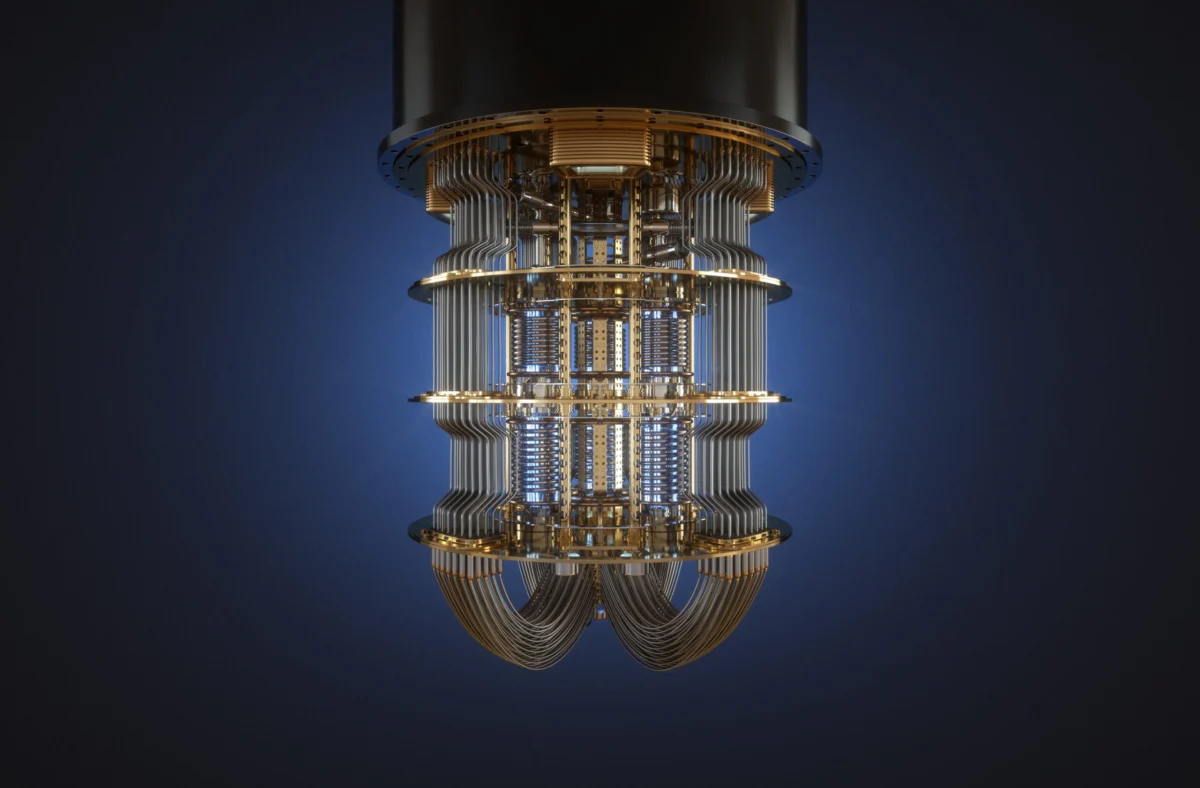

The quantum computing industry currently stands at a pivotal crossroads, characterized by a state of maximum creativity coupled with structural chaos as it attempts to transition from academic experimentation to commercial viability. While the public imagination often views quantum computing as a futuristic paradigm that will eventually render classical computing obsolete, industry experts emphasize a more nuanced reality: quantum systems are poised to serve as specialized accelerators rather than universal replacements. This emerging "quantum economy" is being shaped by a complex interplay of hardware innovation, error-correction breakthroughs, and the urgent need for standardized benchmarks, all while operating under the long shadow of national security concerns regarding encryption.
The Current State of the Quantum Industry: A Fragmented Ecosystem
The quantum sector is currently defined by a lack of consensus on a singular technical approach. Unlike the classical semiconductor industry, which consolidated around silicon-based transistors decades ago, quantum research is simultaneously exploring multiple qubit implementations, including superconducting circuits, trapped ions, neutral atoms, and spin-based systems. This diversity has led to a fragmented but highly active ecosystem.
Central to the effort to unify this field is the Quantum Economic Development Consortium (QED-C). Established under the mandate of the 2018 National Quantum Initiative Act, the consortium was directed by Congress and the National Institute of Standards and Technology (NIST) to identify and bridge gaps in technology, workforce, and standards. Today, the QED-C includes 132 member companies, a figure that significantly outpaces the 36 universities and 11 federally funded research centers currently active in the space. According to Celia Merzbacher, executive director of QED-C, the consortium’s role is to look beyond the "hype" and identify the specific hurdles—ranging from supply chain deficiencies to workforce training—that must be cleared to move toward a functional quantum economy.
The Three Pillars of Quantum Technology: Computing, Networking, and Sensing
While quantum computing garners the majority of media attention, it is only one of three primary pillars within the broader quantum technology landscape. Each pillar addresses distinct problems and faces unique developmental timelines.
Quantum Sensing
Quantum sensing is perhaps the most immediate application of the technology. By leveraging the extreme sensitivity of quantum states to environmental changes, these sensors can measure gravity, magnetic fields, and inertial changes with precision far exceeding classical instruments. Potential applications include high-accuracy navigation for defense, biomedical imaging, and natural resource mapping.
Quantum Networking
Quantum networking utilizes the principles of superposition and entanglement to create communication channels that are theoretically unhackable. The core challenge here lies in maintaining "state entanglement" over long distances and durations. If successful, quantum networks would allow for the instantaneous transfer of quantum information between nodes, though current infrastructure remains limited by the fragility of quantum states during transmission.
Quantum Computing and the QPU Model
Quantum computing is increasingly viewed not as a standalone system but as a Quantum Processing Unit (QPU) that will act as an accelerator for High-Performance Computing (HPC) environments. Much like the addition of Graphics Processing Units (GPUs) revolutionized AI and rendering, QPUs are expected to handle specific, computationally "hard" problems that classical CPUs struggle to solve efficiently.
The Hardware Bottleneck: Cooling and Qubit Stability
The primary obstacle to widespread quantum adoption remains the physical hardware. Qubits, the fundamental units of quantum information, are notoriously "fussy" and sensitive to thermal and electrical disturbances. Most current modalities require extreme cryogenic environments to function.
Pushkar Apte, a strategic technology advisor at SEMI, notes that while quantum computers could theoretically operate at very low power, the energy required to maintain the necessary cooling infrastructure is immense. Superconducting qubits typically operate at 0.04 Kelvin—a temperature colder than outer space. Achieving these temperatures requires dilution refrigerators that utilize helium isotopes, creating a significant barrier to portability.
"We are unlikely to go through a phase where every enterprise has its own quantum computer in a closet somewhere," says Merzbacher. Instead, the industry is moving toward a cloud-based service model where large data centers host the cryogenic infrastructure, and users access quantum power via standard classical interfaces.
Measuring Progress: Fidelity over Quantity
A recurring challenge in the industry is the lack of a standardized metric for progress. In classical computing, performance is measured in flops (floating-point operations per second). In quantum, the focus is shifting from the raw number of qubits to "fidelity"—a measure of how accurately a quantum gate performs an operation.
Igor Markov, a distinguished architect at Synopsys, suggests that the industry should focus on how many qubits can be entangled with a fidelity greater than 0.5. "Entanglement is necessary for quantum algorithms to outperform classical ones," Markov explains. "Fidelity tells us how accurate the result is. While 50% is not great, being below that threshold rules out most practical uses."
Recent milestones provide a snapshot of this progress. IBM recently announced the entanglement of 128 superconducting qubits with fidelity above 0.5. Simultaneously, experiments with neutral atoms have successfully loaded over 10,000 atoms that can be controlled to varying degrees. These competing milestones highlight the ongoing "modalities war" to determine which hardware platform will ultimately scale.
The Software and Error-Correction Frontier
Even with stable hardware, quantum computing cannot function without robust error correction and specialized algorithms. Because qubits are prone to "decoherence" (losing their quantum state), researchers are developing "logical qubits." A single logical qubit is comprised of multiple physical qubits, with the redundancy used to detect and correct errors.
The industry currently relies heavily on "surface codes" for error correction, but these do not scale efficiently for the millions of qubits required for complex tasks like Shor’s algorithm. Consequently, a significant portion of current investment is being directed toward algorithm development and software stacks that can manage the control loops and infrastructure required to keep quantum systems operational.
The Foundry Challenge: From Lab to Mass Production
One of the most significant indicators of the industry’s immaturity is the state of its manufacturing. Unlike the mature semiconductor industry, where foundries like TSMC produce chips at a massive scale, quantum production remains largely vertically integrated and confined to R&D-scale facilities.
"The quantum industry is in a state of vertical integration, much like semiconductors were in the 1970s or 80s," observes Apte. For quantum technology to become viable, the industry must transition to a "foundry model" where standardized components can be manufactured at high volume. This transition requires the development of Process Design Kits (PDKs) that account for cryogenic temperatures. Some startups, such as Quobly, are already working on co-integrating control electronics and qubits on the same chip, operating at temperatures between 500mK and 1K, which allows designers to reuse some classical intellectual property (IP).
Chronology and Future Projections: When Will Quantum Arrive?
The timeline for a "useful" quantum computer remains a subject of intense debate among stakeholders.
- 2018–2023: The "Establishment Phase," marked by the National Quantum Initiative and the proliferation of small startups focusing on niche aspects of the quantum stack.
- 2024–2028: The "Accelerator Phase." Many QED-C members (approximately 50%) expect the first commercial offerings—likely application-specific QPUs—to emerge within the next three to five years. These will likely target specialized fields like drug discovery or materials science.
- 2040s–2050s: The "Fault-Tolerant Phase." Most conservative estimates suggest that general-purpose, fault-tolerant quantum computers capable of breaking current 256-bit encryption keys (via Shor’s algorithm) are at least two decades away.
Despite the long-term nature of these goals, progress appears to be accelerating. Merzbacher notes that many physicists who previously predicted a 15-year window for useful quantum computing have recently revised their estimates down to five years, citing unexpected breakthroughs in hardware stability and error management.
Broader Implications and National Security
The most immediate and pressing implication of quantum computing is its threat to modern cryptography. Shor’s algorithm, which can factor large numbers exponentially faster than classical algorithms, has the potential to undermine the public-key infrastructure that secures global finance and government communications.
This has triggered a global race toward "Post-Quantum Cryptography" (PQC). Governments and enterprises are already being urged to adopt quantum-resistant algorithms to forestall "harvest now, decrypt later" attacks, where adversaries store encrypted data today in hopes of decrypting it once quantum computers become sufficiently powerful.
Conclusion: A Measured Outlook
The consensus among industry leaders is that quantum computing is a "science project" that is rapidly maturing into an engineering challenge. While it is unlikely to replace the smartphone in a user’s pocket, its impact as a high-end computational resource could be transformative. The path forward requires not just "better qubits," but a holistic evolution of the entire computing stack—from cryogenic cooling systems and error-correcting software to a global manufacturing supply chain. As the dust settles on the various competing modalities, the "quantum economy" will likely emerge as a specialized but indispensable layer of the modern technological landscape, standing alongside AI and photonics as a primary driver of 21st-century innovation.
