
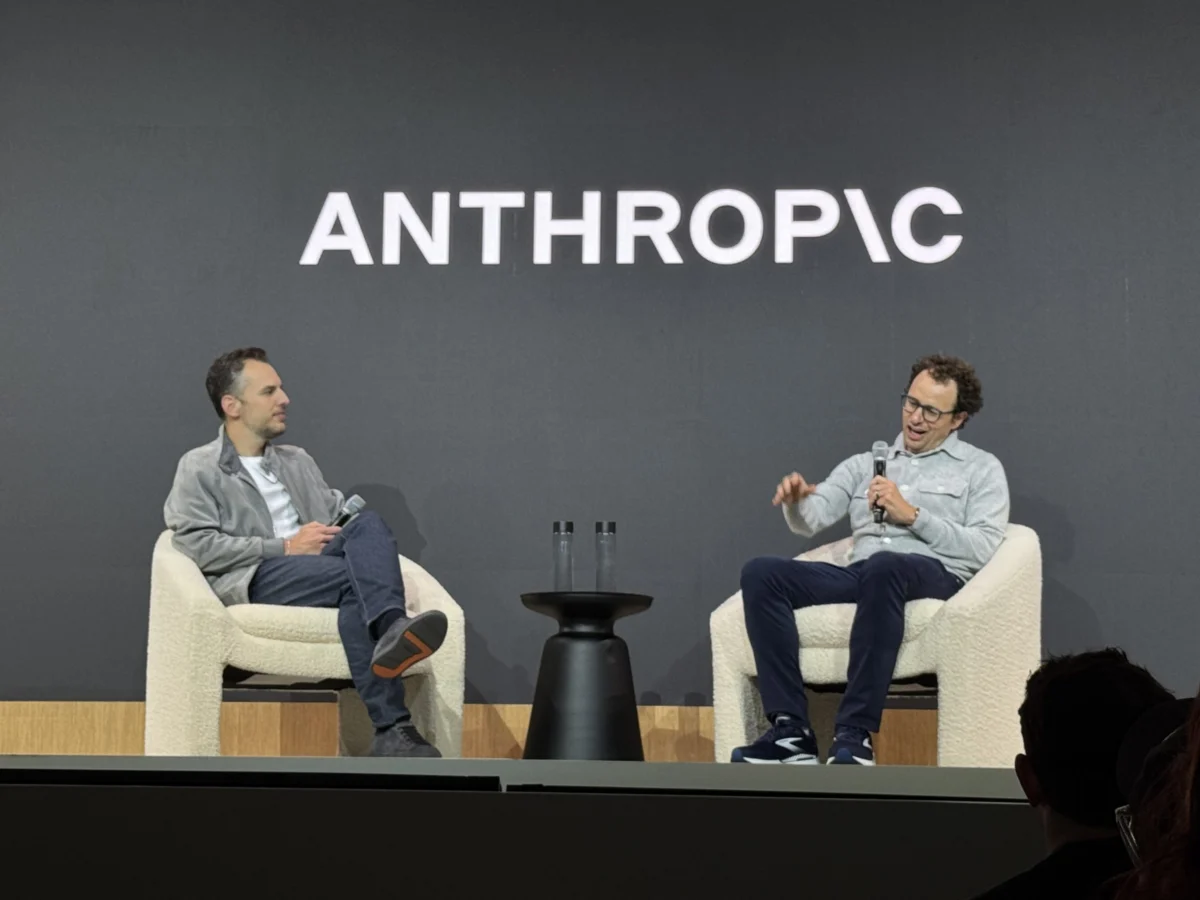

The enterprise artificial intelligence landscape is undergoing a significant transformation, with a pivotal moment arriving this week as Anthropic, a leading AI safety and research company, announced its second Global Premier Partner within the Claude Partner Network: UST. This strategic alliance with UST, a prominent technology and digital transformation services organization, is poised to significantly enhance UST’s capacity to guide enterprise clients beyond experimental proof-of-concept AI projects and toward robust, production-scale deployments. The move signals a maturing of the enterprise AI market, shifting the focus from nascent exploration to widespread operationalization.
For years, the journey from a promising AI pilot to a fully integrated, production-grade enterprise system has been fraught with challenges. A primary hurdle has been the inherent fragmentation of the AI development ecosystem, where diverse teams often build on disparate large language models (LLMs). This divergence creates complexities in integration, maintenance, and scalability, hindering widespread adoption. The next critical phase of enterprise AI, therefore, hinges on the standardization of the underlying technology stack.
This emerging trend implies a fundamental shift in how AI is managed and deployed within large organizations. The responsibility for model selection is expected to transition from individual development teams to centralized enterprise platform teams. This change will fundamentally alter engineering workflows, moving AI model choice from a tactical developer decision to a strategic architectural one. In the near future, it is anticipated that the chosen AI model will become an integral component of the enterprise technology stack, selected once at the platform level and subsequently inherited by all engineering teams that leverage that platform. This approach promises greater consistency, simplified governance, and accelerated deployment cycles across the enterprise.
Standardizing the AI Stack for Scalable AI
As a cornerstone of this partnership, UST will integrate Anthropic’s Claude LLM into the engineering platforms and workflows it designs, develops, and manages for its extensive client base. This integration aims to embed advanced AI capabilities directly into the operational fabric of businesses across various sectors.
Krishna Sudheendra, CEO of UST, emphasized the strategic importance of this alliance. "Our alliance with Anthropic reflects UST’s unwavering commitment to helping clients navigate the AI landscape with confidence and achieve meaningful business outcomes," Sudheendra stated. "By combining the capabilities of Claude with UST’s engineering, industry knowledge, and delivery expertise, we are bringing to market industry-specific platforms and digital and engineering solutions that improve productivity, accelerate business outcomes, and help clients operationalize AI-led decisions in a safe and secure environment."
This move by UST is indicative of a broader industry trend. As of early 2024, a significant number of enterprises have moved beyond initial AI experimentation, with many reporting that they are either in the process of scaling AI initiatives or are actively planning to do so within the next 12-18 months. However, the challenge of scaling remains a primary concern, with reports from industry analysts highlighting that over 60% of AI projects fail to move beyond the pilot stage due to integration, data, and talent challenges. Partnerships like the one between Anthropic and UST aim to directly address these roadblocks by providing standardized, production-ready AI solutions.
Claude Integrated into Core Engineering Platforms
A prime example of this standardization strategy is UST’s planned integration of Claude into its specialized engineering platforms. These platforms are currently utilized by companies operating in highly technical and demanding industries such as semiconductor manufacturing, telecommunications, automotive, embedded systems, and the Internet of Things (IoT). The platforms are critical for functions including design verification, chip validation, factory operations optimization, and field service management.
By embedding Claude’s advanced reasoning and natural language processing capabilities into these platforms, UST aims to empower engineering teams to identify design flaws earlier in the development cycle, significantly accelerate the complex process of chip validation, and seamlessly integrate intricate hardware and software components into unified systems. This synergistic approach is effectively laying the groundwork for the widespread adoption of "physical AI," where AI capabilities are deeply intertwined with the development and operation of tangible products and systems.
UST points to its UST-iDEC platform as a vanguard of this innovation. This existing hardware and silicon validation platform already automates a substantial portion of the validation process, which the company reports has led to a reduction in cycle times by up to 70% and a halving of typical turnaround times. The inclusion of Claude within this pipeline is designed to imbue the system with more sophisticated reasoning capabilities, moving beyond the concept of AI as a mere standalone assistant to a deeply integrated problem-solving engine.
Specifically, Claude Code is being engineered to natively interpret chip pinouts and hardware schematics. This allows it to automatically generate and execute regression tests, a task that previously required extensive manual scripting by engineers. Simultaneously, Claude’s advanced reasoning models will analyze real-time edge data against digital twins of physical systems. This sophisticated analysis is intended to proactively identify firmware regressions and subtle signal-integrity faults, issues that can be notoriously difficult and time-consuming to diagnose using traditional methods. By converging these powerful capabilities, UST is poised to dramatically accelerate an already high-speed validation pipeline, reducing manual effort and enabling earlier and more precise fault detection.
Cultivating a Skilled Workforce: Training 20,000 Technical Associates
The successful standardization of an AI stack necessitates a workforce that is aligned with and proficient in its use. A critical component of the Anthropic-UST alliance is UST’s significant commitment to training its workforce. The company plans to train 20,000 of its developers and technical experts on Claude. These associates will receive certification across a wide spectrum of roles globally, including AI architects, core engineers, implementation consultants, industry-specific specialists, and forward-deployed engineers who work directly on-site with client teams.
Paul Smith, Chief Commercial Officer at Anthropic, highlighted the significance of this internal focus. "UST helps the world’s banks, telecoms, and manufacturers put new technology to work," Smith commented. "They’re proving Claude inside their own engineering first, training 20,000 of their own people on it, before bringing it into the systems they build and run for clients." This approach underscores a commitment to internal mastery and validation before widespread client deployment, a strategy designed to build trust and ensure successful outcomes.
The implications of such a standardization effort for engineering organizations are profound and extend beyond procurement strategies. It fundamentally reshapes the day-to-day realities of development. When a standardized AI model is integrated into common platforms, shared AI workflows become readily reusable across multiple teams, fostering collaboration and reducing redundant effort. Centralized governance policies can be more effectively enforced, ensuring compliance and security standards are met uniformly. Furthermore, the need to redevelop integrations with internal enterprise systems for every new AI project is significantly diminished, as these integrations become part of the standardized platform. The primary trade-off for engineering teams is a gain in uniformity and efficiency at the potential cost of individual developers’ freedom to choose their preferred AI model for specific tasks.
Enterprise Workflows Enhanced Across Industries
Beyond the realm of hardware and physical AI, Anthropic has confirmed that UST is actively integrating Claude into various industry-specific and horizontal enterprise platforms. This expansion demonstrates the versatility of Claude and the strategic intent to leverage AI across the entire enterprise value chain.
In the healthcare sector, UST’s CarePath platform is being enhanced with Claude Code and MCP connectors. This integration aims to streamline member services and claims processing by intelligently routing recommended actions through an agentic layer for human oversight and approval. This ensures that while AI assists in decision-making, human judgment remains central to critical processes.
For the telecommunications industry, UST IntelliOps is introducing Claude’s advanced reasoning capabilities into network operations. The objective is to proactively predict potential Radio Access Network (RAN) failures, thereby reducing the time network operations center (NOC) teams spend sifting through vast amounts of data to distinguish critical alerts from background noise.
In the banking sector, UST FinX is leveraging Claude to accelerate customer onboarding processes and automate complex document processing. This initiative aims to provide banking staff with faster access to crucial account data while maintaining stringent built-in governance and audit controls, essential for regulatory compliance and security.
Manu Gopinath, President of UST, articulated the company’s vision. "We are wiring Claude into how UST designs, builds, and runs solutions across our consulting, platforms, engineering services, and industry offerings," Gopinath stated. "This alliance with Anthropic helps us deliver higher-value outcomes for clients as advancing UST’s transformation into an AI-native organization." This statement underscores UST’s commitment to not only adopting AI but fundamentally transforming its own operational model to become AI-native.
By undertaking firsthand experience with the operational, technical, and change management challenges associated with AI adoption internally, UST is meticulously developing an operational playbook of tested and refined workflows. For broader enterprise organizations looking to implement AI at scale, the key takeaway from this strategic partnership is clear: the future of effective enterprise AI lies in standardizing the underlying technology stack and migrating AI selection from the experimental sandbox phase into the foundational platform layer. As more systems integrators adopt this pragmatic and structured approach, development teams will increasingly find themselves working within a pre-defined AI framework chosen by their organization, a shift that promises greater efficiency, consistency, and accelerated innovation.
