

As Amazon’s veteran head of hardware and devices, David Limp, prepares to retire, the consumer technology giant is facing a pivotal leadership transition at a time when its flagship voice assistant and smart home ecosystem are approaching a major historical milestone. Next year marks the tenth anniversary of the commercial introduction of Amazon Alexa and the Echo smart speaker. This impending decade-long milestone has triggered broader industry-wide discussions regarding the actual maturation of the smart home market, the financial and operational independence of voice-activated ecosystems, and the persistent structural hurdles that continue to challenge mass-market adoption.
The departure of David Limp is part of a broader, sustained wave of executive departures that have reshaped Amazon’s corporate structure over the past year. Limp, who oversaw the development of iconic hardware lines ranging from Kindle e-readers and Fire tablets to Ring security cameras and Echo speakers, leaves behind a legacy that fundamentally transformed how consumers interact with ambient computing. However, as the smart home sector matures, the hardware division faces mounting economic pressures to prove its long-term profitability and self-sustainability, moving away from the era of subsidized hardware sales toward viable, high-margin business models.
State of the Modern Smart Home: Innovation Versus Accessibility
Reflecting on nearly ten years of connected living, industry analysts and consumer advocates are increasingly scrutinizing the real-world utility, cost, and complexity of modern smart home devices. While the ecosystem has expanded exponentially since the mid-2010s, it remains plagued by fragmentation, high price points for premium innovations, and recurring questions regarding user privacy and device longevity.
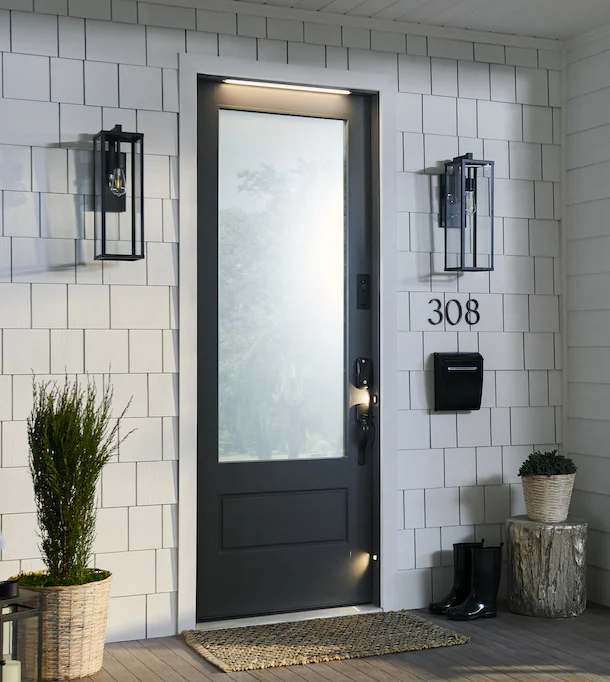
These systemic concerns are perfectly illustrated by recent product rollouts and reviews across the industry. For instance, the critically discussed Mill composting system—a high-tech kitchen waste management solution engineered by Nest co-founder Matt Rodgers—highlights both the ingenuity and the prohibitive economics of modern eco-conscious smart home appliances. Similarly, the commercial debut of Masonite’s high-end smart door, now available at major home improvement retailers like Home Depot, underscores the widening divide between luxury smart home engineering and everyday consumer affordability. While these sophisticated products showcase the cutting edge of domestic automation, their elevated price tags ensure they remain niche novelties rather than household staples for the average consumer.
Regulatory Intervention: The FCC’s Proposed IoT Cybersecurity Label
Amidst the commercial fragmentation of the Internet of Things (IoT) landscape, federal regulators are stepping in to establish baseline security standards. The Federal Communications Commission (FCC) has officially released its Notice of Proposed Rule Making (NPRM) aimed at establishing a comprehensive cybersecurity labeling program for smart devices.
Designed to protect consumers from the persistent threat of compromised connected appliances, routers, and smart home hubs, the proposed labeling scheme will function similarly to the Energy Star efficiency ratings, allowing consumers to easily identify devices that meet rigorous federal cybersecurity benchmarks. With a mandatory 30-day public comment window currently open, technology manufacturers, cybersecurity experts, and consumer advocacy groups are actively reviewing the framework to balance rigorous security mandates with commercial feasibility. Industry stakeholders emphasize that establishing a unified, transparent security standard is a critical prerequisite for building consumer trust in an increasingly interconnected domestic environment.
Industrial Cybersecurity and Critical Infrastructure Vulnerabilities
While consumer-facing smart homes grapple with user interfaces and privacy labels, enterprise and industrial IoT sectors face threats of an entirely different magnitude. Recent security disclosures from Microsoft underscore the vulnerability of critical infrastructure to sophisticated cyberattacks. Microsoft security researchers identified a severe set of vulnerabilities affecting widely deployed industrial equipment and operational technology (OT) systems. According to technical assessments, these flaws could potentially be exploited by malicious actors to manipulate industrial processes or even force the emergency shutdown of vital power plants and manufacturing facilities.
The discovery highlights the expanding attack surface created by the convergence of traditional industrial control systems and modern internet-connected telemetry. As utilities and manufacturing plants integrate smart sensors and remote monitoring tools, securing the foundational firmware and communication protocols has become a paramount national security priority.

Advancements in Smart Home Interoperability: Z-Wave and Local Control
On the hardware and protocol front, the smart home ecosystem is experiencing significant structural developments aimed at solving interoperability and communication bottlenecks. One of the most notable developments is the emergence of a secondary semiconductor supplier for Z-Wave chips, breaking a long-standing manufacturing bottleneck and injecting fresh competition into the market.
This hardware expansion was a primary focal point of recent industry discussions featuring Mariusz Malkowski, founder and Chief Technology Officer of Trident IoT. During an in-depth interview, Malkowski detailed the strategic origins of Trident IoT and outlined what the introduction of an alternative chip supplier means for the broader Z-Wave developer community. For years, the Z-Wave ecosystem relied heavily on singular proprietary semiconductor sources, which occasionally limited supply chain flexibility and slowed innovation cycles. By establishing a robust secondary source for Z-Wave silicon, Trident IoT aims to accelerate hardware availability and reduce development costs for manufacturers.
Furthermore, Malkowski addressed the evolving relationship between legacy mesh protocols like Z-Wave and the burgeoning Matter standard championed by the Connectivity Standards Alliance. He explained the technical mechanics of how Matter will coexist and interface with Z-Wave networks, emphasizing the critical importance of sophisticated protocol bridging. Rather than rendering older, reliable radio standards obsolete, effective bridging solutions allow consumers to integrate legacy Z-Wave sensors and door locks into modern Matter-compatible automation routines.
The conversation also shed light on the future roadmap for Z-Wave technology, including the ongoing rollout of Z-Wave Long Range (Z-Wave LR), which promises significantly expanded wireless range and dramatically increased node capacities for large residential and commercial properties. Additionally, forthcoming security upgrades will harden the protocol against emerging threat vectors. Beyond simply manufacturing silicon chips, Trident IoT is positioning itself as a comprehensive ecosystem partner by integrating alternative smart home radio protocols into its product designs and serving as an official Z-Wave certification testing house, thereby streamlining the path to market for hardware developers.
The Rise of Local Processing and Advanced Hubs
As cloud-based smart home services occasionally suffer from server outages and latency issues, consumer demand for local device control has surged. This trend was underscored by recent comprehensive reviews of advanced smart home hubs, such as the Homey Pro. While premium-priced hubs require a significant upfront financial commitment, devices capable of local processing offer distinct advantages over cloud-dependent alternatives. By processing automations locally on the physical hardware rather than routing every command through external servers, users benefit from lightning-fast response times, enhanced data privacy, and continued functionality even during internet service interruptions.
Practical Applications and Consumer Engineering
Beyond macro-level industry trends, the daily realities of smart home integration frequently involve granular, hands-on problem solving. The intersection of traditional craftsmanship and modern home automation was highlighted by a recent listener inquiry addressing a specialized woodworking project: selecting the optimal smart-capable light bulb for a custom-built artisanal lamp. Navigating the myriad socket types, color temperature ranges, and wireless communication protocols (such as Zigbee, Wi-Fi, or Thread) demonstrates that even as overarching protocols like Matter strive for universal simplicity, the practical execution of smart lighting design still requires careful technical consideration.
Implications for the Next Decade of Connected Living
As Amazon’s Alexa ecosystem approaches its ten-year anniversary, the smart home industry stands at a major crossroads. The departure of foundational leadership figures like David Limp coincides with a necessary reckoning regarding hardware profitability, cybersecurity governance, and protocol unification.
While regulatory milestones like the FCC’s proposed IoT cybersecurity label and technical breakthroughs in silicon manufacturing and local processing point toward a more mature, secure, and resilient industry, persistent challenges remain. High price points for advanced innovations, industrial vulnerabilities, and the ongoing struggle for seamless cross-ecosystem interoperability will dictate the trajectory of the smart home over the next decade. Whether ambient computing can achieve true financial and operational independence will depend heavily on how manufacturers navigate these complex technical and economic realities in the years ahead.
