
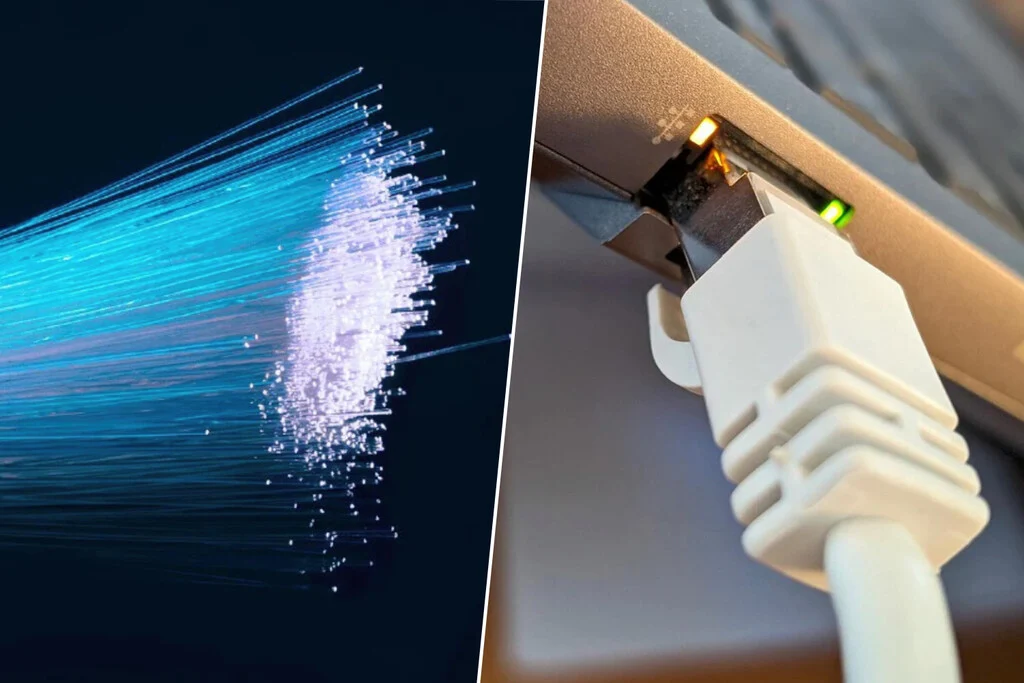

For the past two decades, the relationship between home internet infrastructure and consumer hardware was defined by a predictable imbalance: our computers and peripherals were consistently more capable than the connections coming through our walls. During the mid-2000s, while home users were largely tethered to ADSL connections that struggled to reach 20 Mbps, PC manufacturers were already standardizing Gigabit Ethernet ports. Our hardware served as an empty highway, awaiting the eventual arrival of high-speed fiber optics. Regardless of the internet service provider (ISP) package chosen, the bottleneck was always the infrastructure, not the device.
Today, that long-standing dynamic has undergone a definitive inversion. The rapid deployment of 1 Gbps, 2 Gbps, and now 10 Gbps fiber-to-the-home (FTTH) services by major telecommunications operators has created a new reality: the capacity delivered to the doorstep now vastly exceeds the processing capabilities of most household electronics. This shift marks the first time in the history of consumer networking that the "pipe" is significantly wider than the hardware connected to it.
The Chronology of Connectivity and Hardware Gaps
To understand this transition, one must look at the evolution of networking standards over the last 20 years. In the early 2000s, the introduction of Fast Ethernet (100 Mbps) was more than sufficient for the era of dial-up and early broadband. By 2010, Gigabit Ethernet (1000 Mbps) became the industry standard for motherboards and networking gear, a move that seemed over-engineered at the time.
For over a decade, this "headroom" allowed users to upgrade their internet speeds without needing to touch their local area network (LAN) equipment. However, the last five years have seen a massive acceleration in ISP investment, driven by the rollout of XGS-PON (10-Gigabit Symmetrical Passive Optical Network) technology. While ISPs were once limited by the constraints of legacy copper and early-generation fiber, they are now pushing throughput speeds that render standard consumer-grade networking components obsolete.
The Hardware Bottleneck: Why Your Devices Cannot Keep Up
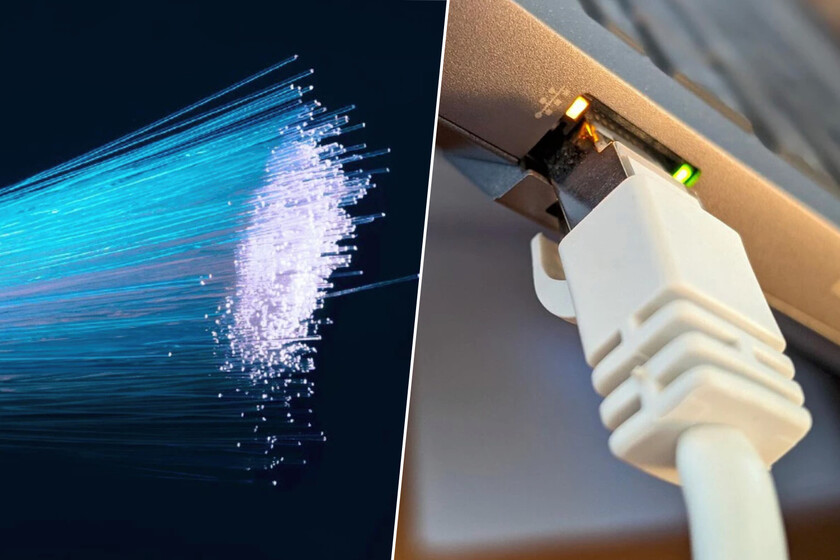
The disconnect between high-speed subscriptions and actual performance is primarily rooted in the physical limitations of current consumer hardware. The vast majority of desktop computers, gaming consoles, Smart TVs, and laptops manufactured within the last five years still feature network interface cards (NICs) capped at 1 Gbps. Some Smart TVs, curiously, are still limited to 100 Mbps ports, effectively throttling a 10 Gbps connection to a fraction of its potential.
This hardware limitation forces a significant financial burden on the end-user who wishes to actually utilize the bandwidth they pay for. To bridge the gap, consumers are increasingly required to purchase aftermarket components, such as 2.5 GbE or 10 GbE PCIe expansion cards for desktops, or external Thunderbolt-to-Ethernet adapters for laptops. For many, this represents an unforeseen secondary cost of upgrading their internet service.
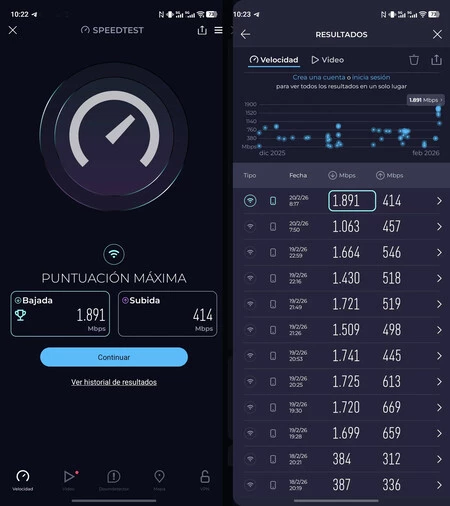
The limitation is even more pronounced in wireless connectivity. While WiFi 6 (802.11ax) brought significant improvements in efficiency and multi-device handling, it is rarely capable of delivering speeds that exceed 1 Gbps in real-world environments. The theoretical maximums of WiFi 6 are rarely reached due to signal attenuation, interference, and the physical constraints of antenna arrays in mobile devices. Consequently, even if a user is subscribed to a 10 Gbps plan, their smartphone or tablet is often limited by its own internal wireless radio, typically capping out between 400 and 850 Mbps.
WiFi 7 (802.11be) is the first standard explicitly designed to break the gigabit barrier in practical, high-throughput scenarios. However, the ecosystem remains in its infancy. A WiFi 7-capable router is a necessary, but insufficient, condition; both the transmitter and the receiver must support the protocol. With high-end tribanda routers costing upwards of $200 and a limited number of smartphones currently shipping with WiFi 7 support, the "last mile" of the wireless connection remains a significant hurdle.
Technical Implications: XGS-PON and Infrastructure Stability
The transition to XGS-PON technology is not merely about achieving higher speed benchmarks; it represents a fundamental change in how network traffic is managed at the distribution level. In older GPON (Gigabit PON) networks, bandwidth is shared among a larger group of users, which can lead to congestion during peak hours.
XGS-PON significantly increases the total capacity available to the local splitter, providing more headroom for multiple households to operate simultaneously without degradation. This structural improvement ensures greater stability. From an engineering perspective, the benefit of a 10 Gbps connection is not necessarily that a single device downloads a file ten times faster, but that the network infrastructure becomes "un-saturable."
Operators are increasingly focusing on the concept of "network resilience." By over-provisioning the infrastructure, ISPs ensure that during peak traffic—such as Friday evenings when multiple users are streaming 4K content, gaming, and working from home simultaneously—the latency and jitter remain minimal. This is the true, often overlooked value of ultra-high-speed plans: it is an investment in stability rather than raw throughput.
Official Responses and Industry Outlook
Telecommunications analysts note that the strategy of offering 10 Gbps plans serves as a long-term marketing and infrastructure-proofing tool. By the time 10 Gbps becomes the "new normal," the average household will likely have migrated to devices that are natively compatible with these speeds.
Industry reports suggest that we are entering a phase where the "Smart Home" will require significantly more bandwidth than the "Connected Home" of the last decade. With the proliferation of high-resolution security cameras, local cloud storage servers (NAS), and advanced VR/AR applications, the cumulative bandwidth demand of a household will soon necessitate speeds that exceed current 1 Gbps limitations.
Major network equipment manufacturers have begun to pivot their product roadmaps. We are seeing a steady, albeit slow, transition toward 2.5 GbE as the new baseline for consumer motherboards and high-end routers. Meanwhile, the enterprise sector has long since moved to 10 GbE, and the trickle-down effect to the residential market is now clearly visible in the latest high-end consumer hardware releases.
The Broader Socio-Economic Context
The current state of home connectivity raises questions regarding the necessity of such high speeds for the average consumer. For standard web browsing, social media consumption, and even streaming high-definition video, a connection of 300 to 600 Mbps is more than adequate. Data indicates that a 4K stream consumes roughly 25 Mbps, while online gaming requires less than 5 Mbps.
However, the argument for 10 Gbps connections centers on the "future-proofing" of the home. The rapid digitization of society implies that the demand for bandwidth will only continue to scale upward. As professional-grade tasks—such as editing 8K video in the cloud or maintaining large-scale home-based data servers—become more accessible to the general public, the infrastructure must be in place to support these workflows.
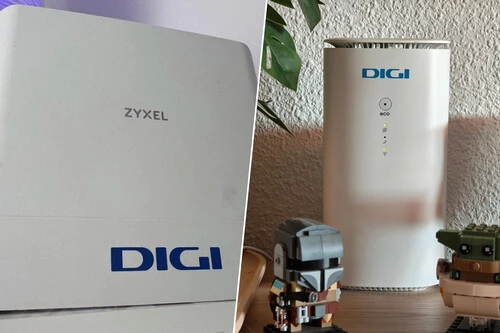
Furthermore, the shift forces a necessary upgrade to the internal home network. For years, the "router provided by the operator" was considered the final authority on network performance. Today, the savvy consumer is learning that a high-speed fiber connection is only as good as the internal cabling, switches, and access points that distribute that signal. The movement toward internal Ethernet backbones, utilizing existing coaxial cable or Cat6 wiring to create a "wired home," is gaining momentum as a direct response to the bottleneck created by wireless limitations.
Conclusion: A Future-Ready Foundation
The current landscape of telecommunications is a testament to the speed of technological advancement. For the first time, consumers have access to internet speeds that are ahead of their time, creating a "wait and see" period for hardware manufacturers. While the average user may not feel the immediate difference between 1 Gbps and 10 Gbps, the infrastructure underlying these speeds provides a level of reliability and capacity that was previously the domain of commercial enterprises.
As the industry moves forward, the focus will likely shift from pure speed to total system integration. The bottleneck is not permanent; it is a temporary stage in the technological life cycle. As WiFi 7 becomes standard in laptops and mobile devices, and as 2.5 GbE ports become as ubiquitous as the 1 GbE ports of the past, the current investments made by consumers and ISPs alike will bear fruit. We are currently living through a period of transition where the infrastructure is paving the way for the next generation of digital consumption. The hardware will eventually catch up, and when it does, the robust networks being installed today will be the foundation upon which the next decade of digital innovation is built.
