
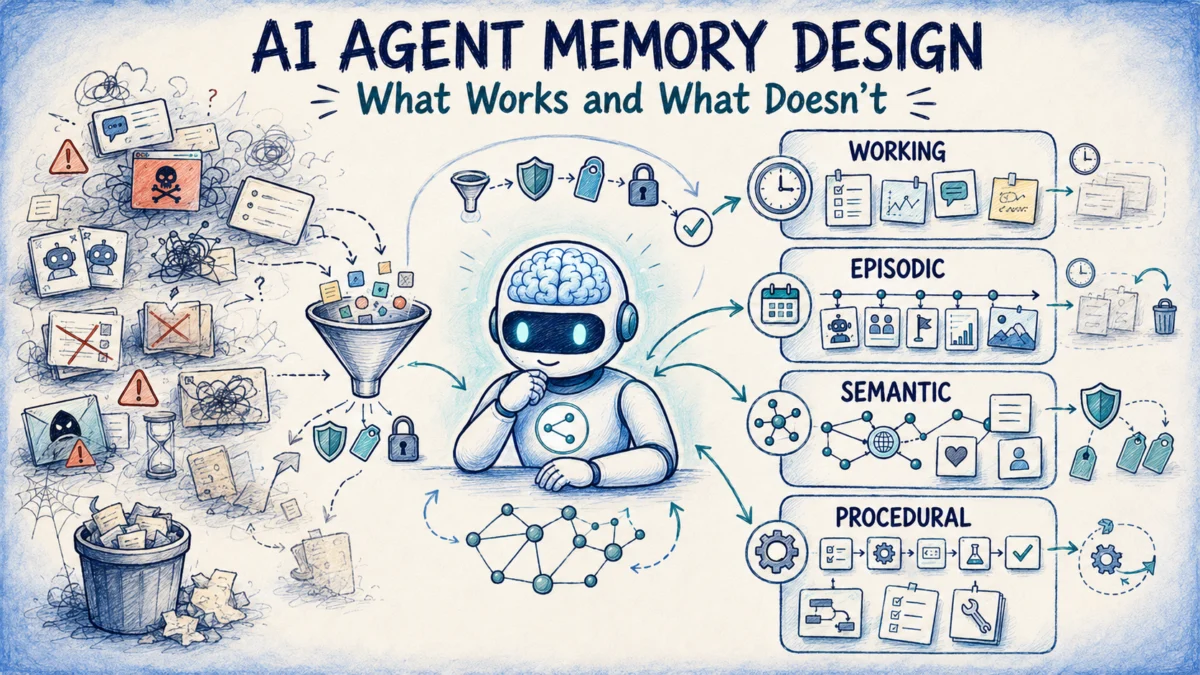

In the rapidly evolving landscape of artificial intelligence, the transition from simple chatbots to autonomous AI agents hinges on one critical development: the ability to maintain reliable, long-term memory. While initial generative models relied solely on ephemeral context windows, modern agentic systems must now navigate the complexities of persisting information across sessions, tasks, and multi-agent interactions. This shift necessitates a move away from simplistic storage solutions toward robust, tiered memory architectures designed to prevent the systemic, hard-to-trace failures that have plagued early deployments of agentic workflows.
The Evolution of Agentic Memory
The concept of "memory" in AI has historically been conflated with static knowledge bases or simple conversation logs. However, the current standard defines agent memory as the dynamic information an agent writes to external storage during runtime for future retrieval. Unlike a system prompt, which provides immutable instructions, or a RAG (Retrieval-Augmented Generation) pipeline, which pulls from fixed documentation, true agent memory is generated by the agent itself.
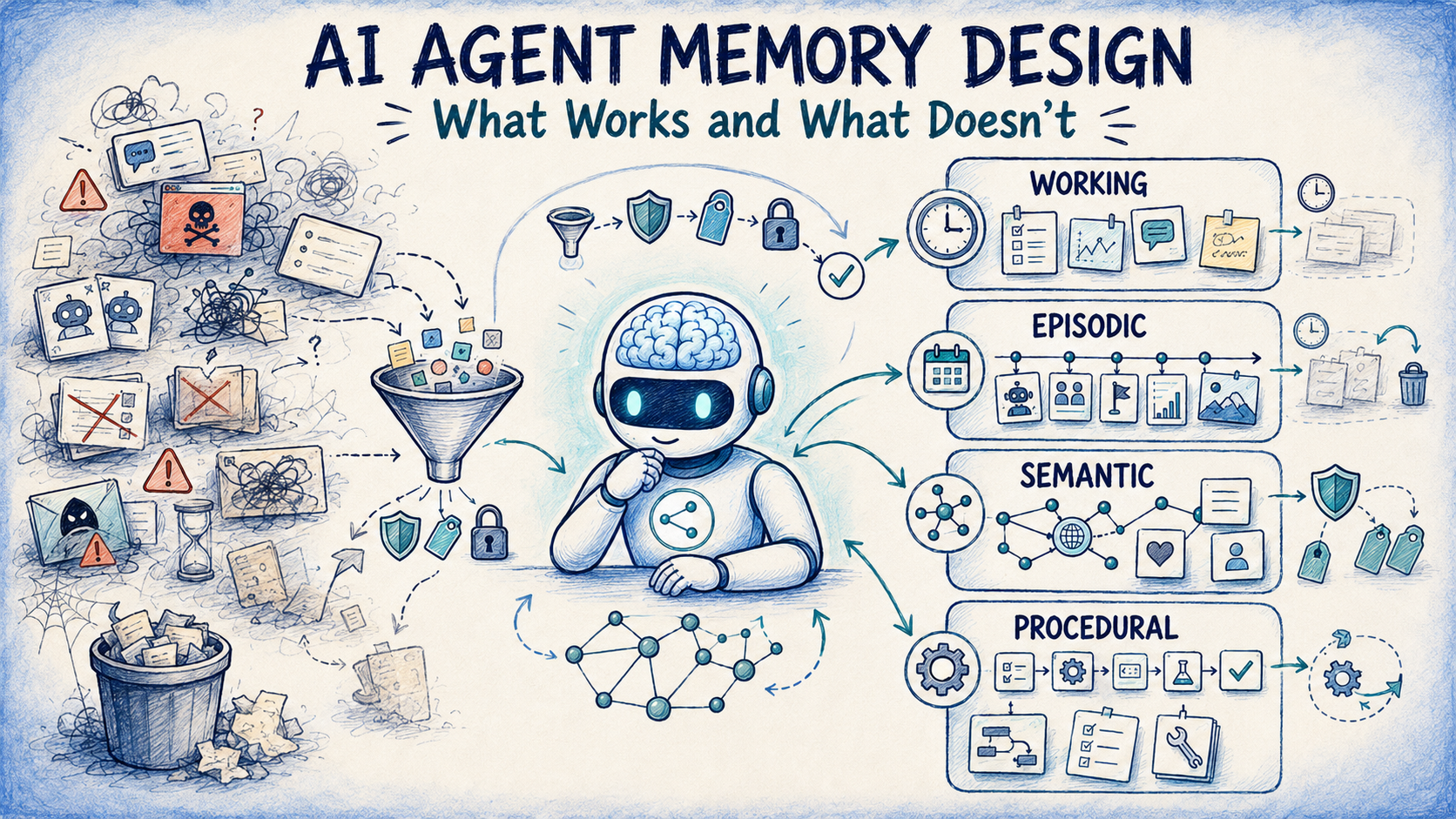
Chronologically, the industry moved from stateless LLM interactions—where every query required a complete context refresh—to basic "memory buffers" that appended previous messages to the input. As agent autonomy increased, these methods proved insufficient. Researchers identified that agents performing multi-step tasks often lost track of intermediate findings or hallucinated instructions from past sessions. This led to the development of sophisticated, multi-layer memory systems categorized into four primary types: episodic (past events), semantic (factual knowledge), procedural (learned workflows), and working memory (active scratchpad state).
The Perils of Monolithic Storage
A common architectural error in early AI agent development is the use of a single vector database as a universal "memory dump." While vector stores are highly effective for semantic similarity searches, treating them as a catch-all solution introduces significant vulnerabilities.
Data from recent technical audits indicates that when agents rely on a flat, undifferentiated memory store, retrieval noise increases exponentially. As the database grows, the semantic "distance" between relevant and irrelevant information shrinks, leading to high-latency queries and, more critically, the retrieval of stale or contradictory facts. Furthermore, this approach ignores the need for structured data. An agent may require an exact value—such as a specific API key or a user preference—that a fuzzy semantic search cannot guarantee, leading to functional failures that are notoriously difficult to debug because the underlying data structure lacks provenance.
Hierarchical Memory and Importance Scoring
To mitigate the risk of data bloat and noise, leading systems are now adopting hierarchical memory models. This strategy involves assigning an "importance score" to every piece of information before it is persisted. By utilizing a structured schema—often implemented via Pydantic or similar data validation frameworks—developers can gate information based on confidence thresholds.
For instance, if an agent performs a task with high uncertainty, that data is relegated to volatile, short-term storage. Only information that meets a pre-defined importance threshold and maintains a high confidence score is promoted to long-term episodic memory. This filtration process ensures that the agent’s "long-term brain" remains clean, relevant, and free from the clutter of half-finished, unreliable trial-and-error logs.
Multi-Agent Coordination and Scope Boundaries
In multi-agent systems, where specialized agents (e.g., a "researcher," a "coder," and an "orchestrator") collaborate, the risk of cross-contamination is high. A frequently cited failure occurs when a research agent writes context notes that a code-execution agent misinterprets as instructions.
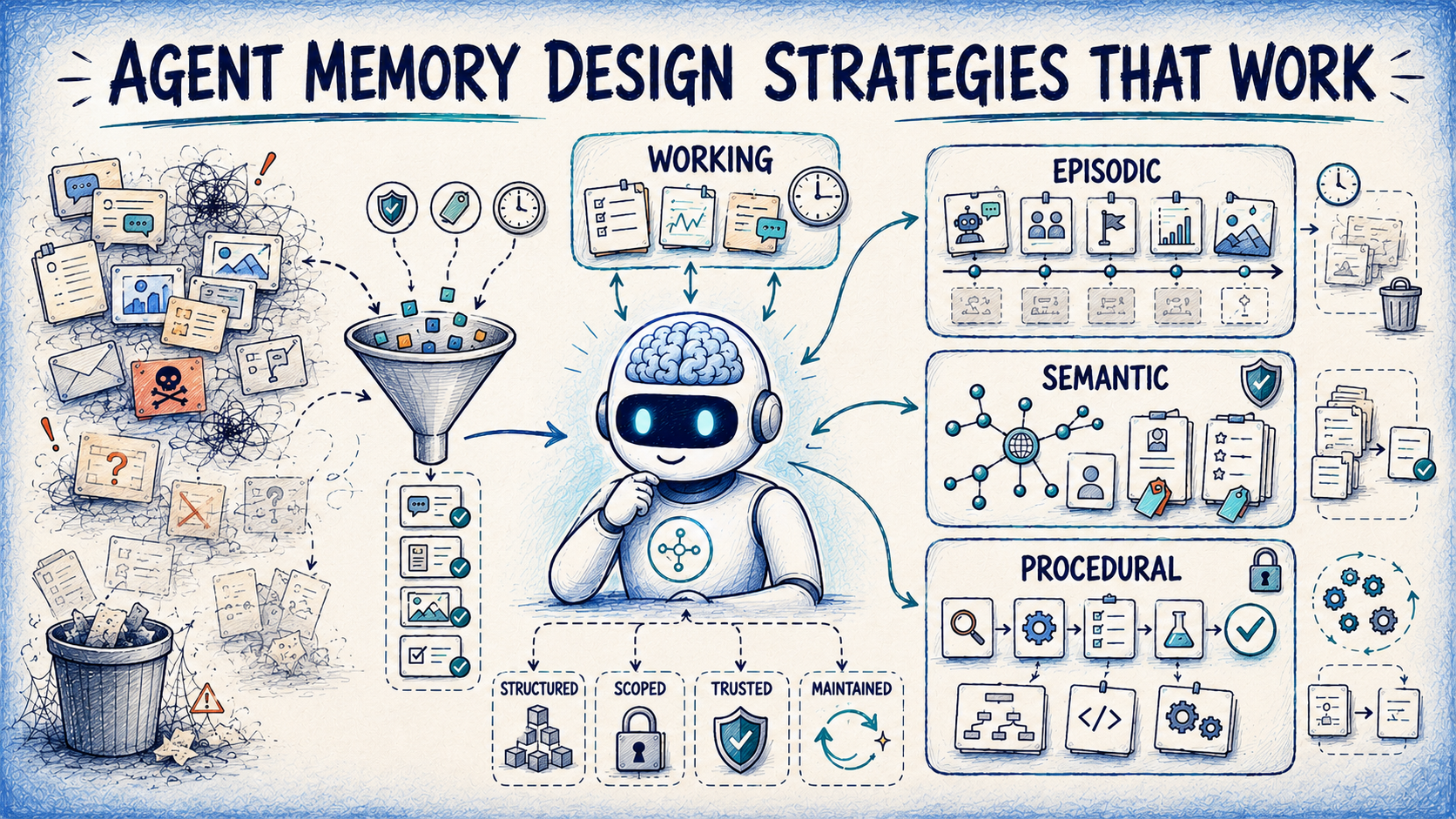
Industry best practices now mandate strict memory scoping. By assigning unique namespaces to each agent, architects can enforce read/write permissions at the data layer. In this model, the orchestrator maintains global access, while sub-agents are restricted to their specific operational domains, with a shared "facts" layer acting as the only point of common ground. This isolation prevents "memory pollution," where one agent’s internal scratchpad inadvertently alters the behavior of another, ensuring the stability of the overall workflow.
The Problem of Compression and Hallucination
A recurring issue in AI memory management is the reliance on summarization as a compression tool. When an agent reaches its context limit, many systems summarize the previous session and store that summary as the "memory" for future interactions. Analysis of these systems has revealed two critical failure modes:
- Detail Loss: Summarization is inherently lossy. Crucial constraints or edge cases are often discarded, leading to agents that "forget" the specific boundaries of their tasks.
- Compound Hallucinations: If an agent hallucinates a fact during an early session, that error is often baked into the summary. Subsequent sessions treat this hallucinated summary as ground truth, effectively "poisoning" the agent’s memory. The error then compounds over time, becoming increasingly difficult to excise.
The current recommended mitigation is to abandon free-form summaries in favor of structured fact extraction. By forcing the model to map information into predefined, typed schemas, developers ensure that only verifiable, distinct facts are stored, rather than subjective paraphrases.
Addressing Memory Poisoning and Security
Security researchers have recently highlighted the "MemoryGraft" attack, a vulnerability where malicious or misleading information is injected into an agent’s long-term memory. Because retrieval is often based on semantic similarity, a small number of poisoned entries can disproportionately influence an agent’s decision-making process.
To defend against this, modern architectures incorporate "provenance tracking" and "trust-level filtering." Every memory entry should be tagged with metadata: the agent ID that generated it, the tool used, the input hash, and a trust score. Before any high-stakes action, the system runs a sanitization check, rejecting any memory retrieved from low-trust sources (such as external web content) that contains imperative language or hidden instructions. This creates a firewall between raw input and the agent’s persistent decision-making logic.
Maintenance Routines: Preventing Technical Debt
Unmaintained memory stores inevitably become technical debt. As the volume of data grows, agents encounter increased costs and decreased performance. Robust systems now implement automated maintenance routines, including:
- Time-to-Live (TTL) Policies: Automatically expiring volatile data.
- Confidence Decay: Lowering the importance score of facts over time to reflect the potential for data to become obsolete.
- Deduplication: Periodically scanning the store to merge identical or conflicting facts.
Implications for the Future of Agentic AI
The transition from "chatting" to "acting" requires a paradigm shift in how we conceive of AI storage. The industry is currently moving away from the "black box" approach—where the agent handles its own memory haphazardly—toward a more transparent, engineered system of record.
This maturation of agentic memory design has profound implications. Reliable memory allows for the development of agents capable of multi-day projects, consistent user personalization, and complex, multi-step problem solving. However, it also places a greater burden on developers to define strict write policies and provenance rules.
As we look toward the next generation of AI development, the ability to architect these systems will likely be the primary differentiator between reliable, high-utility agents and those prone to unpredictable, drift-prone behavior. The consensus among lead engineers is clear: memory is not merely a feature to be added, but a fundamental infrastructure that must be designed with the same rigor as a production database. By prioritizing structure, provenance, and scope, we can build agents that possess not just intelligence, but the consistency required to operate in real-world, high-stakes environments.
