


O2 has embarked on an aggressive strategic expansion over the past month, signaling a clear intent to capture a larger share of the telecommunications market by diversifying its service portfolio and enhancing its hardware offerings. Following the recent implementation of free WiFi 7 router installations for its user base, the introduction of a highly competitive five-euro-per-month mobile tariff, and the expansion of discounted Movistar Plus television packages, the operator is now introducing O2 Estrena. This new program, which draws architectural inspiration from the established Movistar Swap service, allows eligible customers to renew their mobile hardware every 24 months, effectively creating a recurring cycle of device upgrades that mirrors the rapid evolution of modern smartphone technology.
The Strategic Context of O2 Estrena
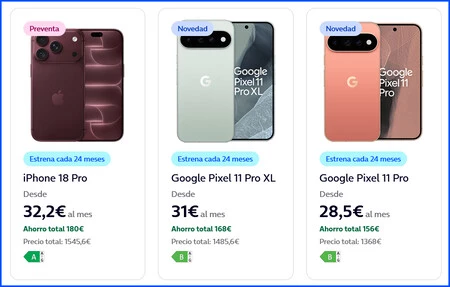
The launch of O2 Estrena coincides with the global release of the iPhone 18 Pro series, marking a significant milestone in the company’s retail strategy. By aligning this program with the availability of flagship devices, O2 is positioning itself to compete directly with premium mobile carriers that have long utilized leasing and renewal models to lock in high-value customers.
The mechanism behind O2 Estrena is straightforward: it provides a structured pathway for subscribers to transition from their current device to the latest model on the market every two years. To participate, customers must hold an active fiber and mobile contract, or a convergent package that includes fiber, mobile, and television services. By restricting this offer to convergent plans, O2 is incentivizing customers to maintain a consolidated telecommunications profile, thereby reducing churn rates and increasing the lifetime value of each subscriber account.
Operational Mechanics and Customer Journey
The user experience within the O2 Estrena ecosystem is designed for transparency and ease of management. Customers can select any device from the operator’s curated catalog that carries the O2 Estrena designation. Once a device is chosen, the customer commits to a 24-month payment plan, with the cost of the hardware amortized into their monthly billing cycle.

A critical component of this program is the proactive communication strategy. Recognizing that users often lose track of their contract terms, O2 has implemented an automated notification system. Customers are alerted via email and SMS when their 24-month term is approaching its conclusion. At this juncture, the user is presented with a binary choice: they may retain their current device, in which case their contract continues under existing terms, or they may initiate a renewal.
If the customer opts for a renewal, the logistics are handled entirely by the operator. The new device is shipped directly to the customer’s registered address, and a 15-day window is provided for the collection of the legacy hardware. Financial adjustments are managed through a flexible pricing model: if the market value of the newly selected device is equivalent to the previous one, the monthly installment remains unchanged. Should the new device possess a higher or lower valuation, the monthly fee is recalibrated accordingly, ensuring that the transition remains economically balanced.
Market Chronology and Recent Developments
The recent sequence of events at O2 demonstrates a rapid operational cadence that has caught the attention of market analysts. In less than thirty days, the operator has executed a series of maneuvers aimed at addressing various pain points within the consumer mobile sector:
- Infrastructure Upgrade: The rollout of WiFi 7 routers, a technology currently at the cutting edge of wireless connectivity, ensures that O2’s fiber customers benefit from reduced latency and higher throughput, directly competing with the premium services offered by parent company Movistar.
- Pricing Strategy: The introduction of a 5-euro-per-month mobile plan acts as a direct counter-offensive against low-cost competitors such as Digi, which have aggressively eroded market share among price-sensitive consumers.
- Content Bundling: By extending discounted access to Movistar Plus to a broader range of tariffs, O2 has successfully blurred the lines between its identity as a low-cost operator and the premium positioning of its parent organization.
- Hardware Lifecycle Management: The launch of O2 Estrena serves as the final piece of this puzzle, creating a comprehensive hardware-as-a-service model that keeps users integrated within the O2 ecosystem for the long term.
Analysis of Implications for the Telecommunications Sector
The introduction of O2 Estrena reflects a broader shift in the European telecommunications market toward hardware-centric retention strategies. Historically, mobile carriers focused primarily on network quality and data pricing. However, as 5G networks reach maturity and data caps become increasingly generous, the differentiation between carriers has narrowed. Consequently, operators are increasingly turning to hardware financing and renewal programs to create "stickiness."
From a financial perspective, O2 Estrena allows the operator to manage a secondary market of high-quality, pre-owned devices. While the company has not yet detailed its refurbishment and resale strategy for the returned handsets, such programs typically allow operators to recover residual value from the hardware, which in turn subsidizes the cost of the next generation of upgrades. This circular economy model is not only environmentally conscious—by extending the lifecycle of devices—but also fiscally efficient, allowing O2 to offer lower monthly payments than a standard retail purchase would entail.
Furthermore, the program simplifies the upgrade process, removing the friction associated with the secondary market. Customers who might otherwise spend time listing their old devices on third-party resale platforms are now provided with a seamless, turnkey solution. This convenience is a potent value proposition that justifies the ongoing monthly commitment.
Regulatory and Consumer Considerations
While the program offers clear benefits in terms of convenience and access to the latest technology, consumers are advised to carefully monitor the terms of their installment agreements. Because O2 Estrena relies on monthly payments, it is essential that customers understand the long-term impact on their recurring monthly expenses. Unlike a one-time purchase, this model commits the user to a permanent cycle of billing.
Furthermore, O2 has emphasized that its approach to billing is designed to be user-friendly. Recent reports indicate that the company has implemented a rigorous system of notifications—up to six SMS alerts—to prevent the occurrence of unexpectedly high bills, particularly concerning roaming charges and data overages. This focus on billing transparency is a cornerstone of O2’s brand identity and is expected to be integrated into the O2 Estrena program as well, ensuring that the hardware installment costs remain clear and predictable.
Looking Ahead
As O2 continues to integrate these diverse service offerings, the company is effectively repositioning itself as a "total service provider." By combining high-speed fiber, competitive mobile pricing, premium television content, and now a structured device renewal program, O2 is successfully bridging the gap between budget-friendly service and premium customer experience.
The success of O2 Estrena will likely be measured by the adoption rate among its existing customer base over the next two years. If the program mirrors the success of Movistar Swap, it could serve as a model for other mid-tier operators looking to stabilize their subscriber numbers in a saturated market. For the consumer, the choice is clear: O2 is betting that the desire for the latest, most advanced hardware, combined with the convenience of a simplified upgrade path, will be the decisive factor in long-term carrier loyalty. With the inclusion of the iPhone 18 Pro in the initial launch phase, the message is clear: O2 intends to be the primary gateway for its users to access the future of mobile innovation.
