

The annual AWS Heroes Summit convened last week, drawing top-tier cloud computing specialists, software architects, and technology leaders from around the globe to Amazon Web Services headquarters and associated conference facilities. As an exclusive, invite-only gathering, the summit serves as a critical bridge between the global developer community and the internal product engineering teams driving the evolution of cloud technology. This year’s multi-day conference placed a heavy emphasis on emerging paradigms, specifically artificial intelligence integration, advanced serverless computing models, secure containerization, and enterprise-grade distributed systems. By facilitating direct collaboration, intensive technical workshops, and candid feedback loops, the event underscores Amazon Web Services’ strategic commitment to decentralized advocacy and community-driven product development.
The Genesis and Evolution of the AWS Heroes Program
To understand the significance of the AWS Heroes Summit, one must examine the foundational architecture of the AWS Heroes program itself. Launched to formally recognize and honor individuals who have demonstrated exceptional commitment to sharing their technical expertise, mentoring other developers, and fostering inclusive communities, the program has grown into an elite network. Heroes are nominated based on their continuous contributions to open-source projects, public speaking engagements, technical writing, and localized community leadership. Unlike traditional corporate advocacy roles, AWS Heroes operate independently, maintaining an objective voice while holding deep technical insights into the platform’s trajectory.
The annual summit was established to harness this collective intelligence. In the rapidly evolving landscape of cloud computing—where paradigms shift from monolithic architectures to microservices, and subsequently toward event-driven serverless and generative AI workflows—gathering these vanguard practitioners is essential. Internal product teams rely on the candid, frontline perspectives of AWS Heroes to validate product roadmaps, identify friction points in developer experience, and test-drive experimental features before public preview announcements. Consequently, the summit functions not merely as a celebration of past achievements, but as an active engineering forum with tangible downstream effects on the global tech industry.
Chronology of the Summit: Day-by-Day Breakdown
The 2026 summit featured a meticulously curated agenda designed to maximize knowledge transfer, strategic alignment, and peer-to-peer networking. The chronological structure of the event facilitated a seamless transition from macro-level enterprise vision down to granular technical execution.
Day 1 set an ambitious tone with an opening keynote and fireside chat featuring AWS CEO Matt Garman. Addressing the assembled global experts, Garman outlined the strategic imperatives facing cloud infrastructure providers in an era defined by ubiquitous machine learning workloads and escalating security demands. The conversation touched upon the democratization of high-performance computing, the operational efficiencies required to power large-scale foundational models, and Amazon’s long-term vision for sustainable, carbon-efficient data center operations. Garman emphasized that the velocity of modern software development is inextricably linked to the removal of undifferentiated heavy lifting, reinforcing AWS’s dedication to managed services and intuitive developer tooling.
Following the opening address, attendees transitioned into specialized breakout sessions led by prominent AWS product and service teams. These closed-door sessions allowed for deep-dive technical explorations into specific domains, including AWS Lambda scaling mechanics, Amazon Bedrock integrations, and advanced container orchestration using Amazon Elastic Kubernetes Service (EKS). Heroes were encouraged to challenge assumptions, present real-world enterprise use cases, and provide rigorous, unvarnished critiques of existing developer workflows.
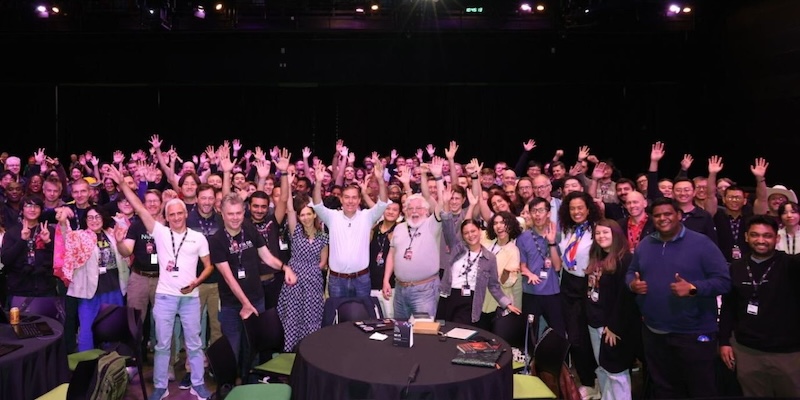
Day 2 shifted the technical focus toward foundational systems engineering and infrastructure reliability. A standout highlight of the second day was an interactive Ask Me Anything (AMA) session with James Hamilton, Amazon Distinguished Engineer and renowned authority on large-scale distributed systems and data center design. Hamilton’s sessions are traditionally regarded as masterclasses in systems architecture, offering rare insights into the physical and logical realities of running the world’s largest cloud infrastructure. Discussions spanned hardware resilience, network topology optimizations, latency reduction strategies, and the engineering disciplines necessary to maintain five-nines availability across global regions.
Subsequent afternoon tracks on Day 2 focused on cross-functional collaboration. AWS Heroes shared regional success stories, highlighting how localized developer communities in regions across Europe, Asia-Pacific, the Americas, and Africa are adapting AWS services to solve unique regional challenges, from regulatory data sovereignty compliance to low-bandwidth edge computing.
Technical Deep-Dive: AI, Serverless, and Containerization at Scale
The technical discourse at the 2026 summit reflected the broader macroeconomic and technological shifts dominating the software engineering landscape. Artificial intelligence, in particular, dominated hallway conversations and formal review sessions. As organizations race to operationalize generative AI, the engineering challenges have evolved from basic model experimentation to complex architectural integration, cost optimization, and inference latency reduction.
AWS product teams utilized the summit to gather feedback on emerging capabilities within Amazon Bedrock, SageMaker, and specialized silicon initiatives such as AWS Trainium and Inferentia. Heroes provided empirical data from their enterprise clients, illustrating the friction points encountered when scaling Retrieval-Augmented Generation (RAG) pipelines, managing vector database efficiencies, and securing sensitive proprietary training data within multi-tenant cloud environments.
Simultaneously, serverless computing received renewed analytical scrutiny. While serverless architectures have matured significantly over the past decade, practitioners continue to push the boundaries of cold-start latency mitigation, state management in distributed serverless functions, and cost predictability under unpredictable traffic surges. The collaborative sessions between AWS Lambda engineers and cloud architects resulted in actionable feature requests and architectural blueprints designed to streamline event-driven application development.
Containerization and microservices governance also remained a cornerstone of the technical agenda. With Amazon EKS and Amazon ECS serving as the underlying orchestration fabrics for mission-critical enterprise applications, discussions centered on zero-trust security postures, automated service meshes, and multi-region failover strategies. The exchange of best practices among global heroes highlighted diverse methodologies for maintaining compliance and operational visibility across sprawling, multi-cloud and hybrid environments.
Official Reactions and Attendee Feedback
The qualitative impact of the AWS Heroes Summit is perhaps best measured through the firsthand reflections of its participants. Throughout and immediately following the conclusion of the event, attendees took to professional platforms and technical networks, including LinkedIn, to share their experiences under the designated conference tags.

Consensus among the global delegation pointed to the unique value of direct, bi-directional communication channels with AWS leadership. Unlike large-scale public conventions such as AWS re:Invent—where scale often necessitates broad, generalized messaging—the summit provides an intimate environment where individual technical arguments can be thoroughly vetted by the architects who built the underlying services.
"The ability to sit across the table from the product managers and principal engineers building the future of cloud infrastructure is an unparalleled privilege," noted one participating AI and machine learning hero. "We are not just passive consumers of technology here; our feedback directly influences how features are prioritized, designed, and deployed to millions of developers worldwide."
Another attendee emphasized the cultural aspect of the gathering, noting that the diversity of perspectives—spanning startups, massive multinational enterprises, and open-source foundations—enriched the collaborative problem-solving process. By lifting each other up and sharing localized success patterns, the community reinforced a collective ethos of technical excellence and continuous learning.
Broader Industry Implications and Future Outlook
The outcomes of the 2026 AWS Heroes Summit carry significant implications for the broader enterprise technology ecosystem. As cloud computing transitions into its next developmental phase, the velocity of innovation is increasingly dictated by how effectively cloud providers can synthesize developer feedback into frictionless, secure, and economically viable services.
By anchoring their product development lifecycle in regular, structured consultations with vanguard practitioners, AWS maintains a competitive edge in developer mindshare and platform usability. The insights gathered during the summit regarding AI deployment friction, serverless optimization, and infrastructure resilience are expected to inform upcoming product roadmaps, service releases, and developer experience enhancements throughout the remainder of the year and into subsequent development cycles.
For software engineers, architects, and IT decision-makers outside the immediate circle of AWS Heroes, the residual benefits of the summit will manifest incrementally via upcoming service updates, technical whitepapers, and best-practice architectural frameworks published across official AWS communication channels. As the industry continues to navigate the complexities of digital transformation, secure AI integration, and cloud-native scaling, forums like the AWS Heroes Summit remain vital catalysts for progress, ensuring that the tools powering modern digital infrastructure are rigorously tested, thoughtfully engineered, and deeply aligned with the real-world needs of the global developer community.
