
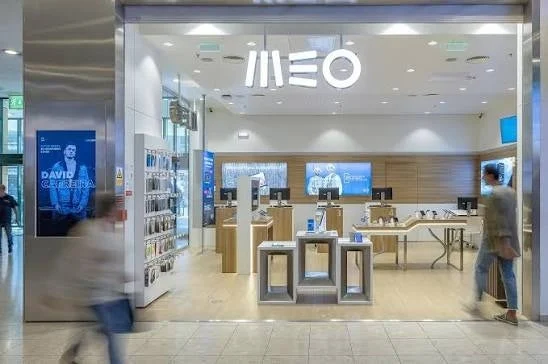

The telecommunications landscape in Portugal is undergoing a significant strategic transformation following a landmark agreement announced on September 23, 2026. Eutelsat, one of the world’s leading satellite operators, has officially secured a partnership with MEO, a premier telecommunications provider in Portugal and a subsidiary of the Altice Portugal group. Under this new accord, MEO will integrate Eutelsat’s advanced OneWeb Low-Earth Orbit (LEO) satellite services directly into its comprehensive enterprise and public-sector connectivity portfolios. This collaborative effort is designed to merge the robust speeds of terrestrial fiber-optic infrastructure and fifth-generation (5G) mobile networks with the ubiquitous, high-speed, and low-latency coverage of satellite communications.
The primary objective of this strategic alliance is to deliver highly resilient, fail-safe backup connectivity solutions tailored specifically for commercial enterprises, government agencies, municipal administrations, and critical infrastructure operators throughout the Portuguese territory. While the exact financial figures and monetary valuations of the contract remain undisclosed by mutual agreement, the industrial and strategic implications of the pact extend far beyond commercial metrics. By bridging the gap between terrestrial and space-based networks, the partnership aims to fortify Portugal’s national communications backbone against disruptions, natural disasters, cyber threats, and physical infrastructure failures.
Chronological Context and Longstanding Infrastructure Ties
The newly minted agreement between Eutelsat and MEO does not emerge in a vacuum; rather, it represents the culmination of a robust, multi-year industrial relationship built on mutual trust and technical collaboration. For several years, MEO has played a foundational role in supporting Eutelsat’s ground segment architecture. Historically, MEO facilities in Portugal have hosted critical gateway infrastructure for Eutelsat’s legacy Geostationary Earth Orbit (GEO) satellite fleet.
As the satellite industry shifted rapidly toward multi-orbit strategies—recognizing the distinct advantages of combining the wide-area coverage of GEO with the ultra-low latency and high-throughput capabilities of LEO—MEO seamlessly transitioned its infrastructure support. The Portuguese telecom giant adapted its facilities to host and support Eutelsat’s burgeoning OneWeb LEO constellation.
Throughout this technological evolution, technical teams from both organizations have worked in close proximity, coordinating meticulously to ensure absolute service continuity, rigorous cybersecurity protocols, and operational security across multiple installation sites. This extensive history of ground-station hosting laid the groundwork for the commercial service integration unveiled in September 2026, transforming a behind-the-scenes infrastructure partnership into a customer-facing, nationwide resilience solution.
Strategic Vision and Executive Perspectives
The modern telecommunications ecosystem faces unprecedented pressures, ranging from extreme weather events exacerbated by climate change to increasing instances of sophisticated digital and physical attacks on critical infrastructure. In response to these escalating vulnerabilities, network operators worldwide are moving away from single-point-of-failure architectures toward multi-layered, redundant communications models.
Ana Figueiredo, Chief Executive Officer of MEO, emphasized the philosophical and technical shift underpinning the partnership in an official corporate statement released alongside the announcement.
"A network’s resilience begins with its ability not to rely on a single technology," Figueiredo stated. "That is why we are combining the strength of our fiber and 5G networks with Eutelsat’s satellite connectivity, creating a multi-layered communications architecture that is more responsive in critical situations. This partnership enables us to bring this capability to businesses, public bodies, and organizations that cannot afford to stop, ensuring connectivity where it is most needed and when the continuity of communications is most critical. It is also a step towards building a European connectivity ecosystem that is more resilient, self-sufficient, and fit for the future."
From Eutelsat’s perspective, the agreement marks another vital milestone in the commercial expansion of its OneWeb LEO constellation across the European continent. Having completed the initial global deployment phases of its first-generation LEO network, Eutelsat has increasingly focused on securing tier-one telecommunications partners in key European markets. Partnering with a dominant regional player like MEO allows Eutelsat to bypass the friction of direct-to-enterprise retail deployment, leveraging MEO’s established sales channels, deep enterprise relationships, and trusted market position to distribute satellite-backed services at scale.
Technological Architecture: The Power of Multi-Orbit and Terrestrial Convergence
To fully comprehend the significance of the Eutelsat-MEO partnership, one must examine the underlying mechanics of network convergence. Traditional enterprise connectivity relies heavily on terrestrial setups, primarily fiber-optic cables and fixed-wireless or cellular architectures such as 4G and 5G. While fiber offers unmatched data throughput and low latency under normal operating conditions, it remains vulnerable to physical severance caused by construction accidents, landslides, severe storms, or maintenance errors. Similarly, cellular towers depend heavily on stable backhaul connections; if the underlying fiber line feeding a cell tower is severed, the mobile network in that region can experience severe degradation or total blackout.
By integrating Eutelsat’s OneWeb LEO services into its service offerings, MEO is effectively offering its clients an automated, seamless failover mechanism. In the event of a terrestrial outage affecting fiber or 5G backhaul, enterprise customer premises equipment (CPE) can instantaneously route critical data traffic over the OneWeb satellite constellation.
Because LEO satellites operate at altitudes of approximately 1,200 kilometers—vastly closer to the Earth than traditional GEO satellites orbiting at 35,786 kilometers—they achieve round-trip latencies of around 30 to 50 milliseconds. This low latency is vital for enterprise applications, enabling uninterrupted voice-over-IP (VoIP) communications, real-time financial transactions, cloud computing access, and video conferencing even when operating on satellite backup. Furthermore, OneWeb’s constellation provides global coverage, meaning that even remote industrial sites, offshore installations, or isolated rural municipalities situated far from primary fiber trunks can benefit from high-speed, reliable primary or secondary connectivity.
Broader Economic, Social, and Geopolitical Implications
The Eutelsat-MEO pact carries profound implications that extend beyond corporate balance sheets and technical specifications, touching upon regional economic competitiveness, public safety, and European technological sovereignty.
Securing Critical National Infrastructure
For public administrations, emergency response units, hospitals, and critical infrastructure operators—such as energy grids, water treatment facilities, and transportation hubs—a loss of communications can lead to catastrophic failures. In emergency scenarios where terrestrial networks are overwhelmed or physically destroyed, having a secondary, satellite-powered communication channel ensures that command-and-control operations can continue without interruption. The MEO-Eutelsat solution provides a bulletproof guarantee of uptime for entities where communication failure is simply not an option.
Advancing European Digital Autonomy
Ana Figueiredo’s reference to building a "European connectivity ecosystem that is more resilient, self-sufficient, and fit for the future" strikes at the heart of current European Union policy objectives. In an era marked by heightened geopolitical tensions and supply-chain vulnerabilities, European leaders have increasingly emphasized the necessity of technological sovereignty. Eutelsat—formed through the high-profile merger of France’s Eutelsat and Britain’s OneWeb—represents a premier European-backed response to the dominance of non-European mega-constellations. By embedding OneWeb services into national telecom infrastructure, operators like MEO are actively contributing to a sovereign European space and communications architecture that reduces reliance on foreign-controlled technologies.
Boosting Enterprise Digital Transformation in Portugal
For the broader Portuguese business community, the availability of multi-path resilient connectivity removes one of the primary hesitations surrounding full digital transformation: the fear of downtime. Small and medium-sized enterprises (SMEs) as well as large multinational corporations operating within Portugal can now deploy advanced cloud-native applications, Internet of Things (IoT) sensors, and automated manufacturing systems with the absolute assurance that their operations will remain online regardless of local terrestrial network conditions.
Market Analysis and Future Outlook
The telecommunications sector is currently witnessing a massive wave of consolidation and convergence between satellite and terrestrial players. Historically viewed as competing technologies, satellite and terrestrial networks are now widely recognized as complementary components of a unified global grid.
Telecommunications operators worldwide are rapidly adopting "network-of-networks" strategies. Mobile Network Operators (MNOs) and Fixed Network Operators (FNOs) realize that building out expensive fiber to every corner of a country is economically unfeasible, while enterprise customers demand 100% uptime guarantees that terrestrial networks alone cannot fulfill. Partnerships like the one between Eutelsat and MEO serve as the blueprint for future telecom business models.
Looking ahead, market analysts anticipate that MEO will begin rolling out bundled commercial packages combining its high-speed fiber and 5G offerings with Eutelsat OneWeb LEO backup solutions in the final quarter of 2026 and heading into 2027. The initial target market will likely focus heavily on high-availability enterprise accounts, banking institutions, government agencies, and utilities before scaling downward to broader commercial segments.
As the implementation progresses, industry observers will closely monitor the operational integration, customer adoption rates, and overall network performance metrics. If successful, the collaboration could serve as a benchmark for other European telecom operators seeking to future-proof their national infrastructures against an increasingly complex and unpredictable operational environment. Ultimately, the Eutelsat-MEO alliance underscores a fundamental truth of the modern digital age: true network resilience is no longer defined by the strength of a single pipe, but by the intelligent convergence of earth and sky.
