
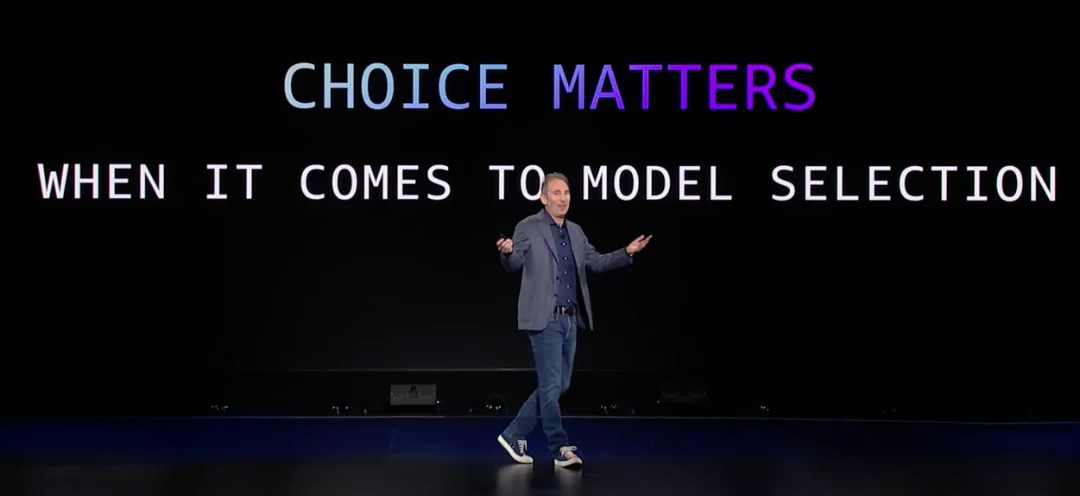

The enterprise cloud computing landscape is undergoing a fundamental shift away from monolithic artificial intelligence deployments toward a philosophy of granular optimization. Amazon Web Services (AWS) has underscored this transition by announcing the immediate availability of powerful new foundational models on Amazon Bedrock, including GPT-6 Sol and GPT-6 Luna from OpenAI, alongside Anthropic’s Claude Opus 5.5. This strategic expansion reflects a growing consensus among enterprise architects that the primary engineering challenge in modern AI deployment is no longer maximizing raw capability, but rather balancing intelligence, operational latency, and token economics across distinct tiers of workflow execution.
For the past several years, the commercial adoption of generative AI was characterized by a race toward maximum parameter scale. Organizations frequently relied on their largest, most computationally expensive frontier models for every enterprise use case, regardless of complexity. This one-size-fits-all approach introduced prohibitive cost structures and unnecessary latency, particularly for high-volume, repeatable business processes. The introduction of OpenAI’s GPT-6 Sol and GPT-6 Luna, paired with Anthropic’s Claude Opus 5.5 on Amazon Bedrock, provides developers with precision instruments tailored to specific operational thresholds. By diversifying the model portfolio available within a single managed cloud ecosystem, AWS is enabling organizations to construct multi-model pipelines where workloads are dynamically routed based on real-time cost-to-performance requirements.
Chronology of the Multi-Model Evolution on Cloud Platforms
The integration of these next-generation models represents the culmination of a rapid technological acceleration that has reshaped cloud architecture over the past twenty-four months. The timeline of enterprise AI deployment on AWS illustrates a deliberate progression from proprietary, single-vendor dependency to a modular, multi-model paradigm.
In the early phases of the generative AI boom, cloud providers focused heavily on establishing baseline access to foundational models, ensuring enterprise-grade security and data privacy within isolated virtual private clouds. As the technology matured throughout subsequent upgrade cycles, enterprise clients demanded greater flexibility and cost containment. The introduction of intermediate model tiers in late 2024 and 2025 demonstrated that smaller, highly optimized models could outperform earlier flagship generations on specific domain tasks while consuming a fraction of the computational power.
The arrival of the GPT-6 series and Claude Opus 5.5 marks the current chapter in this evolution. Rather than introducing isolated updates, these releases are engineered specifically for agentic workflows—complex, autonomous chains of execution where AI systems interact directly with enterprise APIs, databases, and continuous integration pipelines. As autonomous agents become central to software engineering and automated operations, the demand for low-latency, highly predictable reasoning engines has intensified. AWS has responded by ensuring these frontier architectures are natively supported within Amazon Bedrock, complete with fine-grained monitoring, robust data governance frameworks, and enterprise-grade observability tools.
Technical Breakdown of OpenAI GPT-6 Sol and Luna
The integration of OpenAI’s latest models introduces distinct performance profiles designed to optimize different segments of the enterprise workload spectrum.
GPT-6 Sol has been architected specifically for demanding, recurring responsibilities associated with software development and enterprise operations. In DevOps environments, where infrastructure-as-code scripts, continuous integration pipelines, and automated patch management require deep contextual reasoning and syntactic precision, Sol delivers high-fidelity output. Despite its advanced reasoning capabilities, OpenAI and AWS have priced GPT-6 Sol at a significantly lower cost point compared to its GPT-5.6 predecessors, reflecting efficiency gains in underlying model architecture and hardware acceleration.
Conversely, GPT-6 Luna addresses the requirement for high-volume, repeatable tasks where operational throughput and cost per token are paramount. Many enterprise applications—such as automated invoice parsing, large-scale document classification, and routine customer service routing—do not require the exhaustive reasoning depth of a flagship model. Luna is optimized to execute these repetitive steps rapidly and economically, allowing organizations to scale automated workflows without incurring exponential infrastructure costs. The coexistence of Sol and Luna on Amazon Bedrock grants developers the ability to switch between high-reasoning and high-throughput tiers seamlessly within the same application architecture.
Anthropic Claude Opus 5.5 and the Rise of Agentic Coding
Complementing the OpenAI offerings, Anthropic’s Claude Opus 5.5 enters the AWS ecosystem as the inaugural release of the Claude 5.5 family, bringing specialized enhancements for long-running autonomous tasks and agentic coding environments.
One of the persistent challenges in software development workflows utilizing generative AI has been token efficiency during extended coding sessions. As an AI agent analyzes large codebases, tracks dependencies, and writes multi-file patches, the context window grows rapidly, leading to increased latency and financial expense. Claude Opus 5.5 addresses this limitation by executing complex development tasks with significantly fewer tokens than its predecessor, Opus 5. This token-reduction efficiency translates directly into faster compilation feedback loops and reduced API expenditure.
Furthermore, Claude Opus 5.5 is specifically tuned for agentic reasoning—the capacity to maintain long-term goal alignment across multi-step programmatic workflows. In enterprise settings where AI systems are granted autonomy to refactor legacy codebases, execute unit tests, and diagnose runtime errors, stability across extended execution horizons is critical. By deploying Claude Opus 5.5 on Amazon Bedrock, developers gain access to Anthropic’s advanced safety guardrails combined with AWS’s enterprise infrastructure, ensuring that autonomous coding agents operate within strict compliance and security perimeters.
Economic Implications and Cost-Versus-Latency Curves
The primary driver behind the adoption of these new models is the optimization of the intelligence-versus-efficiency curve. In modern enterprise architecture, financial governance is as critical as functional capability. When cloud-native applications scale to millions of daily transactions, even marginal inefficiencies in model latency or token consumption compound into substantial operational expenditures.
Industry analysts note that the pricing structure of GPT-6 Sol, GPT-6 Luna, and Claude Opus 5.5 reflects a broader market maturation. As foundational model providers face intense competitive pressure, the economic value proposition has shifted from charging premium rates for general intelligence to offering specialized, cost-effective pricing tiers for domain-specific execution.

For AWS customers utilizing Amazon Bedrock, this architectural flexibility minimizes vendor lock-in and protects profit margins. An organization can design a system where customer inquiries are initially triaged by an efficient, low-cost model like GPT-6 Luna; escalated to GPT-6 Sol when advanced troubleshooting is required; and handed off to Claude Opus 5.5 when executing autonomous software updates or complex data synthesis. This multi-model orchestration ensures that financial resources are allocated efficiently, reserving high-cost computational power strictly for tasks that demand maximum cognitive depth.
Observability and Governance in Autonomous AI Environments
As enterprise reliance on multi-model architectures and autonomous agents accelerates, the secondary requirement for robust observability becomes paramount. Operating black-box AI models in production environments introduces significant operational risk if system failures, hallucinations, or unauthorized data access go undetected.
To address these concerns, the rollout of GPT-6 and Claude Opus 5.5 on Amazon Bedrock coincides with enhanced monitoring and telemetry capabilities. Enterprise engineering teams require real-time visibility into model latency, token utilization rates, error frequencies, and decision paths, particularly when managing multi-step agentic workflows. AWS has integrated these models into its comprehensive monitoring frameworks, allowing developers to trace agent executions, audit automated code modifications, and enforce strict data residency and security policies.
This emphasis on observability bridges the gap between experimental AI development and mission-critical enterprise production. By providing granular telemetry alongside diverse model choices, AWS ensures that organizations can maintain regulatory compliance, intellectual property protection, and operational predictability while deploying advanced generative systems at scale.
Broader Industry Impact and Future Outlook
The simultaneous introduction of OpenAI’s latest models and Anthropic’s Claude Opus 5.5 on a single hyperscale cloud platform signals a mature phase in the enterprise AI market. The era of exclusive partnerships and single-model reliance is receding, replaced by an ecosystem where choice, interoperability, and cost optimization dictate enterprise cloud strategy.
For developers and enterprise decision-makers, the immediate mandate is architectural redesign. To fully capitalize on the capabilities offered by GPT-6 Sol, GPT-6 Luna, and Claude Opus 5.5, organizations must transition away from monolithic AI integrations and embrace modular, multi-model pipelines. By matching the specific cognitive demands of a task to the most economically and operationally efficient model tier, businesses can achieve sustainable, high-performance AI deployment.
As AWS continues to expand its catalog of foundational models through Amazon Bedrock, the competitive landscape will increasingly favor platforms that offer seamless integration, uncompromising security, and the flexibility to adapt as artificial intelligence technology continues its rapid advancement.
