

The rapid proliferation of generative artificial intelligence has fundamentally altered the landscape of personal and professional productivity, yet this transition has introduced significant overheads in both capital and data security. As individual developers and enterprise users increasingly integrate AI into their daily workflows, the costs associated with cloud-based API usage have scaled exponentially. For frequent automation tasks, reliance on third-party providers like OpenAI or Anthropic can result in monthly expenditures ranging from $60 to several hundred dollars. Furthermore, the mandatory transmission of proprietary code, private files, and sensitive project metadata to external servers has raised critical concerns regarding data privacy and intellectual property leakage.
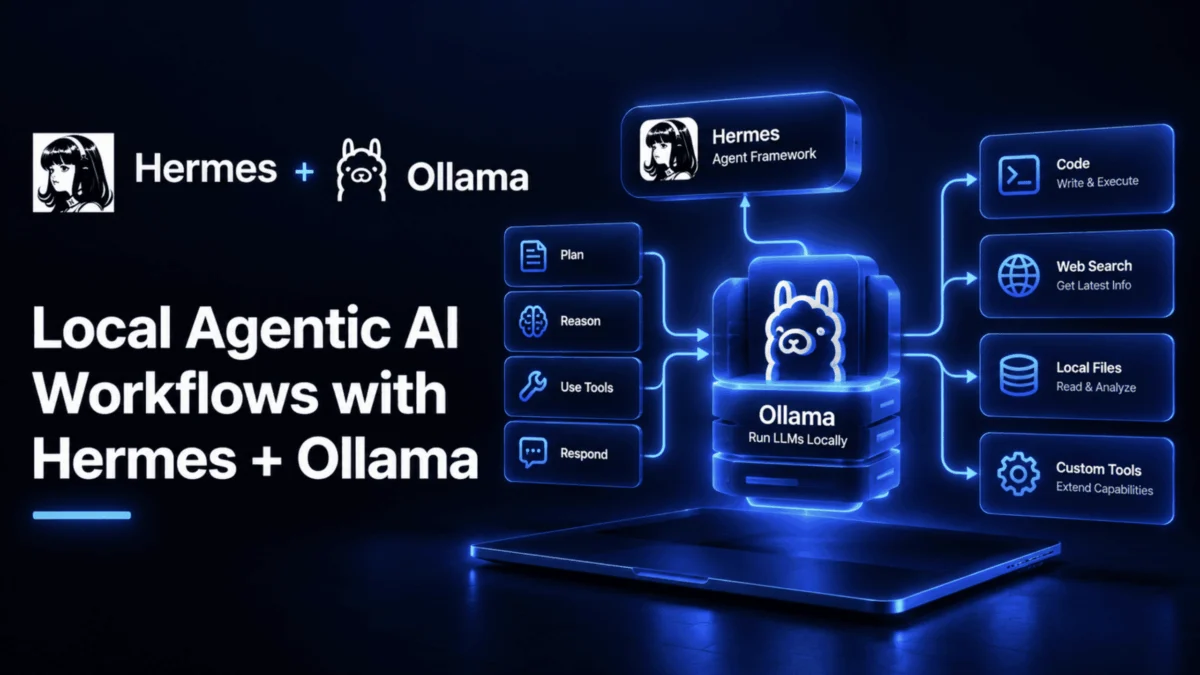
In response to these challenges, the emergence of local, open-source agentic frameworks provides a viable alternative. By leveraging the Nous Research Hermes Agent in tandem with the Ollama model-serving platform, users can construct a high-performance, autonomous AI ecosystem that functions entirely on local hardware. This architecture ensures that all processing, data retrieval, and logic execution occur within a secure, offline-compatible environment, effectively neutralizing both the financial burden of API subscriptions and the risks associated with cloud-based data hosting.
The Evolution of Localized AI Infrastructure
The shift toward localized agentic workflows is not merely a cost-saving measure; it represents a fundamental pivot in the computing paradigm. Historically, the heavy computational requirements of Large Language Models (LLMs) necessitated massive cloud infrastructure. However, the development of sophisticated model quantization techniques—processes that reduce the precision of a model’s weights to minimize memory usage without significantly sacrificing performance—has enabled robust AI deployment on consumer-grade hardware.
Nous Research, a prominent contributor to the open-source AI community, released the Hermes Agent to address the gap between static chatbot interfaces and dynamic, action-oriented systems. Unlike standard LLMs, which operate primarily through text generation, the Hermes Agent is designed for "agentic" behavior. This includes the ability to interpret complex user instructions, autonomously navigate file systems, execute terminal commands, and perform web searches. The software is currently distributed under the MIT license, facilitating its adoption across diverse development environments, including macOS, Windows, and Linux.
Technical Foundations: Hermes Agent and Ollama
The synergy between Hermes and Ollama is rooted in their complementary functional roles. Ollama serves as the backend engine, responsible for downloading, caching, and running open-weight models locally. By exposing an OpenAI-compatible API at the local endpoint of 11434, Ollama enables seamless integration with various front-end applications, including the Hermes Agent.
The Hermes Agent operates as the intelligence layer, orchestrating the interaction between the user, the model, and the host environment. A critical feature of this framework is its "persistent memory" system, which allows the agent to build a historical understanding of user preferences and project structures. This capability prevents the "cold start" problem inherent in many AI interactions, where the model lacks context regarding previous sessions. Furthermore, the platform’s sandboxing capabilities—supporting Docker, SSH, and local execution—allow users to isolate agent actions, ensuring that the model’s file-editing or command-execution functions do not inadvertently compromise the host system.
Hardware Requirements and Performance Benchmarks
The deployment of a local agentic workflow is contingent upon the user’s hardware specifications. Because the agentic process relies on tool-calling models, which are generally larger and more complex than standard chat models, the resource requirements are non-trivial.
For optimal performance, a system equipped with at least 32GB of RAM and a dedicated NVIDIA GPU with 8GB or more of VRAM is recommended. While CPU-only execution is technically feasible, the latency associated with model inference on a processor can significantly degrade the user experience. For instance, a 31B parameter model running on a modern 8-core CPU may achieve speeds of only 2 to 5 tokens per second. In contrast, leveraging GPU acceleration allows for significantly higher throughput, transforming the agent from a background utility into a responsive, interactive tool.
Strategic Implementation: A Step-by-Step Approach
The implementation process begins with the installation of the Ollama binary. Once initialized, the user must select a model that supports "tool calling." This is the most crucial step in the setup process, as many lightweight models are optimized for conversation rather than agency. Models such as the 31B parameter Gemma variants are currently the industry standard for this use case, as they possess the logical depth required to manage complex file operations and terminal interactions.
Once the model is pulled from the Ollama library, the user must configure the Hermes Agent to point to the local API endpoint. By editing the ~/.hermes/config.yaml file to define the custom provider and base URL, the user establishes a direct, private communication link between the agent and the model.
Expanding Functionality: Telegram Integration and Cloud Fallbacks
One of the most powerful features of the Hermes framework is its messaging gateway. By integrating the agent with platforms like Telegram, users can extend their local AI’s reach to mobile devices. This enables the agent to act as a remote assistant, providing the ability to query project status, summarize documentation, or execute commands from anywhere in the world, while the core intelligence remains securely housed on the user’s machine.
To address the limitations of local models, the system also supports a hybrid approach through "fallback providers." Users can configure their setup to prioritize local execution for 90% of tasks, while routing exceptionally complex or nuanced queries to a cloud-based provider like Anthropic’s Claude. This configuration maintains the privacy and zero-cost benefits of the local-first approach while ensuring that the agent does not fail when confronted with edge cases that exceed the capabilities of open-weight models.
Broader Implications for Privacy and Development
The widespread adoption of local agentic workflows has profound implications for software development and data security. For organizations handling sensitive intellectual property, the ability to train and run agents without exposing codebases to third-party providers offers a competitive advantage. Furthermore, the "zero-cost" nature of this setup democratizes access to advanced automation. Students, independent developers, and small businesses can now deploy sophisticated AI agents that were previously gated behind expensive, enterprise-level API costs.
However, the shift toward local AI also places a greater burden of responsibility on the user. Maintaining a secure environment, managing software updates, and monitoring hardware resource consumption are now integral components of the development lifecycle. As the technology matures, the industry is expected to see further refinements in model efficiency, which will likely lower the hardware barrier to entry, making local agentic AI a standard fixture in the modern digital toolkit.
Future Trajectory
As of the latest releases, the Hermes Agent continues to evolve with improved support for complex sub-agent delegation and advanced sandboxing techniques. The integration of these tools into standard development environments suggests a future where AI is not just a peripheral service, but a foundational layer of the operating system. By prioritizing local execution, the developer community is reclaiming control over the data lifecycle, ensuring that the next wave of AI productivity is built on a foundation of security, sustainability, and autonomy.
The transition from cloud-dependent AI to local, self-hosted agency is a critical development in the maturity of the AI sector. By combining the accessibility of the Ollama ecosystem with the sophisticated orchestration of the Hermes Agent, users can now build powerful, cost-effective, and deeply private workflows. This movement not only mitigates the risks of data leakage and rising operational costs but also underscores a broader, necessary evolution toward more resilient and user-centric computing architectures.
