

The landscape of modern product development has undergone a fundamental transformation, driven by the convergence of software-defined functionality, heterogeneous integration, and stringent safety requirements. As systems grow in complexity, the traditional verification model—long treated as a downstream, reactive activity occurring after design decisions are locked—has reached a point of systemic failure. In contemporary engineering organizations, verification is no longer a localized checklist of regressions and coverage reports; it is an evolving, lifecycle-spanning discipline that requires a shift toward "verification threading." This approach seeks to connect intent, execution, and outcomes into a cohesive digital fabric, ensuring that as products scale, the ability to explain, justify, and reuse verification evidence scales with them.
The Historical Context of Verification Bottlenecks
For decades, the semiconductor and systems engineering industries managed complexity by augmenting their verification infrastructure with more compute power, additional specialized engines, and broader automation suites. While these tools were essential, they inadvertently exacerbated the "data silo" problem. Engineering teams began generating massive volumes of logs, waveforms, and metrics that lacked common context. By the early 2020s, many firms reported that while their capacity to run tests had increased by an order of magnitude, their ability to gain actionable insight had plateaued.
The industry’s reliance on "islands of data" was exacerbated by the shift toward collaborative development. As design teams moved from monolithic, single-site operations to distributed, multi-geographic, and multi-disciplinary teams, the tacit knowledge—the "human glue" that once held disconnected verification workflows together—began to evaporate. Without a formal, digital mechanism to bridge these gaps, organizations faced a growing crisis of confidence at the point of signoff.
The Mechanics of the Verification Thread
A verification thread is defined as a structured, digital linkage between requirements, parameters, verification activities, configurations, and results across the entire product lifecycle. Unlike conventional traceability, which is often implemented as a static, document-heavy process designed primarily for regulatory audits, the verification thread acts as an active engineering asset.
In this model, verification artifacts are elevated from simple reports of completed work to reusable engineering evidence objects. Each event within the thread captures not just a binary "pass" or "fail" result, but the comprehensive context of the test: the requirement being addressed, the specific configuration of the hardware or software, the environment constraints, and the embedded assumptions. By capturing this metadata, the organization creates a queryable "knowledge graph" that allows engineers to perform impact analysis in seconds rather than days.
Supporting Data and Industry Trends

Current industry metrics underscore the urgency of this transition. Data from recent engineering productivity surveys suggests that up to 30% of a verification engineer’s time is spent on "reconstruction"—the manual process of interpreting disparate data sets to determine why a test failed or whether a previous verification result remains valid for a new product iteration.
Furthermore, as the industry moves toward AI-enabled and safety-critical applications, the cost of "late-stage ambiguity" has surged. According to recent semiconductor market analysis, the cost of a late-stage design error or a verification gap discovered just prior to tapeout can exceed $10 million in wasted mask costs and months of schedule slippage. By implementing verification threading, organizations have demonstrated the potential to reduce these discovery-to-resolution cycles by as much as 40%, as the linkage allows teams to pinpoint whether an issue stems from a design defect, an environmental mismatch, or an incomplete requirement.
Cross-Domain Integration: The Multi-Layer Challenge
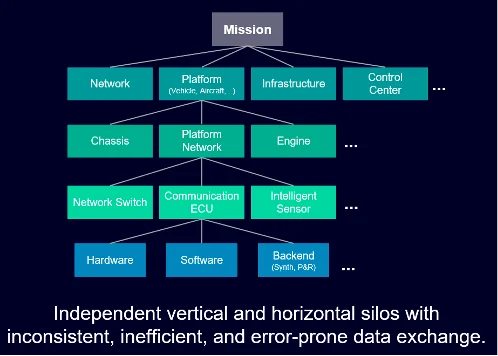
The most significant hurdle in establishing a robust verification thread is the cross-domain nature of modern systems. A single system requirement may originate in a high-level software specification, be refined through system-level modeling, implemented in hardware RTL, and ultimately validated through a mix of simulation, emulation, and physical prototyping.
If these domains function as independent silos, the "thread" is broken at every handoff. Industry leaders are now advocating for a normalized semantic layer—a common language that allows hardware verification, software validation, and safety analysis tools to communicate within the same framework. This normalization ensures that a requirement defined in a system-level document can be directly mapped to the specific hardware assertion or software test case that confirms its implementation. Without this shared semantics, traceability remains a fragile, manual endeavor prone to human error and interpretation debates.
The Impact on Signoff and Organizational Readiness
The traditional signoff process, often described as a high-pressure, late-stage reconciliation exercise, is inherently ill-suited for the pace of modern development. When stakeholders meet to sign off on a project, they are often reviewing a fragmented collection of slide decks and summary reports.
Verification threading changes the value proposition of the signoff meeting. By providing a continuously updated, linked view of verification status, signoff transitions from a "guess-and-check" activity into a data-driven review. Managers and architects can evaluate verification readiness in real-time, observing exactly which requirements are fully covered, which are partially addressed, and where gaps exist. This visibility fosters a higher degree of confidence, allowing teams to make informed decisions about risk mitigation long before the final deadline.
Implications for Engineering Disciplines

The implementation of a verification thread requires a shift in engineering culture. It demands that requirements be decomposed into verifiable, atomic expectations. It necessitates that parameters are defined explicitly rather than implicitly. While this imposes a higher initial burden of rigor, the return on investment is found in the resilience of the engineering process.
When a design configuration shifts or a core IP block is reused in a new context, the thread provides an immediate map of what needs to be re-verified and what remains valid. This capability is increasingly critical for platform-based development, where companies build multiple products from a single, shared architecture. In such an environment, the ability to reuse evidence is not just a productivity gain; it is a fundamental requirement for business viability.
Expert Perspective: Bridging the Gap
Mike Andrews, a technical product manager at Siemens EDA, emphasizes that this transition is a matter of building durable engineering infrastructure. "The semiconductor industry has invested heavily in generating verification data," Andrews noted. "The next frontier is making that data durable, connected, and reusable as engineering knowledge."
According to Siemens and other industry stakeholders, the goal of modern tooling—such as the Questa One VeriThreader—is to provide the mechanism for this connectivity. However, the technology serves only as the foundation; the actual discipline of the thread must be adopted by the engineering teams themselves. By moving away from "tool-centric" thinking and toward a "thread-centric" culture, organizations can ensure that they are not merely accumulating data, but building a foundation of truth that can withstand the complexities of future system design.
Conclusion: The Future of Verification
As products become increasingly adaptive and integrated, the traditional, fragmented approach to verification will become an unsustainable liability. The move toward verification threading is, at its core, a move toward transparency and repeatability. By treating verification as a cohesive, lifecycle-long activity, companies can ensure that their verification efforts remain meaningful, regardless of how complex the underlying system becomes.
For organizations currently struggling with the manual labor of traceability, the path forward involves a twofold commitment: the adoption of systems that enable cross-domain semantic linkage and a dedication to the discipline of structured intent. In an era where product success is increasingly defined by the ability to manage complexity, the verification thread will likely become the definitive metric of a successful engineering organization. Those who adopt this approach will gain a significant competitive advantage, moving from a reactive, evidence-gathering mode to a proactive, evidence-based development cycle.
