

The margin for success in enterprise artificial intelligence projects remains decidedly narrow, presenting organizations with a high-stakes operational landscape where missteps can erode value rather than enhance productivity. While technology headlines continue to be dominated by sensational accounts of rogue autonomous agents and speculative sci-fi scenarios, a quieter, more disciplined revolution is taking shape within the corporate sector. Forward-thinking enterprise software vendors are steering away from chaotic automation and toward a structured, accountable paradigm. A prime example of this pragmatic approach is Workday, which has championed the deployment of what it designates as "lawful" agents—systems designed within strict compliance, governance, and auditability frameworks tailored to the exacting demands of enterprise customers.
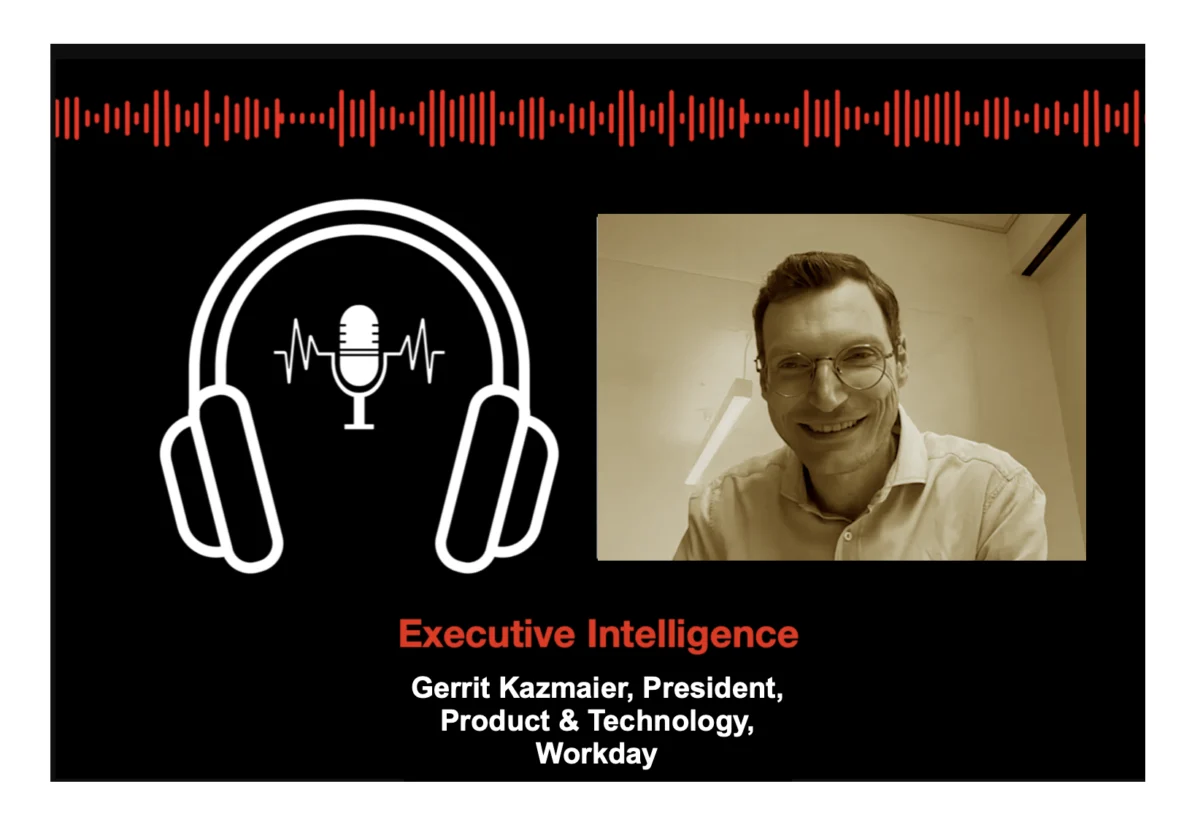
Despite the accelerating pace of technological innovation, market readiness is far from uniform. Many organizations find themselves grappling with the complexities of digital transformation, hesitant to fully embrace agentic workflows due to concerns surrounding data privacy, security, and algorithmic accuracy. To gain a candid perspective on how enterprise software providers are overcoming these hurdles, industry analysts have closely examined the strategies driving real-world traction. Central to this inquiry are the insights shared by Gerrit Kazmaier, President of Product and Technology at Workday, who recently outlined the delicate balance between technological capability and customer adoption on a leading enterprise technology podcast.
The Evolution of Agentic AI and the Imperative of Internal Reinvention
Achieving meaningful traction with enterprise AI is not merely a matter of plugging advanced machine learning models into existing software architectures; it requires a fundamental overhaul of corporate culture, operating procedures, and institutional mindset. According to Kazmaier, Workday’s ability to deliver external momentum with agentic AI was predicated on undergoing significant internal transformation first.
When organizations attempt to implement transformative technologies—defined as non-incremental, structural shifts—they frequently encounter friction rooted in legacy habits. For Workday, realizing the potential of agentic AI necessitated reconnecting with a startup mindset. This philosophical pivot required the company to transcend the constraints of its existing organizational structures and legacy product lines, returning to the foundational ideal of solving large, complex problems unburdened by historical limitations.
This internal realignment extended far beyond product development, touching every facet of corporate operations. Procedures and workflows that were misaligned with the speed and agility required for the AI era had to be systematically evaluated, replaced, or sunsetted. Industry analysts note that this pattern is becoming increasingly common among top-tier enterprise technology firms. Companies that fail to adapt their internal machinery often find that deploying advanced AI tools merely automates inefficient legacy processes, compounding errors at scale rather than driving efficiency.
Rationalizing the Agent Ecosystem: Quality Over Quantity
One of the most notable lessons emerging from the current wave of enterprise AI adoption is the necessity of rationalizing product portfolios. In the early phases of the generative AI boom, many software vendors engaged in a race for feature supremacy, flooding the market with an overwhelming explosion of discrete capabilities and specialized agents. The prevailing logic assumed that more options equated to greater value, leaving enterprise customers to shoulder the arduous burden of sorting through disparate tools and figuring out how to orchestrate them cohesively.
Workday’s recent trajectory highlights a strategic pivot away from this fragmented model and toward a consolidated platform strategy. By engaging in deep, consultative dialogues with enterprise buyers, the company sought to understand the friction points hindering natural adoption. Customers consistently reported that managing an uncoordinated proliferation of single-purpose agents created operational silos and administrative fatigue.
In response, Workday pared down the sheer volume of agents it offered, focusing instead on delivering an integrated, design-centric user experience. This strategy aligns with broader enterprise software trends, where buyers increasingly demand unified ecosystems capable of orchestrating complex, multi-step business workflows seamlessly. Rather than forcing organizations to act as system integrators for a constellation of isolated AI tools, successful vendors are building cohesive platforms where lawful agents operate collaboratively within established business logic.
The Chronology of Enterprise AI Integration: From Hype to Governance
The journey of enterprise AI adoption has evolved rapidly over the past several years, shifting through distinct phases of experimentation, disillusionment, and pragmatic implementation.
Phase 1: The Speculative Boom (2022–2023)
Following the widespread public release of advanced generative pre-trained transformers, the enterprise software market experienced an immediate surge of interest. Organizations rushed to experiment with standalone chatbots and experimental AI applications. However, these early deployments were frequently characterized by a lack of governance, leading to well-documented issues regarding hallucination, data leakage, and compliance vulnerabilities.
Phase 2: The Governance Reckoning (2023–2024)
As enterprise buyers evaluated the return on investment from early trials, the limitations of unstructured, rogue-agent models became starkly apparent. Corporations realized that deploying consumer-grade AI tools within mission-critical human resources and financial systems introduced unacceptable levels of risk. This realization spurred demand for "lawful" agents—systems engineered with transparent audit trails, deterministic guardrails, and strict adherence to corporate security protocols.
Phase 3: Operational Integration and Platform Consolidation (2024–Present)
Entering the current period, the focus has shifted entirely toward operational integration. Vendors and enterprise buyers alike recognize that AI functions primarily as an amplifier of human capability and organizational process. If deployed within a well-structured, human-in-the-loop framework, AI enhances productivity and strategic decision-making. Conversely, when superimposed onto broken or legacy workflows, it serves to magnify inefficiencies and accelerate operational failure.
Overcoming Cultural Resistance and the Human Element in AI Deployment
A recurring theme in the discourse surrounding enterprise AI is that technology alone cannot guarantee success; organizations are fundamentally social systems composed of people. The introduction of autonomous agents and intelligent automation inevitably triggers cultural anxieties, ranging from fear of displacement to skepticism regarding algorithmic reliability.
Addressing these human dimensions requires deliberate change management. Industry leaders emphasize that bridging the gap between an organization’s past practices and its technologically driven future demands transparent communication and active alignment. When employees understand how AI tools augment their daily responsibilities rather than threaten their positions, resistance diminishes, and adoption rates accelerate.
Furthermore, vendors bear a significant responsibility in fostering this trust. To earn the confidence of enterprise buyers, software providers must ensure absolute data privacy, rigorous compliance with regulatory frameworks such as the European Union Artificial Intelligence Act, and verifiable auditability. Enterprise customers cannot afford black-box solutions where accountability is obscured; they require clear mechanisms to trace how decisions were formulated and executed by automated agents.
Broader Market Implications and Analytical Outlook
The strategic choices made by major enterprise resource planning (ERP) and human capital management (HCM) providers like Workday carry profound implications for the broader technology sector. As the market matures, several key trends are likely to define the next phase of enterprise AI evolution:
- The Death of Feature Bloat: Vendors that continue to market disparate, uncoordinated AI features will likely face diminishing returns. Enterprise buyers are pivoting toward platform-level cohesion, favoring integrated solutions that streamline complex business processes over superficial add-ons.
- Heightened Regulatory Scrutiny: With the implementation of comprehensive global AI regulations, the demand for "lawful" agents with robust audit trails will transition from a competitive differentiator to a mandatory baseline requirement for market entry.
- Redefining Productivity Metrics: The conversation surrounding enterprise AI is shifting away from simple cost-reduction models toward qualitative improvements in decision-making speed, employee engagement, and operational resilience.
- The Centrality of Change Management: Service providers and consulting firms specializing in organizational transformation will experience heightened demand as companies realize that technical deployment is only half the battle.
In conclusion, the narrow margin for success in enterprise AI projects demands a departure from sensationalized automation and a embrace of disciplined, human-centric engineering. By prioritizing lawful agents, rationalizing product ecosystems, and addressing the complex social dynamics of organizational change, vendors like Workday are charting a sustainable course forward. For the broader enterprise landscape, the lesson is clear: sustainable value is not realized by forcing advanced technology onto legacy foundations, but by harmonizing innovation with governance, trust, and organizational alignment.
