


Bitcoin’s institutional investment vehicle has reached a significant milestone, marking nine consecutive days of net inflows as investor confidence demonstrates resilience in the face of a complex macroeconomic landscape. According to latest data, U.S. spot Bitcoin exchange-traded funds (ETFs) recorded $66.19 million in net inflows on Tuesday alone. This sustained accumulation phase has propelled the cryptocurrency to trade near the $84,400 mark, reflecting a roughly 1% gain on the day and a decisive recovery from the volatility observed at the start of the week.
The current accumulation streak, which commenced on September 17, has cumulatively attracted approximately $3.08 billion in capital. This performance eclipses the nine-day inflow streak observed in August—a period widely credited by analysts with signaling Bitcoin’s exit from a prolonged bear market—which totaled $3.04 billion. While the numerical difference of $33 million is marginal, the consistency of the current trend highlights a shifting appetite among institutional and retail investors alike, who appear to be treating the asset as a core component of diversified portfolios despite ongoing interest rate pressures.
The Mechanics of Institutional Exposure
Bitcoin ETFs have fundamentally altered the market structure for digital assets. By providing a regulated gateway that allows investors to gain exposure to Bitcoin’s price performance without the technical requirements of managing private keys or navigating traditional cryptocurrency exchanges, these funds have bridged the gap between legacy finance and decentralized assets.
For institutional allocators, the ETFs trade with the same liquidity and oversight as traditional equities on brokerage platforms. Because these funds must purchase the underlying asset to back their shares, the net inflow and outflow figures serve as a real-time barometer for market sentiment. A consistent trend of inflows typically indicates that institutional participants are viewing the current price levels as an attractive entry point, effectively creating a "floor" for the asset’s valuation.
Chronology of the September Market Shift
The resilience of the current inflow streak is particularly notable given the challenging macroeconomic environment that characterized the mid-September period. On September 16, the Federal Reserve executed a 25-basis-point interest rate hike, elevating the federal funds rate to a range of 3.75% to 4%. This move, which had been anticipated by nearly 93% of market participants, initially sent shockwaves through risk-sensitive assets.
The immediate reaction was a sharp contraction in digital asset pricing. Bitcoin plummeted toward the $75,000 level, while ETFs recorded a significant liquidity drain, shedding roughly $746 million over a turbulent two-day window. However, the sentiment reversal was almost instantaneous. By September 17, the tide had turned, with $159.5 million in net inflows entering the ecosystem. Within 48 hours of this pivot, Bitcoin regained the $80,000 threshold, signaling that the "cheap money" era’s conclusion was already priced into the market.

The subsequent capital surge was aggressive. On September 21, the sector saw $999 million in a single day, culminating in a historic weekly inflow of $2.4 billion for the week ending September 25. This performance represents the most robust weekly gain since October 2025, effectively pushing the net flows for the calendar year 2026 into positive territory after a period of net redemptions.
Macroeconomic Context and Treasury Policy
The broader financial backdrop remains intricate. Bitcoin’s current market trajectory cannot be decoupled from the actions of the U.S. Treasury. A pivotal moment in the 2026 recovery occurred on August 19, when the Treasury Department announced a strategic decision to double its longer-dated bond buybacks to a minimum of $4 billion per operation. This injection of liquidity into the bond market helped soothe volatility, allowing risk assets to find a footing.
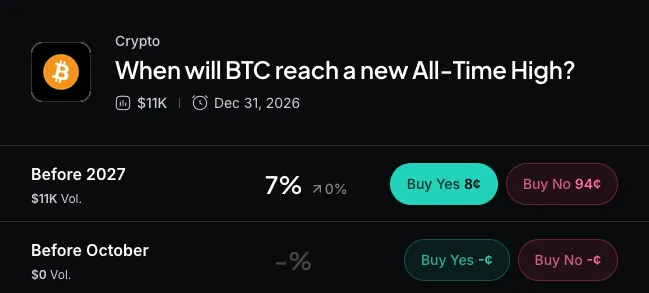
Bitcoin reached $69,000 on the day of that announcement, marking its first significant rally after two months of downward pressure. Despite this progress, the asset remains approximately 33% below its all-time high of $126,296, set in October 2025. This delta underscores the long road to recovery while highlighting that the current price action is supported by a more stable foundation of institutional demand than previous rallies.
Comparative Performance and Future Benchmarks
Market observers are now comparing the current nine-day streak against the historical record set in June 2025, when Bitcoin ETFs experienced 13 consecutive days of net inflows. For the current momentum to match that record, the funds would need to sustain net positive inflows through Monday, October 5.
Analysts note that while the current streak is impressive, it is functioning under different conditions than those of mid-2025. The regulatory environment has matured, and the investor base has become more diversified, including pension funds and wealth management firms that were previously hesitant to allocate to the space.
Implications for Market Stability
The reliance on ETF data as a primary indicator of market health suggests that Bitcoin is increasingly tethered to the health of the traditional financial system. When ETFs see net inflows, it indicates that the "wall of worry"—the collection of fears regarding inflation, central bank policy, and regulatory scrutiny—is being surmounted by long-term capital deployment.
Conversely, the potential for a sudden shift in these flows remains a key risk factor. As interest rates remain elevated at 3.75%–4%, the opportunity cost of holding non-yielding assets like Bitcoin remains a point of contention for some investors. However, the recent behavior of the market suggests that a significant cohort of institutional investors views Bitcoin as a hedge against the long-term devaluation of fiat currency rather than merely a speculative instrument.
Expert Perspectives on Institutional Adoption
While specific firm-level commentary on the latest daily flows is often restricted, the broader sentiment among institutional research desks is one of cautious optimism. Many analysts point out that the ETFs have successfully democratized access to the asset class, allowing for a "smoothing" of volatility that was previously impossible in a retail-dominated market.
"The consistency we are seeing in the inflows is not just a reaction to price," noted one market analyst familiar with digital asset flows. "It is a reflection of a structural change in how portfolios are being constructed. Investors are no longer asking ‘if’ they should have exposure to Bitcoin, but ‘how much’ they should have."
Outlook for the Quarter
As the market enters the final quarter of 2026, the primary focus will remain on the interplay between the Federal Reserve’s interest rate policy and the sustained demand for Bitcoin ETFs. Should the current streak of inflows extend past the 13-day benchmark of June 2025, it would serve as a powerful signal that the market has entered a new phase of maturity.
While the path to reclaiming the record high of $126,296 remains steep, the current foundation of $3.08 billion in recent inflows provides the necessary liquidity to absorb potential sell-side pressure. Investors and analysts alike will continue to monitor the daily inflow reports as a primary indicator of whether the current "grind higher" is a sustainable trend or a temporary relief rally.
For now, the data suggests that institutional buyers are not yet satisfied, continuing to utilize the ETF structure to accumulate Bitcoin during what remains a challenging, yet historically significant, period for the global financial markets. The interplay between these financial vehicles and the underlying asset price will continue to define the narrative for the remainder of the year.
