
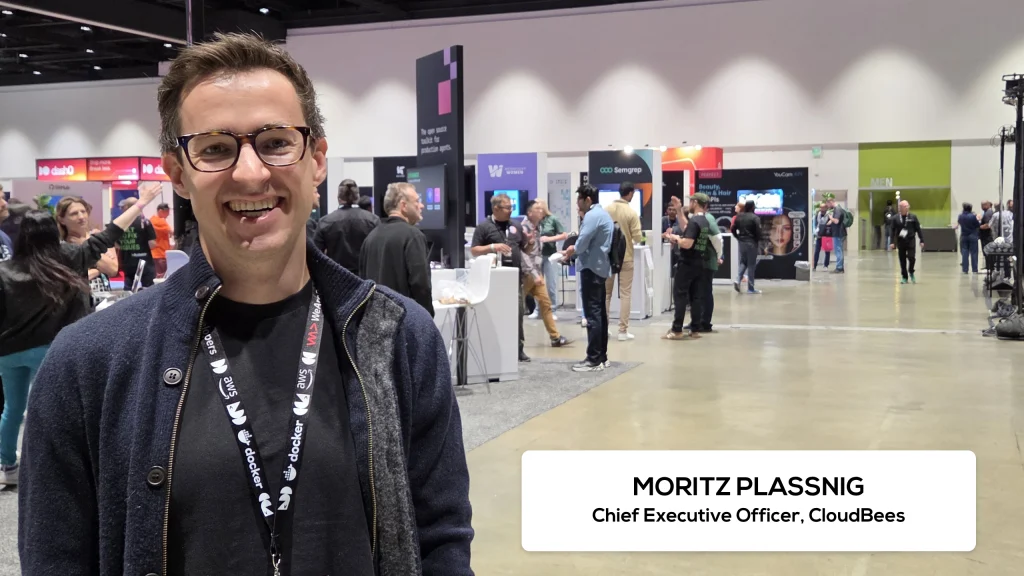

When Moritz “Mo” Plassnig assumed the chief executive officer role at CloudBees earlier this year, his marching orders from the board of directors were unambiguous and uncompromising: abandon the status quo. In an era where generative artificial intelligence is fundamentally rewriting the paradigms of software development, deployment, and lifecycle management, maintaining business-as-usual operations for an enterprise continuous integration and continuous delivery (CI/CD) titan would be a fast track to obsolescence.
The software industry stands at a critical juncture. The proliferation of AI-assisted coding assistants—ranging from GitHub Copilot to autonomous coding agents—has exponentially accelerated code generation. While social media channels frequently buzz with hyperbolic claims about autonomous algorithms completely replacing human software engineers, enterprise leaders confront a far more nuanced and pressing operational crisis. Specifically, organizations are currently grappling with the sheer volume of code pouring out of AI models and the daunting task of securely managing, testing, and deploying these digital assets at scale.
Speaking at the WeAreDevelopers Conference in San Jose, California, Plassnig detailed his strategic vision for steering CloudBees through its most profound operational pivot to date. His objective is to transform the enterprise software stalwart into an AI-first organization capable of helping global enterprises navigate a marketplace flooded with machine-generated code.
A Homecoming Rooted in DevOps Evolution and AI Inspiration
Plassnig’s journey back to the helm of CloudBees is marked by a deep history in the DevOps ecosystem. Eight years ago, he first entered the CloudBees fold when the enterprise acquired CodeShip, the CI/CD startup he co-founded. Following the acquisition, Plassnig spent several years spearheading product development within CloudBees before eventually stepping away to explore opportunities in the cybersecurity sector. During that hiatus, his attention drifted away from traditional pipeline automation.
However, the rapid commercialization and maturation of generative AI served as a catalyst for his return. The technological breakthrough reignited his professional passions, convincing him that the domain of continuous delivery was entering a transformative renaissance.
"I didn’t think much about DevOps or CI/CD for several years," Plassnig noted during his conference appearance. "However, when generative AI emerged, it reignited my passion. I became extremely excited about what we could achieve in our domain, which ultimately brought me back to CloudBees."
This renewed enthusiasm is anchored in a pragmatic assessment of industry trends. The primary bottleneck in software engineering has shifted. Historically, teams struggled to write code quickly enough to meet market demands. Today, thanks to generative AI, writing code is frictionless and fast. The new bottleneck is governance, security, validation, and integration—precisely the domains where CloudBees and its flagship open-source Jenkins automation server have established their market dominance over the past decade.
The Enterprise Reality Versus Conference Hype
During his initial months as CEO, Plassnig embarked on an extensive listening tour, meeting directly with executives across Fortune 500 companies, large public-sector institutions, and global enterprises. These conversations revealed a stark dichotomy between the theoretical capabilities touted at technology conferences and the pragmatic, methodical execution required inside heavily regulated corporate environments.
"What they are doing on the ground differs significantly from conference hype or public commentary on social media," Plassnig explained. "While everyone recognizes that agentic coding represents the future, adopting these technologies within large enterprises requires extensive, hard work. It isn’t strictly a technology problem; it demands process transformation, governance, and stringent security."
Enterprise IT leaders cannot simply plug AI models into their existing developer workflows without careful oversight. Introducing unverified, machine-generated code into mission-critical pipelines introduces acute security vulnerabilities, compliance risks, and technical debt. Consequently, global organizations are demanding robust governance frameworks that can automatically vet, scan, test, and deploy AI-generated artifacts without slowing down developer velocity. This market demand forms the foundation of Plassnig’s new strategic roadmap for CloudBees.
Chronology of Change: From Automation Pioneer to AI-First Governance
To understand the weight of Plassnig’s mandate, it is helpful to examine the historical trajectory of CloudBees and the broader CI/CD market. Founded in 2010 by former Sun Microsystems executive Sacha Labourey and Kohsuke Kawaguchi, the creator of Jenkins, CloudBees positioned itself as the commercial champion of open-source automation. Over the next decade, the company evolved from a platform-as-a-service provider into the dominant enterprise provider for Jenkins-based continuous integration and delivery.
Timeline of Key Milestones:
- 2010: CloudBees is founded to provide enterprise-grade support and tools for the Jenkins automation server.
- 2018: CloudBees acquires CodeShip, bringing co-founder Mo Plassnig into the executive ranks to bolster its cloud-native CI/CD capabilities.
- 2020–2023: The company expands its portfolio to encompass software delivery management (SDM), value stream management (VSM), and advanced security compliance.
- Early 2024: Mo Plassnig returns to CloudBees as CEO, tasked by the board of directors with overhauling the company’s strategy to address the generative AI boom.
- Mid 2024: Plassnig outlines the company’s new AI-first operational framework at the WeAreDevelopers Conference in San Jose.
Industry Data and Market Dynamics
The urgency driving Plassnig’s strategy is validated by broader industry analytics. According to recent market research from enterprise intelligence firms, the global adoption of generative AI coding tools has surpassed 75% among professional software developers. Organizations report productivity gains ranging from 20% to 55% in initial code drafting tasks.
However, this productivity surge has created secondary systemic challenges:
- Volume Overload: Codebases are expanding at unprecedented rates, overwhelming traditional peer-review processes.
- Security Vulnerabilities: Studies indicate that code generated by LLMs can occasionally introduce insecure coding patterns or outdated libraries if not properly constrained.
- Pipeline Bottlenecks: Legacy CI/CD pipelines, designed for human-paced commit cycles, struggle to process the sheer frequency of automated pull requests and builds.
As a result, enterprise technology budgets are rapidly shifting away from raw code generation tools toward software supply chain security, automated testing, and governance platforms. CloudBees is strategically repositioning itself to capture this enterprise expenditure.
Broader Implications for Software Engineering and DevOps
The pivot underway at CloudBees reflects a broader macroeconomic and architectural shift across the enterprise software landscape. As artificial intelligence transitions from an experimental novelty to a foundational layer of software engineering, the entire DevOps toolchain must adapt.
For years, the DevOps movement focused on bridging the gap between development and operations teams through automation, continuous integration, and rapid feedback loops. The advent of agentic coding—where AI systems can autonomously plan, write, test, and refactor multi-file codebases—requires a new evolutionary step: AI-native governance.
Industry analysts suggest that companies providing CI/CD infrastructure will no longer be judged solely on their ability to compile code quickly or manage server clusters. Instead, enterprise buyers will evaluate vendors based on their capacity to act as intelligent gatekeepers. Platforms must automatically verify compliance, enforce security policies, detect hallucinations in machine-generated code, and optimize resource consumption across hybrid cloud environments.
For Plassnig and CloudBees, successfully executing this transformation means bridging the gap between the agile, fast-moving world of modern AI startups and the rigid, security-conscious requirements of global financial institutions, healthcare providers, and government agencies.
As the software industry absorbs the shockwaves of generative AI, the mandate handed to Plassnig serves as a bellwether for established enterprise tech companies everywhere. In a marketplace where the velocity of code creation has multiplied exponentially, standing still is no longer an option. CloudBees is betting its future that the ultimate winners of the AI revolution will not be those who merely write the code, but those who can safely, reliably, and intelligently deliver it to production.
