

The landscape of software development and infrastructure monitoring is undergoing a fundamental transformation as organizations increasingly adopt autonomous systems and non-deterministic agentic workflows. Addressing the acute monitoring and debugging deficits inherent to these advanced technologies, Amazon Web Services (AWS) has officially announced the general availability of Amazon CloudWatch Omni. Designed as a purpose-built observability, evaluation, and experimentation solution, CloudWatch Omni seeks to bridge the chasm between traditional application performance monitoring (APM) and the dynamic, highly unpredictable nature of artificial intelligence agents.
The release comes at a critical juncture for enterprise technology. As businesses race to integrate generative AI and complex multi-step AI agents into their production environments, traditional monitoring tools—historically built around predictable request-response cycles and static infrastructure metrics—have proven inadequate. CloudWatch Omni attempts to solve this industry-wide challenge by delivering an app-centric, AI-powered, open-standards-based observability platform that operates seamlessly across diverse model providers, frameworks, and runtimes.
The Agentic Observability Crisis
To understand the necessity of CloudWatch Omni, industry analysts point to the unique engineering hurdles introduced by generative AI. Unlike classical software code, which executes deterministically based on explicit logic trees, AI agents operate through probabilistic decision-making. A minor modification to a prompt can precipitate a dramatic degradation in response quality, even while standard CPU, memory, and error-rate metrics register zero anomalies.

Historically, engineering teams have been forced to spend countless hours manually parsing fragmented logs across disparate systems to diagnose these failures. Existing third-party solutions have typically required developers to endure constant context-switching, moving back and forth between localized coding environments and separate browser-based telemetry dashboards. This friction has historically slowed development velocity and complicated the root-cause analysis of production regressions.
CloudWatch Omni directly targets these workflow inefficiencies by unifying development-time telemetry and production-time operations into a coherent, dual-surface architecture.
A Dual-Surface Architecture for Developers and Operators
The core innovation of CloudWatch Omni lies in its split-surface delivery model, catering specifically to the distinct yet collaborative needs of software engineers and system operators.
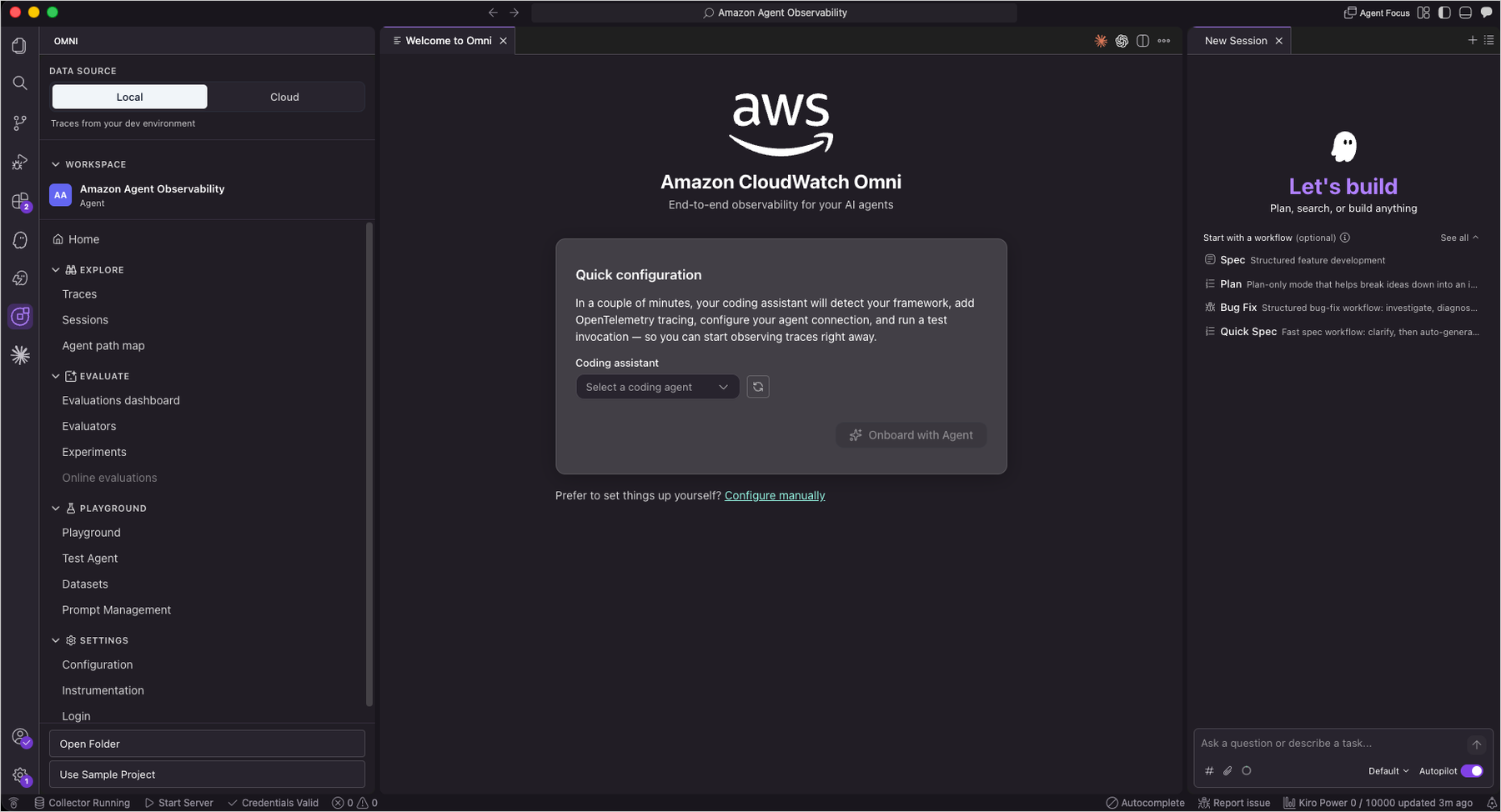
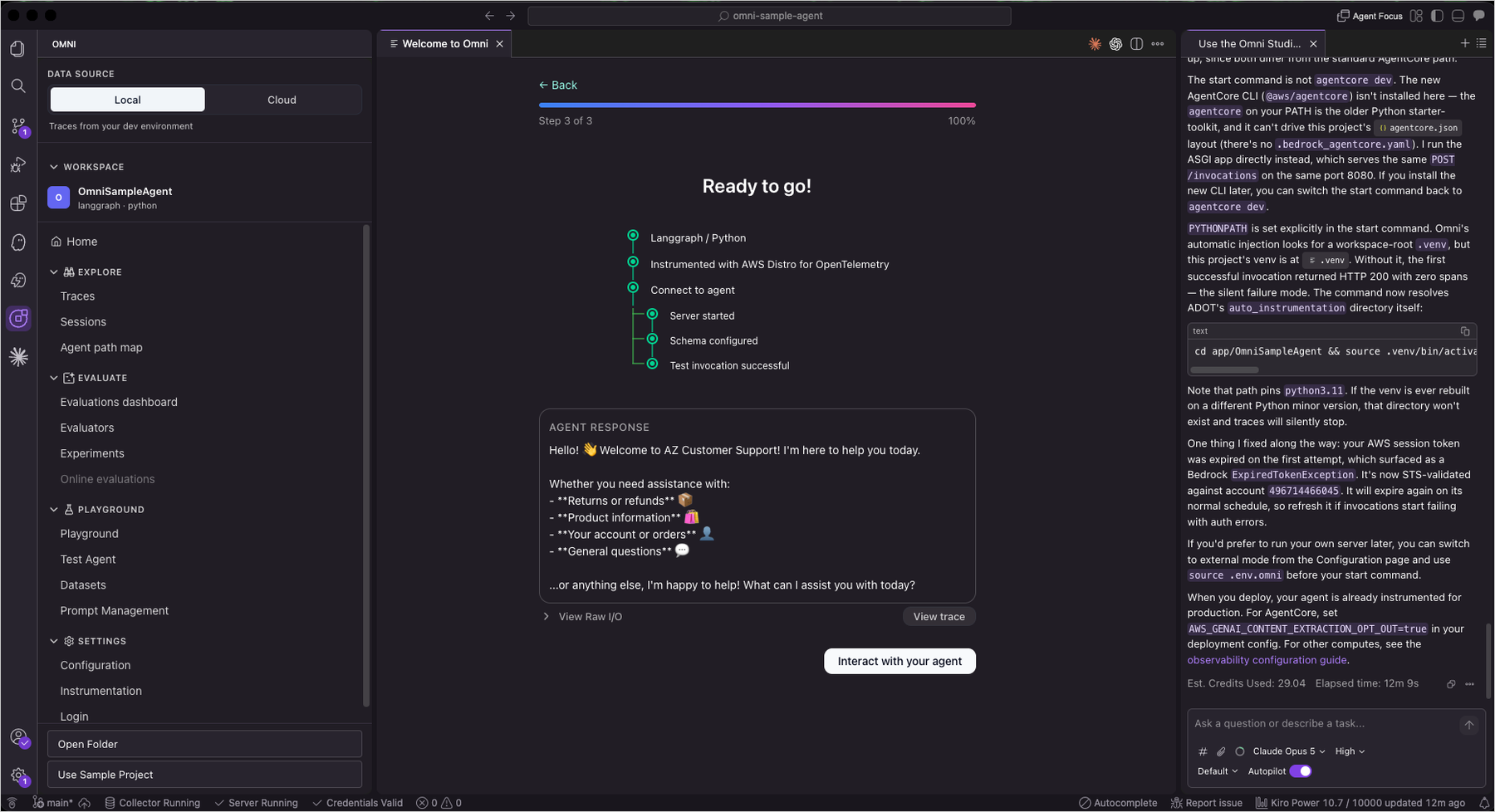
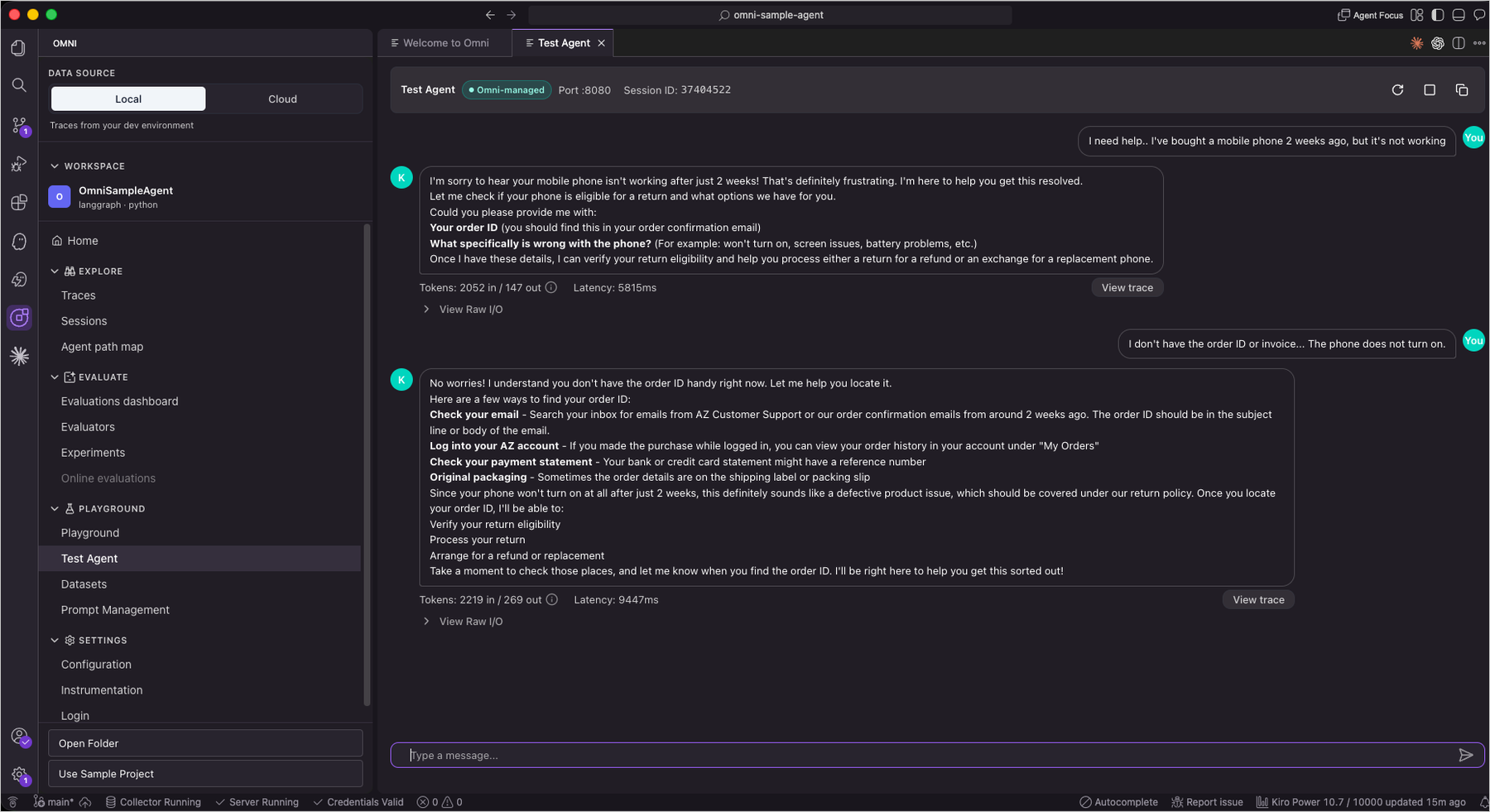
For developers, CloudWatch Omni manifests as a native extension within supported integrated development environments (IDEs), specifically Visual Studio Code and Kiro. As developers build and test AI agents locally, execution traces stream directly into the IDE interface in real time. Features such as an integrated prompt playground and automated evaluation suites are available just a click away from the codebase.
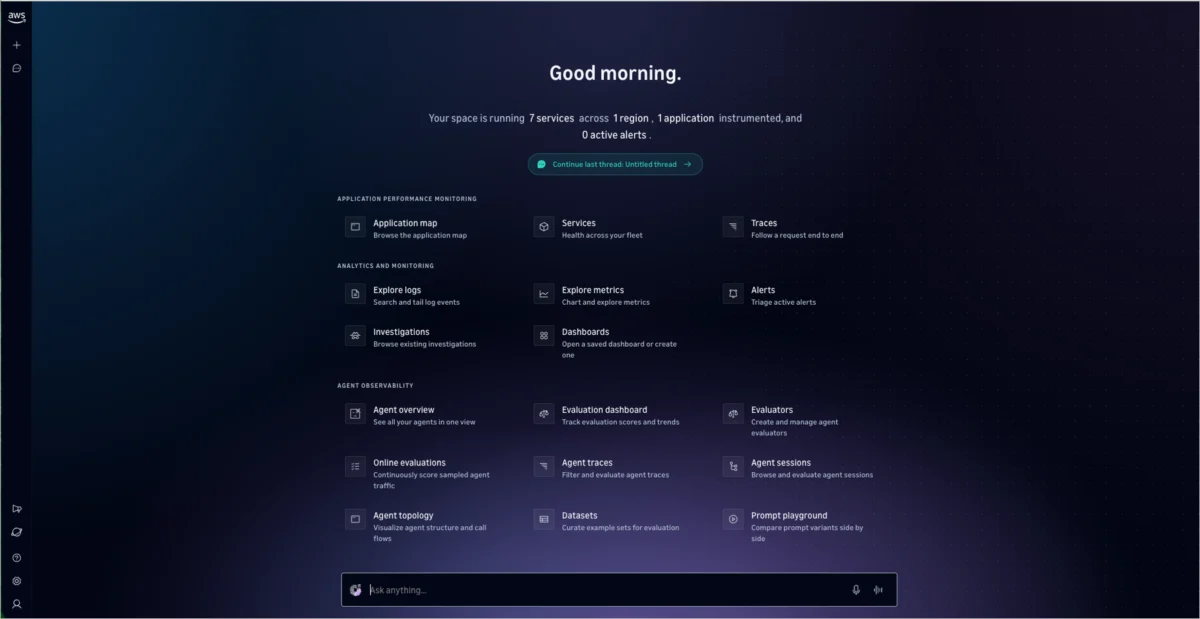
Conversely, operations and site reliability engineering (SRE) teams require visibility into production fleets without the clutter of a local development environment. For these stakeholders, CloudWatch Omni offers a standalone web experience entirely separate from the traditional AWS Management Console. Accessible via enterprise Single Sign-On (SSO) with no AWS console requirements, this web interface allows operators to monitor fleet performance, analyze historical logs, and investigate systemic anomalies.
Despite serving different user personas, both surfaces draw from the exact same underlying telemetry data. Consequently, the precise trace a developer examines to debug a faulty logic loop locally is identical to the trace an operator investigates during a production incident review. Furthermore, the platform’s Cloud Login feature facilitates an optional, frictionless bridge between local environments and enterprise cloud accounts, allowing teams to transition seamlessly from local prototyping to persistent cloud-based monitoring.
Deep Trace Visibility and Rigorous Evaluation Frameworks
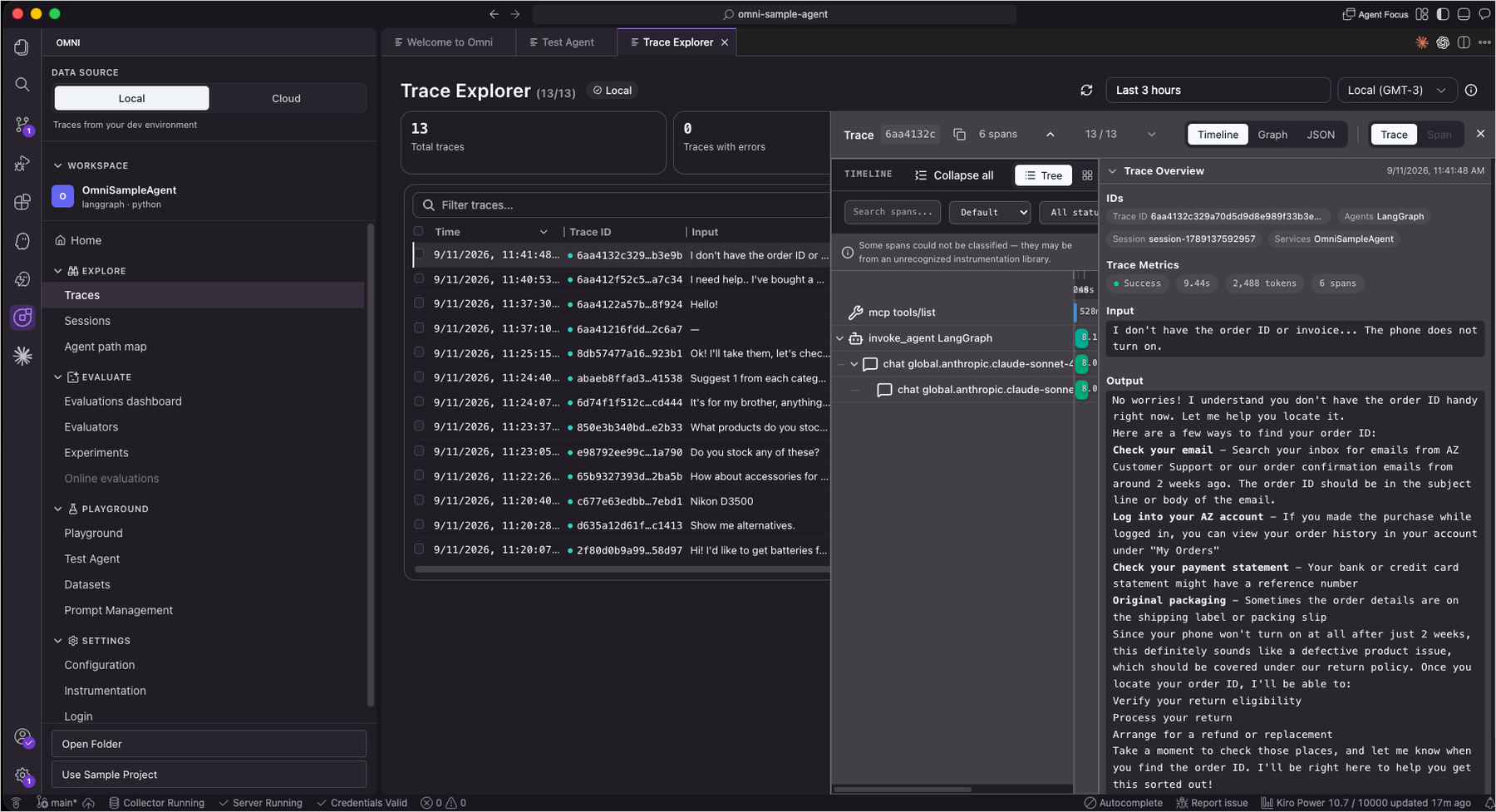
At the heart of CloudWatch Omni’s technical capability is its sophisticated trace-capture engine. Modern AI agents perform multiple interdependent tasks per user invocation, including complex reasoning steps, dynamic tool selections, and recursive sub-calls. CloudWatch Omni records every granular step in a structured, hierarchical timeline known as the Trace Explorer. Engineers can drill down into individual execution spans to inspect raw inputs and outputs, verify token consumption profiles, and measure latency bottlenecks.
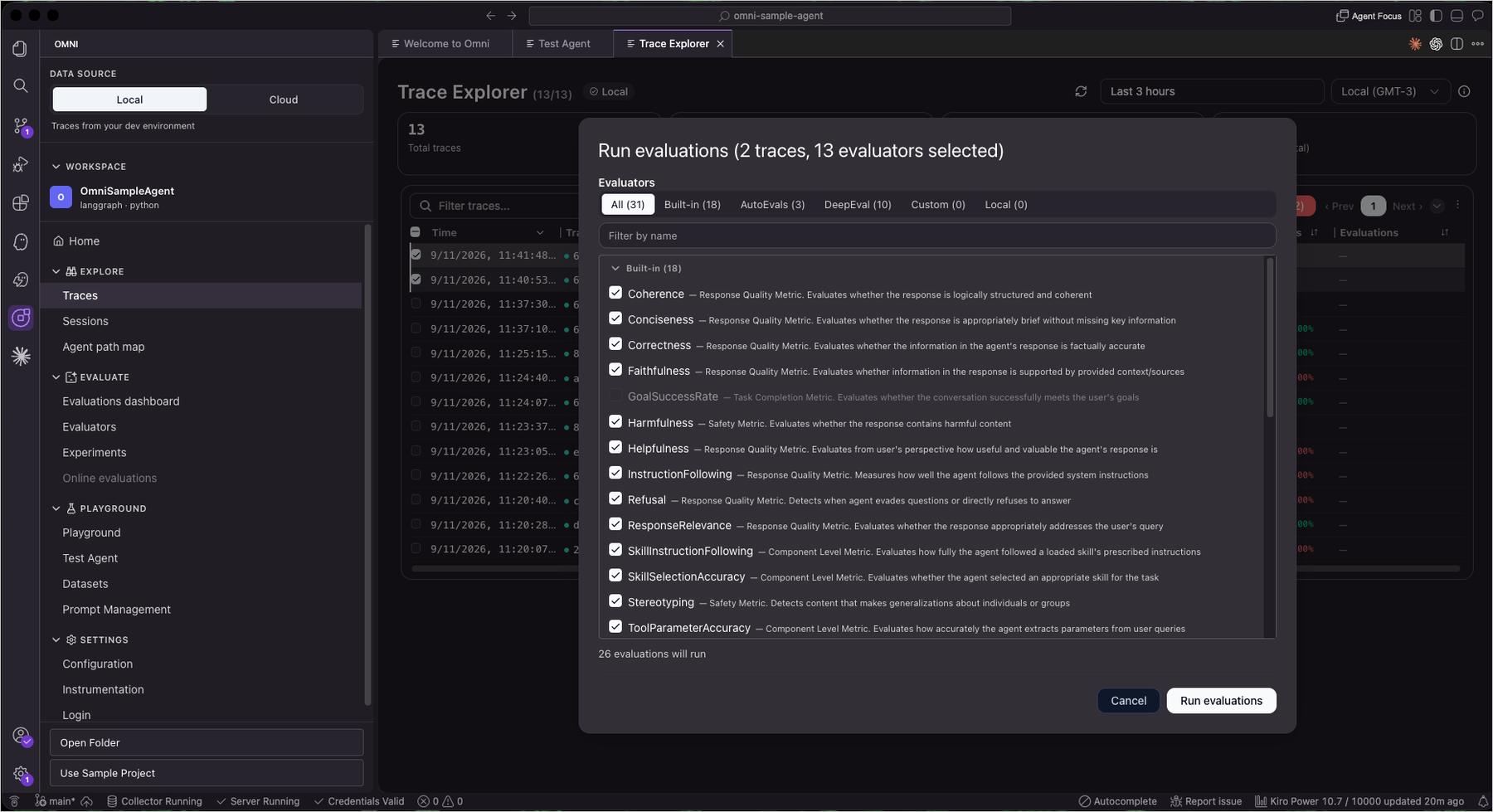
To address the subjective nature of AI response quality, CloudWatch Omni incorporates 17 built-in evaluators designed to assess critical metrics such as semantic coherence, factual faithfulness, helpfulness, and routing correctness. Rather than relying on gut feeling or manual spot-checks, engineering teams can configure automated evaluations against custom datasets.
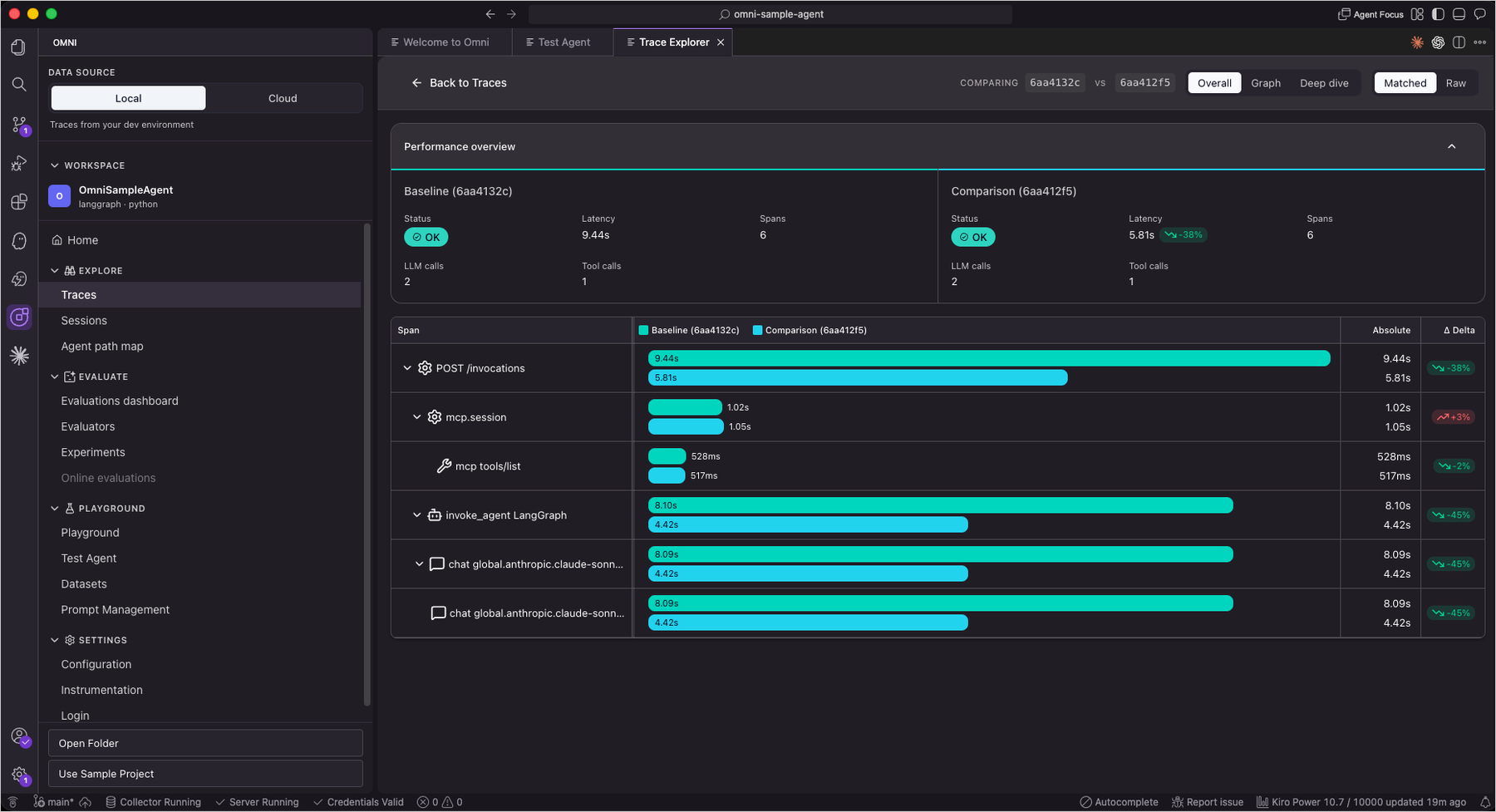
Furthermore, the platform introduces specialized tools to accelerate the iteration cycle:
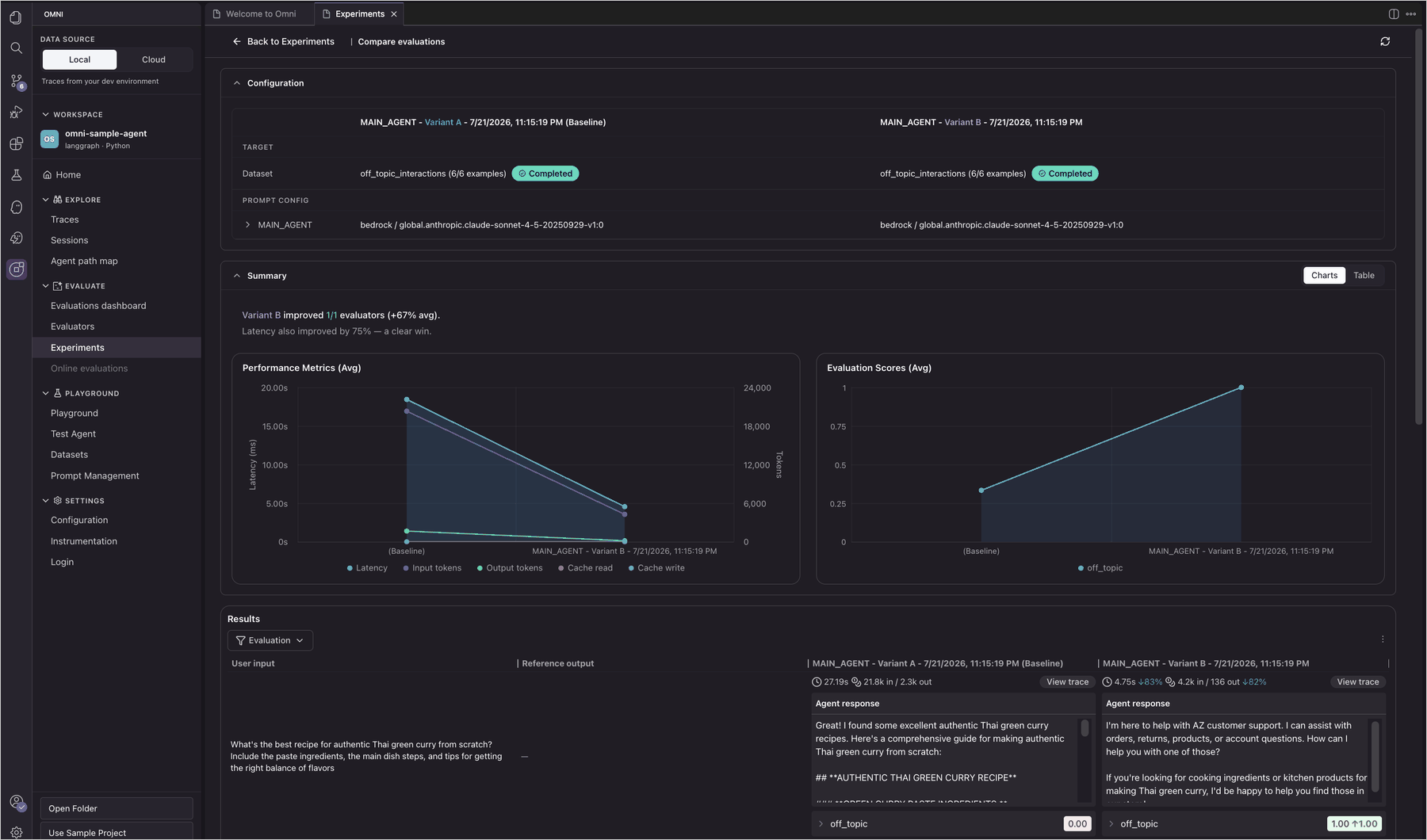
- Compare Mode: Places two execution traces side by side to visualize the precise behavioral impact of altered prompts or model configurations, proving invaluable for regression analysis.
- Ask Assistant: An integrated AI diagnostic tool that ingests trace data to answer natural language queries regarding agent behavior, such as explaining why an agent redundantly invoked a specific external tool.
- Playground & Experiments: Allows developers to test multiple model and prompt configurations simultaneously against golden datasets, automatically scoring results across latency, token usage, and accuracy metrics before committing code to production.
- Prompt Management: Version-controls prompt configurations over time, enabling rapid rollbacks when performance regressions are detected in the wild.
- Session Explorer & Agent Topology: Session Explorer provides full conversation histories for multi-turn interactions, while Agent Topology visualizes the intricate architecture of sub-agents, tools, and their interconnections.
Integration with Open Standards and Existing Ecosystems
Rather than attempting to lock organizations into a proprietary ecosystem, CloudWatch Omni has been constructed on open standards. The platform supports native OpenTelemetry instrumentation, leveraging OpenInference and ADOT (AWS Distro for OpenTelemetry) specifications. This ensures that regardless of whether an agentic workload runs on serverless functions like AWS Lambda, containerized infrastructure on Amazon ECS or Amazon EKS, or even across multi-cloud environments, telemetry collection remains standardized.
Moreover, CloudWatch Omni integrates fluidly with the premier open-source and commercial agent frameworks that developers already utilize. Full support is provided for LangChain, LangGraph, CrewAI, the OpenAI SDK, Strands, and the Vercel AI SDK, spanning both Python and TypeScript implementations. In addition, the platform offers deep native observability for agents constructed using Amazon Bedrock AgentCore, harnessing Bedrock’s native evaluation capabilities directly within the Omni workflow.
For teams utilizing AI-assisted coding tools such as Kiro, Claude Code, and Codex, CloudWatch Omni features automated setup protocols. These assistants can independently configure local development servers, install necessary dependencies, and inject OpenTelemetry instrumentation, reducing the time required to boot up a fully traced agent session from hours to mere minutes.
Industry Implications and Market Analysis
Technology analysts view the launch of CloudWatch Omni as a strategic evolution in Amazon’s broader cloud operations and artificial intelligence strategy. As enterprise spending shifts decisively toward autonomous AI agents capable of executing complex business workflows, observability has transformed from a back-office utility into a core competitive differentiator.
By eliminating the traditional boundaries between code authoring, local experimentation, and cloud-scale operations, AWS is positioning CloudWatch Omni as an indispensable command center for the generative AI era. The platform’s flexibility—allowing developers to operate entirely offline or locally before opting into cloud connectivity—lowers the barrier to entry for smaller engineering teams while maintaining the enterprise-grade governance, security, and scalability required by Fortune 500 corporations.
Pricing, Availability, and Getting Started
Amazon CloudWatch Omni is generally available globally. The IDE extension is provided free of charge, and developers do not require an active AWS account or pre-configured cloud credentials to begin building and testing agents locally. API keys for third-party model providers like OpenAI and Anthropic, or standard AWS credentials for Amazon Bedrock, are the sole prerequisites for model inference.
Engineers and system administrators can immediately download the CloudWatch Omni extension via the Visual Studio Code Marketplace. Comprehensive documentation, API guides, and troubleshooting resources are accessible through the CloudWatch on AWS Builder Center and the official AWS documentation portal, empowering technical teams to accelerate their transition toward reliable, eval-driven agentic architectures.
