
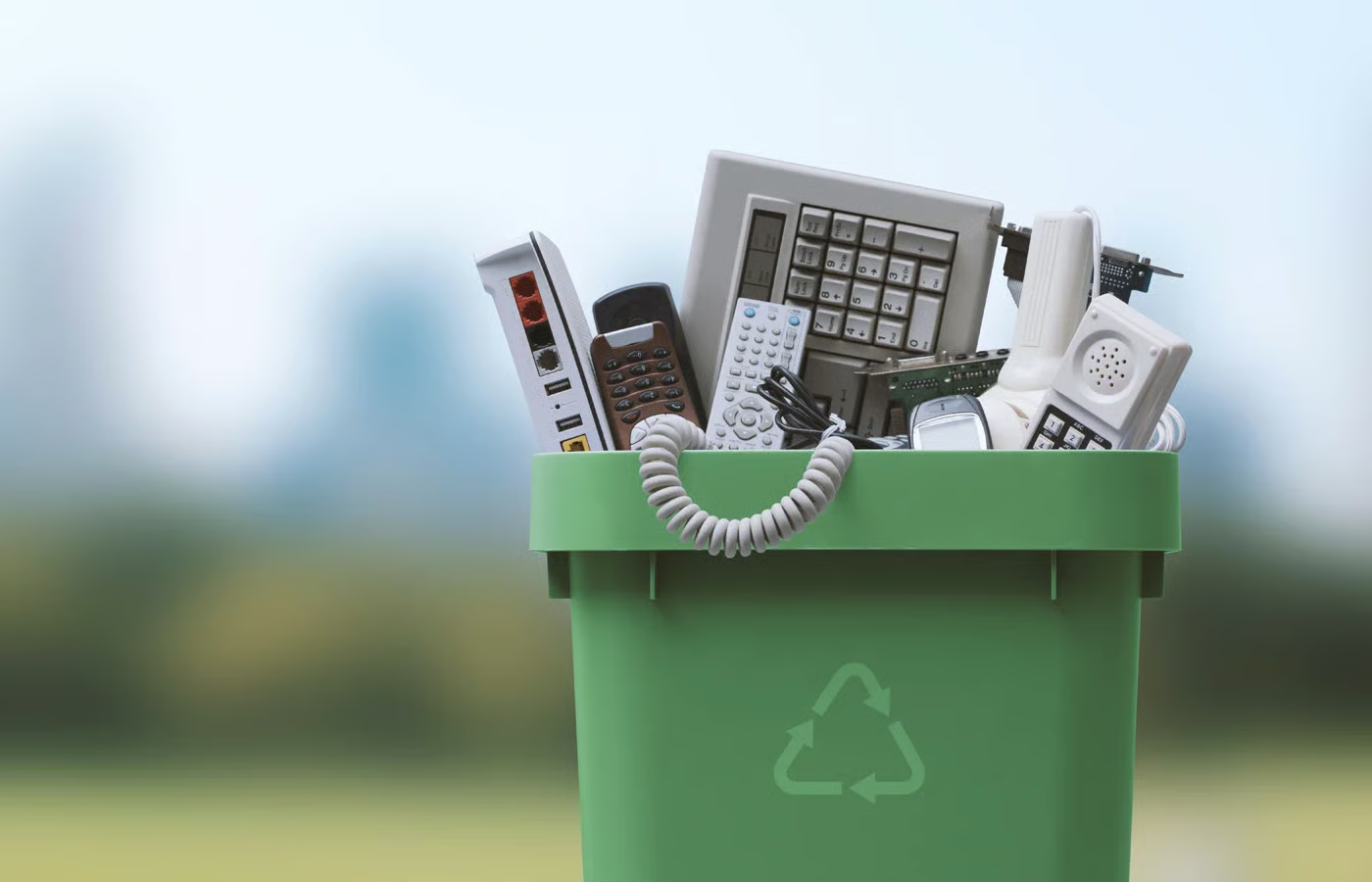

Electronic waste, commonly referred to as e-waste, has rapidly transformed from a localized disposal issue into one of the most pressing environmental, economic, and geopolitical challenges of the twenty-first century. Encompassing everything from handheld smartphones and MP3 players to large industrial appliances, commercial servers, refrigerators, and air conditioning units, e-waste represents the physical byproduct of our relentless digital transformation. When properly recycled, these discarded devices yield valuable, scarce materials that can be reintroduced safely into the global manufacturing supply chain. Conversely, improper handling releases persistent toxic substances into the ecosphere, threatening public health and degrading natural habitats worldwide.
The urgency of this crisis has placed e-waste at the center of Green IT initiatives and global sustainability frameworks. As governments, corporate entities, and consumers grapple with the exponential accumulation of discarded hardware, understanding the systemic roots of the e-waste epidemic is critical to charting a sustainable path forward.
The Anatomy and Acceleration of the Global E-Waste Crisis
To understand why e-waste demands immediate global intervention, one must examine its complex chemical composition. Discarded electronics are a dual-natured repository: they contain highly sought-after, finite resources such as copper, gold, silver, palladium, and critical rare earth metals, alongside hazardous, non-biodegradable elements like lead, mercury, cadmium, beryllium, and brominated flame retardants.
The primary driver behind the proliferation of e-waste is the rapid pace of technological innovation coupled with aggressive consumer marketing. Shorter product life cycles, planned obsolescence, and a prevailing "throwaway culture" have transformed electronics from durable, long-term investments into disposable consumer goods. Consumers are routinely encouraged to upgrade their devices every few years, accelerating the velocity at which functional or easily repairable electronics find their way into landfills.
This dynamic has made e-waste the fastest-growing domestic and commercial waste stream on the planet. According to landmark baseline data published by the World Health Organization (WHO) and international research partners, an estimated 53.6 million tonnes (59 million U.S. tons) of e-waste were generated globally in 2019 alone. This staggering figure equates to an average of 7.3 kilograms per person on Earth. Most alarming, however, is that only 17.4 percent of this total volume was officially documented as having been collected and recycled through formal, environmentally sound channels. The remaining 82.6 percent vanished into the informal waste economy, ending up in municipal landfills, incinerated, or illegally shipped to developing nations where rudimentary extraction methods cause catastrophic localized pollution.
A Chronological Evolution of the E-Waste Dilemma
The modern e-waste crisis did not materialize overnight; it is the culmination of decades of consumer electronics expansion and globalization.
During the late 20th century, the personal computer boom and the widespread commercialization of mobile phones introduced silicon-based technology to households and offices on an unprecedented scale. By the early 2000s, as the first generation of consumer electronics reached functional obsolescence, industrialized nations faced an immediate surplus of discarded hardware. Lacking robust domestic recycling infrastructure and facing stringent local environmental disposal laws, many developed nations began exporting their electronic refuse to developing regions in Asia and Africa, masked as second-hand donations or recyclable commodities.
In response to mounting environmental degradation and humanitarian concerns, the international community convened in 1989 under the auspices of the United Nations Environment Programme to adopt the Basel Convention on the Control of Transboundary Movements of Hazardous Wastes and Their Disposal. While the Basel Convention entered into force in 1992, amendments addressing the illegal dumping of e-waste took years to fully ratify and enforce, leaving a prolonged regulatory vacuum.
By the 2010s, the mass adoption of smartphones, tablets, and cloud-computing infrastructure triggered a second wave of e-waste generation. The sheer volume of devices overwhelmed traditional municipal waste systems. Concurrently, environmental watchdogs and international bodies began publishing comprehensive empirical data—such as the Global E-waste Monitor series—revealing that the generation rate was outpacing recycling capacity by a factor of three. Today, the crisis has entered a critical phase where regulatory compliance, circular economy mandates, and advanced material recovery technologies are converging to reshape how the global economy treats end-of-life electronics.
Environmental, Health, and Economic Impacts
The consequences of mismanaged e-waste extend deeply into ecological systems and human biological health. When electronic devices are subjected to open burning, acid bathing, or crude shredding in informal recycling yards—practices frequently observed in parts of West Africa and South Asia—hazardous compounds are released into the air, soil, and water tables.
Heavy metals such as lead and cadmium bioaccumulate in local food chains, posing severe neurotoxic, nephrotoxic, and carcinogenic risks to local populations, particularly children who often engage in informal scavenging. Persistent organic pollutants, including dioxins generated by burning plastic casings mixed with flame retardants, further exacerbate air pollution and respiratory illnesses.
From an economic perspective, the failure to capture and recycle e-waste represents a massive misallocation of capital and resources. Billions of dollars in precious and critical metals are permanently lost to landfills annually. Extracting virgin ores requires massive energy inputs, contributes heavily to greenhouse gas emissions, and causes large-scale habitat destruction through mining. By contrast, recovering these metals from existing e-waste demands significantly less energy and mitigates the geopolitical vulnerabilities associated with the supply chains of rare earth elements.
Stakeholder Responsibilities: Corporate Duty and Consumer Action
Addressing a crisis of this magnitude requires a multi-tiered approach involving clear accountability across corporate boardrooms, legislative bodies, and individual consumer choices.
The corporate world bears a fundamental responsibility, as manufacturers dictate the initial design, material selection, and repairability of electronic goods. Historically, consumer electronics have been manufactured with glued components, proprietary screws, and integrated batteries that render home repair nearly impossible. However, shifting market pressures and emerging right-to-repair legislation are forcing enterprises to rethink product lifecycles. Companies are increasingly adopting sustainable procurement policies, phasing out hazardous inputs, and establishing take-back programs that allow consumers to return obsolete equipment for proper recycling or refurbishment.
Beyond manufacturing, enterprise organizations are examining their internal IT footprints to curtail e-waste and reduce carbon overhead. In addition to recycling corporate hardware, organizations are aggressively optimizing data center and server room power consumption efficiency. By consolidating virtual machines, modernizing server architecture, and extending hardware refresh cycles through rigorous maintenance, businesses can simultaneously reduce capital expenditures and environmental impact.
Consumers also play an indispensable role. Individual purchasing behavior directly influences market trends. By rejecting throwaway culture, prioritizing repair over replacement, purchasing modular or upgradeable devices, and utilizing certified e-waste recycling collection points, consumers act as a vital counterweight to the pressures of planned obsolescence.
Policy, Legislation, and International Frameworks
Governments and international bodies have increasingly deployed legislative tools to govern the lifecycle of electronic goods. At the international level, the Basel Convention remains the foundational framework regulating the transboundary movement of hazardous wastes, preventing developed nations from dumping toxic electronic refuse onto nations unequipped to process it safely.
Regionally, regulatory frameworks have grown markedly stricter. The European Union has pioneered some of the world’s most robust legislative measures, notably the Waste Electrical and Electronic Equipment (WEEE) Directive, the Restriction of Hazardous Substances (RoHS) Directive, and recent landmark mandates requiring standardized USB-C charging ports and enforceable right-to-repair protocols. These regulations set a global precedent, compelling multinational manufacturers to redesign products for the entire European market, which in turn influences global supply chain standards.
In the United States, e-waste governance is decentralized, relying primarily on a patchwork of state-level laws rather than a comprehensive federal mandate. Over half of U.S. states have enacted manufacturer-responsibility laws prohibiting the disposal of electronics in municipal landfills and establishing consumer drop-off networks. Concurrently, federal agencies and regulatory bodies are intensifying scrutiny on illegal electronics exports and supporting domestic recycling research initiatives.
Technological Innovations and the Future of E-Waste Management
As the volume of global electronic waste continues to mount, the long-term solution rests on technological innovation, systemic structural redesign, and the embrace of circular economy principles.
Advanced recycling technologies are currently revolutionizing material recovery. Artificial intelligence-driven sorting robots equipped with advanced spectrometry and optical sensors are being deployed in state-of-the-art recycling facilities. These systems can rapidly identify, categorize, and separate intricate components and rare earth elements from crushed e-waste with high precision, dramatically reducing reliance on hazardous manual labor and increasing recovery yields. Furthermore, biological and chemical processing innovations—such as bioleaching, which utilizes specific microorganisms to extract precious metals from electronic ores—offer eco-friendly alternatives to traditional smelting and acid baths.
Simultaneously, the industrial design philosophy is shifting toward "Design for Environment" (DfE). Manufacturers are increasingly prioritizing end-of-life considerations during the initial conception phase of product development. This includes minimizing the use of toxic binding agents, utilizing biodegradable or easily separable composite materials, and engineering modular architectures. Modular smartphones, upgradeable laptops, and repair-friendly appliances allow users to replace isolated failing components rather than discarding an entire system, effectively flattening the growth curve of e-waste generation.
Underpinning these technological and design shifts is the broader transition toward circular economy models within the global technology sector. The traditional linear economic model—extract, manufacture, consume, discard—is being systematically replaced by closed-loop paradigms that emphasize product life extension, refurbishment, remanufacturing, and recycling. Additionally, innovative commercial structures such as "Product-as-a-Service" (PaaS)—where customers subscribe to the functional utility of a device rather than owning the physical hardware—incentivize manufacturers to build exceptionally durable, easily upgradeable, and fully recyclable electronics, aligning corporate profitability with long-term environmental stewardship.
The Bottom Line: A Cleaner Future Through Integrated Management
Effectively mitigating the global e-waste crisis is not an obligation that can be discharged by any single sector, industry, or government. It demands a coordinated, synchronized effort bridging international policymakers, corporate manufacturers, enterprise IT leaders, and everyday consumers.
The integration of cutting-edge automated recycling technologies, the widespread adoption of sustainable product designs, and the rigorous enforcement of cross-border environmental laws represent essential steps toward neutralizing the health and ecological hazards of electronic waste. As society looks toward an increasingly digitalized future, long-term sustainability will depend upon our collective capacity to adapt our consumption habits, evolve our waste management methodologies, and treat electronic hardware not as disposable commodities, but as valuable, finite resources within a continuous circular economy.
