
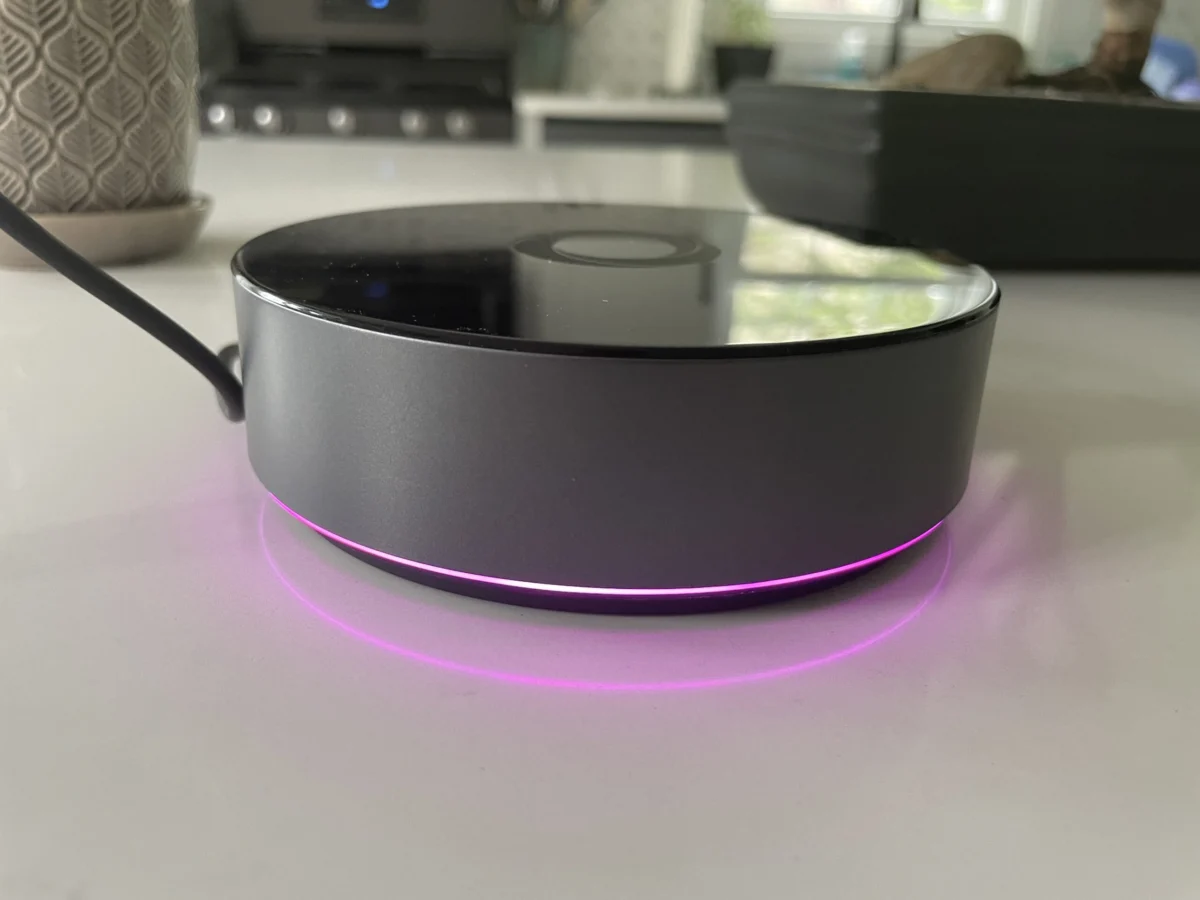

The smart home hardware market has long oscillated between user-friendly cloud-dependent ecosystems and complex, locally managed technical setups tailored for hobbyists. Following the March release of the $69 Homey Bridge—a cloud-centric hub targeting entry-level consumers—Athom has officially brought its flagship $399 Homey Pro to the United States market. Positioned as a robust, privacy-focused alternative for power users, the new iteration aims to bridge the gap between local control, extensive radio integration, and modern application design.
However, a comprehensive hands-on evaluation reveals that while the hardware exhibits immense potential, prospective buyers must carefully audit their existing device inventories before investing. Despite official claims supporting more than 50,000 devices via various brand integrations, hardware compatibility bottlenecks present significant hurdles for mainstream adoption in its current state.
Evolution of the Hardware and Technical Specifications
The launch of the U.S.-bound Homey Pro marks a substantial hardware upgrade over the original 2019 model. Athom reports that the new Pro features a central processing unit that is roughly 3.5 times more powerful than its predecessor. Furthermore, the device is equipped with 8 GB of internal storage and 2 GB of random-access memory—quadrupling the storage and doubling the memory found in the lower-cost Homey Bridge.
These architectural enhancements are not merely superficial; they serve a distinct functional purpose. Unlike the Homey Bridge, which relies heavily on cloud infrastructure to route commands and execute routines, the Homey Pro prioritizes local execution. By shifting processing to the edge, the hub ensures that local automations and device controls remain functional even during unexpected internet outages. This local-first architecture also aligns with growing consumer demands for enhanced data privacy, keeping sensitive telemetry and domestic activity off external cloud servers.
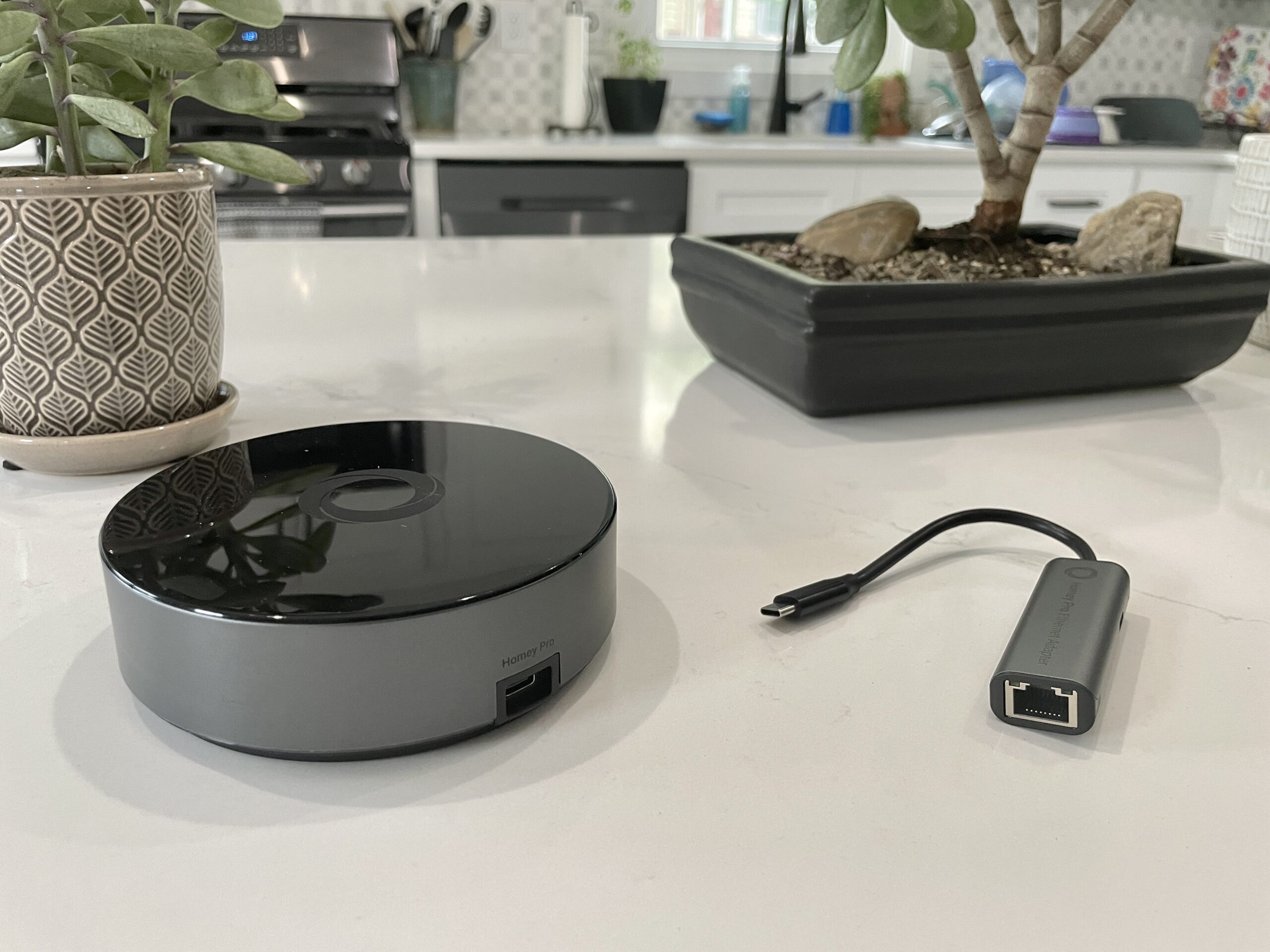
In terms of physical connectivity, the U.S. version of the Homey Pro comes comprehensively equipped with radios for Wi-Fi (supporting both 2.4 GHz and 5 GHz bands), Bluetooth, infrared, Zigbee, Z-Wave, and an 833 MHz radio intended for legacy devices. Additionally, the Pro includes an integrated Thread radio—a notable hardware advantage over the Bridge—alongside the promise of future firmware updates enabling full Matter and Matter-over-Thread support. Users also have the option to add physical Ethernet connectivity via an adapter for an additional $29, mitigating potential wireless interference in dense urban environments.

The Onboarding Experience and Application Interface
The initial setup procedure for the Homey Pro is streamlined and intuitive. Upon powering the hub via the included USB-C cable and downloading the companion mobile application, users are guided through a series of foundational configuration steps. A standout feature during this onboarding phase is the application’s spatial mapping logic, which prompts users to define their home’s architectural layout, including the total number of floors and the specific allocation of rooms per level. This thoughtful touch expedites organization compared to competing ecosystems that require manual, room-by-room device sorting post-setup.
The overarching software experience—accessible via both the iOS/Android mobile applications and a dedicated web interface—receives high marks for modern aesthetics and granular control. The interface clearly exposes both basic toggle functions and advanced configurations. Furthermore, the platform features a built-in energy management dashboard capable of tracking both real-time and historical power consumption.
To utilize this energy tracking feature, users must manually input the wattage specifications for connected appliances during setup. Once configured, the software dynamically adjusts power estimations based on device states—such as halving the projected energy draw when a smart bulb is dimmed to 50 percent. For devices capable of reporting telemetry natively, the hub automatically logs actual electricity usage. Through the web dashboard, users can also cross-reference energy analytics with localized environmental data, including barometric pressure, ambient temperature, and humidity.

Integration Hurdles and Ecosystem Fragmentation
Despite the polished interface and impressive hardware capabilities, real-world testing exposes notable friction points regarding device compatibility. Athom markets the Homey Pro as supporting a sprawling catalog of more than 50,000 smart home products through its application ecosystem. In practical deployment, however, compatibility often depends on specific firmware versions, communication protocols, and the current rollout phase of emerging standards like Matter.
During practical testing environments, foundational ecosystems such as Lutron Caseta switches, Philips Hue intelligent lighting, and Sonos multi-room audio systems paired effortlessly and responded with near-instantaneous execution speeds. Conversely, integration failures occurred across a diverse array of popular consumer hardware, including Schlage smart locks, Ecobee smart thermostats, Nanoleaf bulbs and light strips, Govee smart kitchen appliances, Wyze security cameras, Eve Home sensors, and various third-party smart plugs.
Many of these incompatibilities stem from the evolving state of the Matter connectivity standard. For instance, smart plugs reliant on Matter-over-Thread failed to integrate because native Matter-over-Thread support had not yet been fully activated in the Homey Pro firmware at the time of testing. Even among supported brand families, granular limitations emerged; while non-traditional Nanoleaf panels (such as hexagons and lines) integrated successfully, standard-form-factor bulbs and older Essentials-line items did not initialize. Similarly, brand recognition within the app did not guarantee universal device support—while Ecobee is listed as a compatible partner, the platform restricted integration to older hardware like the Ecobee 3 Lite and specific room sensors, leaving newer models like the Ecobee Thermostat Premium unsupported.

Official Clarifications and Developer Extensibility
Following initial review findings, representatives from Athom reached out to clarify nuances concerning device onboarding. Manufacturers emphasized that Wi-Fi-based Matter devices are generally compatible under current firmware builds, while Thread-dependent peripherals require pending software patches. Furthermore, while initial searches for an integrated product catalog proved elusive within the main marketing site, company officials noted that the comprehensive directory of compatible integrations remains accessible via the dedicated "Apps" portal on the official Homey website.
For advanced users, developers, and hobbyists dissatisfied with existing manufacturer integrations, the Homey Pro offers an escape hatch through its web interface. By generating an API key, users can access documentation and templates to code custom integrations using JavaScript and Node.js. This architecture essentially transforms the Homey Pro into a localized Node.js server. While this level of extensibility mirrors the deep customizability found in open-source platforms like Home Assistant, it remains a niche feature tailored primarily to technically proficient enthusiasts rather than mainstream consumers.
Automation via Advanced Flows
Routine creation and automation logic on the Homey Pro are handled through a proprietary system known as "Flows." Moving beyond the linear, restrictive "if-this-then-that" paradigms popularized by mainstream consumer ecosystems, Flows adopt a modular "When… and… then…" conditional structure.

This multi-tiered logical approach allows users to incorporate complex filtering conditions, integrate "else" statements, and program cascading routines where one Flow triggers subsequent automations. While basic Flows can be constructed seamlessly within the mobile application, power users can access an advanced mode via the web browser interface to design intricate logic chains. These advanced Flows rival the power and flexibility of community-driven automation engines found in open-source smart home software.
Market Implications and Consumer Guidance
The release of the Homey Pro in the United States highlights a persistent dilemma in the consumer Internet of Things (IoT) landscape. On one hand, the device delivers an exceptionally polished mobile application, reliable local processing, a comprehensive suite of hardware radios, and sophisticated automation logic that outclasses many mass-market hubs. Furthermore, its subscription model is remarkably restrained compared to its lower-cost sibling, requiring only a nominal monthly fee solely for optional cloud-based backups, while eliminating device count caps.
On the other hand, the $399 price point demands a high degree of versatility. For consumers whose smart homes rely heavily on a fragmented mix of emerging Thread devices, niche brands, or specific hardware iterations not yet supported by Athom’s developer community, the financial barrier to entry is difficult to justify.

Ultimately, prospective buyers are advised to exercise caution. Before committing to a Homey Pro or Homey Bridge purchase, consumers should download the free Homey application, navigate the integrated app directory, and verify the compatibility of their specific hardware models. For early adopters and privacy advocates willing to audit their device ecosystem, the Homey Pro offers a powerful, local-first command center. For others, established open-source alternatives or deeply entrenched ecosystem hubs may remain the more pragmatic choice.
