
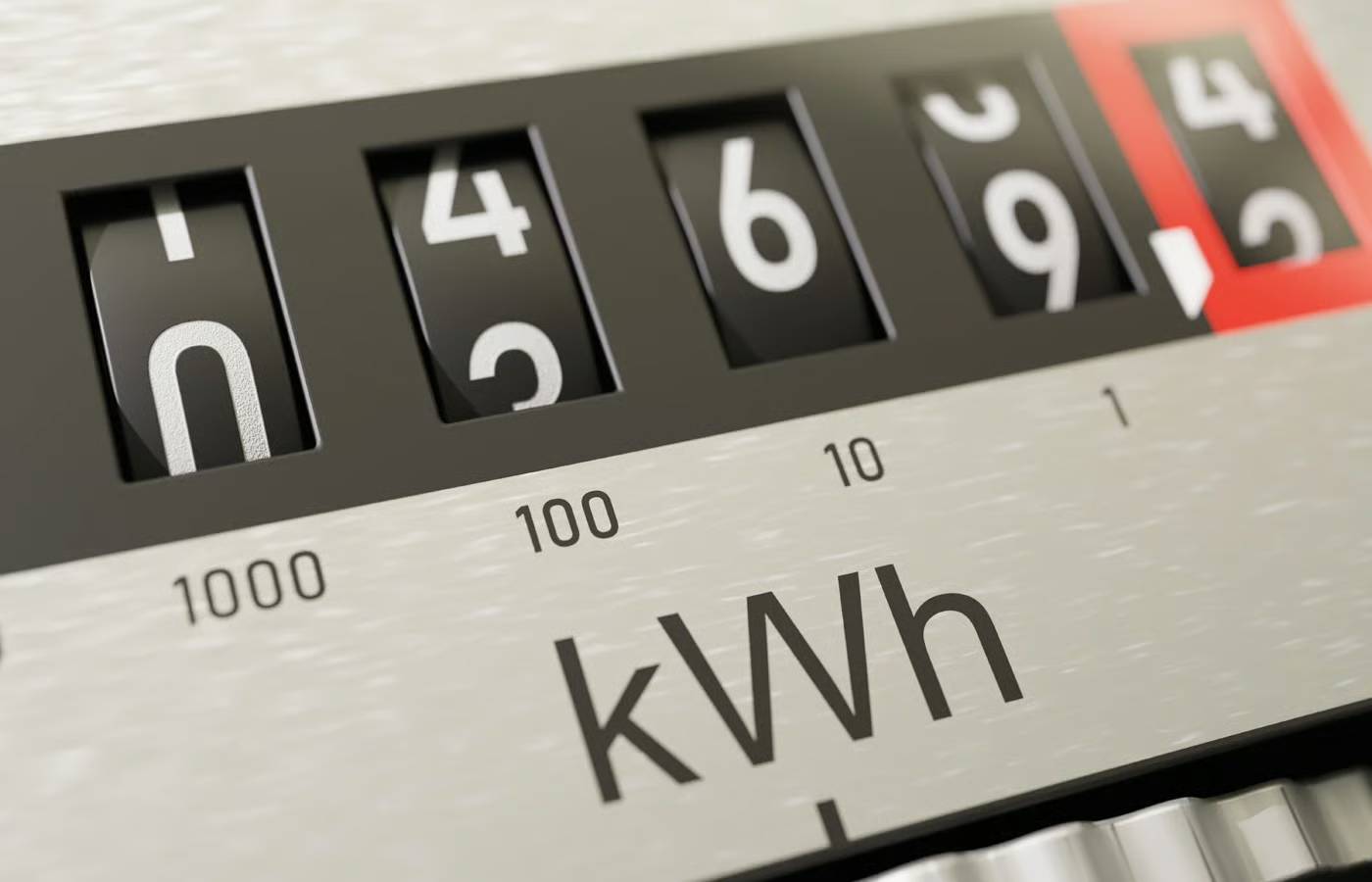

The rapid expansion of the global digital economy has placed unprecedented demands on data centers, transforming energy consumption from a routine utility expense into one of the most critical operational and environmental challenges of the modern era. As enterprises, cloud providers, and artificial intelligence initiatives process exabytes of data daily, the facilities housing this infrastructure are consuming staggering amounts of electricity. Powering servers and operating the intricate climate control systems required to dissipate immense heat loads account for a substantial portion of a data center’s operational budget. Consequently, stakeholders across the technology sector are urgently re-evaluating how power flows through these facilities, identifying major energy contributors, and deploying aggressive optimization strategies to curb escalating costs and environmental footprints.
Understanding the complex ecosystem of data center power consumption requires looking past the blinking lights of server racks to examine the entire facility lifecycle. At its foundation, a data center relies on a robust power infrastructure. External power sources, typically high-capacity utility grids, feed electricity into the facility. This power is subsequently regulated and distributed via Power Distribution Units (PDUs) to various functional zones. To safeguard against catastrophic grid failures, facilities maintain extensive redundancy systems, including Uninterruptible Power Supply (UPS) units and diesel-powered backup generators, ensuring seamless continuity during outages.
However, the primary drivers of electricity consumption within these walls are the servers and computing equipment. As the core processing units of the facility, servers execute complex data processing, storage, and networking tasks. Their energy demand is dynamic, scaling upward in direct correlation with computational workloads. Auxiliary computing hardware, including high-density storage arrays and enterprise-grade networking switches, further compounds this baseline energy draw.
Compounding the power demands of computing hardware is the immense requirement for cooling and climate control. Because electronic components generate significant heat during operation, data centers must deploy sophisticated thermal management systems. Computer Room Air Conditioner (CRAC) units, chillers, and large cooling towers operate continuously to maintain strict temperature and humidity parameters. Historically, the energy consumed by these climate control systems has nearly equaled the power utilized by the computing equipment itself, rendering cooling a prime target for efficiency overhauls.
To quantify and benchmark this operational efficiency, the data center industry relies on Power Usage Effectiveness (PUE), a metric established by The Green Grid. PUE is calculated by dividing the total facility energy input by the power dedicated strictly to IT equipment. An ideal PUE rating of 1.0 indicates absolute efficiency, where every watt of power serves computing functions directly. While early data centers frequently operated at PUEs exceeding 2.0, modern facilities increasingly approach targets closer to 1.2 or lower. Auxiliary systems, such as security infrastructure, automated monitoring arrays, and energy-efficient lighting, account for the remaining fractional overhead. Furthermore, because power consumption fluctuates dramatically based on user demand, facilities routinely implement demand-scaling mechanisms to modulate energy usage during off-peak operational windows.
The trajectory of data center energy consumption has evolved significantly over the past two decades. In the early 2000s, enterprise data centers prioritized raw computing capacity and uptime above all else, often resulting in widespread over-provisioning and inefficient power utilization. By the 2010s, the explosive growth of cloud computing centralized workloads into massive hyperscale facilities, prompting early regulatory scrutiny and industry-wide self-regulation. The subsequent introduction of the PUE standard in 2007 provided a universal benchmark, accelerating the adoption of hot and cold aisle containment strategies. Over the past five years, the mainstream integration of artificial intelligence and machine learning workloads has driven rack power densities to unprecedented heights, necessitating a paradigm shift away from traditional air cooling toward liquid-based thermal solutions.
Industry analysts and environmental economists emphasize that managing this energy trajectory is no longer optional. According to recent consensus data from energy research groups, data centers currently account for approximately one to two percent of global electricity demand, a figure projected to rise sharply through the end of the decade. This exponential growth has provoked reactions from utility providers, municipal governments, and corporate leadership teams alike. Energy utility executives have publicly noted strain on local electrical grids, particularly in major data center hubs such as Northern Virginia’s "Data Center Alley," Dublin, and Singapore, where regional grids face unprecedented capacity constraints. In response, corporate sustainability officers are increasingly held accountable for meeting strict net-zero carbon targets, transforming energy efficiency into a core boardroom metric rather than a localized facilities management concern.
To address these compounding pressures, data center operators are deploying a diverse array of optimization strategies, fundamentally altering how facilities are designed, built, and managed.
Upgrading to energy-efficient hardware represents a foundational step in mitigating power consumption. Modern enterprise servers feature advanced power-scaling capabilities and higher performance-per-watt ratios, enabling facilities to process greater computational loads with fewer resources. Simultaneously, operators are systematically replacing traditional mechanical hard disk drives with Solid-State Drives (SSDs). SSDs consume a fraction of the power required by spinning disks while offering superior read and write speeds. Investing in equipment that meets rigorous efficiency standards, such as ENERGY STAR certifications, ensures that baseline power consumption remains tightly controlled from the point of hardware acquisition.
Because cooling systems historically consumed nearly half of a facility’s total energy, modernizing thermal management is paramount. Traditional air-cooling methods are increasingly inadequate for high-density AI and machine learning clusters. Consequently, facilities are adopting advanced liquid cooling technologies—such as direct-to-chip cooling and immersion cooling—which dissipate heat far more efficiently than air. Furthermore, forward-thinking operators utilize external air economizers to leverage favorable ambient weather conditions for "free cooling," while meticulous hot and cold aisle containment configurations prevent the mixing of supply and exhaust air, optimizing airflow dynamics.
Virtualization and server consolidation have revolutionized capacity utilization within the enterprise. By utilizing hypervisors to run multiple virtual machines on a single physical server, organizations can drastically reduce their physical hardware footprint. This consolidation not only preserves valuable floor space but directly slashes power requirements. By optimizing workload distribution across fewer physical units, data centers maximize hardware utility and curtail idle energy waste.
The integration of advanced software solutions has further transformed operational oversight. Data Center Infrastructure Management (DCIM) tools provide real-time visibility into power distribution, thermal dynamics, and equipment performance. By deploying predictive analytics powered by machine learning algorithms, operators can anticipate workload spikes, automatically adjust cooling parameters, and dynamically route power to optimize efficiency without compromising service-level agreements (SLAs).
Finally, progressive operators are aggressively integrating renewable energy sources into their operational portfolios. Transitioning away from carbon-intensive grid power involves securing long-term Power Purchase Agreements (PPAs) with wind, solar, and hydroelectric generators. Many hyperscale operators now aim for 24/7 carbon-free energy matching. Additionally, participation in Renewable Energy Credits (RECs) and investments in on-site microgrids and localized generation assets enable data centers to enhance energy independence while shrinking their overall carbon footprint.
Despite these technological advancements, facility operators continue to navigate complex operational challenges. The primary obstacle remains the delicate balancing act between high-performance computing and energy efficiency. As end-users demand faster transaction speeds, real-time analytics, and heavy AI inference capabilities, server hardware naturally draws more power. Current semiconductor technology often struggles to simultaneously scale processing performance while maintaining linear improvements in energy efficiency.
Furthermore, capital expenditure barriers frequently hinder infrastructure modernization. Upgrading legacy facilities with state-of-the-art cooling systems, high-density power distribution units, and energy-efficient hardware requires substantial upfront investment. For many organizations, the financial friction of retrofitting older buildings outweighs short-term operational savings, leaving them reliant on aging, less efficient infrastructure. Additionally, implementing innovative thermal solutions like liquid cooling requires specialized engineering expertise and structural modifications that may be logistically impractical in certain geographic or architectural settings.
The overarching implications of efficient data center power management extend far beyond the balance sheets of individual technology firms. Economically, rigorous energy optimization protects organizations from volatile utility pricing and shields them from potential regulatory penalties or carbon taxation. Operationally, efficient power and thermal management enhances hardware longevity, reduces the risk of thermal throttling, and ensures higher service reliability. Environmentally, minimizing energy waste directly contributes to global sustainability initiatives, validating corporate environmental, social, and governance (ESG) commitments. Ultimately, as the digital economy continues its relentless expansion, the mastery of data center energy efficiency will serve as the defining metric of industrial maturity and ecological stewardship.
