

The race toward the sixth generation of mobile connectivity, 6G, has transcended mere technical evolution to become a pivotal theater of geopolitical maneuvering. While China currently holds a dominant position through a massive portfolio of essential patents, the European Union has long banked on a strategy of digital sovereignty. By bolstering its traditional telecommunications champions—Ericsson and Nokia—Europe aimed to secure the future of global infrastructure. However, a disruptive force has emerged not from the East, but from Silicon Valley: Nvidia. The artificial intelligence powerhouse is mounting an aggressive challenge to the status quo, proposing to replace the closed, proprietary systems of traditional manufacturers with open-architecture servers powered by its own high-performance graphical processing units (GPUs).
The Architecture of the Status Quo
To understand the gravity of this shift, one must analyze how mobile networks have functioned for decades. The telecommunications industry has historically operated under two distinct architectural models. The first is an "open" standard model, which ensures that any user device can connect seamlessly to any network provider’s infrastructure. The second, and far more lucrative, is the "closed" infrastructure model.
In this proprietary ecosystem, major vendors such as Ericsson, Nokia, Huawei, and ZTE provide integrated radio stations. These systems are designed as "black boxes" where software, hardware, and custom-designed silicon are inextricably linked. This vertical integration has been the primary engine of profitability for these firms, allowing them to capture revenue not only from hardware sales but also through extensive intellectual property portfolios and recurring maintenance contracts.
The Rise of Open RAN and Nvidia’s Intervention
The industry’s attempt to break this cycle of dependency manifested in the Open RAN (Radio Access Network) initiative. The goal was to decouple hardware and software, allowing operators to mix and match components from different vendors, theoretically reducing costs and increasing innovation. Despite its promise, Open RAN’s commercial adoption has been significantly slower than industry analysts initially projected.
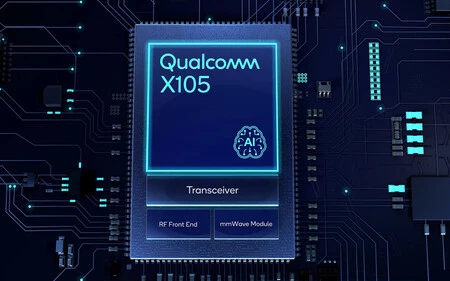
Nvidia, sensing a strategic opening, has decided to pivot from being a mere bystander to a primary architect of this new era. By embracing open-source initiatives such as the OCUDU (Open Compute for Cloud-Native Radio Access Networks) and championing its proprietary reference platform, "Aerial," Nvidia is attempting to rewrite the rules of network deployment. The company’s vision is to move the "Layer 1"—the most computationally intensive part of radio signal processing—away from proprietary ASICs (Application-Specific Integrated Circuits) and onto general-purpose GPUs.
The practical implication of this shift is profound: a single antenna could theoretically process voice calls while simultaneously executing complex AI models. This transforms the network from a rigid communication pipe into a dynamic, intelligent compute fabric.
Geopolitical and Industrial Timeline
The trajectory toward 6G is already well-mapped, with the 3GPP (3rd Generation Partnership Project) serving as the primary standards body. The timeline for this transition is as follows:
- 2023-2025: Initial research phase, focusing on the theoretical foundations of 6G, including Terahertz communications and Integrated Sensing and Communication (ISAC).
- 2026-2027: Development of the 3GPP Release 20 and 21 specifications, which will define the technical requirements for 6G global standards.
- 2028: Expected finalization of the technical specifications (Release 21).
- 2029-2030: Commencement of commercial 6G deployments in leading markets.
While Nvidia’s push into telecom is recent, it is built upon the company’s decade-long dominance in AI data centers. The successful pilot with T-Mobile in the United States, where 5G calls were completed using Grace Hopper superchips to handle the radio access network layer, serves as a proof-of-concept that the traditional vendors can no longer ignore.
Divergent Paths: Ericsson, Nokia, and the Physical Reality
Facing this potential disruption, the European giants have adopted differing strategies. Ericsson, for instance, continues to argue that the physics of radio wave propagation necessitates highly specialized hardware. In Spain, Ericsson’s recent collaborations with MasOrange to test intelligent antennas in the 6 GHz band demonstrate a commitment to optimizing traditional network performance. This approach emphasizes that while AI is useful, the physical reality of signal transmission remains the domain of specialized telecom engineering.
Nokia, conversely, has been navigating a hybrid path, attempting to integrate AI software capabilities into their existing hardware stack while cautiously participating in open-architecture trials. Both companies face a difficult "management trap": if they embrace the Nvidia model fully, they risk commoditizing their core product—the proprietary radio unit—which could lead to a catastrophic decline in margins.
Supporting Data and Technical Challenges
The transition to a GPU-based network infrastructure is not without significant hurdles. The primary concern is energy efficiency. Current mobile network stations are designed for low power consumption and high reliability. Integrating high-performance GPUs at the network edge, potentially at thousands of sites in urban and rural areas, introduces massive cooling and power requirements.
Industry analysts estimate that shifting Layer 1 processing to GPUs could increase the power footprint of a standard base station by a factor of three to five. Furthermore, the reliability requirements for telecommunications—often referred to as "five-nines" (99.999% uptime)—are significantly more stringent than those required for standard cloud computing. For Nvidia to succeed, it must prove that its software-defined radio can match the uptime and latency performance of the dedicated chips that have powered the world’s networks for decades.
Broader Economic and Geopolitical Implications
The emergence of Nvidia in the 6G space creates a new dimension of geopolitical friction. If the network infrastructure becomes "software-defined," the strategic value of the hardware becomes secondary to the value of the software stack. This could potentially reduce the influence of European hardware manufacturers and shift the power balance toward American software and chip design firms.
Furthermore, the "Integrated Sensing and Communication" (ISAC) capability of 6G—which allows networks to perceive their environment, effectively turning antennas into radar-like sensors—raises significant privacy and regulatory questions. Should this technology be controlled by a centralized, US-based entity like Nvidia, or should it remain under the control of regional network operators?

Conclusion: A New Era for Telecommunications
The outcome of this battle remains uncertain. While the 3GPP standards are still in their infancy, the fundamental nature of the network is already being challenged. We are witnessing a transition where the telecommunications sector is merging with the data center industry.
Whether 6G will eventually become an extension of Nvidia’s global AI footprint or whether European firms can successfully maintain their grip on infrastructure remains the defining question of the next decade. What is certain, however, is that the era of the "closed" telecom network is ending. The monopoly of traditional manufacturers on the "antennae business" has been broken, and the future of global connectivity will be determined by whoever can successfully synthesize the demands of high-speed radio physics with the insatiable compute requirements of artificial intelligence. As the 2030 rollout approaches, the industry must reconcile these competing visions or risk a fragmented, incompatible global network.
