

Cloud computing environments have grown exponentially in complexity over the past decade. As organizations migrate critical workloads, databases, and microservices to public cloud infrastructure, maintaining alignment with established engineering best practices has become an increasingly daunting challenge. Enterprises frequently struggle to balance competing priorities such as minimizing operational costs, maximizing system performance, hardening security postures, and ensuring fault-tolerant resilience. Historically, addressing these concerns required exhaustive manual audits, continuous monitoring of utilization metrics, and tedious cross-referencing against extensive architectural frameworks like the AWS Well-Architected Tool.
To alleviate this operational friction, Amazon Web Services (AWS) has announced the public preview of the AWS Well-Architected Agent. This advanced, artificial intelligence-powered service is designed to autonomously analyze an organization’s active AWS environment. By intelligently correlating utilization metrics, resource configurations, and application topologies against best practices spanning more than 65 AWS services, the agent delivers targeted, context-aware recommendations. Rather than relying on generic checklists or static templates, the new service evaluates infrastructure through the analytical lens of an experienced cloud architect, offering ready-to-implement remediation packages designed to align directly with a business’s unique strategic goals.
Core Mechanics and Architectural Intelligence
At its core, the AWS Well-Architected Agent acts as an autonomous analytical layer within an enterprise’s cloud portfolio. Traditional cloud optimization methods often require engineers to manually pull reports from multiple services—such as AWS Trusted Advisor, Amazon CloudWatch, and AWS Cost Explorer—and manually reconcile conflicting recommendations. For instance, a performance-tuning recommendation to scale up an Amazon Elastic Compute Cloud (EC2) instance might directly conflict with a cost-optimization goal to trim idle resources.
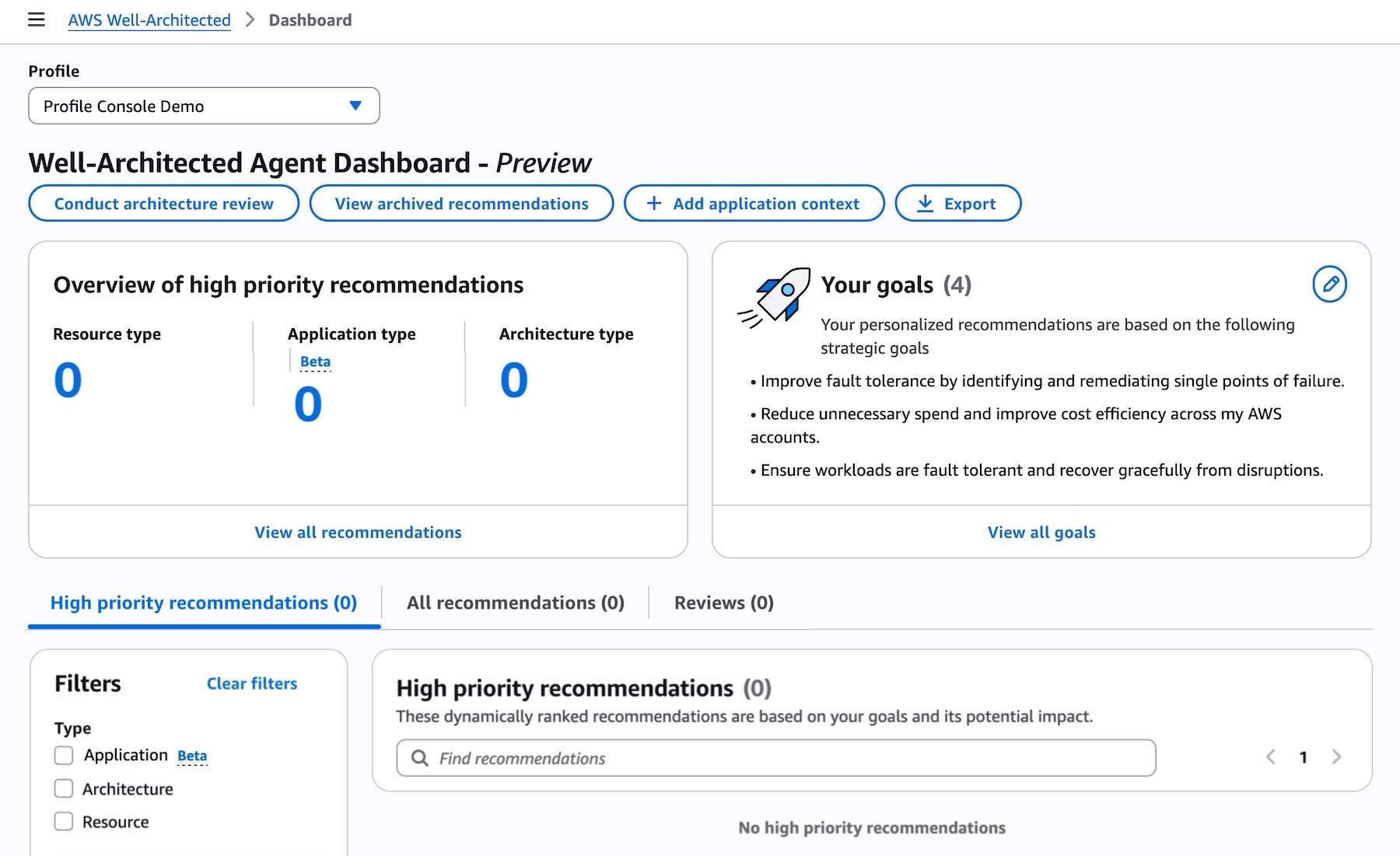
The Well-Architected Agent bridges this gap by automatically evaluating cross-pillar trade-offs. When generating insights, the agent weighs security hardening against operational overhead, or resilience improvements against financial expenditures, presenting administrators with a balanced, prioritized view of their infrastructure health. The service evaluates workloads against established pillars: Cost Optimization, Security, Reliability, Performance Efficiency, and Operational Excellence.
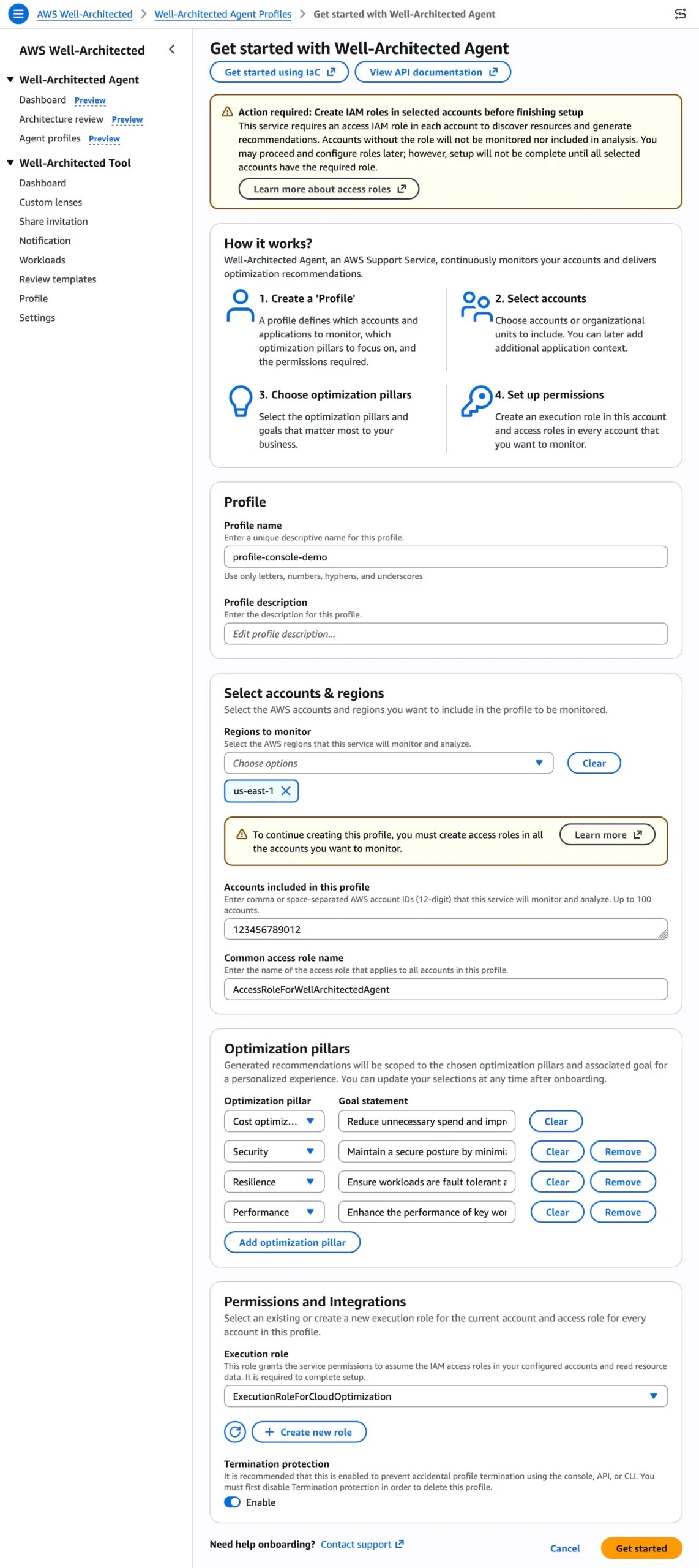
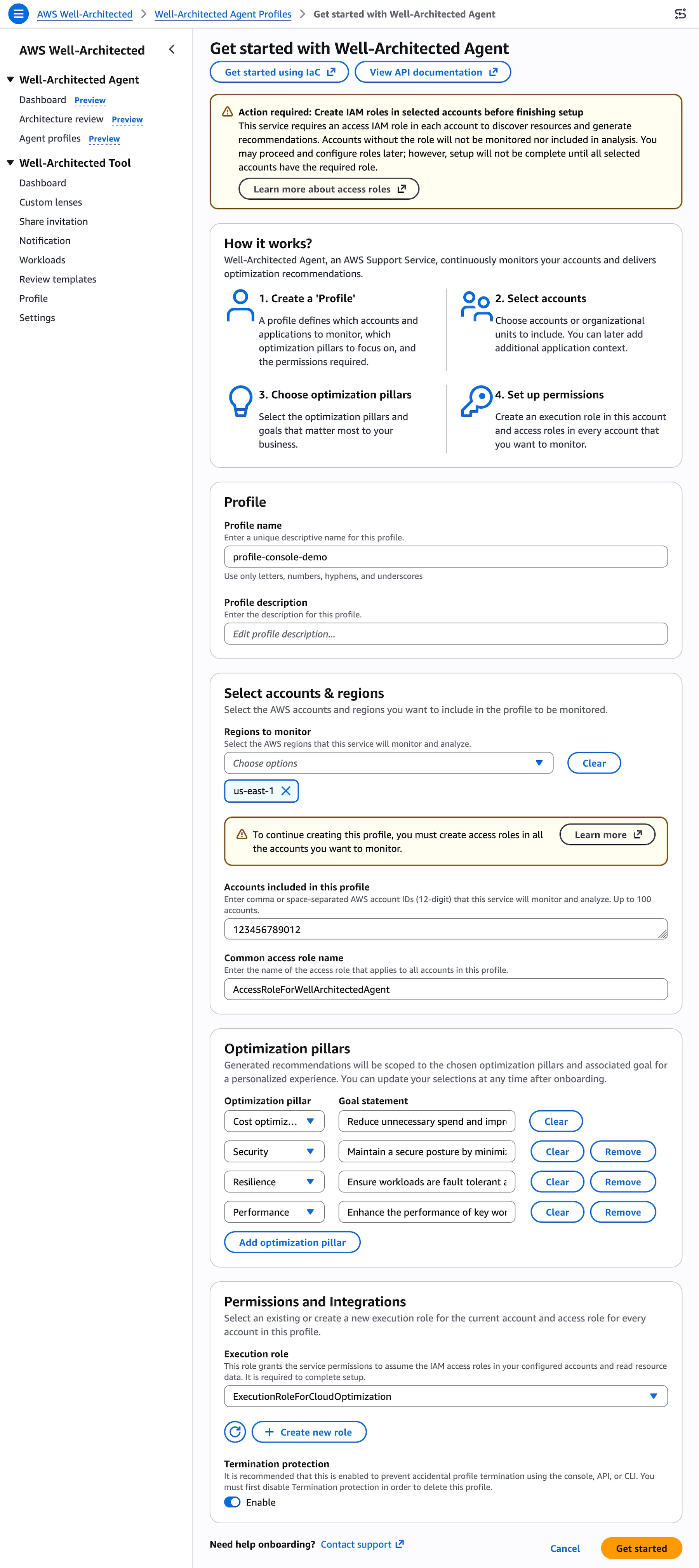
The technical workflow begins in the AWS Well-Architected console, where administrators create a dedicated agent profile. This profile defines the explicit scope of what the agent can access, allowing organizations to narrow monitoring down to specific AWS accounts, individual regions, or designated application boundaries. To safely interact with the environment, the agent utilizes customer-managed Identity and Access Management (IAM) roles, ensuring strict adherence to the principle of least privilege. Once configured, the agent reads resource configurations and telemetry data, generating its initial set of comprehensive, prioritized recommendations within 24 hours.

Pre-Deployment Governance and Infrastructure as Code Integration
A significant differentiator for the AWS Well-Architected Agent is its ability to shift architectural governance left, analyzing workloads before they are ever provisioned in a production environment. Modern cloud engineering relies heavily on Infrastructure as Code (IaC) frameworks, enabling development teams to define and provision infrastructure using declarative configuration files.
During the public preview, the Well-Architected Agent introduces support for pre-deployment architecture reviews. Engineering teams can package their IaC projects—utilizing popular tools such as Terraform, AWS CloudFormation, or the AWS Cloud Development Kit (CDK)—into a compressed archive and upload them directly through the dashboard. The agent scans these configuration files against chosen Well-Architected lenses, identifying potential security misconfigurations, scalability bottlenecks, or cost inefficiencies before code is merged or deployed.
Furthermore, when the agent identifies a vulnerability or optimization opportunity in active resources or code templates, it does not stop at a diagnostic diagnosis. It provides actionable resolution paths. Administrators can choose to execute fixes directly via the AWS Management Console, run generated AWS Command Line Interface (CLI) scripts, or apply automated code patches. For IaC projects, the agent generates precise code modifications—such as updated AWS CDK functions or CloudFormation snippets—that developers can copy directly into their repositories, drastically reducing the time required to remediate technical debt.
Integration with Modern Development Workflows
Recognizing that cloud administrators and DevOps engineers prefer to interact with tools inside their existing daily environments, AWS has designed the Well-Architected Agent with programmatic extensibility in mind. The service integrates natively with modern AI coding assistants and developer workflows through the AWS Model Context Protocol (MCP) Server and associated plugins.
By leveraging the AWS MCP Server, developers can interact with the Well-Architected Agent programmatically. Engineering teams can query architectural documentation, search for remediation patterns, and pull active optimization recommendations directly into their Integrated Development Environments (IDEs) or terminal interfaces. This seamless integration ensures that cloud health and architectural governance are treated as continuous, collaborative tasks embedded directly into the software development lifecycle, rather than periodic, disruptive audit events.
Background and Strategic Context
The release of the Well-Architected Agent arrives at a critical juncture in the cloud computing market. As macroeconomic pressures prompt tighter corporate scrutiny on technology budgets, cloud financial management (FinOps) has transitioned from a niche discipline to a board-level imperative. Simultaneously, the proliferation of distributed microservices architectures and serverless compute models has vastly increased the surface area for potential security vulnerabilities and performance degradation.
AWS originally introduced the Well-Architected Framework in 2012 as a set of foundational best practices designed to help cloud architects build secure, high-performing, resilient, and efficient infrastructure. Over the years, the framework expanded to include the digital Well-Architected Tool, which allowed users to conduct manual reviews through questionnaires and self-assessments. While these tools proved invaluable for establishing baseline governance, they demanded substantial manual effort, often resulting in review fatigue and stale architectural documentation.
Industry analysts note that the introduction of generative and analytical AI agents into cloud management consoles represents the next logical evolution of platform-as-a-service offerings. By automating the synthesis of complex telemetry data and translating it into prescriptive, automated code fixes, cloud providers are shifting the burden of optimization away from manual human oversight and toward intelligent, autonomous systems.
Availability and Enterprise Requirements
The AWS Well-Architected Agent is currently available in public preview across three major cloud regions: US East (N. Virginia), US East (Ohio), and US West (Oregon). However, organizations running workloads globally are not restricted by geography; customers can onboard workloads located in any commercial AWS Region for analysis.
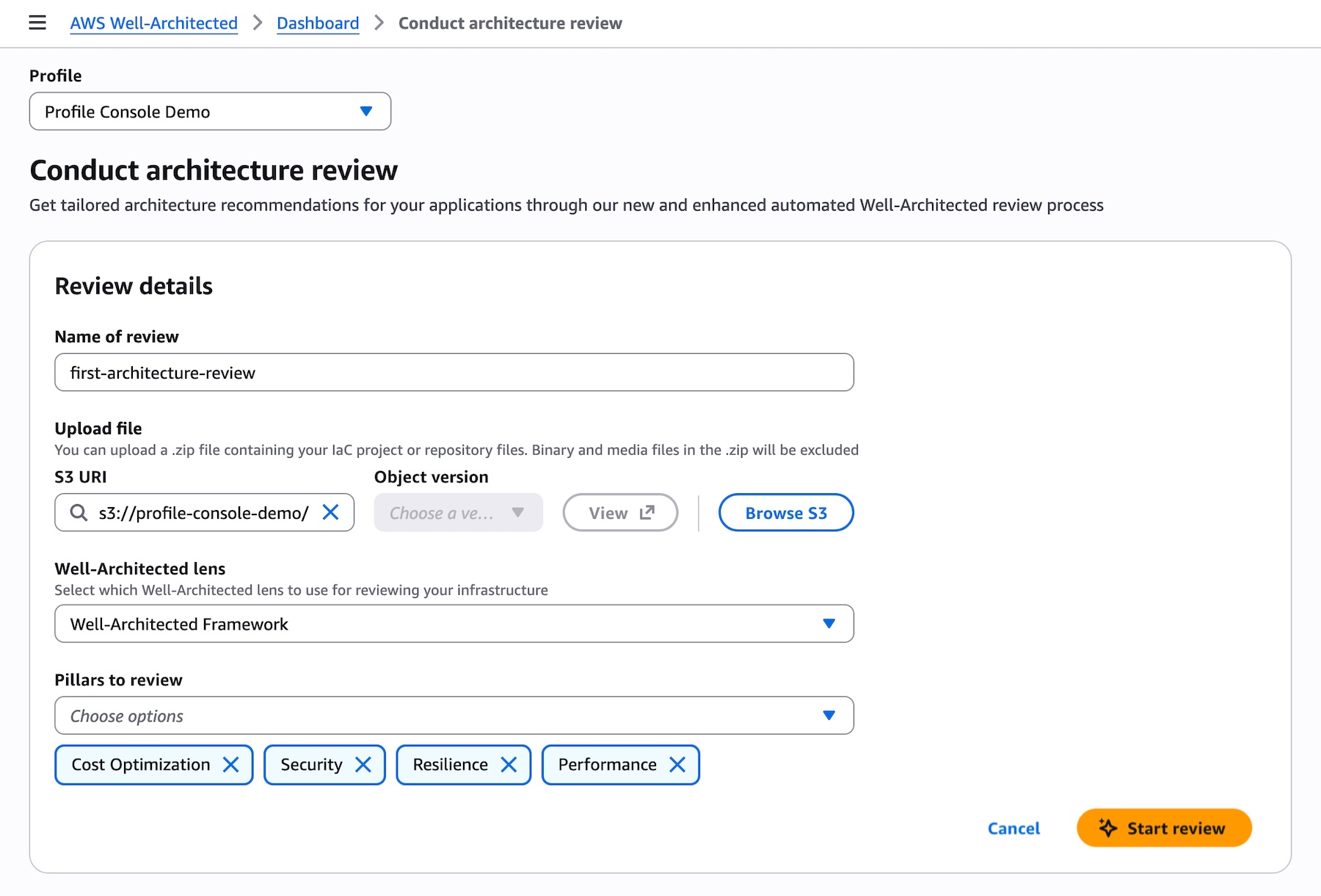
Access to the service is structured to support existing enterprise support tiers. The Well-Architected Agent is delivered as a component of AWS Support and is available to customers maintaining an active AWS Support plan. Organizations interested in evaluating the service can initiate their first profile through the AWS Well-Architected console, with ongoing feedback channels managed through standard AWS Support contacts and account teams.
Implications for Cloud Operations and Security Teams
The deployment of autonomous architectural agents introduces profound implications for enterprise IT operations. By continuously evaluating infrastructure against a dynamic baseline of best practices, organizations can drastically shorten their mean time to remediation (MTTR) for architectural drift. Security vulnerabilities that might traditionally persist undetected until a formal quarterly audit can now be flagged, prioritized, and patched within hours of resource provisioning.
Moreover, the ability to enforce Well-Architected standards at the IaC stage empowers development teams to take proactive ownership of cloud hygiene. When engineers receive immediate, context-aware code modifications inside their IDEs rather than abstract compliance reports, the cultural barrier between development, security, and operations (DevSecOps) is significantly lowered.
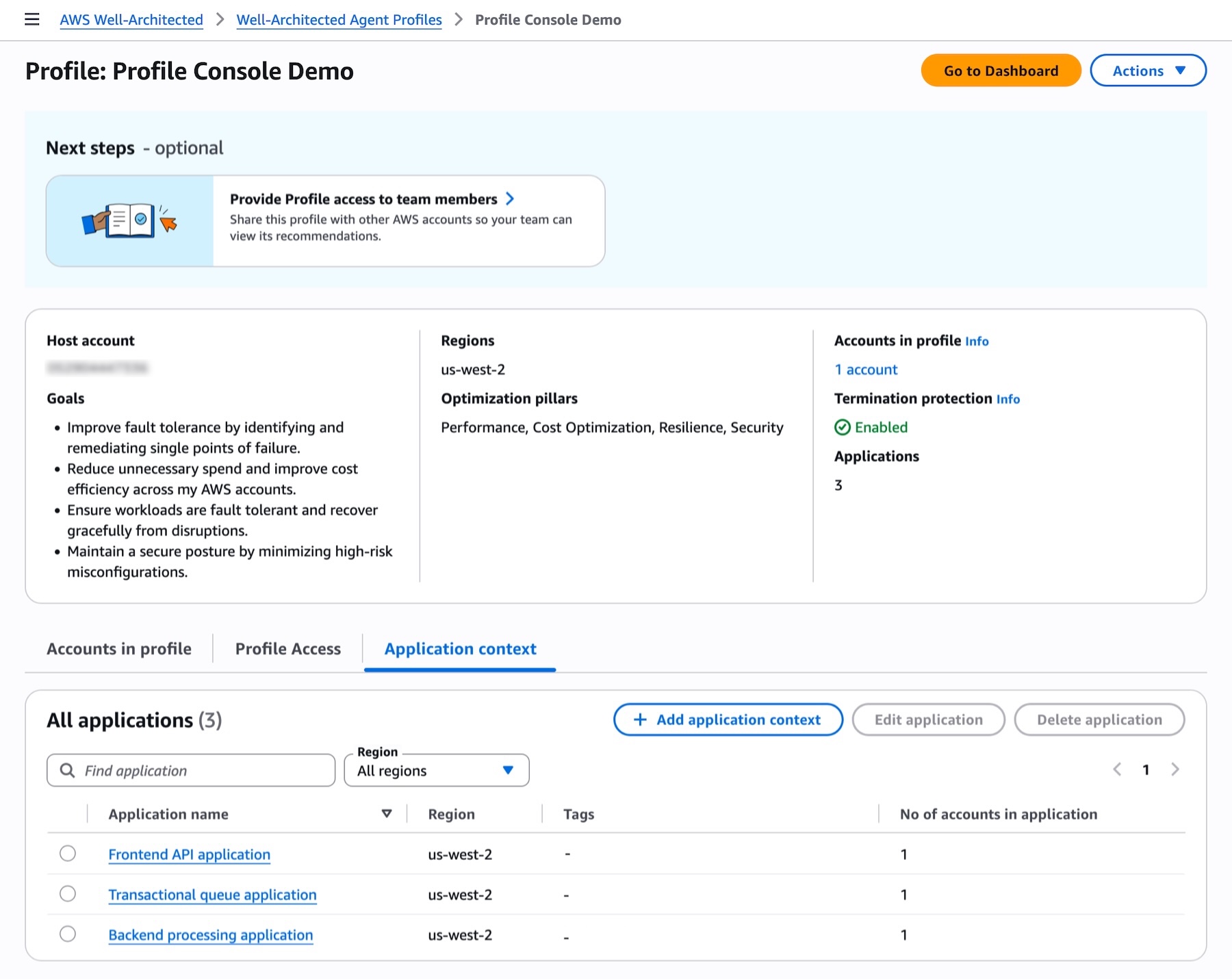
As the public preview progresses toward general availability, industry observers will be monitoring how effectively the agent scales across massive, multi-account enterprise environments containing hundreds of thousands of disparate resources. If the Well-Architected Agent successfully delivers on its promise of contextual, friction-free optimization, it could fundamentally redefine how organizations govern, secure, and maintain their cloud estates in the years to come.
