

The telecommunications sector in the Lao People’s Democratic Republic (Lao PDR) has undergone a profound transformation over the last decade, evolving from a nascent market into a competitive digital ecosystem that serves as a cornerstone of the nation’s economic development. By the end of 2021, the country reached a significant milestone, recording more than 10 million mobile subscribers. For a nation with a population of approximately 7.5 million, this figure highlights a high rate of multi-SIM usage and a deep penetration of mobile technology into the daily lives of Lao citizens. Currently, the market is defined by four major service providers: Unitel, Lao Telecom (LaoTel), TPlus Laos, and ETL Laos. These operators are navigating a complex landscape characterized by rapid technological shifts, geographic challenges, and a shifting regulatory environment aimed at fostering a digital economy.
Historical Context and the Chronology of Liberalization
The journey of the Lao telecommunications industry began in earnest in the mid-1990s. Lao Telecom was established in 1996 as a joint venture between the Lao government and Shenington Investments (a subsidiary of Thailand’s Thaicom). For years, it held a dominant position as the primary provider of both fixed-line and mobile services. However, the government recognized that modernization required competition and foreign investment.
In 2008, a landmark shift occurred with the entry of Unitel, a joint venture between Lao Asia Telecom and Vietnam’s military-run telecommunications giant, Viettel. Unitel’s aggressive strategy focused on rural expansion, which fundamentally altered the market share landscape. Following this, the Russian-backed VimpelCom entered the market in 2009 under the Beeline brand (now TPlus). By 2015, the Enterprise of Telecommunications Lao (ETL) was restructured to operate more competitively, later undergoing a significant transition when a Chinese firm, Jiafu Holdings, acquired a 51% stake in 2017. This chronology reflects a strategic move by the Lao government to leverage regional expertise—from Thailand, Vietnam, Russia, and China—to build a robust national infrastructure.

Market Share and Competitive Analysis
The competitive hierarchy in Laos is clearly defined, though the gap between the top two players and the smaller operators remains substantial. According to data from the Ministry of Post and Telecommunications (MPT), the market distribution as of the end of 2020 saw Unitel leading with a 51% market share. Lao Telecom followed with 34%, while TPlus and ETL held 10% and 5%, respectively.
Unitel: The Market Leader
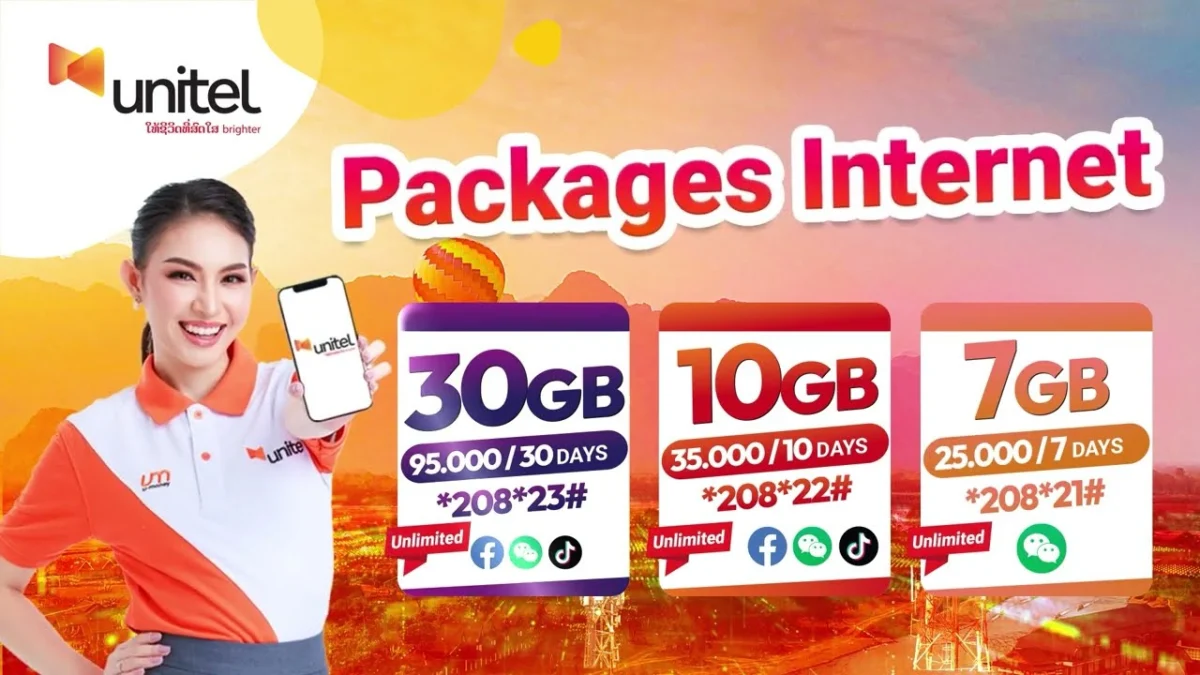
Unitel’s rise to the top of the Lao market is a case study in rural-first infrastructure deployment. By leveraging Viettel’s experience in emerging markets, Unitel invested heavily in placing towers in remote, mountainous provinces where other operators hesitated to go. With over 5 million subscribers, Unitel offers a comprehensive suite of services, including 4G LTE, fiber-to-the-home (FTTH), and digital financial services like "u-money." Their success is largely attributed to their extensive network coverage, which is currently the widest in the country.
Lao Telecom (LaoTel): The Established Power
As the second-largest operator with over 3 million subscribers, Lao Telecom maintains a strong foothold, particularly in urban centers and among government and corporate clients. LaoTel has often been the first to pilot new technologies, such as the initial 5G trials in Vientiane. Their service portfolio is diverse, ranging from traditional voice and data to mobile banking solutions (M-Money), catering to a loyal base that values the company’s long-standing presence in the country.
TPlus Laos and ETL: The Niche Competitors
TPlus (formerly Beeline) and ETL represent the more agile, albeit smaller, segments of the market. TPlus has historically targeted the youth demographic with vibrant branding and competitive data packages. ETL, meanwhile, has benefited from its partnership with Chinese investors, focusing on upgrading its network to 4.5G and 5G standards to compete on speed and reliability. While their market shares are smaller, their presence ensures that pricing remains competitive across the board.
Technological Evolution and Infrastructure Expansion
The technological trajectory in Laos has moved swiftly from basic GSM standards to high-speed data networks. While 2G and 3G networks remain essential for voice coverage in rural areas, the focus has shifted toward 4G LTE and the early stages of 5G deployment.
The deployment of 4G has been instrumental in supporting the government’s "Digital Laos" vision. High-speed internet has enabled the growth of e-commerce, digital payments, and social media, which are vital for the country’s burgeoning small and medium enterprise (SME) sector. Furthermore, the introduction of eSIM technology has marked a significant step in digital convenience. Specifically designed to assist the tourism sector, eSIMs allow international visitors to activate local plans via a QR code, bypassing the need for physical SIM cards. Platforms such as laosesim.com have become essential resources for travelers, reflecting a broader trend of digital integration in the hospitality industry.
Pricing Structures and Regional Comparison
In terms of affordability, Laos offers some of the most competitive mobile data pricing in Southeast Asia. The average cost per gigabyte of data typically ranges between $2 and $5. This competitive pricing is a result of the intense rivalry between Unitel and LaoTel, as well as the government’s mandate to keep essential communication services accessible to the lower-income population.
However, industry analysts note that while consumer prices are low, the cost of maintaining infrastructure in Laos is high due to the country’s landlocked and mountainous geography. This creates a thin profit margin for operators, who must balance the need for low consumer prices with the high capital expenditure required for network maintenance and upgrades.

Regulatory Framework and Government Initiatives
The Ministry of Post and Telecommunications (MPT) serves as the primary regulatory body, overseeing licensing, spectrum allocation, and consumer protection. In recent years, the MPT has tightened regulations regarding SIM card registration, citing national security and the prevention of telecommunications fraud as primary motivators.
The Lao government’s "Digital Economy Development Plan 2021–2025" is a pivotal policy document that guides the sector. This plan emphasizes the expansion of broadband internet to 100% of district centers and the promotion of digital literacy. The government is also working to harmonize its regulations with ASEAN standards to facilitate cross-border data flows and regional roaming agreements.
Challenges and Barriers to Growth
Despite the rapid growth, several challenges persist that could hamper the future of telecommunications in Laos:
- Infrastructure Limitations: The rugged terrain of the Annamite Range makes the installation of fiber optic cables and mobile towers exceptionally expensive.
- Skilled Labor Shortage: There is a significant gap in the local workforce regarding high-level telecommunications engineering and cybersecurity expertise, often requiring operators to rely on foreign consultants.
- Economic Fluctuations: As a country sensitive to currency fluctuations, the cost of importing telecommunications equipment (usually priced in USD or CNY) can vary wildly, affecting the long-term investment strategies of operators.
- Rural-Urban Divide: While Vientiane and Luang Prabang enjoy high-speed connectivity, many remote villages still struggle with inconsistent signals, limiting their participation in the digital economy.
Future Outlook: The Path to 5G and Beyond
The future of the Lao mobile market is inextricably linked to the rollout of 5G technology. With trials already conducted by Lao Telecom and Unitel, the commercial launch of 5G is expected to revolutionize sectors beyond just personal communication. In agriculture, IoT (Internet of Things) devices connected via 5G could monitor crop yields; in healthcare, telemedicine could bridge the gap for rural patients who cannot travel to the capital.

Moreover, the integration of mobile money is expected to deepen. With a large portion of the population remaining "unbanked," mobile operators are essentially becoming the country’s primary financial institutions. The expansion of these digital wallets into a unified payment system will likely be a major focus for the next five years.
Conclusion
Mobile operators in Laos have demonstrated remarkable resilience and growth, successfully transitioning the country into a mobile-first society. From the dominance of Unitel to the legacy of Lao Telecom and the competitive pressure from TPlus and ETL, the market is vibrant and evolving. While infrastructure and economic challenges remain, the government’s commitment to digital transformation and the arrival of 5G suggest that the telecommunications sector will remain the engine of growth for the Lao PDR. As the nation continues to move from being "landlocked" to "land-linked" through digital connectivity, the role of these four operators will be more critical than ever in shaping the country’s socio-economic future.
