
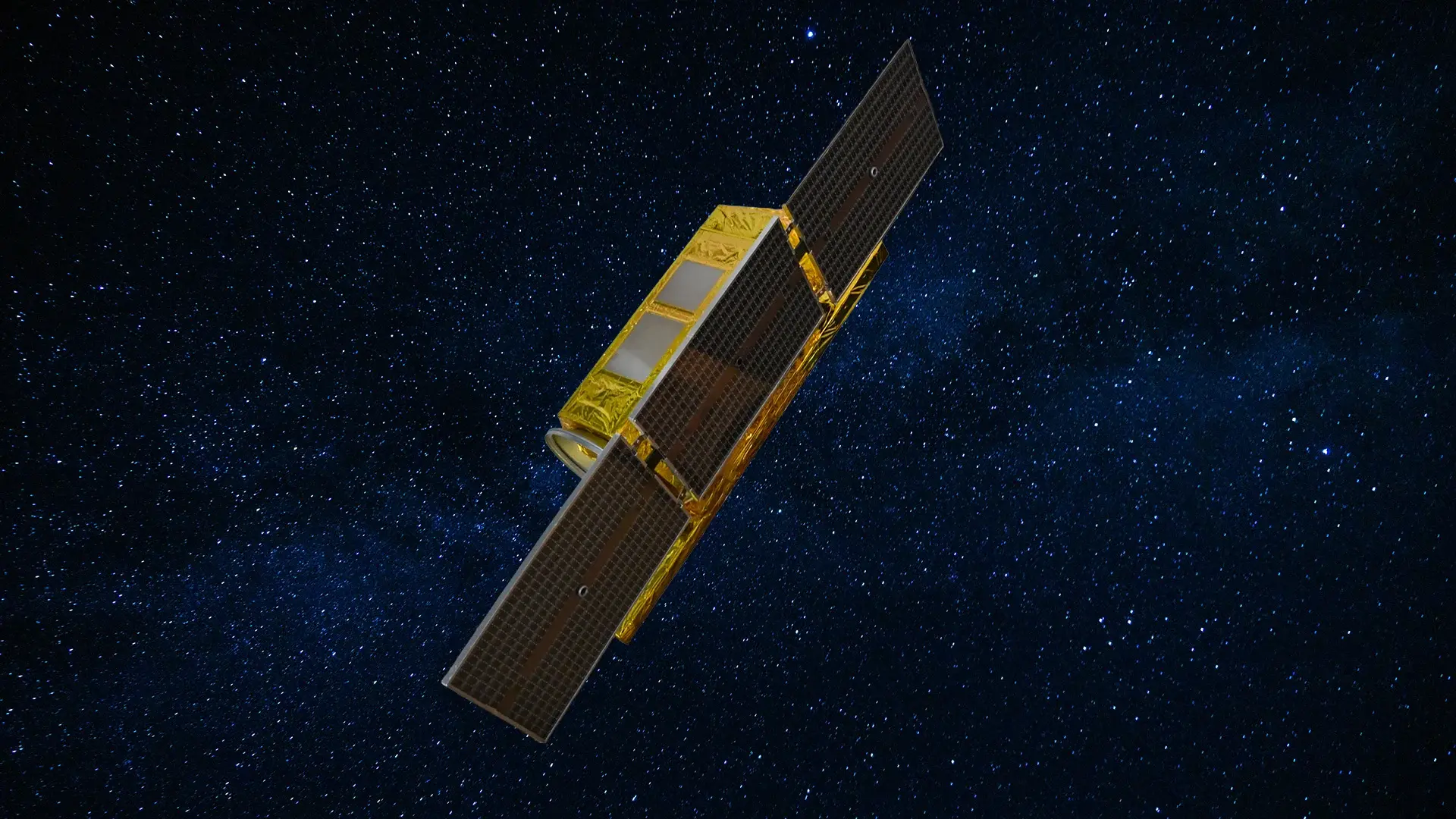

The European Defence Agency (EDA) has officially launched a pioneering research initiative aimed at establishing a sovereign military presence in the Very Low Earth Orbit (VLEO) region, marking a significant evolution in the continent’s space-based defense capabilities. This project, designated as VLEO-DEF, represents a concerted effort to design the first European military satellite concept specifically engineered for operation in the atmospheric fringes of the Earth. On March 13, the EDA formalized the commencement of this 36-month endeavor by signing a research contract valued at 15.65 million euros (approximately $17.87 million) with a high-level industrial consortium comprising 17 European industrial and research organizations. This strategic move is funded by five prominent European Member States—Spain, France, Luxembourg, Portugal, and Slovenia—underscoring a shared commitment to enhancing regional security through technological innovation.
Defining the VLEO Frontier: Technical and Strategic Advantages
The VLEO region is generally defined as the orbital space residing between 250 and 350 kilometers above the Earth’s surface. Traditionally, military and commercial satellites have operated in Low Earth Orbit (LEO), which typically spans from 500 to 2,000 kilometers, or in Geostationary Orbit (GEO) at roughly 35,000 kilometers. By descending to the VLEO altitude, the EDA aims to exploit unique physical advantages that are currently inaccessible to higher-altitude assets.
The primary driver for VLEO operations is the dramatic improvement in optical and signal resolution. Operating closer to the planet allows satellite sensors to capture imagery with significantly higher fidelity. In the realm of intelligence, surveillance, and reconnaissance (ISR), the proximity to the target reduces the "slant range," meaning that smaller, more cost-effective telescopes can achieve the same—or better—ground sample distance (GSD) as much larger and more expensive satellites located in traditional LEO. For military commanders, this translates into the ability to identify smaller objects, track tactical movements with greater precision, and conduct battle damage assessments with unprecedented clarity.
Furthermore, the reduction in distance facilitates lower latency in signal transmission. In modern warfare, where seconds can determine the success of an interception or a tactical maneuver, the faster delivery of data from space-based sensors to ground-based command centers is a critical asset. VLEO satellites require less power for communication and can transmit data bursts more efficiently, creating a more responsive "sensor-to-shooter" cycle.
Chronology of European VLEO Development
The inception of VLEO-DEF is not an isolated event but rather the latest milestone in a structured roadmap developed by the European Defence Agency to master sub-LEO altitudes. The agency’s interest in this domain has intensified as traditional orbits become increasingly congested and contested.
In 2024, the EDA laid the groundwork for this transition with the LEO2VLEO project. This earlier initiative, supported by Austria and the Netherlands, focused on the development of a constellation of three satellites designed with "orbital agility." The objective of LEO2VLEO was to demonstrate that satellites could be designed to maneuver between traditional LEO altitudes and VLEO zones. This "dip-in" capability allowed assets to descend temporarily to perform high-resolution tasks before ascending back to a more stable higher orbit to conserve fuel and avoid atmospheric drag.
The transition from LEO2VLEO to VLEO-DEF signifies a shift from experimental maneuvering to dedicated, persistent presence. While the 2024 project proved the feasibility of altitude transitions, VLEO-DEF seeks to solve the fundamental engineering challenges of staying in VLEO permanently. The 36-month timeline of VLEO-DEF is structured to move from conceptual design to a finalized military satellite architecture, setting the stage for future procurement and deployment cycles by the end of the decade.
The Consortium and Funding Architecture
The financial and intellectual backing of VLEO-DEF highlights the collaborative nature of European defense procurement. The 15.65 million euro investment is not drawn from a general EU budget but is specifically provided by the five participating Member States. This model reflects the "opt-in" nature of EDA projects, where nations with specific strategic interests pool resources to drive high-tech research.
Spain and France, as major players in the European aerospace sector, provide the foundational industrial expertise. France’s involvement is particularly noteworthy given its recently updated space defense strategy, which emphasizes "active defense" and the protection of space assets. Luxembourg, a global hub for satellite communications and commercial space ventures, brings financial and logistical sophistication. Portugal and Slovenia represent the growing aerospace ambitions of smaller European nations, seeking to integrate their domestic industries into the continent-wide defense supply chain.
The consortium of 17 organizations includes a mix of "Old Space" defense giants and "New Space" startups, alongside academic research institutions. This diversity is essential because VLEO presents environmental challenges that traditional satellite designs cannot withstand. The consortium will focus on material science—specifically developing coatings that can resist atomic oxygen erosion—and advanced propulsion systems, such as air-breathing electric propulsion (ABEP), which could theoretically use the thin atmosphere at 250km as a propellant source.
Technical Hurdles: Atmospheric Drag and Atomic Oxygen
Despite the clear advantages of VLEO, the region remains largely underutilized due to significant physical barriers. At altitudes below 350 kilometers, the Earth’s atmosphere is thin but still dense enough to create substantial aerodynamic drag. This drag causes satellites to lose velocity rapidly, leading to orbital decay and eventual re-entry if not countered by constant propulsion.
A second major challenge is the presence of atomic oxygen (ATOX). At these altitudes, ultraviolet radiation breaks down diatomic oxygen molecules into highly reactive single atoms. These atoms are extremely corrosive and can degrade traditional satellite materials, solar panels, and optical coatings within months.
The VLEO-DEF project will dedicate a significant portion of its research to these two areas. The project aims to design a satellite bus that is aerodynamically streamlined—looking more like a sleek aircraft than a traditional boxy satellite—to minimize drag. Additionally, the research will explore the use of novel polymers and ceramic coatings designed to withstand the "sandblasting" effect of atomic oxygen. By solving these issues, the EDA hopes to extend the operational lifespan of VLEO assets from a few months to several years, making them economically viable for military use.
Strategic Implications and Operational Impact
The move to VLEO carries profound implications for European strategic autonomy. Currently, many European nations rely on high-altitude commercial imagery or US military assets for high-resolution intelligence. A dedicated European VLEO constellation would provide independent, high-revisit-rate surveillance capabilities that are less susceptible to certain types of interference.
From a defensive perspective, VLEO satellites are inherently more resilient against certain anti-satellite (ASAT) threats. Their high orbital velocity and proximity to the atmosphere make them difficult targets for ground-based kinetic interceptors. Furthermore, the "self-cleaning" nature of VLEO—where any debris created by a collision or malfunction naturally decays and burns up in the atmosphere within days—prevents the long-term orbital contamination that plagues higher LEO altitudes. This makes VLEO a "sustainable" military environment.
The project also aligns with the concept of "Responsive Space." Because VLEO satellites are smaller and can be launched by lighter, more affordable rockets, they can be deployed rapidly to replace lost assets or to provide surge capacity over a specific conflict zone. The VLEO-DEF concept is expected to emphasize modularity, allowing different sensor payloads (optical, radar, or signals intelligence) to be integrated into a standardized satellite bus.
Official Perspectives and Industry Reaction
While specific statements from individual ministers are often reserved for project completion, the EDA has framed VLEO-DEF as a cornerstone of the EU’s "Space Strategy for Security and Defence." Officials within the agency have indicated that this project is a direct response to the "contested, congested, and competitive" nature of modern space.
Industry experts suggest that the 15.65 million euro contract is an "anchor investment" intended to de-risk the technology for the private sector. By funding the difficult early-stage research into materials and propulsion, the five Member States are enabling European companies to take a lead in a global VLEO market that is expected to grow as the demand for real-time Earth observation increases.
Analysts at leading aerospace consultancies have noted that VLEO-DEF represents a move toward "disaggregated" satellite architectures. Instead of relying on a few massive, expensive satellites (which are "juicy targets" for adversaries), the military of the future will likely use swarms of smaller VLEO satellites that provide persistent, redundant coverage.
Conclusion: The Road to 2029 and Beyond
As the VLEO-DEF project embarks on its 36-month journey, the focus will remain on turning theoretical physics into operational hardware. The success of this project will be measured by its ability to deliver a viable design that addresses the twin challenges of drag and degradation. If successful, the project will likely lead to a follow-on demonstration mission, where a prototype VLEO-DEF satellite is launched to validate the consortium’s findings in the actual space environment.
The roadmap initiated by the EDA signals a clear message: Europe intends to be a leader, not a follower, in the next generation of orbital defense. By reclaiming the "very low" ground, the European Union is positioning itself to maintain a watchful eye over global developments with a level of detail and speed that was once the stuff of science fiction. The 15.65 million euro investment is more than just a research grant; it is a down payment on the future of European sovereign security in the stars.
