
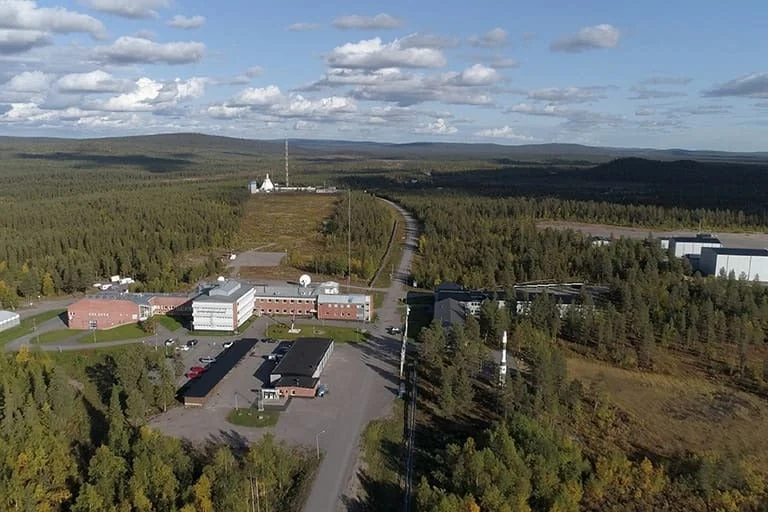

Sweden has officially initiated a pivotal transformation in its national defense and aerospace infrastructure, marking a significant step toward achieving full sovereign control over satellite deployment. In a move designed to bolster national security and enhance European space resilience, SSC Space (Svenska Rymdaktiebolaget) has signed a comprehensive agreement with the Swedish Defense Materiel Administration (FMV) to establish a dedicated satellite launch capability at the Esrange Space Center. Valued at SEK 209 million (approximately $22 million), the contract underscores Sweden’s commitment to securing its own access to orbit, moving away from a historical dependence on foreign launch providers.
The agreement, the details of which were formalized on March 16, provides the framework for the development of advanced systems and infrastructure required to ensure the protection, availability, and reliable execution of satellite launches. While the primary beneficiary of this domestic capability will be the Swedish Armed Forces, the infrastructure is also designed to serve the strategic needs of international partners and allies, particularly within the framework of NATO and European Union defense cooperation. With a target operational date set for 2028, Sweden is positioning itself as a critical northern hub for orbital access in an era of heightened geopolitical volatility.
Strategic Objectives and Financial Framework
The contract between SSC and FMV is not an isolated procurement but the cornerstone of a broader, multi-year national strategy. In 2023, the Swedish government made a landmark decision to allocate approximately SEK 1 billion ($105.44 million) to the Swedish Armed Forces through 2032 to accelerate the development of the nation’s space capabilities. This financial commitment reflects a paradigm shift in how Stockholm views the space domain—no longer merely a realm for scientific exploration, but a contested strategic environment essential for modern warfare and national resilience.
The funding initiative is multifaceted. Beyond the establishment of launch capabilities, the government’s mandate includes the enhancement of Space Situational Awareness (SSA), which involves tracking debris and monitoring the activities of foreign actors in orbit. It also involves the expansion of physical infrastructure at the Esrange Space Center, located north of the Arctic Circle near Kiruna. This cooperation between the FMV and SSC is intended to provide the Swedish Armed Forces with the flexibility to carry out multiple satellite launches on short notice, a capability often referred to as "responsive space."
The partnership began its initial phase in December 2024, when FMV and SSC Space established a collaborative framework to begin the technical and logistical setup of the project. This early alignment was crucial for defining the security protocols and technical requirements necessary for handling sensitive defense payloads.
The Evolution of Esrange Space Center
The Esrange Space Center is uniquely positioned to fulfill Sweden’s orbital ambitions. Established in 1966, the facility has long been a world-class site for suborbital sounding rockets and high-altitude research balloons. However, the transition to orbital launches represents a major technological leap. Its geographic location at 67°N latitude makes it one of the most advantageous sites in the world for launching satellites into polar or Sun-synchronous orbits (SSO). These orbits are particularly valuable for Earth observation, reconnaissance, and environmental monitoring, as they allow satellites to pass over the Earth’s poles and view every part of the globe under consistent lighting conditions.
In January 2023, Sweden inaugurated "Spaceport Esrange," the first orbital launch complex on mainland Europe. The new agreement with the FMV builds upon this existing infrastructure, adding the specialized security layers and military-grade command-and-control systems required for defense missions. By 2028, the site is expected to handle the full lifecycle of a mission—from payload integration and fueling to final countdown and orbital insertion.
Strengthening European Autonomy and NATO Integration
The drive for a domestic launch capability is deeply intertwined with Europe’s broader "launcher crisis." For years, Europe relied heavily on the heavy-lift Ariane 5, the medium-lift Soyuz (via a partnership with Russia), and the light-lift Vega. However, the retirement of the Ariane 5, the cessation of cooperation with Russia following the invasion of Ukraine, and technical setbacks with the Ariane 6 and Vega-C have left the continent with a temporary "gap" in its access to space.
By developing Esrange, Sweden is contributing to the diversification of European launch sites. While the Guiana Space Centre in Kourou, French Guiana, remains Europe’s primary gateway to space, having a mainland European alternative provides critical redundancy. For the Swedish Armed Forces, this means the ability to launch reconnaissance or communication satellites without navigating the logistical complexities of shipping sensitive hardware across the Atlantic to South America.
Furthermore, Sweden’s recent accession to NATO has reframed its space ambitions. As a member of the alliance, Sweden’s ability to provide secure, rapid launch services becomes an asset for the collective defense of the Nordic and Baltic regions. The capability to replace incapacitated satellites quickly is a core component of NATO’s space strategy, and Esrange is poised to become a vital node in this resilient architecture.
Official Perspectives and Leadership
The leadership at SSC Space has emphasized that the agreement is a milestone for both national and regional security. Charlotta Sund, President and CEO of SSC Space, noted that the initiative strengthens Sweden’s freedom of action in a domain that is increasingly characterized by competition and strategic maneuvering.
"This agreement is an important step in the development of Sweden’s and Europe’s space capabilities," Sund stated. "By building a national satellite launch capability from Esrange, we are strengthening both Sweden’s and Europe’s access to space, for both the Swedish Armed Forces and commercial operators, and contributing to increased resilience and freedom of action in an increasingly strategic domain."
Industry analysts suggest that the "dual-use" nature of the Esrange expansion—serving both military and commercial clients—is a pragmatic approach to economic sustainability. While the FMV contract focuses on defense, the infrastructure upgrades will likely attract commercial small-satellite launch providers seeking a reliable European base. This synergy ensures that the Swedish taxpayer’s investment yields both security dividends and economic growth in the Arctic region.
Technical Requirements and the Smallsat Revolution
The focus of the new launch capability will primarily be on small satellites, or "smallsats." The global space industry has shifted toward constellations of smaller, cheaper satellites rather than single, massive, and expensive platforms. For a nation like Sweden, smallsats offer a cost-effective way to achieve high-revisitation rates for intelligence, surveillance, and reconnaissance (ISR).
The 2028 operational goal requires several key technical milestones:
- Infrastructure Hardening: Ensuring that the launch pads and data links at Esrange are protected against both physical and cyber threats.
- Launch Vehicle Compatibility: Developing flexible ground support equipment that can accommodate various micro-launchers currently being developed by private aerospace companies in Europe and North America.
- Regulatory Frameworks: Establishing clear protocols for airspace management and maritime safety during launches, particularly given the proximity to international flight paths and fishing grounds in the Norwegian Sea.
Chronology of Sweden’s Space Advancement
The path to the current agreement can be traced through several key milestones over the past decade:
- 2018: The Swedish government begins a formal review of its national space strategy, identifying the need for increased sovereign capability.
- October 2020: The government announces the decision to establish orbital launch capabilities at Esrange.
- January 2023: King Carl XVI Gustaf and EU officials officially inaugurate the orbital launch site at Esrange, signaling Sweden’s readiness to host satellite missions.
- May 2023: The "Strategy for Space Activities" is updated, emphasizing the role of space in national security and the allocation of SEK 1 billion for defense-related space projects.
- December 2024: FMV and SSC Space initiate preliminary collaboration to define the scope of the military launch project.
- March 2025: The formal SEK 209 million contract is signed, setting the 2028 deadline for operational readiness.
Broader Implications and Fact-Based Analysis
The implications of this contract extend far beyond the borders of Sweden. For the global space market, the entry of a state-backed orbital site in Scandinavia provides a competitive alternative to sites in the United Kingdom (SaxaVord) and Norway (Andøya).
From a defense perspective, the move signifies the "normalization" of space as a military theater for medium-sized powers. Previously, only superpowers maintained independent launch capabilities. Today, the decreasing cost of launch technology and the increasing importance of space-based data for terrestrial operations have made domestic launch a viable and necessary pursuit for nations like Sweden.
However, the project is not without challenges. The 2028 timeline is ambitious, requiring seamless coordination between government agencies, private contractors, and international regulatory bodies. Additionally, the harsh Arctic environment at Esrange presents unique engineering hurdles, particularly for year-round launch operations in sub-zero temperatures.
Despite these challenges, the economic impact on the Norrbotten region is expected to be overwhelmingly positive. The expansion of Esrange is projected to create high-skilled jobs in Kiruna and foster a local ecosystem of aerospace startups, ranging from satellite manufacturers to data analytics firms. This "New Space" economy will benefit from the stable, long-term commitment of the Swedish government.
Conclusion
As Sweden moves toward 2028, the agreement between SSC Space and the FMV stands as a testament to the nation’s proactive stance in a changing global order. By investing in the infrastructure of the future, Sweden is ensuring that it remains a master of its own destiny in the stars. The ability to launch, control, and protect satellites from its own soil provides the Swedish Armed Forces with an essential tool for modern defense, while simultaneously cementing Sweden’s role as a leader in the burgeoning European space sector. The SEK 209 million contract is more than a financial transaction; it is a strategic investment in the sovereignty, security, and technological prowess of the Swedish state.
