
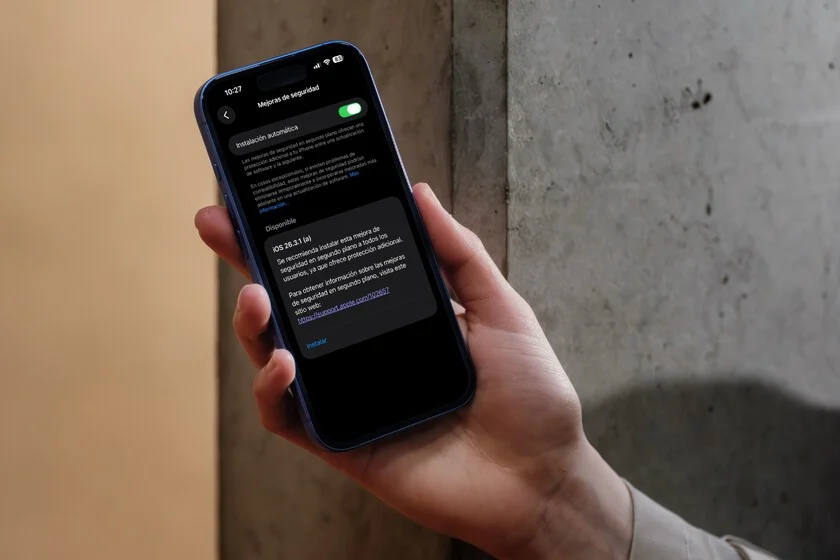

Apple has long been refining its approach to software updates, aiming to deliver essential fixes without burdening users with the traditional lengthy download, system reboot, and waiting period associated with major operating system upgrades. The company has now taken a significant step forward in this endeavor by introducing a new system designed to provide small, faster security corrections, decoupled from the larger, feature-rich versions of its operating systems. This innovative mechanism, dubbed "Background Security Improvements," represents a pivotal shift in how Apple addresses critical vulnerabilities, prioritizing agility and user convenience.
This development is not merely a theoretical concept or a feature confined to developer betas; it is a fully operational system already deployed in the wild. On March 17, 2026, Apple initiated its first public rollout of these Background Security Improvements, a strategic formula meticulously designed to patch specific vulnerabilities that emerge between comprehensive updates for iOS, iPadOS, and macOS. The core benefit for users is profound: the ability to receive crucial security fixes without the necessity of waiting for an expansive new version of the operating system to be released, downloaded, and installed. This proactive stance significantly narrows the window of opportunity for malicious actors, fortifying the security posture of millions of Apple devices globally.
Understanding Background Security Improvements: A New Paradigm for Digital Defense
Apple officially characterizes these new improvements as "lightweight security releases." Their purpose is precisely tailored: to deliver targeted patches for critical components such as Safari, the underlying WebKit engine, and other fundamental system libraries. These are areas that frequently become targets for exploits and can greatly benefit from more frequent, smaller patches rather than being bundled into less frequent, larger OS updates. It is crucial to understand that these Background Security Improvements do not serve as a replacement for standard, comprehensive operating system updates. Instead, they act as a vital interstitial layer, filling the security gap that can emerge between full OS versions when a vulnerability necessitates immediate attention.
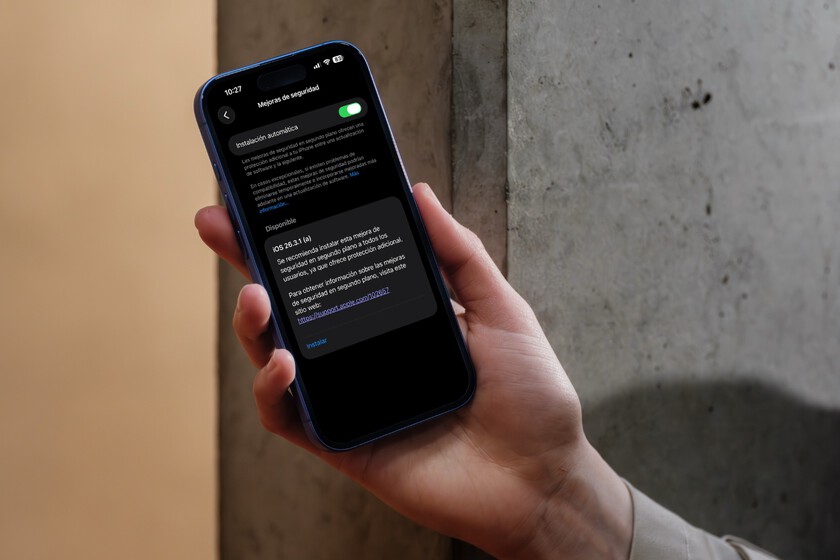
This approach fundamentally alters the traditional logic of software security. Historically, serious security corrections were almost exclusively integrated into broader system updates, often alongside new features, performance enhancements, and bug fixes. This monolithic update model, while effective, carried inherent drawbacks. The sheer size of these updates often led to longer download times, required device reboots, and consequently, a tendency for users to postpone installation, leaving their devices vulnerable for extended periods. With the advent of Background Security Improvements, Apple can now deploy a specific, surgical fix without necessitating a full-scale system overhaul. In practical terms, this translates to significantly smaller downloads, reduced waiting times, and a vastly quicker installation process compared to a traditional operating system update. This streamlining is expected to boost user adoption rates for critical security patches, thereby enhancing the overall security ecosystem.
The Evolving Threat Landscape and Apple’s Response
The digital threat landscape has become increasingly sophisticated and relentless. Nation-state actors, organized cybercrime groups, and individual hackers constantly probe for weaknesses in operating systems and popular applications. Zero-day exploits—vulnerabilities unknown to the software vendor—are particularly insidious, offering attackers a brief but potent window to compromise systems before a patch can be developed. In this environment, the speed of response is paramount. Traditional update cycles, often spanning weeks or months between major releases, can leave millions of devices exposed to severe risks.
Apple’s move with Background Security Improvements can be seen as a direct response to this escalating threat. While Apple has always maintained a strong reputation for security, the pressures to deliver timely patches have never been higher. Other major players in the tech industry have also explored similar modular security update strategies. Google, for instance, introduced Project Mainline for Android, aiming to decouple core OS components and security modules from full Android versions, allowing for faster and more consistent updates. Apple’s implementation brings a similar level of granular control and responsiveness to its own highly integrated ecosystem, reinforcing its commitment to user security in an era of persistent cyber threats.
The Inaugural Patch: A Critical Fix for WebKit
The first public deployment of Apple’s Background Security Improvements, released on March 17, 2026, targeted a significant vulnerability across its core platforms: iOS 26.3.1, iPadOS 26.3.1, and macOS 26.3.1. This initial improvement addressed a critical flaw within WebKit, the powerful rendering engine that underpins Apple’s Safari browser and is extensively used by third-party browsers and applications across its operating systems.

The specific vulnerability, identified as CVE-2026-20643, posed a substantial risk: it allowed malicious web content to bypass the same-origin policy. The same-origin policy is a fundamental security mechanism within web browsers, designed to prevent scripts from one website (origin) from interacting with resources from another website (origin). This policy is crucial for isolating potentially malicious code and protecting user data from cross-site scripting (XSS) attacks, data theft, and unauthorized access. A bypass of this policy could enable an attacker to inject malicious scripts into legitimate websites, steal cookies or other sensitive information, or even execute arbitrary code on the user’s device simply by tricking them into visiting a compromised webpage. Apple stated that the problem was mitigated through improved input validation, a common technique to sanitize and verify data before it is processed, thereby preventing malicious inputs from exploiting the vulnerability.
While this update was not accompanied by any new user-facing features or visual enhancements, its significance lies precisely in its discreet yet critical nature. By choosing to launch its new security patching mechanism with a fix for WebKit, Apple demonstrated its capability to swiftly address one of the most sensitive points in its ecosystem: the security of web browsing and online interactions. This initial patch underscores the potential of Background Security Improvements to shield users from severe threats that could otherwise remain unaddressed for longer periods, awaiting the next major OS release.
User Experience and Management of Background Security Improvements
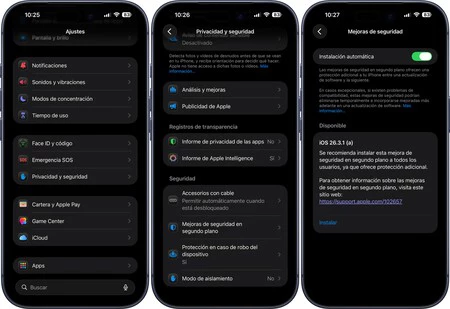
Apple has designed these new security improvements to be as seamless and unobtrusive as possible for the end-user. The company has indicated that this system is available exclusively on the most recent versions of iOS, iPadOS, and macOS, specifically on compatible devices. Users can manage these settings by navigating to "Privacy & Security" and then selecting "Background Security Improvements" within their device settings.
For most users, especially those who have automatic updates enabled, these patches are designed to arrive and install with minimal effort or intervention. The system is engineered to apply these fixes in the background, often requiring little to no user action. If automatic installation is not enabled, users retain the option to manually trigger the installation from the same dedicated settings section. This flexibility ensures that users who prefer more control over their updates can still benefit from the rapid deployment of critical security fixes.

One of the most appealing aspects of these improvements is the dramatically reduced time required for their application. In many instances, the fixes may only necessitate a quick device restart, a far cry from the extended downtime associated with full OS updates. Apple has even noted that when a patch specifically targets Safari on macOS, it might only require restarting the browser itself, rather than the entire computer. This level of granular control and minimal disruption is a game-changer for user convenience and device availability.
The true value proposition extends beyond mere speed. This new mechanism fundamentally changes the velocity with which Apple can effectively "close a door" to potential exploits, without being constrained by the need to package a comprehensive, multi-gigabyte operating system update. This significantly shrinks the window of exposure when a serious vulnerability is discovered, providing a more robust defense against rapidly evolving cyber threats. Moreover, the ease and speed of installation are highly likely to increase user compliance, meaning fewer users will postpone or ignore critical security patches, further strengthening the collective security of the Apple ecosystem.
Broader Implications and Industry Impact
The introduction of Background Security Improvements carries significant implications for Apple, its users, and the wider technology industry.
For Apple Users: The most immediate and tangible benefit is enhanced security. Users can rest assured that their iPhones, iPads, and Macs are receiving timely protection against emerging threats, often without even noticing the process. This translates to less hassle, fewer disruptions, and a more secure computing experience. The increased likelihood of users installing patches promptly means a safer environment for everyone, as fewer unpatched devices reduce the overall attack surface.
For Apple as a Company: This initiative solidifies Apple’s reputation as a leader in privacy and security. It demonstrates a proactive, sophisticated approach to managing the complex demands of modern software security. Internally, it allows Apple’s security teams greater flexibility and agility in responding to vulnerabilities, potentially easing the pressure to rush major OS releases solely for security fixes. It also represents a strategic investment in the long-term integrity and trustworthiness of its platforms, which are crucial differentiators in a competitive market.
For the Technology Industry: Apple’s move sets a new benchmark for how software vendors can and should handle security updates. As one of the world’s most influential technology companies, its adoption of such a granular and rapid patching system could prompt other vendors to re-evaluate their own update strategies. This could lead to a broader industry shift towards more modular, less intrusive, and faster security patching mechanisms, ultimately benefiting all consumers across various platforms. The implicit message is clear: in an age of constant cyber threats, speed and efficiency in patching are no longer optional but essential.
Looking ahead, this development suggests a clear strategic direction for Apple: a future with fewer cumbersome, monolithic patches and more discrete, rapid corrections between major versions. This philosophy aligns with a broader trend in software development towards continuous integration and continuous delivery (CI/CD), applying principles of agile development to the critical domain of security. While the full impact will unfold over time, the initial rollout of Background Security Improvements on March 17, 2026, marks a significant milestone, ushering in an era of more resilient and responsive digital defense for Apple users worldwide. It underscores a fundamental shift in how one of the world’s leading technology companies envisions and delivers protection in an ever-evolving digital landscape.
