
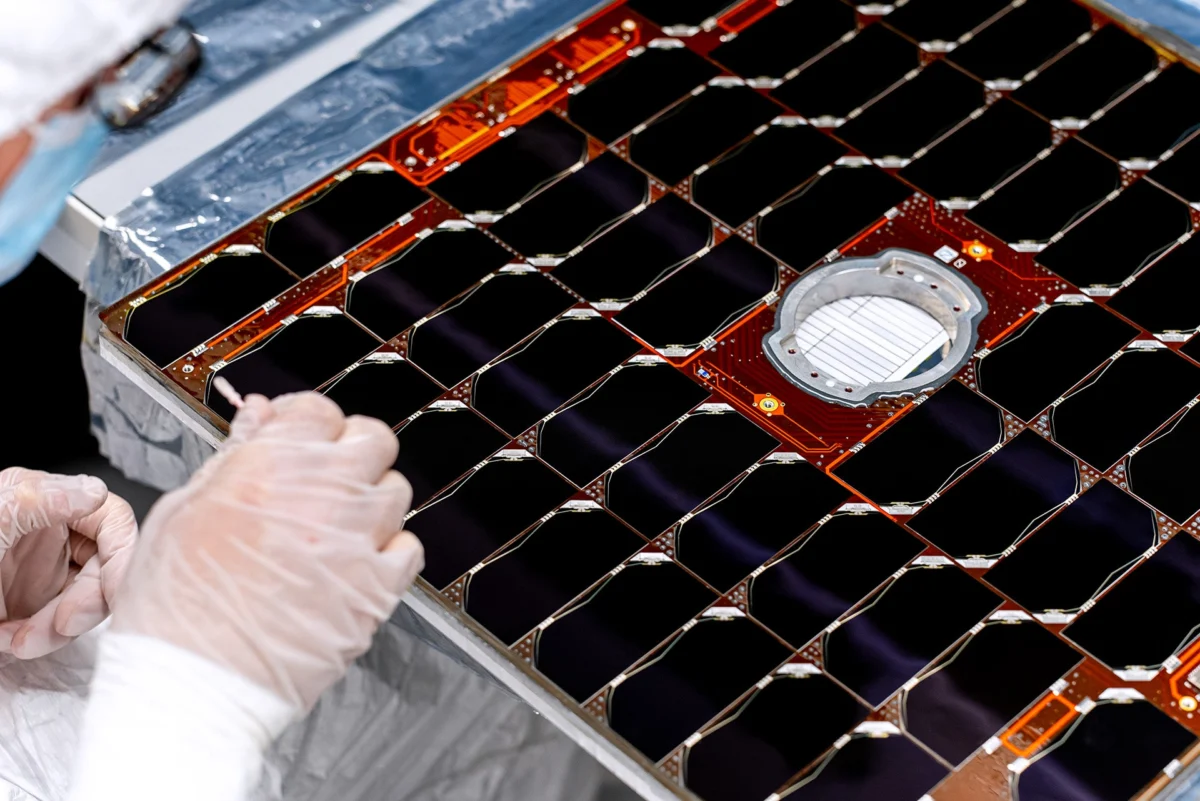

Flexell Space and Kongsberg NanoAvionics have officially entered into a strategic partnership to supply advanced solar arrays for K-LEO, South Korea’s sovereign Low-Earth Orbit (LEO) national security constellation. The announcement, made by Flexell Space in a statement on Wednesday, marks a significant milestone in the development of South Korea’s independent space-based reconnaissance and secure communication infrastructure. Hanwha Systems, a leading global defense and technology company based in Seoul, is currently spearheading the development of the K-LEO satellites, serving as the primary integrator for the project.
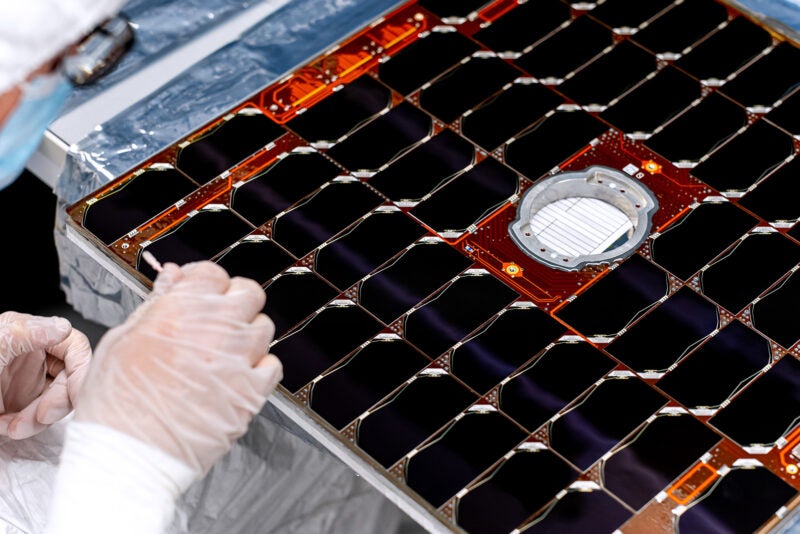
Under the terms of the agreement, Lithuania-based Kongsberg NanoAvionics will leverage its extensive experience in small satellite engineering to design and manufacture the solar arrays. South Korea-based Flexell Space will take on the critical role of quality assurance testing, ensuring that every component meets the stringent requirements and rigorous standards dictated by the South Korean government and national security protocols. This division of labor combines European manufacturing precision with South Korean oversight and technological integration.
The collaboration extends beyond the immediate requirements of the K-LEO mission. The two companies have confirmed they are exploring the long-term integration of Flexell’s proprietary copper indium gallium selenide (CIGS) and perovskite solar cells into the broader range of NanoAvionics’ cubesat and microsatellite platforms. This technological synergy aims to revolutionize power systems in the "New Space" sector by offering high-efficiency alternatives to traditional gallium arsenide (GaAs) cells while significantly reducing production costs and increasing mechanical flexibility.
The Strategic Importance of the K-LEO Constellation
The K-LEO project is a cornerstone of South Korea’s broader strategy to achieve space sovereignty. In an era of heightened geopolitical tensions in the Asia-Pacific region, the South Korean government has prioritized the development of its own satellite networks to reduce reliance on foreign intelligence assets. Historically, South Korea has relied heavily on United States satellite imagery and communication infrastructure. While the alliance remains strong, the K-LEO constellation represents a shift toward a multi-layered, independent defense posture.
K-LEO is designed to provide high-resolution surveillance and secure, high-bandwidth communications for national security operations. By operating in Low-Earth Orbit, these satellites offer lower latency and higher resolution compared to traditional geostationary (GEO) satellites. This is particularly crucial for monitoring activities on the Korean Peninsula and ensuring that the South Korean military maintains a "kill chain" capability—the ability to detect, track, and intercept potential threats in real-time.
The development of K-LEO follows a series of successful milestones in South Korea’s space program, including the launch of the Nuri rocket (KSLV-II) and the deployment of the 425 Project military reconnaissance satellites. The K-LEO constellation is expected to complement these existing assets by providing more frequent revisit times and more resilient communication links.
Advancing Solar Technology: CIGS and Perovskite
One of the most technically ambitious aspects of the Flexell and Kongsberg NanoAvionics partnership is the focus on next-generation solar cell technology. For decades, the space industry has relied on triple-junction gallium arsenide (GaAs) solar cells. While highly efficient, GaAs cells are expensive to produce, rigid, and heavy.
Flexell Space is championing the use of CIGS and perovskite tandem solar cells. CIGS technology is known for its high radiation resistance—a critical factor for satellites operating in the harsh environment of LEO, where they are constantly bombarded by charged particles. Perovskite cells, on the other hand, have seen a meteoric rise in efficiency in terrestrial applications over the last decade. By combining these materials into a tandem structure, Flexell aims to match or exceed the power output of GaAs cells at a fraction of the cost.
The flexibility of these thin-film solar cells also allows for innovative deployment mechanisms. Unlike rigid panels, these flexible arrays can be stowed more compactly during launch and deployed into larger surface areas once in orbit. This "high-power-to-weight" ratio is essential for microsatellites, which are often limited by the volume and mass constraints of their launch vehicles.
Tim Ahn, CEO of Flexell Space, emphasized the importance of this technological leap. "This collaboration goes beyond simple component procurement and represents an important opportunity to further strengthen our quality verification capabilities," Ahn said. "It will also serve as a meaningful milestone in accelerating the integration of our next-generation solar cells into actual satellite array systems."
Strengthening the Global Space Supply Chain
Kongsberg NanoAvionics’ role in the K-LEO project underscores the company’s growing influence in the global small satellite market. Based in Vilnius, Lithuania, NanoAvionics has become a go-to provider for satellite buses and subsystems, having participated in over 120 satellite missions and commercial projects.
Atle Woello, CEO of Kongsberg NanoAvionics, noted that the selection of his company by Flexell is a validation of their engineering prowess. "Being selected by Flexell is testimony to our strong subsystem portfolio spanning standard spacecraft components and expertly engineered tailored solutions that meet specific customer mission requirements," Woello said. He also highlighted a growing trend in the industry: "We are seeing increased interest in our products and services from other domestic national security missions."
The partnership reflects a broader trend of international collaboration in the defense sector. While the mission is a "sovereign" South Korean initiative, the involvement of a European manufacturer demonstrates the interconnected nature of the modern aerospace supply chain. By sourcing specialized subsystems from global leaders, Hanwha Systems can accelerate the development timeline of K-LEO while ensuring the constellation utilizes the most advanced technology available.
Hanwha Systems and the Collaborative Ecosystem
Hanwha Systems has been proactive in seeking international expertise to bolster the K-LEO project. In January 2026, the company announced separate Memorandums of Understanding (MoUs) with Canadian space giants Telesat and MDA Space. These agreements are focused on exploring the use of Telesat’s LEO communications infrastructure and MDA’s advanced satellite technology to enhance the K-LEO network.
This collaborative approach is part of the "Hanwha Space Hub" initiative, which seeks to integrate the various aerospace capabilities of Hanwha Group—ranging from rocket engines (Hanwha Aerospace) to satellite systems (Hanwha Systems) and Earth observation services (Satrec Initiative). By building a robust ecosystem of domestic and international partners, Hanwha aims to position itself as a top-tier global player in the space industry, capable of competing with established giants like SpaceX, Airbus, and Lockheed Martin.
The K-LEO constellation is expected to play a vital role in the "Integrated Defense Solution" that Hanwha provides to the South Korean Ministry of National Defense. This includes the integration of space assets with land, sea, and air platforms, creating a "hyper-connected" battlefield environment.
Chronology of South Korea’s LEO Ambitions
The path to K-LEO has been paved by several years of strategic planning and technological breakthroughs:
- 2021: South Korea and the United States agree to terminate the "Missile Guidelines," which previously restricted the range and payload of South Korean rockets. This opened the door for more ambitious space launch vehicle development.
- 2022: The successful second flight of the Nuri rocket (KSLV-II) proved South Korea’s ability to launch domestically produced satellites into orbit.
- 2023: The launch of the first satellite of the "425 Project," a military reconnaissance satellite program, marked the beginning of South Korea’s high-resolution orbital surveillance era.
- 2024-2025: Hanwha Systems secures the primary contract for K-LEO and begins scouting international partners for specialized subsystems.
- January 2026: Hanwha signs MoUs with Telesat and MDA Space to integrate communication and radar technologies.
- March 2026: Flexell Space and Kongsberg NanoAvionics announce their partnership for the K-LEO solar array supply.
Economic and Industrial Implications
The move toward sovereign LEO constellations like K-LEO is driving significant economic activity within the global space sector. According to industry reports, the LEO satellite market is projected to grow at a compound annual growth rate (CAGR) of over 15% through 2030. This growth is fueled by the demand for global internet coverage, Earth observation for climate monitoring, and national security requirements.
For South Korea, the K-LEO project is not just a defense necessity but an industrial opportunity. By fostering companies like Flexell Space, the government is nurturing a domestic high-tech sector that can eventually export its products to the global market. The transition from GaAs to CIGS/perovskite solar cells could specifically disrupt the satellite power market, which has long been characterized by high barriers to entry and high costs.
If Flexell and NanoAvionics successfully demonstrate the viability of these new solar arrays on K-LEO, it could lead to a standard shift in how small satellites are powered globally. The cost savings associated with these materials could make large-scale constellations more financially viable for commercial startups and smaller nations looking to establish their own space presence.
Future Outlook
As the K-LEO constellation moves closer to its initial launch dates, the focus will shift from design and manufacture to integration and testing. The rigorous quality assurance process led by Flexell Space will be critical in ensuring that the solar arrays can withstand the thermal cycling and radiation environment of LEO for their intended mission lifespan, typically 5 to 7 years for microsatellites.
The partnership between Flexell Space and Kongsberg NanoAvionics serves as a blueprint for how domestic national security projects can leverage global expertise while maintaining local control over quality and strategic requirements. As South Korea continues to expand its footprint in the "Final Frontier," the K-LEO constellation will stand as a testament to the country’s technological maturity and its commitment to securing its place in the modern space age.
The success of K-LEO will likely trigger further investments in sovereign satellite capabilities across the globe, as more nations seek the strategic advantages of LEO constellations. For now, the eyes of the aerospace industry remain on the collaboration between Lithuania and South Korea, watching as they build the power systems that will fuel the next generation of national security in orbit.
