
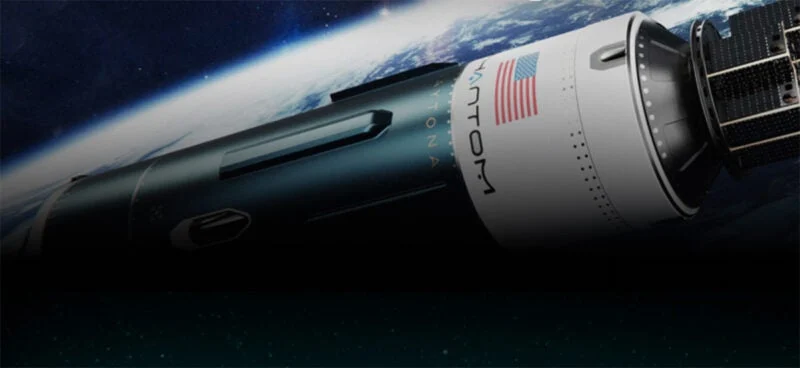

The landscape of the commercial space industry continues to shift toward consolidation and vertical integration as Phantom Space Corporation, a Tucson-based launch vehicle and satellite manufacturer, officially announced its acquisition of Thermal Management Technologies (TMT). This strategic move is designed to bolster Phantom Space’s internal supply chain and accelerate the deployment of its ambitious "Phantom Cloud" project—a planned constellation of orbital data centers. By absorbing TMT, a specialized manufacturer based in North Logan, Utah, Phantom Space secures a critical technological pillar necessary for high-performance satellite operations: the ability to manage extreme thermal loads in the vacuum of space.
Under the terms of the agreement, TMT will operate as a wholly-owned subsidiary of Phantom Space. While the financial specifics of the transaction remain undisclosed, the acquisition represents a significant expansion of Phantom’s hardware portfolio. TMT has long been a quiet powerhouse in the aerospace and defense sectors, providing sophisticated thermal control systems, including phase-change materials, heat pipes, and advanced radiators, to a variety of government and commercial clients. As part of the transition, TMT will maintain its existing contracts and continue to serve its current customer base, while simultaneously pivoting to become a joint developer for Phantom’s proprietary spacecraft.
Strengthening the Vertical Integration Strategy
The acquisition of TMT is the latest evidence of a broader trend within the "New Space" sector, where companies are increasingly moving away from a traditional "buy-and-assemble" model toward a vertically integrated approach. Similar to the strategies employed by industry leaders like SpaceX and Rocket Lab, Phantom Space is seeking to control as much of its production line as possible. By owning the thermal management technology, Phantom reduces its reliance on external vendors, mitigates supply chain risks, and potentially lowers the overall cost of satellite manufacturing.
Jim Cantrell, co-founder and CEO of Phantom Space, emphasized that this acquisition was not merely about adding assets to a balance sheet, but about securing a technical advantage. "TMT’s technology is a critical piece of the puzzle for our constellation," Cantrell stated. "They have deep expertise in satellite thermal components, and we see immense potential in their technology to improve the performance and reliability of our orbital infrastructure."
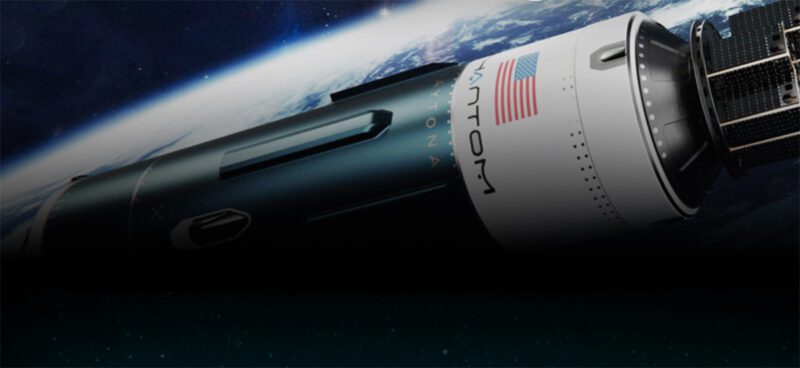
For Phantom Space, vertical integration is a survival and growth strategy. In an industry where launch delays and component shortages are common, having in-house expertise in specialized fields like thermal dynamics allows for faster iteration and tighter quality control. This is particularly vital as the company prepares its Daytona rocket for its inaugural flight and begins the mass production of its satellite buses.
The Thermal Management Imperative in Orbital Computing
The primary driver behind this acquisition is the development of the Phantom Cloud constellation. Unlike traditional communications satellites, which primarily relay signals, the Phantom Cloud satellites—specifically the Block I Phantom Cloud spacecraft—are designed to function as high-performance computing nodes in Low Earth Orbit (LEO). This "edge computing in space" concept allows for the processing of massive amounts of data, such as high-resolution satellite imagery or signals intelligence, directly in orbit before the information is sent down to Earth.
However, high-performance computing generates significant amounts of heat. In the vacuum of space, heat cannot be dissipated through convection (air movement), leaving only radiation and conduction as viable cooling methods. Without sophisticated thermal management systems, the delicate processors required for an orbital data center would quickly overheat and fail.
TMT’s specialized knowledge in managing these thermal requirements is what makes them an indispensable asset to Phantom. Their hardware ensures that the Block I spacecraft can maintain optimal operating temperatures while handling the high power-draw associated with data processing. This capability is expected to give Phantom Space a competitive edge over other constellation operators who may struggle with the thermal limitations of standardized, off-the-shelf satellite buses.
A History of Collaboration: The Cantrell and Schick Connection
The acquisition is also a story of long-standing professional relationships. Jim Cantrell and Scott Schick, the founder and General Manager of TMT, share a history that spans over four decades. Both men were colleagues at the Space Dynamics Laboratory (SDL) at Utah State University, an institution renowned for its contributions to space science and sensor technology.
This personal and professional history provided a foundation of trust that facilitated the merger. Scott Schick will remain at the helm of TMT as a subsidiary, ensuring continuity in leadership and technical direction. "Given my history with Jim and our shared vision for the future, this partnership was a natural step forward," Schick noted. "By joining Phantom, we are bringing together complementary strengths that will expand one another’s technical capabilities, enhance long-term stability, and accelerate the development of new hardware."
The synergy between the two leaders suggests a smoother integration process than is often seen in corporate mergers. The shared culture of engineering excellence fostered at Utah State University is likely to permeate the combined entity as they work toward the common goal of mass-producing space hardware.
From Vector Launch to TMT: A Timeline of Strategic Growth
The purchase of TMT is not an isolated event but rather the next chapter in a series of aggressive moves by Phantom Space to solidify its market position. The company has been on a trajectory of rapid expansion since its founding in 2019.
- 2019: Phantom Space is co-founded by Jim Cantrell and Michael D’Angelo with the goal of becoming the "Henry Ford of Space" through mass production.
- 2021: Phantom Space secures $5 million in seed funding and announces its intention to build the Daytona and Laguna launch vehicles.
- 2022-2023: The company focuses on engine development, successfully testing its Hadley engines, which are designed to power the Daytona rocket.
- February 2024: Phantom Space acquires the intellectual property (IP) of Vector Launch, a defunct rocket company previously founded by Cantrell. This acquisition provided Phantom with valuable engine designs and launch technology that had already undergone significant testing.
- May 2024: Phantom Space officially announces the acquisition of Thermal Management Technologies, marking its transition from a launch-focused company to a full-service space infrastructure provider.
This timeline illustrates a clear strategy: first, secure the means of transport (the rockets), then secure the intellectual property of predecessors (Vector), and finally, secure the specialized technology needed for advanced payloads (TMT).
Supporting Data and Market Context
The acquisition comes at a time when the global small satellite market is projected to grow exponentially. According to market research reports from organizations like Euroconsult and Quilty Space, the demand for small satellites is expected to reach an average of over 2,000 launches per year through 2030. Much of this demand is driven by the rise of mega-constellations for broadband internet, Earth observation, and now, orbital edge computing.
By positioning itself as both a launch provider and a satellite manufacturer, Phantom Space is targeting a total addressable market (TAM) that includes not only launch services (estimated at $15 billion by 2030) but also the burgeoning market for space-based data services.
The "orbital data center" niche is particularly lucrative. As the volume of data generated by Earth observation satellites increases, the "downlink bottleneck"—the limited capacity to send raw data to ground stations—becomes a major hurdle. Processing data in orbit reduces the amount of information that needs to be transmitted, effectively increasing the efficiency of the entire satellite network. Phantom Space’s move to acquire TMT directly addresses the hardware challenges associated with this high-value application.
Implications for the Aerospace and Defense Sectors
The absorption of TMT into Phantom Space has broader implications for the defense and aerospace industries. TMT has been a reliable supplier for various defense contracts, where thermal management is critical for sensitive sensors used in missile defense and surveillance.
Industry analysts suggest that as part of Phantom Space, TMT may have access to more capital and resources to scale its production, potentially benefiting its existing government clients. However, there is also the possibility that TMT’s expertise will become increasingly proprietary to Phantom’s internal projects. Phantom Space has mitigated these concerns by stating that TMT will continue to operate as a joint developer, positioning it to support a "wider range of customers."
Furthermore, this acquisition highlights the importance of the Utah aerospace corridor. The region around Utah State University has become a hub for specialized space components, and Phantom Space’s investment in a Logan-based company reinforces the state’s role as a critical player in the national space economy.
Future Outlook: The Path to the Daytona Launch
With TMT now part of the fold, the focus for Phantom Space shifts toward the execution of its launch manifest and the deployment of the first Phantom Cloud units. The Daytona rocket, a two-stage liquid-oxygen/kerosene (LOX/RP-1) vehicle, is designed to carry payloads of up to 450 kilograms to LEO. The integration of TMT’s thermal systems into the satellite buses that Daytona will carry represents the final stage of the company’s current development cycle.
The success of Phantom Space will ultimately depend on its ability to prove that its mass-production model can deliver reliability at a lower price point than its competitors. The acquisition of TMT provides the technical assurance that their satellites can handle the rigors of high-performance computing, but the operational challenge of orbital deployment remains.
As the commercial space race enters a more mature phase characterized by mergers and acquisitions, Phantom Space’s move to bring TMT into its "family" underscores a fundamental reality of the industry: reaching orbit is only half the battle; surviving and performing in the harsh environment of space is the other. With Schick and Cantrell reunited, and TMT’s thermal technology integrated into the Phantom Cloud, the company is now better positioned to face both challenges simultaneously.
