
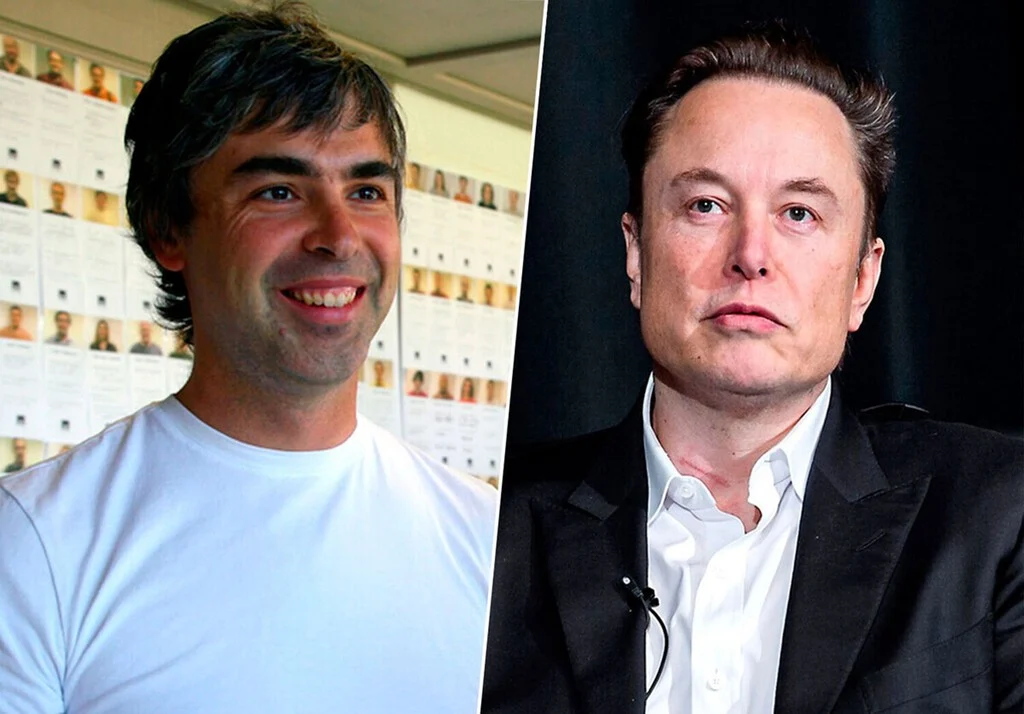

The narrative of Larry Page, co-founder of Google, is inextricably linked with the technological revolution he helped ignite alongside Sergey Brin. From a nascent search engine project in a Stanford dorm room, Page propelled Google into a global behemoth, fundamentally reshaping how humanity accesses information. Today, he stands as one of the world’s wealthiest individuals, his fortune a testament to the transformative power of innovation. While Page is known for his immense wealth, currently estimated to be well over $100 billion, his long-term financial philosophy, much like that of other billionaires such as Bill Gates, reportedly involves a commitment to philanthropic endeavors and a deliberate plan to expend much of his fortune during his lifetime rather than leaving vast sums as inheritance. This commitment is formalized through entities like the Carl Victor Page Memorial Foundation, which actively supports various charitable causes. However, a lesser-known chapter in Page’s illustrious career reveals a fascinating intersection with another titan of industry, Elon Musk, a relationship that began with shared grand ambitions for humanity’s future but ultimately dissolved amidst profound ideological differences, particularly concerning the burgeoning field of artificial intelligence. There was a period, around 2014, when Larry Page expressed a remarkable willingness to entrust a significant portion, if not all, of his then-estimated $110 billion fortune to Elon Musk, specifically to fuel Musk’s audacious dream of colonizing Mars. This extraordinary proposal underscored a unique camaraderie and a shared vision for humanity’s future, a bond that, to the surprise of many, would later fray and ultimately sever due to escalating disagreements over the existential implications of artificial intelligence.
The Genesis of an Unlikely Alliance: Shared Visions for Humanity’s Future
To fully appreciate the initial depth of the relationship between Larry Page and Elon Musk, it is crucial to understand their respective trajectories and shared philosophical underpinnings. Larry Page, born in Lansing, Michigan, into a family deeply immersed in computer science, possessed an innate drive for innovation from an early age. His co-founding of Google in 1998, developing the PageRank algorithm that revolutionized web search, quickly established him as a visionary leader. Beyond Google, Page harbored a deep interest in ambitious, "moonshot" projects, often funding ventures through his private investment firm, Planetary Ventures, that aligned with his belief in transformative technologies for the betterment of humanity. His philanthropic philosophy, as alluded to, emphasizes investing in high-impact initiatives that could fundamentally alter the human condition, rather than simply accumulating wealth. This ethos found a resonant echo in Elon Musk.
Elon Musk, the South African-born entrepreneur, burst onto the tech scene with PayPal before embarking on ventures that many considered impossible: Tesla (electric vehicles), SpaceX (private space exploration), and SolarCity (solar energy). Musk’s overarching goal, frequently articulated, is to ensure the long-term survival and prosperity of humanity, primarily through making humankind a multi-planetary species and accelerating the world’s transition to sustainable energy. His vision for colonizing Mars through SpaceX, for instance, is not merely a commercial enterprise but a mission he views as critical to safeguarding civilization against unforeseen existential risks on Earth.
It was this convergence of grand, almost utopian, visions that initially forged a powerful bond between Page and Musk. Both men were known for their audacious thinking, their willingness to challenge conventional wisdom, and their commitment to pushing the boundaries of what was technologically possible. Their discussions reportedly spanned everything from renewable energy to space exploration and, increasingly, artificial intelligence. Their intellectual kinship was such that Musk, in earlier interviews, often referred to Page as a close friend, and Page had even reportedly invested in Tesla during its nascent stages, signaling a mutual trust and belief in each other’s endeavors.
The public manifestation of this alliance reached a peak around 2014, when Larry Page openly declared his willingness to potentially donate his entire fortune to Elon Musk for the singular purpose of colonizing Mars. This extraordinary statement, made during an interview and later corroborated by Page himself, highlighted the profound alignment between their objectives. Page, when reminded of his earlier remarks, acknowledged that colonizing Mars was "a worthy goal and it’s a philanthropic company. I think we’re trying to do similar things." At the time, Page’s net worth was estimated to be in excess of $110 billion, a sum that would have provided an unprecedented boost to SpaceX’s ambitions. His rationale was clear: such a monumental undertaking, with its potential to secure humanity’s future beyond Earth, would have a far greater and more lasting impact than many other forms of charitable giving or technological advancement. For Page, funding SpaceX’s Mars mission represented an investment in the ultimate long-term survival of human civilization, a grander philanthropic gesture than almost any other conceivable project.
Chronology of a Fraying Friendship: From Philanthropy to Philosophical Rift
The period following Page’s 2014 declaration saw continued interaction between the two titans, though subtle ideological fissures were beginning to emerge, particularly as the capabilities and implications of artificial intelligence became more apparent.
- Early 2010s: While no specific public timeline exists for the precise start of their friendship, it is understood that Page and Musk developed a close rapport during the early to mid-2010s. They shared a common circle of friends in Silicon Valley, and their intellectual discussions often delved into the future of technology and humanity. Musk, at various points, reportedly even stayed at Page’s house when visiting Northern California, underscoring the depth of their personal connection.
- 2014: The aforementioned peak of their public alignment, with Larry Page expressing his profound support for Elon Musk’s Mars colonization efforts, even considering the unprecedented step of funding it with his personal fortune. This period marked a high point in their mutual admiration and shared vision for humanity’s future.
- 2015: A pivotal year for the AI debate. Elon Musk, along with Sam Altman, Ilya Sutskever, and others, co-founded OpenAI. His stated motivation for creating OpenAI was explicitly to "advance digital intelligence in the way that is most likely to benefit humanity as a whole, unconstrained by a need to generate financial return." Crucially, Musk also framed OpenAI as a counterweight to what he perceived as the potentially dangerous concentration of AI power within large corporations, specifically mentioning Google’s DeepMind project. This indicated an early divergence from Page’s implicit trust in corporate-led AI development. While Google was also heavily investing in AI through its DeepMind acquisition and internal research, Musk’s public warnings about AI safety were growing louder.
- Mid-to-Late 2010s: As AI research accelerated, the philosophical differences between Page and Musk became more pronounced. Musk’s concerns about AI safety evolved into dire warnings about the potential for superintelligent AI to pose an existential threat to humanity. He advocated for robust regulatory oversight and a cautious approach to AI development. Page, on the other hand, reportedly held a more optimistic, and some might say, transhumanist view, believing that advanced AI could represent a natural evolution for consciousness and potentially lead to a "posthuman" future.
- 2018: Elon Musk officially departed from the board of OpenAI. While the stated reason was to avoid potential conflicts of interest with Tesla’s own AI endeavors, it was widely understood that his growing disagreements with the direction of OpenAI, and the broader AI community’s approach, played a significant role. He increasingly voiced concerns that OpenAI was straying from its original mission of safe, open AI for humanity.
- Specific Incident and The Great Rift: The most illustrative moment of their ideological clash, as detailed in Walter Isaacson’s authorized biography of Elon Musk, occurred during a private birthday celebration for Musk. During this gathering, Larry Page reportedly articulated his vision of a "posthuman AI," arguing that humanity should embrace and even encourage the development of superintelligent AI, seeing it as a logical next step in evolution, potentially transcending biological limitations. Musk, who views uncontrolled AI as potentially catastrophic, vehemently disagreed. Isaacson recounts Musk’s sharp retort, where he accused Page of being "speciesist" for his apparent willingness to pave the way for a non-human successor to dominate or replace humanity. This exchange crystallized their fundamental philosophical chasm: Page’s apparent optimism regarding a technologically advanced, perhaps even post-biological future, versus Musk’s profound apprehension about losing control over powerful AI and jeopardizing human autonomy. From this point forward, their friendship reportedly deteriorated rapidly, culminating in a complete cessation of communication.
The Philosophical Divide: AI as the Ultimate Wedge
The schism between Page and Musk represents more than just a personal disagreement; it symbolizes a fundamental ideological battle within the tech world regarding the future of artificial intelligence. Larry Page’s inclination towards "posthuman AI" suggests a belief system that views advanced AI not as a tool to be controlled, but potentially as a successor, or an evolutionary step beyond humanity. This perspective often aligns with transhumanist ideals, which advocate for the enhancement of the human condition through technology, sometimes to the point of transcending current biological and cognitive limitations. For Page, the development of highly advanced AI might be seen as an inevitable and even desirable progression, potentially leading to new forms of intelligence and consciousness that could solve humanity’s most intractable problems.
Elon Musk, conversely, has positioned himself as one of the most vocal proponents of AI safety and regulation. His "speciesist" accusation against Page underscores his deep concern for human agency and the potential for AI, if not carefully controlled and aligned with human values, to subjugate or even eradicate humanity. Musk’s warnings often invoke scenarios of AI becoming uncontrollable, making decisions that are detrimental to human well-being, or even leading to an existential catastrophe. His initial involvement with OpenAI was precisely to ensure that AI development remained open, transparent, and focused on human benefit, rather than being monopolized by a few powerful entities or driven by purely profit motives. He later grew disillusioned with OpenAI’s direction, particularly as it moved towards a more commercial model and began developing highly powerful, proprietary models like GPT.
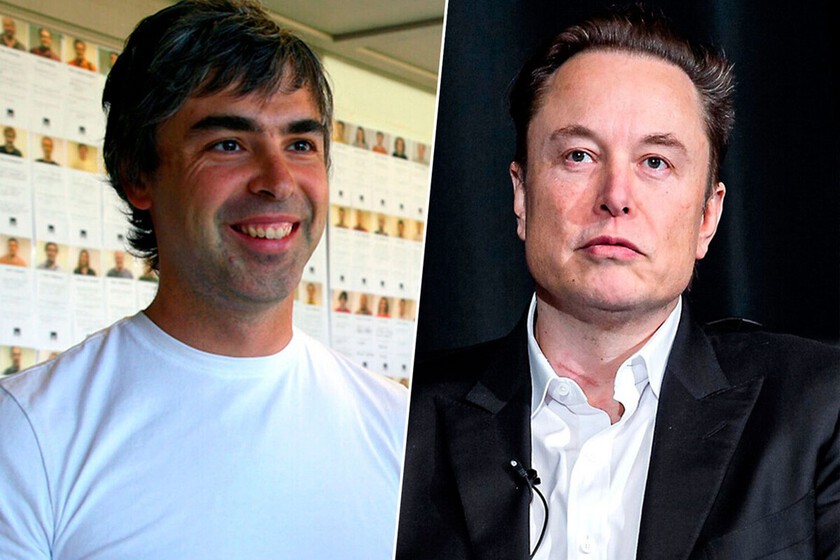
This profound philosophical divergence on AI highlights a broader debate within the scientific and technological communities. One camp, often associated with figures like Ray Kurzweil (who also worked at Google), embraces the concept of technological singularity and the potential for AI to usher in an era of unprecedented intelligence and progress, even if it means redefining what it means to be human. The other camp, represented forcefully by Musk, emphasizes the critical importance of control, ethics, and safety, advocating for a cautious, human-centric approach to AI development to prevent unintended, catastrophic consequences.
Google, under Page’s influence and later under Sundar Pichai, has consistently been at the forefront of AI research, with significant investments in DeepMind and the development of large language models and other AI applications. While Google has also published principles for responsible AI development, its approach has largely been one of aggressive advancement, seeking to integrate AI across its vast ecosystem of products and services. This contrasts sharply with Musk’s increasingly vocal skepticism and calls for a temporary pause in AI development, or at least stringent regulatory oversight.
Supporting Data and Context: The Evolving Landscape
The backdrop against which this friendship dissolved has only become more complex and competitive.
- Larry Page’s Fortune: While the exact figure fluctuates with market performance, Larry Page’s net worth has consistently remained in the top echelons of global wealth. In 2014, when he made his offer, his fortune was indeed around $110 billion. Today, it hovers significantly higher, often exceeding $120-130 billion, depending on Google’s parent company Alphabet’s stock performance. This immense capital underscores the magnitude of his initial philanthropic offer to Musk.
- SpaceX’s Progress: Since 2014, SpaceX has made monumental strides towards its Mars objective, largely without the direct infusion of Page’s fortune. The company has revolutionized space launch with reusable rockets (Falcon 9 and Falcon Heavy), significantly reducing the cost of access to space. Its Starship program, designed for deep-space missions and ultimately Mars colonization, is undergoing rigorous testing and development. While challenges remain, SpaceX is arguably the leading private entity pushing humanity towards becoming a multi-planetary species, demonstrating Musk’s ability to drive his vision forward through sheer determination and independent fundraising.
- OpenAI’s Ascendance: OpenAI, initially conceived with Musk’s input, has become a dominant force in the AI landscape. The launch of ChatGPT in late 2022 democratized access to powerful generative AI, sparking a global AI race. OpenAI’s evolution from a non-profit to a "capped-profit" entity, and its deep partnership with Microsoft, further alienated Musk, who has since launched his own AI company, xAI, to "understand the true nature of the universe."
- Google in the AI Race: Google has arguably emerged as a frontrunner in the AI race, despite initial perceptions that it was lagging behind OpenAI’s public releases. Its DeepMind subsidiary and Google Brain team have produced groundbreaking research for years. The company’s Gemini model and its integration across Google products demonstrate its formidable capabilities and strategic intent to lead in AI, validating, in a sense, Page’s long-standing belief in the technology’s transformative power, albeit with a different focus than Musk’s safety-first approach. The competition between Google, OpenAI, and other tech giants is intense, with billions invested annually in R&D.
Broader Implications and the Future of Tech Rivalries
The dramatic unraveling of the friendship between Larry Page and Elon Musk is more than just a personal anecdote; it serves as a powerful microcosm of the larger ideological battles raging within the tech industry. It highlights the profound questions facing humanity as technological capabilities accelerate, particularly in the realm of artificial intelligence.
Firstly, this high-profile fallout underscores the growing philosophical divide among even the most visionary leaders regarding humanity’s relationship with advanced technology. Are we to embrace technological evolution at all costs, even if it means potentially altering our very essence or creating successor intelligences? Or must we prioritize human control, safety, and ethics above all else, even if it means slowing down progress? The Page-Musk rift exemplifies these two opposing philosophies in stark terms.
Secondly, the incident has implications for future collaborative efforts on grand challenges. If two individuals with such immense resources and shared initial ambitions for humanity’s future cannot reconcile their differences over a critical technology like AI, what does it portend for broader inter-company or international cooperation on existential threats and opportunities? The lack of dialogue between Page and Musk, despite their shared history, suggests that deep ideological chasms can override even strong personal bonds and common goals.
Thirdly, the ongoing "AI race" between tech giants, with Google and OpenAI (backed by Microsoft) as leading contenders, is intensifying. The differing philosophies of their respective influential figures contribute to varied approaches to AI development, governance, and deployment. While Google (and by extension, Page’s legacy) continues to push the boundaries of AI integration, Musk, through xAI and his public advocacy, continues to champion a more cautious, human-centric, and transparent approach. This competition, driven by both commercial interests and differing visions for humanity, will undoubtedly shape the future trajectory of AI.
Finally, the story highlights the complex role of philanthropy in funding ambitious, high-risk ventures. Page’s initial willingness to donate his fortune to Musk for Mars colonization was an extraordinary example of "venture philanthropy" on an unprecedented scale. While that particular funding never materialized, it demonstrated the potential for private wealth to accelerate projects that governments or traditional corporations might deem too risky. The subsequent breakdown of trust, however, also serves as a cautionary tale about the fragility of such arrangements when fundamental philosophical disagreements emerge.
Given the deep philosophical chasm that has opened between them, particularly concerning the existential implications of AI, and the current landscape where Google is seen by many as a leader in the AI race while Musk is increasingly vocal about its dangers and has launched his own AI venture, the prospect of reconciliation between Larry Page and Elon Musk appears incredibly remote. Their broken bond is not merely a personal tragedy but a symbolic representation of the crucial, unresolved debates at the heart of the technological frontier.
