
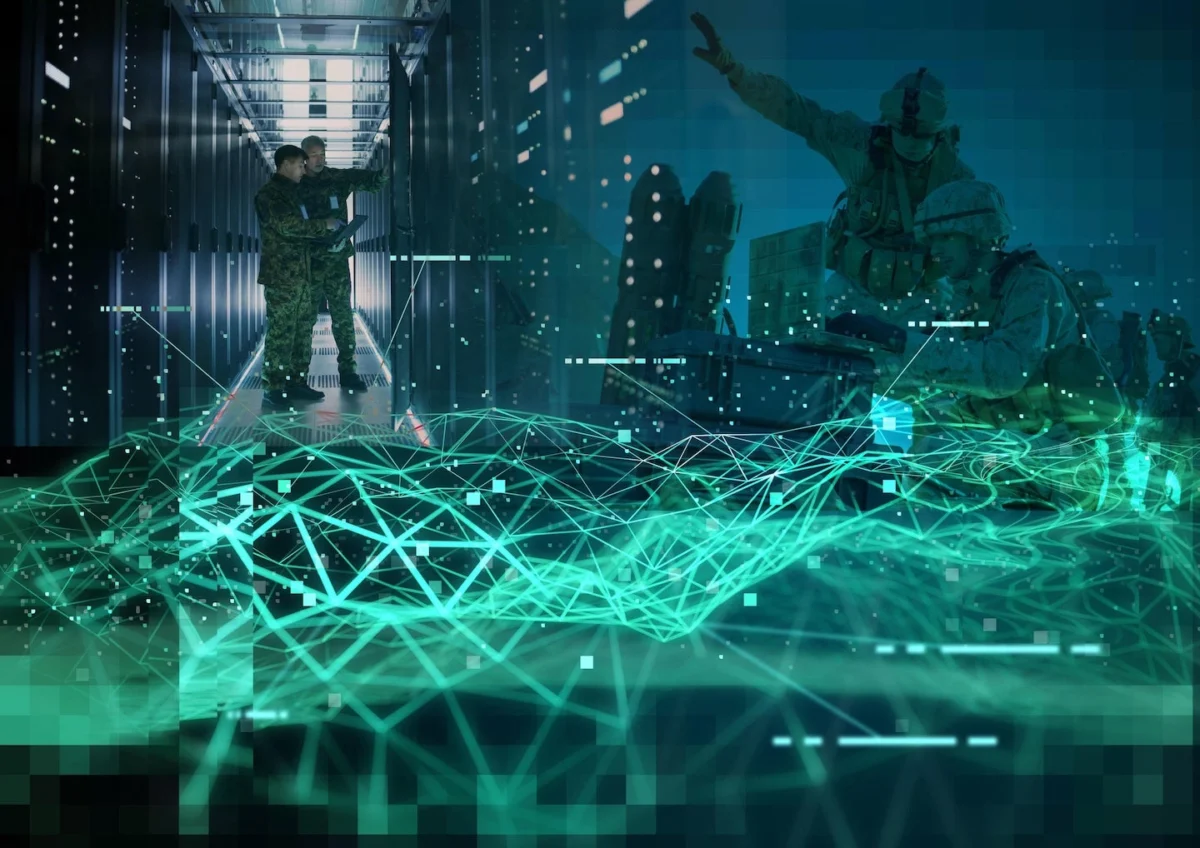

The paradigm of modern warfare is shifting from a struggle over raw data capacity to a race for seamless integration, as commercial space leaders and defense officials pivot their focus toward pushing critical information processing to the tactical edge. During the recent SATShow Week held on March 25, a consensus emerged among industry titans: the historical bottleneck of limited bandwidth has been largely dismantled by the proliferation of Low-Earth Orbit (LEO) constellations, leaving a new, more complex challenge in its wake. Decision-making must now occur at the "speed of conflict," a requirement that demands the immediate synthesis of fragmented data architectures into a unified, interoperable ecosystem capable of supporting the warfighter in contested environments.
The Evolution of the Tactical Edge and the Bandwidth Revolution
Historically, the "tactical edge"—defined as the furthest reaches of the battlefield where personnel and autonomous systems operate—was characterized by isolation. Communication was often restricted by high-latency Geosynchronous Orbit (GEO) satellites and heavy, proprietary hardware that struggled to maintain connectivity in rugged or obstructed terrain. The primary constraint was bandwidth; there simply was not enough throughput to transmit high-definition video, real-time sensor data, or complex command-and-control (C2) instructions.
However, the rapid deployment of LEO constellations by commercial entities has fundamentally altered this landscape. Unlike GEO satellites orbiting at 35,000 kilometers, LEO satellites operate at altitudes between 500 and 2,000 kilometers, drastically reducing latency and increasing available bandwidth. With thousands of satellites now in orbit, the "pipe" for data is no longer the limiting factor. Instead, the industry is grappling with how to manage the flood of information and ensure that disparate systems can speak the same language.
Patrick Markus, vice president and general manager at Hughes Defense and Government, noted that the tactical edge is no longer a static location but a functional requirement. He described it as anywhere a decision needs to be made under the pressures of active engagement, encompassing everything from a single soldier with a handheld device to an autonomous drone swarm operating deep behind enemy lines.
Integration and the Extension of the Cloud into Orbit
As the volume of data increases, the focus has shifted toward virtualization and cloud integration. Mike Moran, director of U.S. government business at Amazon Leo for Government, emphasized that the challenge for future battlefields is not the quantity of data but the harmony of the systems processing it. Moran argued that the next generation of military success will depend on how well sensors, C2 nodes, and vector nodes are integrated into a cohesive communications architecture.
Amazon’s approach involves extending the Amazon Web Services (AWS) cloud infrastructure directly into space. By adopting standard network protocols, Amazon Leo allows the AWS backbone to run virtualized satellite communication (satcom) functions. This shift is transformative; it enables digital modems and virtual waveforms—which previously required dedicated, heavy hardware—to run as software on standardized platforms. This "cloud-to-edge" continuity ensures that a commander in a mobile operations center has access to the same computational power and data analytics as a strategist at a centralized headquarters, with minimal delay.
The Physical Burden: SWaP and the Soldier’s Dilemma
One of the most pressing practical concerns for the tactical edge is the "Size, Weight, and Power" (SWaP) tradeoff. Simon Swift, director of digital technologies at ETL Systems, highlighted the visceral reality of the battlefield. Soldiers often face a grim choice when packing their gear: "Do I carry bullets, food, or communications?"
In the past, the answer was complicated by the lack of interoperability. Swift recounted an anecdote from an allied commander who was responsible for maintaining and supporting 75 different types of modems. This "stove-piped" architecture, where each satellite provider or sensor requires its own proprietary hardware, creates a logistical nightmare and increases the physical burden on the warfighter.
To combat this, the industry is moving toward software-defined platforms. Standards such as Digital IF Interoperability (DIFI) and Waveform Architecture for Virtualized Ecosystems (WAVE) are becoming the bedrock of new development. These standards allow a single piece of hardware—such as a standard laptop or a small, ruggedized server—to host multiple architectures. During SATShow, ETL Systems demonstrated this capability by running a high-speed satellite modem on a consumer-grade laptop, proving that the days of specialized, bulky hardware may be numbered.

Strategic Initiatives: PWSA, SDN, and the Hybrid Space Architecture
The push for integration is not merely a commercial trend; it is a central pillar of U.S. Department of Defense (DoD) strategy. Several high-profile initiatives are currently underway to create a seamless "network of networks."
- Proliferated Warfighter Space Architecture (PWSA): Managed by the Space Development Agency (SDA), this initiative focuses on deploying a multilayered network of hundreds of small satellites in LEO to provide persistent, low-latency communication and missile tracking.
- Space Data Network (SDN): This aims to create a "mesh network" in space, allowing satellites to communicate with each other via optical inter-satellite links (OISLs), reducing the reliance on ground stations.
- Hybrid Space Architecture (HSA): This initiative seeks to blend commercial, civil, and military satellite assets into a single, resilient fabric.
While the HSA is often touted as inherently resilient due to its sheer number of assets, Amazon’s Moran offered a cautionary note. He argued that proliferation does not automatically equal resilience. "The devil’s in the details," Moran said, noting that if these many architectures are not integrated within a shared, flexible framework, they remain vulnerable to targeted disruptions. The goal is to create a system where, if one pathway is compromised, the data can instantaneously re-route through another without the user ever losing connectivity.
The Role of the Air Force Research Laboratory (AFRL)
The transition from theoretical integration to operational capability is being accelerated by targeted government contracts. Recently, the Air Force Research Laboratory (AFRL) awarded a contract to Hughes Network Systems to develop an intelligent space data network. This project is tasked with integrating DoD, allied, and commercial satellite networks into a unified system.
This contract represents a significant shift in acquisition strategy. The DoD is no longer looking to build isolated, bespoke systems; it is looking to leverage the rapid innovation of the commercial sector. Patrick Markus of Hughes noted that the DoD is particularly interested in "direct-to-device" solutions—technologies that allow standard military hardware to connect to satellite networks without requiring additional, specialized terminals. This "cost-effective acquisition" model is designed to streamline the deployment of new services and reduce the long-term maintenance burden on the military.
Commercial Efficiency vs. Sovereign Control
As the military leans more heavily on commercial providers, a tension remains between efficiency and control. Simon Swift of ETL Systems observed that defense forces are eager to adopt commercial-off-the-shelf (COTS) technology to save costs and speed up deployment, but they must also maintain "sovereign control" of their networks. The prevailing philosophy is to make equipment "as commercial as possible, whilst being as military as necessary."
This balance is crucial for maintaining an information advantage in contested environments. Military users need the assurance that their communications cannot be "turned off" by a commercial provider during a conflict, and they need specialized encryption and anti-jamming capabilities that go beyond standard commercial requirements.
The Five-Year Outlook: A New Concept of Operations
Looking toward the end of the decade, the integration of space-based assets is expected to fundamentally change the concept of military operations (CONOPS). Mike Moran predicts that in five years, the advancements in networking and virtualization will lead to a "whole different way of global engagement."
The ability to sustain an information advantage at the edge will be the primary deterrent against adversaries. As information processing moves closer to the point of action, the "OODA loop" (Observe, Orient, Decide, Act) will be compressed from minutes or hours to seconds. This speed will be essential in countering hypersonic threats, managing large-scale autonomous operations, and maintaining situational awareness in an era of electronic warfare and cyber attacks.
Conclusion: Integration as the Ultimate Weapon
The discussions at SATShow Week 2024 make it clear that the satellite industry has entered a new era. The "bandwidth wars" of the last decade have concluded, and the "integration era" has begun. For the warfighter at the tactical edge, this means less weight to carry, more reliable connections, and the ability to access the full power of the cloud in the heat of battle.
By breaking down the "stove-pipes" of legacy systems and embracing software-defined, interoperable standards, the commercial and defense sectors are building a resilient, hybrid architecture. This architecture is not just a means of communication; it is a force multiplier that ensures that even in the most contested environments, the speed of decision-making remains faster than the speed of conflict. As the DoD continues to refine its acquisition processes and industry leaders push the boundaries of virtualization, the tactical edge will move from a point of vulnerability to a position of overwhelming strength.
