
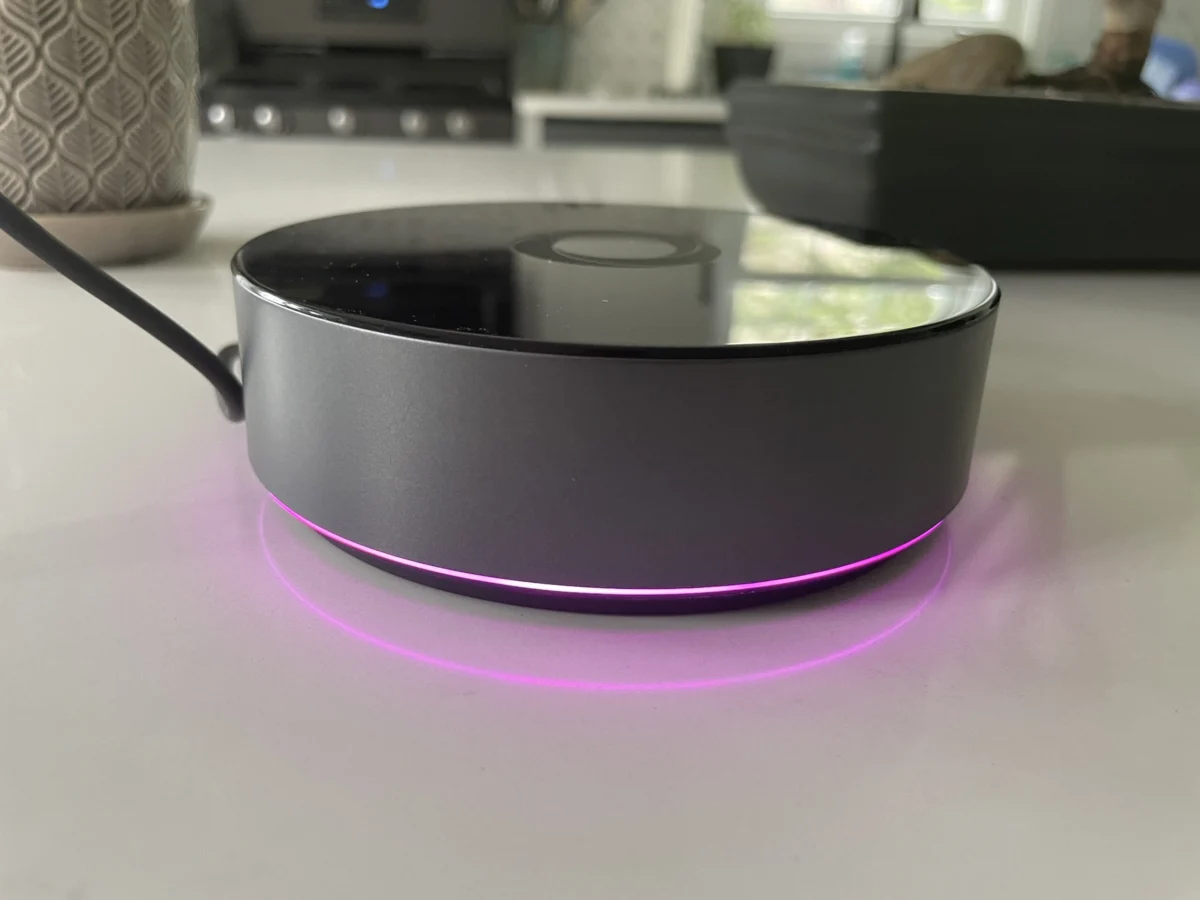

The smart home landscape continues to evolve, with new hubs and platforms vying for dominance. Following the introduction of the more budget-friendly Homey Bridge at $69, Athom has now launched its premium offering, the Homey Pro, in the U.S. market for $399. This advanced hub promises a more robust and locally controlled smart home experience, aiming to address limitations found in its predecessor. Stacey on IoT previously reviewed the Homey Bridge in March, noting its simplicity and sweet spot for basic smart home needs. The Homey Pro, however, represents a significant step up, shedding most subscription fees and restrictions while introducing optional Ethernet connectivity for an additional $29 and future support for the Matter standard, including Matter over Thread.
A Deeper Dive into Homey Pro’s Capabilities
The Homey Pro is a powerful iteration of Athom’s smart home hub technology. Building upon the foundation of the 2019 Homey Pro, this new iteration boasts a claimed 3.5 times increase in CPU performance. This enhanced processing power is complemented by double the storage and memory compared to the Bridge, with 8 GB of storage and 2 GB of RAM. These upgrades are not merely for show; they are integral to the Homey Pro’s core philosophy: prioritizing local control for smart home devices. Unlike the more cloud-dependent Homey Bridge, the Pro aims to keep as much of your smart home’s operations within your local network as possible. This approach offers significant advantages, particularly concerning user privacy and resilience. By minimizing reliance on external servers, the Homey Pro can continue to manage connected devices and execute automations even during internet outages, provided those automations do not inherently require cloud connectivity.
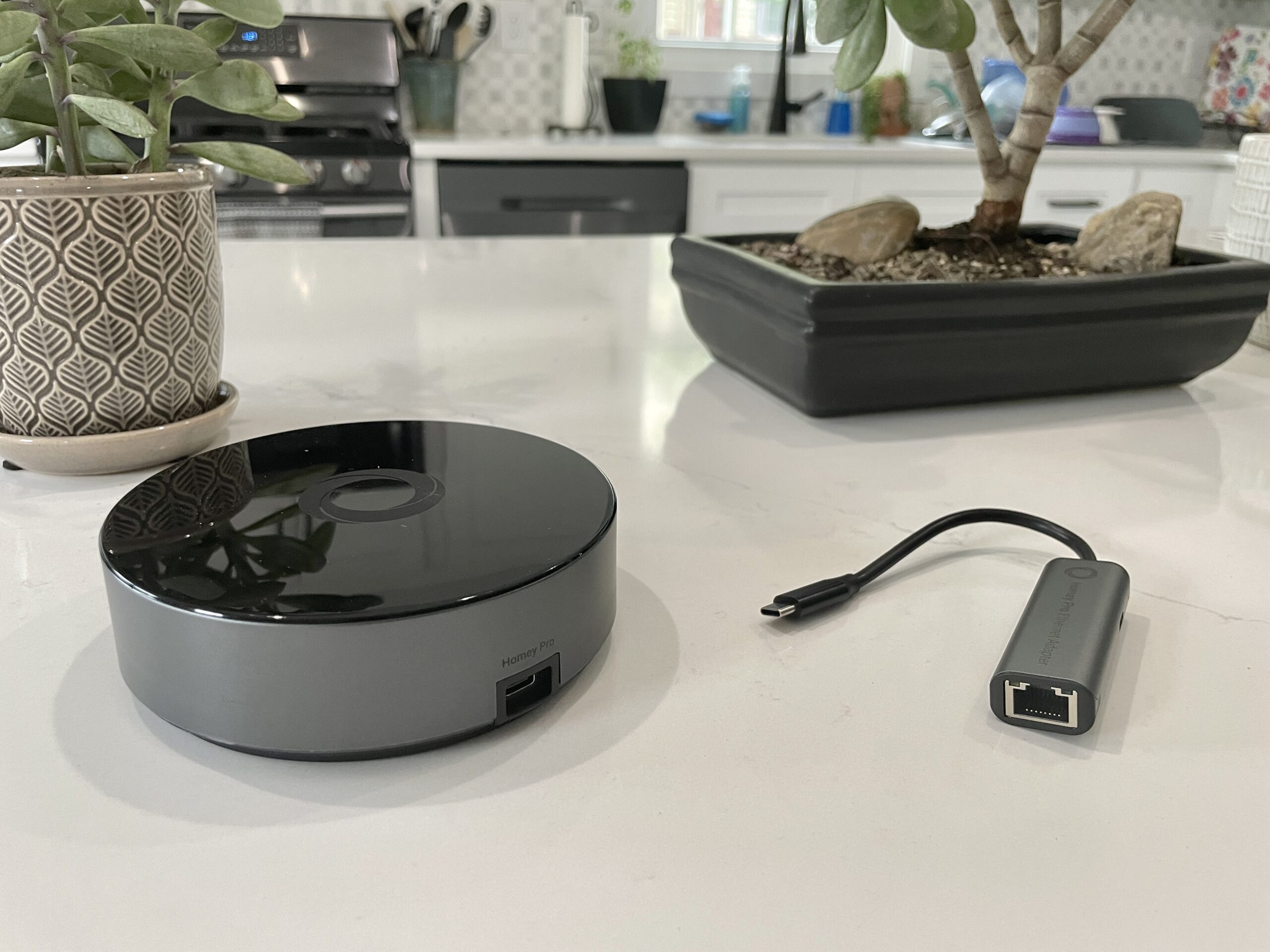
From a functional standpoint, both the Bridge and the Pro share core capabilities. Users can add and manage devices, as well as create automations. Both hubs are equipped with a comprehensive suite of radios essential for broad device compatibility. For the U.S. market, the Homey Pro includes Wi-Fi (supporting both 2.4 GHz and 5 GHz bands), Bluetooth, infrared, Zigbee, and Z-Wave. The Pro model distinguishes itself further by incorporating a Thread radio, crucial for the emerging Thread-based smart home ecosystem, and supports older 833MHz devices. Critically, the Pro eliminates the stringent five-connected-device limit imposed on the Homey Bridge, which requires a $2.99 monthly subscription for additional devices. The only optional subscription for the Homey Pro is a $0.99 monthly fee for cloud backups, offering peace of mind for users who wish to safeguard their configurations.
The Setup Experience: Intuitive and Insightful
The initial setup process for the Homey Pro proved to be straightforward and user-friendly, mirroring the positive experience reported with the Homey Bridge. After powering the device using the included USB-C cable and charger, users download the dedicated Homey app on their smartphone. The app guides users through a series of basic questions to configure their smart home environment. A particularly noteworthy feature is the app’s inquiry into the home’s layout, including the number of floors and the rooms situated on each. This detailed initial mapping is a significant advantage, streamlining the organization of devices within specific locations, a more intuitive approach compared to many competing smart home applications.
Once connected to the home’s Wi-Fi network, the next crucial step is integrating smart devices. Homey advertises support for an extensive catalog of over 50,000 devices, a figure that initially suggests broad compatibility. However, real-world testing revealed a more nuanced picture. While the Homey Pro successfully integrated a selection of devices, including Lutron Caseta switches, Philips Hue bulbs, and Sonos speakers, a substantial portion of the reviewer’s smart home ecosystem remained unsupported.

Device Compatibility: A Critical Consideration
The challenges in device integration became apparent when attempting to connect a variety of popular smart home products. Devices such as a Schlage door lock, Ecobee Thermostat, Nanoleaf bulb and light strip, Govee electric kettle, Wyze cameras, Eve Home devices, Logitech video doorbell, and several smart plugs failed to connect. While the lack of support for most smart plugs could be attributed to their Matter certification and the Homey Pro’s pending Matter over Thread implementation, the absence of connectivity for other devices was more perplexing.
A Homey representative later clarified that Matter devices operating over Wi-Fi should theoretically be compatible, suggesting that the reviewer’s Matter devices, which primarily utilized Thread, explained their incompatibility. However, the issue extended beyond Matter-certified devices. Many brands listed as supported in the Homey app did not have specific models available for integration. For instance, while Nanoleaf’s geometric light panels (triangles, hexagons, and lines) were recognized, the standard Nanoleaf bulb and smart lights were not. This discrepancy persisted even with older Nanoleaf Essentials, which are not Matter-certified. Similarly, a Meross Garage Door opener also proved incompatible.
The integration process for specific devices often resulted in error messages or a complete lack of device detection. The Schlage Encode Wi-Fi lock, despite being a recognized brand, failed to connect after authentication, reporting "No devices found." The Govee Wi-Fi kettle integration encountered an error message, and a Cync by GE smart plug, a non-Matter device, lacked any dedicated integration. Even with brands like Ecobee, where the app listed compatible models, only the Ecobee 3 Lite and Ecobee Room Sensor were supported, excluding the reviewer’s Ecobee Thermostat Premium and newer sensors. The reviewer noted that a significant portion of their smart home devices were no longer Zigbee or Z-Wave, suggesting that users with a predominantly Zigbee and Z-Wave ecosystem might experience better results with the Homey Pro.

The lack of a readily accessible, comprehensive list of supported product integrations on Homey’s website was a significant hurdle. While an update to the article mentioned that integrations are found under the "Apps" section of their website, the initial difficulty in locating this information highlights a potential friction point for consumers. The recommendation for potential buyers is to download the free Homey app first and thoroughly search for their existing and planned devices before committing to a purchase. It is worth noting that when devices were successfully integrated, their response times were nearly instantaneous.
The Developer Angle: Custom Integrations and Advanced Flows
For technically inclined users and developers, the Homey Pro offers an intriguing avenue for creating custom integrations. The platform provides an API key through its web interface, along with sample code in JavaScript and Node.js, suggesting that the Homey Pro is architected as a Node.js server. This capability allows hobbyists and developers to extend the functionality of the Homey Pro to support devices not natively integrated. While this feature is a valuable addition for a niche audience, it is unlikely to be utilized by the average consumer who prioritizes out-of-the-box compatibility.
The Homey App: A Polished User Experience
Despite the challenges with device compatibility, the Homey mobile application itself is a standout feature. It presents a modern and intuitive interface that surpasses many of its competitors. The app provides access to both basic and advanced functionalities, making it easy to manage connected devices. The ability to assign devices to specific rooms or floors is streamlined, although the reviewer noted that this organization step ideally should occur during the initial device integration rather than requiring a separate trip to device settings.

A particularly impressive feature is the estimated smart home energy usage monitoring. This data can be viewed in near real-time and historically. While the accuracy of this feature relies on users manually inputting the wattage of each device, it offers a valuable insight into energy consumption. The system intelligently adjusts energy usage estimates based on device output, such as dimming lights. For instance, dimming lights to 50% resulted in a corresponding halving of the estimated power draw. This energy data is accessible through both the mobile app and the web interface. The web interface further enhances this by displaying local temperature, barometric pressure, and humidity readings, adding another layer of environmental awareness. A Homey representative confirmed that if a device is capable of reporting its actual electricity usage, the Homey system will utilize and display this data.
Flows: The Powerhouse of Automation
Homey’s automation engine, known as "Flows," bears a strong resemblance to the sophisticated automation capabilities found in platforms like Home Assistant, rather than the simpler routines offered by major voice assistants. Flows operate on a "When… and… then…" logic, a more structured approach than the "If this happens, do that" model. The system allows for complex conditional logic, including "else" conditions, and the ability for one Flow to trigger another. The reviewer found the creation of these Flows to be effective and executed them flawlessly. While basic Flows can be configured within the mobile app, the web interface offers an advanced mode for creating highly complex automations. The web interface also serves as a comprehensive control panel, mirroring the functionality of the mobile app for device viewing and control.
Conclusion: Potential Amidst Compatibility Hurdles
The Homey Pro presents a compelling vision for a localized, privacy-centric smart home hub. Its robust hardware, comprehensive radio support, and advanced automation capabilities offer significant potential. The market has seen a shift towards cloud-based solutions, making a powerful local hub like the Homey Pro a welcome entrant for those prioritizing data privacy and offline functionality. The user experience, from initial setup to ongoing management via the polished Homey app, is generally positive.

However, the primary reservation for potential buyers lies in device compatibility. At $399, the Homey Pro’s inability to integrate with a significant portion of the reviewer’s existing smart home devices is a considerable drawback. While the promise of future Matter support and the possibility of community-developed integrations offer pathways for expansion, these do not fully mitigate the current limitations. The reviewer’s personal reliance on a lower-cost Home Assistant setup, where nearly all devices are supported, underscores the importance of broad compatibility for a central smart home controller.
Ultimately, the Homey Pro is a device with immense potential for users who value local control and privacy. For such individuals, it may indeed be the ideal solution. However, the critical caveat remains: prospective buyers must diligently verify that their current and planned smart home devices are compatible with the Homey Pro before making a purchase. The market will be watching to see how Athom addresses these compatibility concerns and expands its integration ecosystem to fully unlock the Pro’s considerable promise.
This article was updated on August 16, 2023, at 11:00 AM ET, with clarifications and corrections based on direct communication with Homey representatives.
