
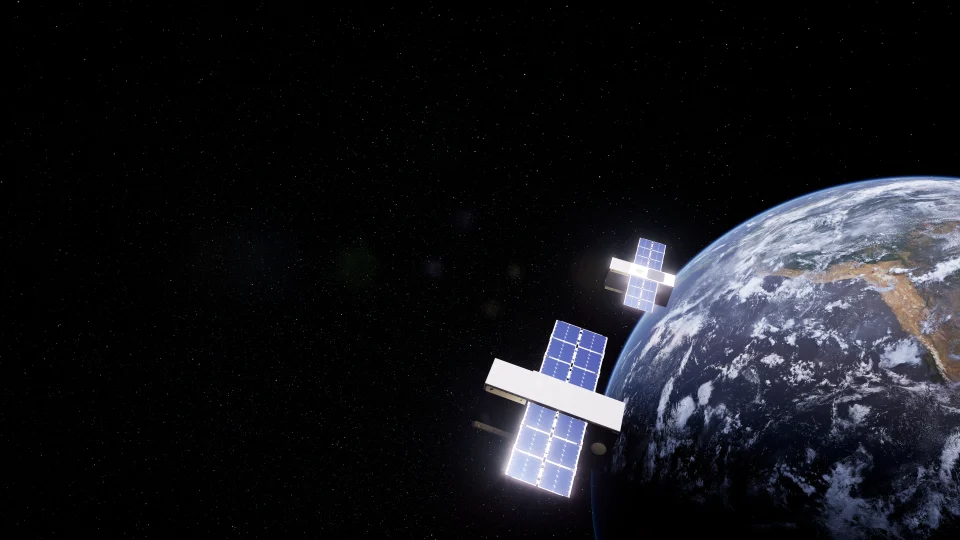

Lockheed Martin has announced a significant strategic shift in its space defense portfolio, revealing that it is self-funding two ambitious next-generation space dominance missions designed to provide the United States Department of Defense with advanced orbital warfare capabilities. The initiative, comprising the Vanguard and Sentinel satellite programs, aims to address the U.S. Space Force’s intensifying demand for rapid deployment, maneuverability, and sophisticated command-and-control systems within the increasingly contested environment of Earth’s orbit. Speaking at a media briefing during the annual Space Symposium in Colorado Springs, Tim Lynch, Vice President for Mission Strategy at Lockheed Martin Space, emphasized that the company is moving proactively to align with the military’s urgent "kit in orbit now" philosophy.
The decision to internalize the costs of these demonstrations reflects a broader trend within the aerospace and defense industry, where prime contractors are increasingly assuming financial risk to accelerate technology maturation. By self-funding these efforts, Lockheed Martin bypasses some of the lengthy traditional procurement cycles, aiming to demonstrate flight-ready hardware that can be integrated into the Space Force’s architecture by the end of the decade. The missions specifically target Rendezvous and Proximity Operations (RPO) and advanced Command and Control (C2), two critical pillars of modern space superiority.
A Two-Tiered Approach: Vanguard and Sentinel Platforms
The centerpieces of Lockheed Martin’s space dominance roadmap are the Vanguard and Sentinel platforms. These systems are designed to offer a scalable response to various mission requirements, ranging from rapid constellation deployment to high-endurance orbital maneuvering.
Vanguard is categorized as a smaller satellite platform, optimized for high-throughput and compact efficiency. According to Lynch, Vanguard is the ideal candidate for proliferated constellations, where multiple low-cost assets work in tandem to provide persistent surveillance or communication links. Its design prioritizes "plug-and-play" modularity, allowing for the rapid integration of various payloads depending on the evolving needs of the customer.
In contrast, the Sentinel platform is a medium-class system designed for more demanding mission profiles. Sentinel leverages the spacecraft architecture of Terran Orbital, a subsidiary that has become central to Lockheed Martin’s strategy for small-to-medium satellite production. Unlike the smaller Vanguard, Sentinel is built with enhanced power systems and superior propulsion capabilities. A defining feature of the Sentinel platform is its capacity for on-orbit refueling, a capability that is becoming a prerequisite for "enduring missions" where a satellite must remain operational and maneuverable over many years without being limited by its initial fuel load.
Despite their different sizes and roles, the two platforms share a high degree of technical commonality. Lynch noted that approximately 70 percent of the module subsystems—including guidance, navigation, control systems, and star trackers—are identical across both Vanguard and Sentinel. This commonality is intended to drive down production costs, simplify maintenance, and allow for a more resilient supply chain.
Strategic Timing and the Road to Geosynchronous Orbit
Lockheed Martin has established a tentative timeline for these demonstrations, targeting the late 2020s for initial flights. The current roadmap places the Vanguard flight in the first year of the demonstration phase, followed by the Sentinel demonstration the following year. While specific dates remain subject to launch availability and broader platform validation schedules, the company is currently aiming for a window between late 2028 and early 2029.
The primary objective of these flights is to validate complex maneuvers in Geosynchronous Orbit (GEO). Located approximately 35,786 kilometers above the Earth, GEO is a critical piece of orbital real estate, housing the world’s most vital communications, weather, and early-warning satellites. Demonstrating RPO maneuvers in this region is significantly more challenging than in Low Earth Orbit (LEO) due to the distances involved and the high stakes of operating near multi-billion-dollar national security assets.
The demonstrations will focus on proving that these spacecraft can not only reach GEO but also perform precise proximity operations—essentially the ability to approach and maneuver around other objects in space with extreme accuracy. This capability is vital for inspecting potentially hostile satellites, servicing friendly assets, or engaging in defensive maneuvers to protect U.S. interests.
The Andromeda Program and the $1.8 Billion Signal
Lockheed Martin’s investment in Vanguard and Sentinel does not exist in a vacuum; it is closely tied to the Space Force’s multi-billion-dollar "Andromeda" program. Just last week, the Space Force awarded contracts to 14 companies, including Lockheed Martin, under the Andromeda initiative. This $1.8 billion program, officially known as the Geosynchronous Reconnaissance & Surveillance Constellation (RG-XX), is the military’s primary vehicle for establishing a robust space domain awareness (SDA) network in high Earth orbit.
Sentinel, in particular, is being positioned as Lockheed Martin’s baseline spacecraft for the RG-XX requirements. The RG-XX program demands satellites with significant "Delta V"—a measure of the impulse needed to perform an orbital maneuver. High Delta V requirements suggest that the Space Force is looking for assets that can move aggressively across different orbital planes to track or intercept objects. By self-funding the Sentinel demonstration, Lockheed Martin is effectively "de-risking" the platform for the Space Force, showing that the technology is mature enough for the high-stakes demands of the RG-XX constellation.
Enhancing Space Domain Awareness and Orbital Defense
The shift toward active orbital warfare capabilities is driven by a deteriorating security environment in space. For decades, space was viewed as a sanctuary, but recent activities by adversaries have forced a reevaluation. Both Russia and China have demonstrated "inspector" satellites capable of maneuvering close to U.S. assets, and the development of ground-based anti-satellite (ASAT) missiles has further complicated the landscape.
Lynch identified space situational awareness and the "protect and defend" mission as the two major areas where threats are most prevalent. The goal of the next-generation space dominance effort is to provide the U.S. with "Dynamic Space Operations" (DSO) capabilities. Historically, satellites have been "positional" assets—once launched, they stayed in a fixed orbit and moved very little. DSO represents a paradigm shift where satellites are expected to move frequently to avoid threats, inspect anomalies, or optimize their vantage points.
The use of common subsystems like attitude control, power, and propulsion across the Vanguard and Sentinel lines is a tactical move to ensure these DSO capabilities can be fielded at scale. Lynch noted that the company has already engaged with "early adopters" within the government who are providing feedback on the design. This demand signal ensures that Lockheed’s self-funded research aligns perfectly with the specific "buy" signals coming from the Pentagon.
Technical Analysis: The Importance of Refueling and Maneuverability
The inclusion of on-orbit refueling in the Sentinel platform marks a significant milestone in the evolution of space logistics. Currently, the lifespan of a high-value satellite is often determined by its fuel tank. Once a satellite exhausts its propellant, it can no longer maintain its station or avoid debris, effectively becoming a piece of space junk. By designing Sentinel with refueling in mind, Lockheed Martin is supporting the Space Force’s vision of a "circular economy" in orbit, where tankers can replenish mission-critical satellites, extending their operational life by years or even decades.
Furthermore, the emphasis on Delta V in the Sentinel platform addresses the physics of orbital engagement. In the context of space dominance, Delta V is the "currency" of maneuver. A satellite with high Delta V can change its velocity and direction more frequently and more drastically. This is essential for RPO missions, where a satellite might need to match the orbit of a non-cooperative target. Lynch’s confirmation that Sentinel will share 70 percent of its subsystems with Vanguard suggests that Lockheed has found a way to standardize the complex software and sensors required for these maneuvers, potentially allowing for a "fleet" approach to orbital defense.
Broader Implications for the Defense Industrial Base
Lockheed Martin’s move to self-fund these missions also sends a message to the broader defense industrial base. It highlights the growing competition from "New Space" companies—startups that often use private venture capital to develop technology at a faster pace than traditional defense contractors. By leveraging its subsidiary, Terran Orbital, Lockheed Martin is attempting to combine the agility of a small-sat manufacturer with the deep systems integration expertise and "exquisite" engineering of a traditional prime contractor.
This hybrid approach could redefine how the Space Force procures technology. If Lockheed Martin can successfully demonstrate Vanguard and Sentinel on its own dime, it sets a high bar for competitors and may encourage the Department of Defense to move toward more "commercial-like" acquisition strategies, where they buy proven services and platforms rather than funding every stage of research and development.
Conclusion: Securing the High Ground
As the Space Force continues to refine its "Competitive Endurance" theory—a strategy championed by Chief of Space Operations General B. Chance Saltzman—the need for assets that can perform RPO and maintain command and control under fire will only grow. Lockheed Martin’s Vanguard and Sentinel programs represent a significant gamble on the future of orbital warfare, but one that is backed by clear demand signals from the highest levels of the U.S. military.
The planned demonstrations in 2028 and 2029 will be a litmus test for whether traditional aerospace giants can pivot quickly enough to meet the challenges of a contested space domain. If successful, these missions will not only validate Lockheed Martin’s technological frameworks but will also provide the United States with a new generation of "orbital warriors" capable of ensuring that Earth’s orbit remains a secure and stable domain for national interests. With the $1.8 billion Andromeda program looming on the horizon, the stakes for these self-funded demonstrations could not be higher, marking a new chapter in the race for space dominance.
