
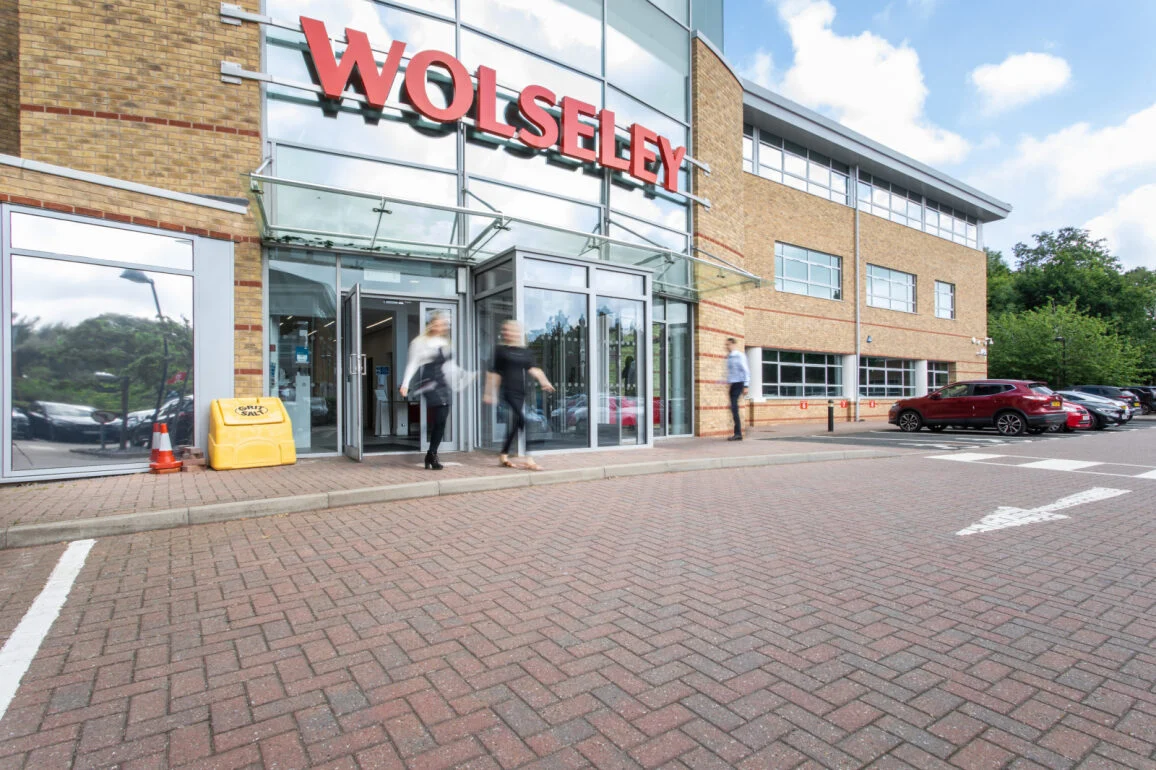

Wolseley Group, the United Kingdom’s preeminent specialist trade merchant in the plumbing, heating, and cooling sectors, is currently navigating one of the most significant technological overhauls in its history, shifting away from the monolithic "big bang" IT strategies of the past toward a modular, human-centric digital architecture. With an annual turnover of approximately £2.5 billion across the UK and Ireland, the company operates a sprawling network of 700 locations and manages a workforce of thousands, serving a diverse clientele that ranges from independent local plumbers to Tier-1 construction firms with annual procurement budgets exceeding £50 million. The current transformation, led by Chief Technology Officer Roger Connett, represents a departure from traditional enterprise resource planning (ERP) implementation strategies, prioritizing cultural change and operational pragmatism over the mere installation of new software.
This strategic pivot follows a period of corporate transition; in 2021, Wolseley was acquired by the private equity firm Clayton, Dubilier & Rice (CD&R) from its former parent company, Ferguson plc. Under new ownership, the group recently restructured its operating model into four distinct, customer-focused divisions: Plumbing and Heating, Cooling, Infrastructure, and Industrial. This restructuring served as the catalyst for the "branch modernization programme," a high-stakes initiative designed to replace decades-old "green screen" legacy technology that currently powers every customer-facing transaction across the enterprise.
A Legacy of Lessons: The Chronology of Transformation
The path to Wolseley’s current digital state has been marked by the scars of previous industrial-scale IT failures. According to Connett, the organization spent the better part of two decades attempting to implement large-scale ERP programs that were often characterized by high costs and operational friction. These previous attempts, both under the Ferguson banner and as a standalone entity, frequently failed to account for the unique complexities of the merchant trade, leading to a fundamental rethink of how technology should be deployed within the business.
Approximately 10 to 15 years ago, the leadership team reached a consensus: technology could no longer be viewed in a vacuum. The realization was that for any system to succeed, it had to be underpinned by a comprehensive strategy for people, process, and cultural change management. This realization birthed the modular approach that defines the current roadmap. Rather than attempting to replace every system simultaneously—a move that has historically crippled large enterprises—Wolseley opted for a phased rollout.
The chronology of this success began eight years ago with the migration of finance systems to Oracle Cloud. This was followed three to four years ago by the integration of supply chain and logistics modules. The final, and arguably most complex, stage is the current branch modernization effort. By breaking the transformation into manageable pieces, Wolseley has managed to maintain operational continuity while slowly de-risking its legacy environment.
Navigating the Complexity of the Trade Merchant Model
To the casual observer, a trade merchant might appear to operate like a standard retail outlet. However, the underlying logic of Wolseley’s business is far more intricate than a consumer-facing storefront. In a traditional retail environment, products have fixed prices and are sold in simple one-to-one transactions. In contrast, Wolseley’s model is built on bespoke pricing agreements, credit-based sales, and complex sourcing requirements.
A single customer order at a Wolseley branch might involve components sourced from 15 different suppliers, requiring a seamless orchestration of CRM, ERP, and supply chain data. Furthermore, the duration of a customer relationship can vary wildly, from a local contractor purchasing a single tap fitting to a massive infrastructure project requiring a steady supply of specialized materials over a six-month period.
The failure of previous standardized "front-end" systems was largely due to their inability to handle these nuances. To solve this, Wolseley is utilizing Oracle Fusion Supply Chain Management (SCM) as its core engine but is extending the platform via Oracle Cloud to build a bespoke user interface tailored specifically to the workflow of a trade counter. The group is taking a deliberately cautious approach to the rollout, with a single-branch pilot scheduled for late 2024. This "start small" philosophy allows the IT team to iron out process kinks and learn from real-world usage before scaling the solution across the remaining 699 locations.
The Business of Consequences: Risk Management in Vital Infrastructure
Wolseley’s cautious approach to technology is dictated by the gravity of its operational impact. Connett describes the organization as a "business of consequences," distinguishing it from the relatively low-stakes world of consumer e-commerce. In the consumer sector, a logistics error might result in a delayed clothing delivery; in Wolseley’s world, a delivery failure can halt a multi-million-pound construction project or compromise public health infrastructure.
The stakes are particularly high when dealing with specialized components for hospitals, schools, and large-scale residential developments. If a critical valve is incorrectly specified or fails to arrive on time at a hospital construction site, the financial repercussions can reach hundreds of thousands of pounds per day in liquidated damages. More importantly, it can delay the opening of vital public facilities. This sense of responsibility permeates the company’s digital strategy, particularly regarding the adoption of emerging technologies like Artificial Intelligence (AI).
Strategic AI: Moving Beyond the Hype Cycle
While the enterprise technology market is currently saturated with talk of "agentic AI" and fully autonomous workflows, Wolseley is taking a more grounded approach. Rather than pursuing peripheral use cases like automated job descriptions or contract management, the company is focusing on embedding AI into its core operational flows—specifically the quotation cycle.
Currently, the process of generating a quote for a customer is a manual, labor-intensive task. Customers often submit requests via email using non-standardized manufacturer codes or vague descriptions. Branch staff must then interpret these requests, manually enter them into the system, apply specific customer pricing, and generate a quote. This cycle can take three to four days.
By leveraging AI to interpret these requests and automate the data entry, Wolseley aims to compress this four-day cycle into just 20 minutes. Under this model, human employees remain in the loop to validate the final 5% of the transaction, but the bulk of the "heavy lifting" is handled by the system. This shift is not merely about cost reduction; it is a competitive play. In an industry where speed and reliability are paramount, the ability to provide near-instantaneous quotes can significantly increase win rates and customer loyalty.
Addressing the Productivity Gap and Workforce Retention
One of the most compelling aspects of Wolseley’s digital transformation is its focus on "bringing up the bottom third" of its branch network. Historically, the company has observed a performance split where one-third of branches excel, one-third perform adequately, and one-third struggle. Connett posits that modernizing the technology platform will have the greatest impact on this lower-performing tier by standardizing best practices and reducing the cognitive load on staff.
A major factor in branch performance is staff turnover and the steep learning curve associated with legacy systems. Currently, it can take between three to six months for a new hire to become proficient in Wolseley’s "green screen" environment. Given that approximately one-third of new employees leave within their first year, a significant portion of the workforce is often in a state of perpetual training.
By implementing a modern, intuitive interface, Wolseley expects to reduce the time to productivity from months to a single week. This improvement in the employee experience is expected to have a "flywheel effect": better tools lead to faster onboarding, which leads to higher job satisfaction, which ultimately reduces turnover and improves customer service.
The Human Element: Managing the "Weird and Wonderful"
Despite the focus on software and data, Wolseley’s leadership remains acutely aware that digital transformation is ultimately a human endeavor. Connett recounts instances where even the most logically sound technological solutions were met with unexpected human behavior. During a revamp of distribution center orchestration, the company implemented a logic to centralize inventory to minimize unnecessary transport costs. The system was designed to ship products to branches only when a "promise date" was imminent.
However, branch managers—driven by an entrepreneurial desire to secure stock for their specific customers—began manually moving promise dates forward to "trick" the system into releasing inventory early. This behavior highlighted a critical lesson: AI and automation cannot account for every human variable. Connett emphasizes that IT leaders must "relentlessly communicate" and spend time on the front lines—in the branches and distribution centers—to understand how work actually happens.
Broader Market Implications and Industry Outlook
Wolseley’s journey reflects a broader trend within the UK’s £110 billion construction and trade sector, which has traditionally lagged behind finance and retail in terms of digital maturity. As supply chains become more volatile and labor shortages persist, the pressure to digitize has moved from a "nice-to-have" to a strategic necessity.
The success of Wolseley’s modular approach may serve as a blueprint for other legacy-heavy industrial firms. By prioritizing the "easy 80%" of value-adding use cases and maintaining a cautious, pilot-led rollout, the company is demonstrating that it is possible to modernize a multi-billion-pound enterprise without the catastrophic disruptions often associated with ERP overhauls.
As Wolseley prepares for its first branch pilot in late 2024, the eyes of the industry will be on whether this pragmatic, human-centric model can deliver the promised gains in efficiency and resilience. For Connett and his team, the goal is clear: to ensure that the technology behind the scenes is as reliable and robust as the industrial valves and heating systems that Wolseley provides to the nation’s infrastructure.
