
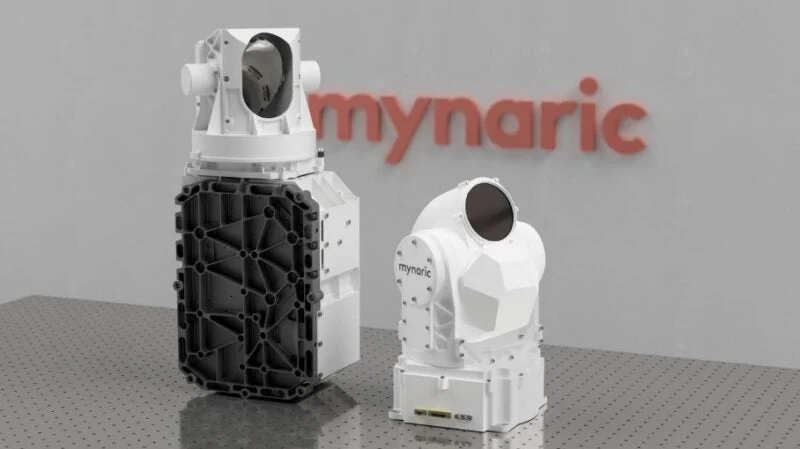

Rocket Lab USA, Inc., a leading provider of launch services and space systems, officially announced on Tuesday the completion of its acquisition of Mynaric AG, a prominent developer of optical communications terminals (OCTs). The final transaction was valued at approximately $155.3 million, marking a $5.3 million increase over the initial $150 million valuation disclosed when the deal was first announced in March 2025. This acquisition represents a pivotal moment for Rocket Lab as it seeks to solidify its position as a vertically integrated space company, moving beyond launch services to become a dominant force in the satellite components and manufacturing market.
The closing of the deal follows a swift regulatory review process, including critical approval from the German government in late March. The final purchase price was settled through a combination of a nominal cash payment and the issuance of nearly 2.3 million shares of Rocket Lab common stock. Under the original terms established in early 2025, Rocket Lab had agreed to a $75 million upfront payment—flexible between cash and stock—and an additional $75 million earn-out provision contingent upon Mynaric’s financial and operational performance as a subsidiary. The slight adjustment in the final price reflects the dynamic nature of the transition and the immediate integration of Mynaric’s production assets into Rocket Lab’s broader portfolio.
The Strategic Importance of Optical Communications
The core of the Mynaric acquisition lies in its specialized technology: optical communications terminals. Unlike traditional radio frequency (RF) communications, which rely on congested spectrum and face limitations in data throughput, OCTs use lasers to transmit data between satellites in space and from space to terrestrial ground stations. This technology is essential for the next generation of satellite constellations, particularly those operating in Low Earth Orbit (LEO).
Laser communication offers several distinct advantages over RF systems. First, it provides significantly higher bandwidth, allowing for the transmission of massive amounts of data at the speed of light. Second, laser beams are narrow and highly directional, making them much harder to intercept or jam, which is a critical requirement for national security and defense applications. Third, because laser communication does not use the radio spectrum, operators do not need to navigate the complex and often slow regulatory process of obtaining frequency licenses from international bodies like the International Telecommunication Union (ITU).
For Rocket Lab, bringing this technology in-house is a logical step in its mission to eliminate bottlenecks in the satellite supply chain. Peter Beck, the founder and CEO of Rocket Lab, emphasized this in a public statement following the closing: "Laser communication is a key enabler for satellite constellations, but it has long been a supply chain pain point for commercial and government constellation operators. High-performing and cost-effective products simply have not been available in high volumes. That changes today with Mynaric now officially part of Rocket Lab."
Mynaric’s Path to Acquisition: From Production Struggles to Recovery
Mynaric AG, headquartered in Munich, Germany, has long been recognized as a technical leader in the laser comms space. However, the company’s journey to this acquisition was marked by significant operational hurdles. In late 2023 and throughout 2024, Mynaric faced severe supplier challenges that nearly halted the production of its flagship CONDOR terminals. These delays led to a financial crisis, as the company struggled with liquidity while trying to fulfill a growing backlog of orders.
Despite these setbacks, a concerted turnaround effort was initiated. By the beginning of 2025, Mynaric had successfully resolved several key manufacturing bottlenecks, leading to a substantial increase in terminal deliveries. The company’s CONDOR Mk3 terminal, in particular, became a sought-after product for high-profile satellite programs. Rocket Lab, already a major customer of Mynaric, recognized that the company’s technical prowess remained intact despite its previous financial volatility.
By acquiring Mynaric, Rocket Lab is not only securing a critical component for its own satellites but is also providing the capital and operational stability necessary to scale Mynaric’s production to meet industry-wide demand. Rocket Lab’s proven track record in manufacturing—demonstrated by its high-cadence Electron launches and its rapid expansion of satellite component production—is expected to transform Mynaric from a struggling specialist into a high-volume industrial supplier.
The SDA Connection: A Critical Driver for the Deal
One of the primary drivers behind the acquisition is Rocket Lab’s existing commitment to the Space Development Agency (SDA). Rocket Lab is currently developing 36 satellites for the SDA’s Proliferated Warfighter Space Architecture (PWSA). This massive government project is designed to create a resilient, multi-layered network of satellites in LEO to provide missile tracking and secure data transport for the U.S. military.
The PWSA is divided into "layers," specifically the Tracking Layer and the Transport Layer. Laser communication is the "backbone" of this architecture, as the satellites must be able to communicate with each other instantaneously via optical inter-satellite links (OISLs) to relay data across the globe without relying on ground stations in contested territories.
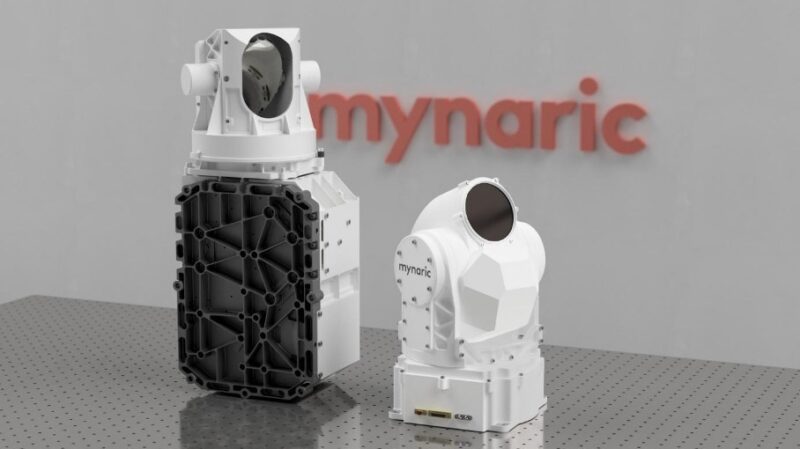
Rocket Lab had already selected Mynaric’s CONDOR Mk3 terminals for its 36 SDA satellites. By acquiring the supplier, Rocket Lab de-risks its most significant satellite manufacturing contract. If Mynaric had continued to struggle with production or faced insolvency, Rocket Lab’s ability to deliver its SDA satellites on schedule would have been severely compromised. Now, as the parent company, Rocket Lab can ensure that the production of these terminals is prioritized and integrated directly into the satellite assembly process at its Long Beach, California, headquarters and other facilities.
Rocket Lab’s Evolution: A Masterclass in Vertical Integration
The Mynaric deal is the latest in a series of strategic acquisitions that have transformed Rocket Lab from a dedicated launch provider into an end-to-end space company. Since its IPO in 2021, Rocket Lab has systematically acquired companies that fill specific niches in the satellite components market:
- Sinclair Interplanetary: Acquired in 2020, this company provided high-quality reaction wheels and star trackers, which are essential for satellite attitude control.
- Planetary Systems Corporation (PSC): Acquired in 2021, PSC specializes in satellite separation systems, ensuring that spacecraft are safely deployed from launch vehicles.
- SolAero Technologies: Acquired in 2022, SolAero is one of the world’s leading producers of high-efficiency solar cells and panels for space applications.
- ASI (Advanced Solutions, Inc.): This acquisition brought in sophisticated flight software and mission simulation capabilities.
With the addition of Mynaric, Rocket Lab now owns the technology for launch, power systems, structural components, separation systems, attitude control, flight software, and high-speed communication. This level of vertical integration is rare in the aerospace industry, mirrored perhaps only by SpaceX. It allows Rocket Lab to control its costs, manage its own schedules, and offer "turnkey" satellite solutions to customers who want to get to orbit quickly without managing dozens of different subcontractors.
Financial Analysis and Market Implications
The $155.3 million acquisition price reflects a premium that accounts for Mynaric’s intellectual property and its strategic value to Rocket Lab’s Space Systems segment. In recent quarterly earnings reports, Rocket Lab has noted that its Space Systems division—which includes satellite manufacturing and component sales—now accounts for a significant and growing portion of its total revenue, often surpassing the revenue generated by its launch services.
Industry analysts suggest that the integration of Mynaric could significantly boost Rocket Lab’s margins in the long run. By eliminating the markup associated with purchasing terminals from an external vendor and by streamlining the manufacturing process, Rocket Lab can offer more competitive pricing for its Photon satellite bus and its larger satellite constellations.
Furthermore, the global market for laser communications is expected to grow exponentially over the next decade. As commercial entities like Amazon (Project Kuiper) and various international defense agencies look to build their own LEO constellations, the demand for reliable, mass-produced OCTs will skyrocket. With Mynaric under its wing, Rocket Lab is positioned to be a primary merchant supplier to these third-party operators, creating a new and lucrative revenue stream independent of its own launch and satellite missions.
Chronology of the Acquisition
The path to the final closing was efficient but involved several critical milestones:
- March 2025: Rocket Lab and Mynaric announce a definitive agreement for the acquisition. The initial deal is valued at $150 million, with a mix of cash and stock.
- Mid-March 2025: Mynaric shareholders and board members express support for the deal, viewing Rocket Lab as the ideal partner to stabilize the company’s finances.
- Late March 2025: The German Federal Ministry for Economic Affairs and Climate Action conducts a regulatory review. Given Mynaric’s role in sensitive defense technology, the approval was a necessary hurdle. The German government ultimately approves the acquisition, recognizing the benefits of the partnership for the company’s long-term viability.
- Early April 2025: Rocket Lab finalizes the share issuance and "nominal cash" components.
- Tuesday (Closing Date): Rocket Lab officially announces the completion of the transaction at a final price of $155.3 million.
Future Outlook: Scaling the CONDOR Mk3
Looking ahead, the immediate priority for Rocket Lab will be the "industrialization" of the CONDOR Mk3 terminal. While Mynaric has proven the technology works, the challenge remains in producing hundreds, and eventually thousands, of these units per year with high reliability.
Rocket Lab’s expertise in automated manufacturing and lean production will be applied to Mynaric’s Munich facilities. There is also the possibility that Rocket Lab may establish parallel production lines in the United States to satisfy "Made in USA" requirements for certain Department of Defense contracts, further deepening its relationship with the SDA and other military branches.
As the space economy shifts from experimental missions to massive infrastructure projects, the ability to communicate data rapidly and securely is the ultimate "gold rush" opportunity. By securing Mynaric, Rocket Lab has not just bought a company; it has secured the "pipes" through which the future of space-based data will flow. This acquisition cements Rocket Lab’s status as a formidable competitor in the global aerospace market, capable of delivering complete, high-performance orbital assets from the ground up.
