

The telecommunications landscape in the Lao People’s Democratic Republic (PDR) has undergone a profound transformation over the last decade, evolving from a nascent market with limited connectivity into a competitive sector that serves as a cornerstone of the nation’s digital economy. By the end of 2021, the country reached a significant milestone, recording more than 10 million mobile subscribers. This figure is particularly striking given the nation’s population of approximately 7.5 million, indicating a high rate of multi-SIM usage and a deep penetration of mobile technology across both urban and rural demographics. Currently, the market is defined by four primary service providers—Unitel, Lao Telecom (LaoTel), TPlus Laos, and ETL Laos—each vying for dominance through infrastructure expansion, technological upgrades, and diversified service offerings.
The Competitive Landscape and Market Share Distribution
The distribution of market share in Laos reflects a blend of international joint ventures and state-backed enterprises. According to data released by the Ministry of Post and Telecommunications (MPT), the hierarchy of the market remains relatively stable, though competition for data-hungry younger consumers is intensifying.
As of the most recent comprehensive reporting period at the end of 2020, Unitel emerged as the clear market leader, commanding a 51% share of the total subscriber base. This dominance is followed by Lao Telecom, which holds approximately 34% of the market. The remaining portion of the industry is split between TPlus Laos, with a 10% share, and ETL Laos, which maintains a 5% stake.
This concentration of power between the top two players—Unitel and LaoTel—accounts for 85% of the total market, creating a duopolistic environment where these two entities set the pace for infrastructure investment and pricing structures. However, the smaller players, particularly TPlus, have carved out niches by focusing on urban youth and specialized digital services.
Profiles of the Leading Mobile Operators
Unitel (Star Telecom)
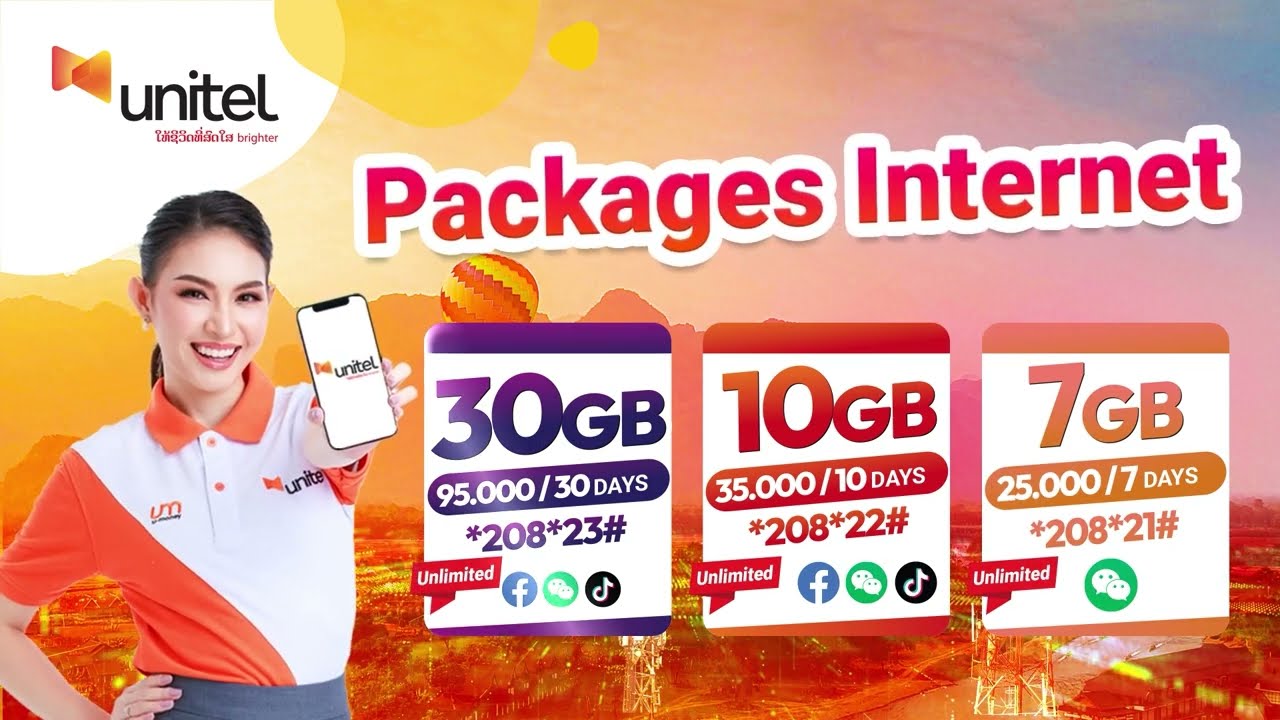
Unitel is a joint venture between the Lao Asia Telecom and Viettel Group, the military-run telecommunications giant from Vietnam. Since its inception in 2008, Unitel has leveraged Viettel’s experience in emerging markets to aggressively expand its footprint. With over 5 million subscribers, its success is largely attributed to its "rural-first" strategy, ensuring that even remote mountainous provinces have access to cellular signals. Unitel provides a comprehensive suite of services, including high-speed 4G data, broadband internet, and an array of value-added services (VAS) such as "U-money," a mobile financial service that has been instrumental in promoting financial inclusion in unbanked regions.
Lao Telecom (LaoTel)
Established in 1996, Lao Telecom is the oldest provider in the country and is a joint venture between the Lao government (51%) and Shenington Investments (49%), a subsidiary of Thailand’s Thaicom. With a subscriber base exceeding 3 million, LaoTel benefits from its long-standing reputation and extensive infrastructure in the capital, Vientiane, and other major provincial hubs. The company has historically been a pioneer in technology, being the first to launch 3G and 4G services in the country. Its service portfolio includes mobile banking, digital entertainment, and corporate leased-line services.
TPlus Laos
Formerly known as Beeline Laos and originally VimpelCom, the company rebranded to TPlus after a transition in ownership. As a subsidiary of the Russian-linked telecommunications interests before shifting toward more localized management, TPlus has focused on maintaining a modern, vibrant brand image. With roughly 1 million subscribers, it emphasizes international roaming capabilities and mobile payment solutions. TPlus is often seen as a "challenger brand," offering aggressive promotional data packages to attract students and young professionals.
ETL Laos (Enterprise of Telecommunications Lao)
ETL Laos began as a 100% state-owned enterprise but underwent a significant transition in 2017 when the Lao government sold a 57% stake to Jiafu Holdings, a Chinese entity. This privatization was intended to inject much-needed capital and technical expertise into the company. While it currently holds the smallest market share at 5%, ETL remains a critical player in the state’s strategy to maintain a diversified telecom sector. It provides reliable voice and data services and has recently focused on upgrading its core network to better compete with the private-sector giants.
A Chronology of Telecommunications Development in Laos
The journey of the Lao mobile sector is marked by several key phases:
- 1996–2002: The Incumbent Era. The establishment of Lao Telecom marked the beginning of mobile telephony, initially serving a small elite and government officials.
- 2003–2008: Market Liberalization. The government began opening the sector to joint ventures, leading to the entry of ETL as a separate state entity and the eventual formation of Star Telecom (Unitel).
- 2009–2015: Rapid Expansion and 3G/4G Rollout. This period saw the entry of Beeline and a massive push for infrastructure. Unitel’s aggressive rural expansion forced competitors to follow suit, leading to a surge in mobile penetration.
- 2016–Present: Digital Transformation and 5G Ambitions. The focus shifted from basic connectivity to high-speed data. In 2020, Lao Telecom and Unitel began testing 5G technology in Vientiane, signaling the country’s intent to keep pace with global technological trends.
Infrastructure, Technology, and Connectivity Standards
The primary technology used across the Lao mobile network is the Global System for Mobile Communications (GSM). While 2G and 3G networks still support a significant portion of voice traffic and rural data usage, 4G LTE has become the standard in urban centers.
The geographical landscape of Laos—characterized by rugged mountains and dense forests—presents a formidable challenge for network engineers. Despite this, the "Big Two" (Unitel and LaoTel) have invested heavily in fiber-optic backbones that link Laos to its neighbors, including Thailand, Vietnam, and China. This regional connectivity is crucial for a landlocked country aiming to become a "land-linked" digital hub.
A notable innovation in the service sector is the introduction of eSIM technology, specifically targeted at the tourism industry. Before the pandemic and during the subsequent recovery, operators began offering eSIMs through digital platforms like laosesim.com, allowing international visitors to activate local data plans before they even landed in Vientiane or Luang Prabang. This move has significantly enhanced the customer experience for the millions of tourists who visit the country annually.
Pricing Structures and Consumer Economics
Laos maintains some of the most competitive mobile pricing in the Southeast Asian region. The cost of data is a critical factor for the local population, where the average income is lower than in neighboring Thailand or Vietnam.
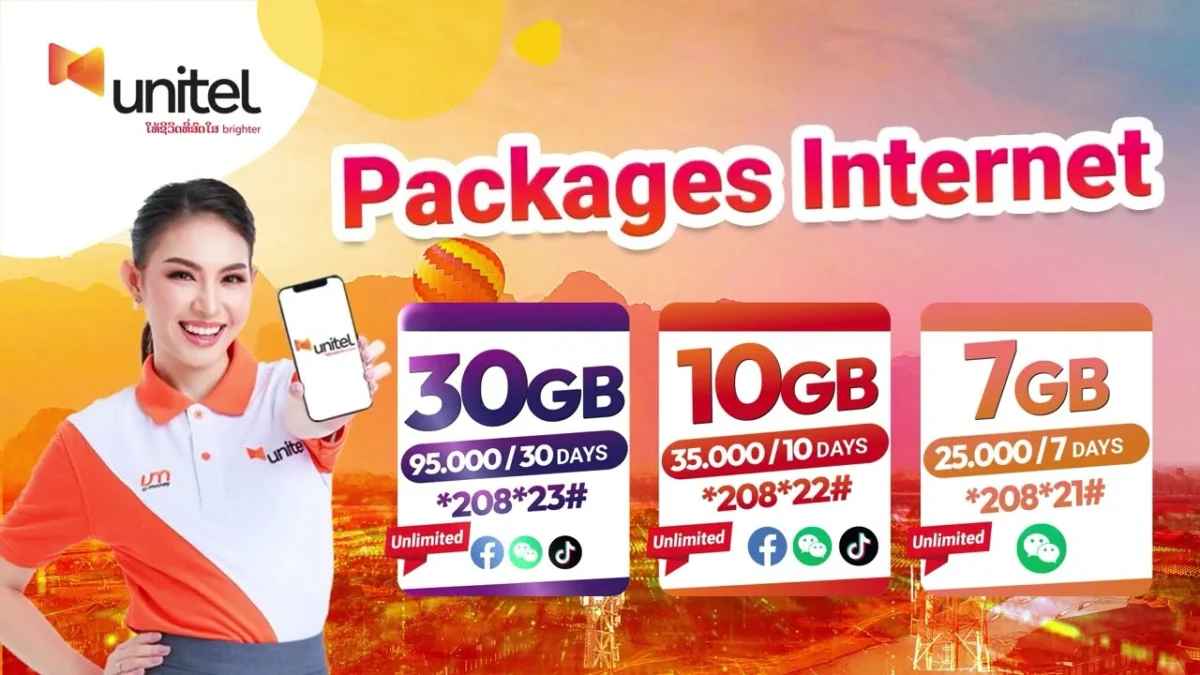
Current market rates for mobile data generally range from $2 to $5 USD per gigabyte, depending on the validity period and the volume of the package. Prepaid plans remain the dominant choice for over 90% of the population, offering flexibility for users to top up small amounts as needed. Operators frequently use "unlimited" social media packages (for apps like Facebook and WhatsApp) as a hook to retain subscribers, reflecting the social-media-centric nature of internet usage in the country.

Regulatory Environment and Government Oversight
The Ministry of Post and Telecommunications (MPT) serves as the primary regulatory body. Its mandate includes frequency allocation, licensing, and ensuring that operators adhere to national security and consumer protection standards.
In recent years, the government has implemented stricter SIM card registration laws, requiring all users to link their numbers to official identification. While this was done to curb telecommunications fraud and enhance security, it initially slowed subscriber growth as operators worked to verify millions of existing users. Furthermore, the government’s "Digital Economy Development Plan 2021–2025" outlines a roadmap for increasing internet speeds and expanding the digital footprint into the most remote villages, tasking operators with specific coverage milestones.
Challenges to Future Growth
Despite the impressive subscriber numbers, the Lao mobile sector faces several structural hurdles:
- Infrastructure Costs: The cost of maintaining towers in remote, mountainous terrain is high, and the return on investment in these low-density areas is slow.
- Human Capital: There is a persistent shortage of high-level technical expertise in areas like cybersecurity, network virtualization, and 5G architecture.
- Regulatory Hurdles: Navigating the bureaucratic requirements for tower placement and international bandwidth agreements can be time-consuming for operators.
- Currency Fluctuations: As many equipment purchases are made in USD while revenue is collected in Lao Kip (LAK), the recent volatility of the local currency has squeezed the profit margins of operators.
Future Outlook and Strategic Analysis
The future of the Lao mobile market is inextricably linked to the broader regional integration within ASEAN. As the Kunming-Vientiane railway and other infrastructure projects bring more economic activity, the demand for sophisticated telecommunications services will rise.
5G technology is expected to move from the trial phase to commercial reality in major cities like Vientiane, Savannakhet, and Pakse within the next 24 to 36 months. This will not only provide faster mobile internet for consumers but also enable "Industry 4.0" applications in the country’s growing Special Economic Zones (SEZs).
Furthermore, the rise of mobile money is set to redefine the role of the mobile operator. With Unitel’s U-money and LaoTel’s M-Money, these companies are transitioning from simple utility providers to central pillars of the nation’s financial ecosystem. This shift is expected to drive customer loyalty and provide new revenue streams that are less dependent on traditional voice and SMS services.
Conclusion
The mobile operators of Laos have demonstrated remarkable resilience and growth, successfully navigating a transition from basic connectivity to a multifaceted digital landscape. Led by Unitel and Lao Telecom, the industry has achieved high penetration rates and is currently laying the groundwork for a 5G future. While challenges regarding rural coverage and economic volatility remain, the strategic importance of telecommunications to the Lao government’s development goals ensures that the sector will remain a primary driver of national progress. For consumers, both domestic and international, the result is a market that offers increasing accessibility, competitive pricing, and a steady march toward a fully digitized society.
