
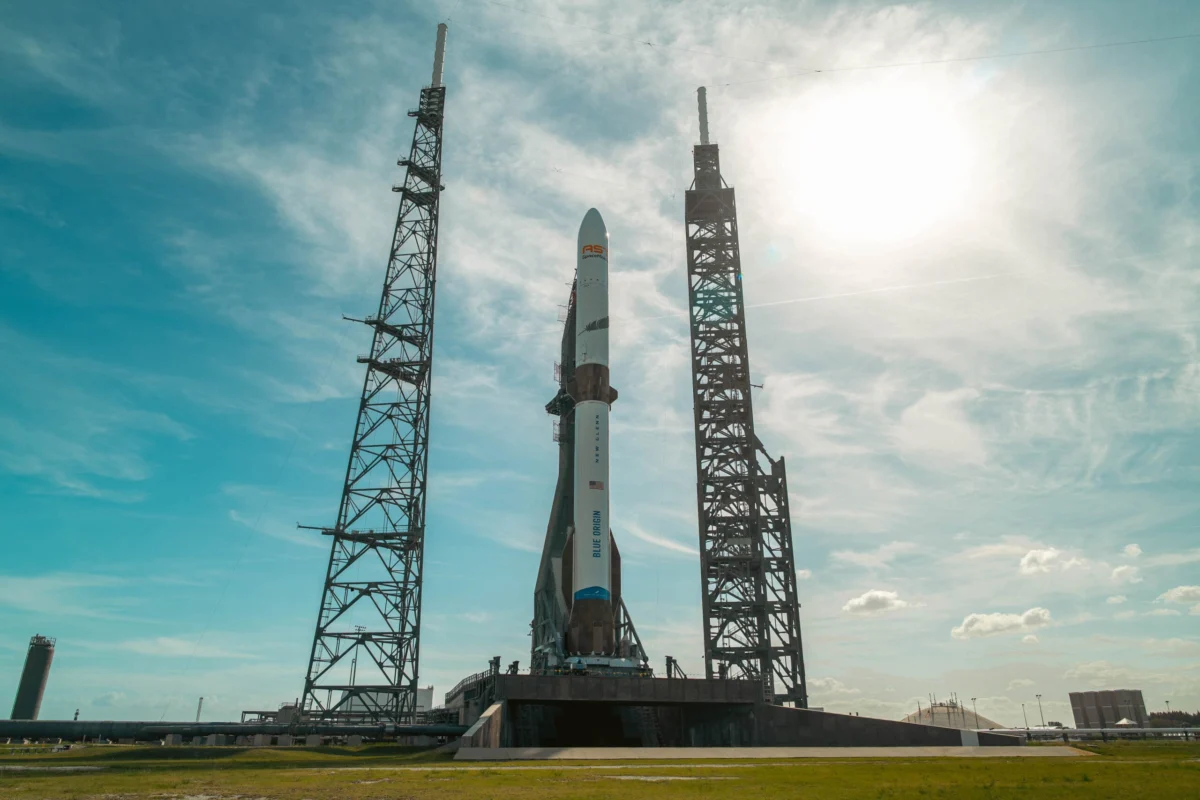

AST SpaceMobile has officially announced its intention to file a comprehensive insurance claim for the loss of its BlueBird 7 satellite, following a launch anomaly involving Blue Origin’s New Glenn heavy-lift launch vehicle. The incident, which occurred during the early hours of Sunday, April 19, saw the satellite deployed into an unsustainably low orbit due to a performance failure in the rocket’s upper stage. While the satellite successfully separated from the vehicle and established power, its orbital parameters were insufficient for long-term operations, necessitating a controlled de-orbit.
The mission, which departed from Space Launch Complex 36 (SLC-36) at Cape Canaveral Space Force Station at 7:25 a.m. EDT, represented a significant milestone for both companies. For Blue Origin, it was the first commercial flight of the New Glenn vehicle. For AST SpaceMobile, it was a critical step in the expansion of its space-based cellular broadband network. However, the technical failure of the second stage has now triggered a federal investigation and a temporary grounding of the New Glenn fleet.
Detailed Chronology of the Launch and Anomaly
The countdown for the mission proceeded without significant weather or technical delays, leading to a nominal liftoff. The New Glenn first stage, powered by seven BE-4 engines, performed according to specifications. Following stage separation, the first stage booster successfully executed a vertical landing, a feat that Blue Origin has prioritized as part of its reusable architecture. This marked the third successful recovery of a New Glenn booster, underscoring the reliability of the vehicle’s primary stage.
The complication arose during the flight of the second stage, known as the GS2. According to data released by Blue Origin, the stage was scheduled to perform two distinct burns of its dual BE-3U engines to achieve the target circular orbit. While the first burn placed the vehicle into an initial parking orbit, the second burn encountered a critical thrust deficit.
Blue Origin CEO Dave Limp confirmed the engine performance issue in a statement released Monday. "Early data suggest that on our second GS2 burn, one of the BE-3U engines didn’t produce sufficient thrust to reach our target orbit," Limp stated. He expressed regret over the failure to deliver the mission as requested by the customer, noting that while the booster recovery was a success, the primary mission objective—satellite delivery—was not met.
AST SpaceMobile’s technical team monitored the BlueBird 7 satellite immediately following separation. While the spacecraft was functional and responding to commands, the altitude was significantly below the threshold required for its onboard thrusters to compensate for atmospheric drag. Consequently, the company made the decision to initiate de-orbiting procedures to ensure a safe reentry and prevent the satellite from becoming a collision hazard in the increasingly crowded low Earth orbit (LEO) environment.
Technical Analysis of the BE-3U Engine Failure
The BE-3U is a liquid hydrogen (LH2) and liquid oxygen (LOX) engine, designed as an "upper stage" variant of the BE-3 engine used on Blue Origin’s suborbital New Shepard vehicle. Unlike the sea-level BE-3, the "U" variant features a vacuum-optimized nozzle and is designed to restart multiple times in the vacuum of space.
The failure of one of these engines during the second burn is a significant technical hurdle for Blue Origin. The GS2 stage is designed to be highly efficient, leveraging the high specific impulse of hydrogen fuel. However, hydrogen systems are notoriously complex due to their cryogenic temperatures and the potential for leaks or pump cavitation. The FAA-led mishap investigation will likely focus on whether the thrust deficit was caused by a fuel delivery issue, a mechanical failure within the engine’s turbopump, or a software-related command error.
Until the root cause is identified and a corrective action plan is approved by the Federal Aviation Administration (FAA), the New Glenn vehicle will remain grounded. This pause in operations comes at a sensitive time for Blue Origin, which has a mounting manifest of high-priority missions, including launches for NASA and Amazon’s Project Kuiper.
Impact on AST SpaceMobile’s Constellation Strategy
The loss of BlueBird 7 is a setback for AST SpaceMobile’s ambitious timeline to provide global direct-to-cell connectivity. The company is currently building a constellation of large-scale satellites designed to communicate directly with standard, unmodified smartphones. These satellites feature massive phased-array antennas, which are among the largest commercial arrays ever deployed in LEO.
Prior to this launch, AST SpaceMobile had celebrated a major success with the BlueBird 6 satellite, which recently successfully unfurled its array in space. The BlueBird 7 was intended to be the next link in a chain of 45 satellites that the company aims to have in orbit by the end of 2026. This constellation size is considered the "tipping point" required to offer continuous, non-interrupted broadband services to users across the globe.
In a statement to investors, AST SpaceMobile emphasized that the financial impact of the loss would be mitigated by insurance. "The company expects the cost of the satellite to be recovered under its insurance policy," the statement read. Space insurance typically covers the replacement cost of the hardware as well as the costs associated with a re-launch, though the premiums for future missions may be adjusted based on the findings of the mishap investigation.
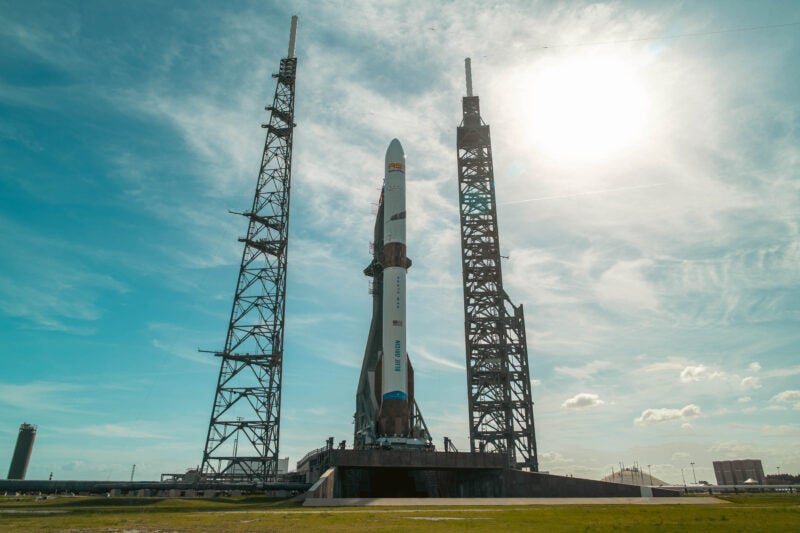
Despite the loss, AST SpaceMobile maintained its guidance for a launch cadence of "every one to two months on average." To achieve this, the company utilizes a multi-launcher strategy, having previously used SpaceX’s Falcon 9 for its BlueWalker 3 test mission and earlier BlueBird launches. This diversification is intended to prevent the grounding of a single launch vehicle from completely halting the company’s deployment schedule.
Market Reaction and Financial Implications
The aerospace market reacted swiftly to the news of the mission failure. AST SpaceMobile’s stock (ASTS) experienced a 6% decline during Monday’s trading session as investors weighed the implications of the delay. While the insurance claim protects the company’s balance sheet from the immediate capital loss of the satellite, the "opportunity cost" of a delayed network rollout remains a concern for analysts.
The direct-to-cell market is becoming increasingly competitive. SpaceX, in partnership with T-Mobile, is rapidly deploying its Starlink "Direct to Cell" capability, and Lynk Global is also moving forward with its own constellation. For AST SpaceMobile, which counts AT&T, Verizon, and Vodafone among its strategic partners, maintaining a steady deployment schedule is vital to securing its first-mover advantage in high-bandwidth space-to-phone services.
Financial analysts noted that AST SpaceMobile has recently bolstered its cash position through strategic investments and a successful capital raise. This liquidity provides a buffer against the operational delays caused by the New Glenn anomaly. However, the company will need to demonstrate that it can navigate the current launch vehicle shortage, as demand for heavy-lift capacity continues to outstrip supply across the industry.
Regulatory Oversight and the FAA Investigation
The Federal Aviation Administration (FAA) confirmed that it is overseeing the mishap investigation, a standard procedure for any launch that does not go according to the filed flight plan. Under federal regulations, Blue Origin will lead the investigation with FAA oversight to identify the root cause of the BE-3U underperformance.
"A mishap investigation is underway," the FAA stated. "The New Glenn vehicle is grounded until the FAA determines that any system, process, or procedure related to the mishap does not affect public safety."
Because the anomaly occurred in the upper atmosphere and the vehicle did not pose a threat to populated areas, the investigation is expected to focus primarily on technical reliability rather than public safety risks. Nevertheless, the process can be lengthy. For a new vehicle like New Glenn, which has only three flights under its belt, the FAA will likely require a rigorous review of all telemetry data to ensure that the engine failure is not indicative of a systemic design flaw.
The Broader Outlook for Blue Origin and New Glenn
The failure of the BlueBird 7 mission is a hurdle for Blue Origin as it seeks to position New Glenn as a viable, lower-cost alternative to SpaceX’s Falcon Heavy and United Launch Alliance’s (ULA) Vulcan Centaur. New Glenn is a massive rocket, standing over 320 feet tall, and is central to Blue Origin’s long-term vision of "millions of people living and working in space."
The vehicle’s first flight in January 2025 and its second flight for NASA’s ESCAPADE mission in November 2025 were both regarded as successes, establishing a sense of momentum for the company. This third flight was meant to prove that New Glenn could handle the complexities of commercial satellite deployment, which often requires precise orbital insertion to maximize the operational life of the spacecraft.
Blue Origin has invested billions of dollars into the development of the BE-4 and BE-3U engines and the massive production facilities at Merritt Island, Florida. The company’s manifest includes significant contracts for Amazon’s Project Kuiper, a satellite internet constellation that will compete with SpaceX’s Starlink. Any prolonged grounding of New Glenn could have ripple effects across the entire satellite industry, particularly for customers who have already committed to the vehicle for their upcoming launch windows.
Conclusion and Next Steps
As AST SpaceMobile moves forward with its insurance claim and satellite replacement plans, the focus of the space industry remains on the findings of the GS2 upper stage investigation. The loss of BlueBird 7 serves as a reminder of the inherent risks of spaceflight, even as the industry moves toward a more "normalized" commercial model.
For AST SpaceMobile, the path to 45 satellites remains the priority. The company’s ability to rebound from this setback will depend on the speed of the investigation and the availability of alternative launch slots. For Blue Origin, the challenge is to rectify the BE-3U performance issues and return New Glenn to flight, proving that it can reliably serve the burgeoning commercial space market.
The coming months will be critical for both entities as they analyze telemetry, adjust engineering protocols, and work toward the next launch. While the loss of BlueBird 7 is a clear blow, the data gathered from the anomaly may ultimately lead to a more robust and reliable New Glenn vehicle, ensuring the success of future missions in the high-stakes arena of global telecommunications.
