

The Lao People’s Democratic Republic has witnessed a transformative era in its telecommunications sector, transitioning from a nascent market to a robust digital ecosystem characterized by more than 10 million mobile subscribers as of 2021. This milestone is particularly significant given the nation’s population of approximately 7.5 million, indicating a mobile penetration rate exceeding 100%, a trend driven by the prevalence of multi-SIM usage among consumers seeking to optimize costs and network coverage. Currently, the industry is defined by a competitive quartet of major service providers—Unitel, Lao Telecom (LaoTel), TPlus Laos, and ETL Laos—each vying for dominance in a landscape increasingly shaped by 4G LTE expansion and the looming integration of 5G technologies.
As the Ministry of Post and Telecommunications (MPT) continues to oversee the modernization of the nation’s digital infrastructure, the sector serves as a critical pillar for the "Digital Laos" vision, which aims to leverage connectivity to drive economic growth, financial inclusion, and improved public services. This comprehensive report examines the market dynamics, technological shifts, and strategic challenges defining the current state of mobile operations in Laos.
The Competitive Landscape: Market Share and Provider Profiles
The Laotian mobile market is categorized by a clear hierarchy of dominance, where two major players control the vast majority of the subscriber base, while two smaller entities focus on niche stability and specialized service delivery. According to data released by the Ministry of Post and Telecommunications at the conclusion of 2020, the market share is distributed as follows: Unitel leads with 51%, LaoTel holds 34%, TPlus Laos maintains 10%, and ETL Laos accounts for the remaining 5%.
Unitel: The Market Leader
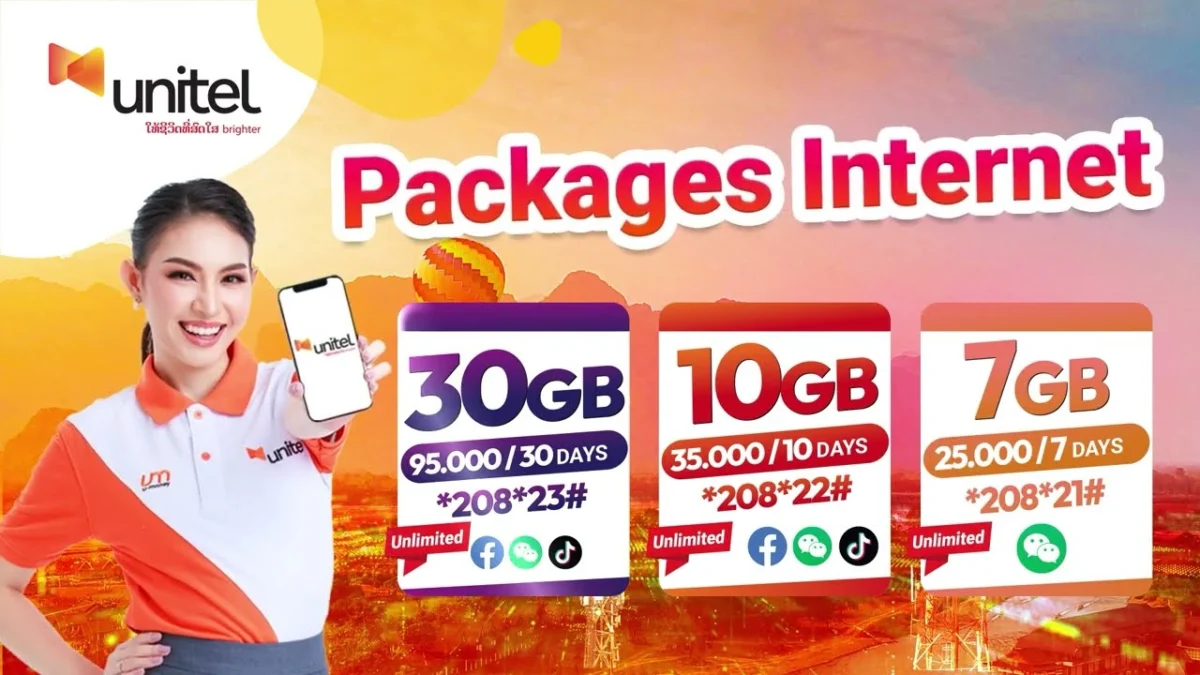
Established in 2008 as a joint venture between the Lao Asia Telecom and Vietnam’s military-run telecommunications giant, Viettel, Unitel has rapidly ascended to the top of the industry. With a subscriber base exceeding 5 million, Unitel’s success is largely attributed to its aggressive infrastructure deployment strategy, which mirrors Viettel’s successful "rural-first" model used in other developing markets. By prioritizing network coverage in remote and mountainous provinces that were previously underserved, Unitel secured a loyal customer base. Today, the company offers a comprehensive suite of services, including high-speed mobile data, fiber-to-the-home (FTTH) broadband, and value-added services (VAS) ranging from digital gaming to video-on-demand.

Lao Telecom (LaoTel): The Strategic Incumbent
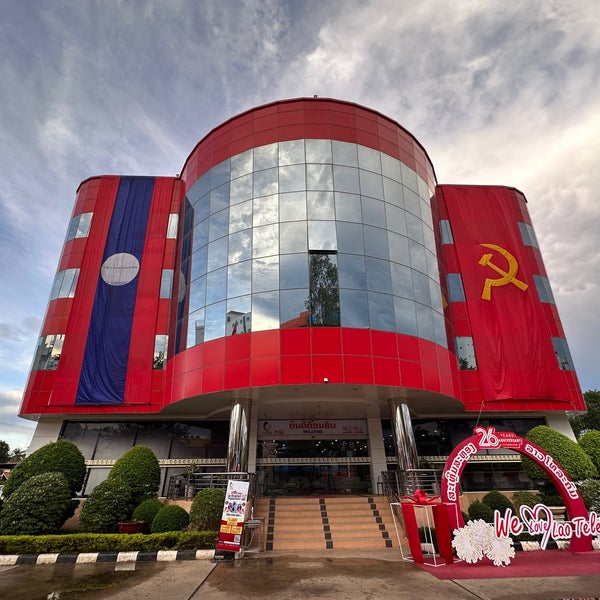
As the oldest telecommunications provider in the country, established in 1996, Lao Telecom remains a cornerstone of the national infrastructure. A joint venture between the Lao government (51%) and the international conglomerate Shenington Investments (49%), LaoTel boasts over 3 million subscribers. The provider is often perceived as the "premium" choice in urban centers like Vientiane and Luang Prabang. Beyond traditional voice and data, LaoTel has been a pioneer in integrating financial technology, launching mobile banking solutions and digital wallets that have become essential for the unbanked populations of the country.
TPlus Laos: The Rebranded Contender
Formerly operating under the Beeline brand, TPlus Laos is a subsidiary of the Russian-based multinational VimpelCom. Following a strategic rebranding, the company has focused on capturing the youth demographic and urban professionals. With approximately 1 million subscribers, TPlus has positioned itself through competitive data packages and international roaming services. The provider has also been active in the mobile payment space, attempting to carve out a niche in the burgeoning e-commerce sector of Laos.
ETL Laos: The State-Owned Specialist
The Enterprise of Telecommunications Lao (ETL) was reorganized as a joint venture in 2015, with a significant stake held by Jiafu Holdings. Although it holds the smallest market share at 5%, ETL remains a vital player due to its role in providing essential connectivity to government institutions and its focus on enterprise solutions. While its consumer-facing growth has been more conservative than Unitel or LaoTel, ETL provides a necessary competitive check on pricing and service standards within the industry.
A Chronology of Telecommunications Development in Laos
The journey of the Laotian mobile sector is one of rapid acceleration over a relatively short period.
- 1996–2000: The era of inception began with the founding of Lao Telecom, marking the transition from a purely landline-based system to the introduction of early cellular technology.
- 2002–2008: The market began to open to international investment. The establishment of Unitel in 2008 proved to be the most significant turning point, introducing intense competition and driving down the cost of SIM cards and handsets.
- 2011–2015: This period saw the entry of Beeline (now TPlus) and the reorganization of ETL. It also marked the beginning of the transition from 2G to 3G services, allowing for the first wave of widespread mobile internet usage.
- 2017–2021: The focus shifted toward 4G LTE deployment. During this time, mobile subscriptions surged past the 10 million mark, and the government began drafting more stringent regulations regarding SIM card registration to enhance national security and consumer protection.
- 2022–Present: The current phase is defined by the exploration of 5G pilot programs and the digital transformation of the tourism sector through technologies like eSIM.
Technological Infrastructure and Network Coverage
The geographic reality of Laos—a landlocked, mountainous nation—presents significant hurdles for telecommunications infrastructure. Despite this, mobile operators have made substantial strides in expanding their footprint.

Unitel currently maintains the most extensive network, with towers reaching even the most isolated districts in northern and southern Laos. LaoTel follows closely, with a strong emphasis on maintaining high-quality signal strength in the "Golden Triangle" and along the Thai-Lao border. While 2G and 3G networks remain the backbone for voice calls in rural areas, 4G LTE has become the standard in all provincial capitals.
The deployment of 4G has been essential for the growth of the local digital economy. High-speed data allows for the operation of ride-hailing apps, food delivery services, and social media platforms, which have become integral to the daily lives of Laotian citizens. Furthermore, the industry is currently looking toward 5G. Initial trials have been conducted in Vientiane, with operators anticipating that 5G will eventually facilitate the "Smart City" initiatives proposed by the government.
Economic Analysis: Pricing and Consumer Accessibility
Laos offers some of the most competitive mobile pricing in Southeast Asia. This affordability has been a primary driver of the high penetration rate. On average, the cost of mobile data ranges between $2 and $5 per gigabyte, depending on the validity period and the specific data bundle.
The pricing strategy of Laotian operators is often tiered to accommodate different socio-economic groups. Prepaid plans remain the most popular, allowing users to manage their expenses via low-denomination scratch cards or digital top-ups. This low barrier to entry has allowed even low-income families in agricultural sectors to access the internet, providing them with critical information on market prices for crops and weather forecasts.
However, industry analysts note that while low pricing is good for consumers, it puts pressure on the profit margins of operators, potentially slowing the rate of reinvestment into new infrastructure. The MPT plays a delicate balancing act, ensuring that prices remain accessible while allowing companies enough revenue to maintain and upgrade their networks.
Digital Transformation in Tourism: The Rise of eSIM
A notable innovation in the Laotian mobile market is the adoption of eSIM technology, specifically targeted at the tourism sector. Prior to this, travelers arriving in Laos were required to find physical kiosks to purchase local SIM cards—a process often fraught with language barriers and registration delays.
With the introduction of eSIM services, tourists can now purchase and activate data plans before they even land in the country. Platforms such as laosesim.com have become popular gateways for international visitors. This shift has received positive feedback from the Lao National Institute of Tourism and Hospitality, which views digital connectivity as a key component of the tourist experience. By ensuring that visitors have immediate access to maps, translation tools, and emergency services, the mobile operators are directly contributing to the recovery of the nation’s post-pandemic tourism industry.
Regulatory Environment and Governance
The Ministry of Post and Telecommunications (MPT) serves as the primary regulator, tasked with fostering a competitive environment while ensuring national interests are met. Key regulatory focuses in recent years have included:
- SIM Registration: To combat fraud and enhance security, the government has mandated that all mobile subscribers register their SIM cards with valid identification.
- Spectrum Management: The MPT manages the allocation of radio frequencies, ensuring that the transition to 4G and eventually 5G happens in an orderly fashion without interference.
- Consumer Protection: Regulations have been implemented to ensure transparency in billing and to prevent operators from engaging in anti-competitive pricing wars that could destabilize the market.
Official statements from the MPT emphasize that the goal is not just connectivity, but "quality connectivity." This involves setting benchmarks for upload and download speeds and holding operators accountable for network outages.
Critical Challenges and the Path Forward
Despite the rapid growth, several obstacles remain. The most pressing challenge is the "digital divide" between urban and rural populations. While Vientiane enjoys speeds comparable to other regional capitals, remote villages still struggle with inconsistent signals.

Furthermore, the sector faces a shortage of skilled domestic labor in high-tech fields such as network engineering and cybersecurity. Many operators currently rely on foreign expertise from Vietnam, China, and Russia. Addressing this will require a long-term investment in STEM education within the Laotian school system.
Infrastructure costs also remain high due to the rugged terrain. Building a single cell tower in the mountains of Phongsaly or Houaphan requires significantly more capital than in the plains of the Mekong Valley. Operators must also contend with the high cost of international bandwidth, as Laos is a landlocked country and must pay for transit rights through neighboring Thailand or Vietnam to access global undersea cables.
Conclusion: The Future of Connectivity in Laos
The future of mobile operations in Laos is intrinsically linked to the nation’s broader economic aspirations. As the government pushes for greater integration with the ASEAN Economic Community, the role of telecommunications will only grow in importance. The expected deployment of 5G will likely unlock new opportunities in the Internet of Things (IoT), automated logistics, and e-government services.
While challenges regarding rural infrastructure and workforce development persist, the trajectory of the market remains overwhelmingly positive. With over 10 million subscribers and a competitive environment that keeps prices low and innovation high, Laos is well-positioned to continue its digital evolution. The synergy between state-owned enterprises and foreign-invested joint ventures has created a resilient market that serves as a model for infrastructure development in emerging economies. As the digital and physical worlds continue to converge, the mobile operators of Laos will stand as the gatekeepers of the nation’s progress in the 21st century.
