

OpenAI is significantly advancing the integration of artificial intelligence into the daily operational fabric of businesses with the introduction of shared "workspace agents." These new AI capabilities, detailed this week, are designed to autonomously execute multi-step tasks across various organizational tools, operating continuously without the need for constant human prompting. This marks a substantial evolution from previous conversational AI models, shifting the paradigm towards proactive and sustained task completion within corporate environments.
Powered by Codex, OpenAI’s sophisticated coding agent, these workspace agents enable teams to construct specialized AI assistants capable of handling complex workflows. These can range from drafting comprehensive reports and triaging incoming requests to autonomously responding to internal communications. Unlike earlier iterations of ChatGPT, which relied on a back-and-forth dialogue model to achieve tasks, these agents are engineered to independently manage a defined workflow from initiation to completion, leveraging the data and tools accessible within an organization’s ecosystem. This fundamental shift promises to automate repetitive yet crucial business processes, freeing up human capital for more strategic endeavors.
The introduction of workspace agents follows a series of strategic moves by OpenAI to cater to team-based and enterprise-level AI adoption. The company has progressively built out team-focused features, including the launch of ChatGPT Enterprise and ChatGPT Business, which established shared AI environments for organizations. Furthermore, the development of custom GPTs allowed teams to create bespoke AI assistants tailored for specific departmental needs or recurring tasks. Workspace agents are presented as a direct evolution of these custom GPTs, building upon the concept of specialized AI but with an emphasis on sustained, autonomous operation rather than prompt-response cycles.
A Team Effort: Autonomous Workflows for Enhanced Productivity
The core innovation of workspace agents lies in their ability to execute predefined processes. Instead of merely responding to a user’s query, these agents are configured to follow a specific sequence of actions. This often involves gathering information from various connected systems, processing it, and then delivering the results. Potential applications are broad and impactful, including the automatic compilation of weekly performance reports, the qualification of sales leads based on predefined criteria, or the rigorous review of internal requests against established company policies.

OpenAI has outlined a user-friendly process for building these agents. Teams can describe their desired workflow directly within ChatGPT, which then guides them through the subsequent steps. This includes connecting necessary tools, meticulously defining each stage of the process, and rigorously testing the system to ensure accuracy and efficiency. The agents are also designed for flexibility, capable of being scheduled to run at specific times or configured to react automatically to incoming requests, thereby enabling a truly responsive and proactive AI infrastructure. This approach democratizes the creation of powerful AI tools, making advanced automation accessible to a wider range of business users.
The company has confirmed that custom GPTs will remain available, with plans to facilitate their conversion into workspace agents over time. This offers a clear upgrade path for existing custom AI solutions, allowing businesses to transition towards more autonomous and integrated AI workflows without losing their existing investments in tailored AI assistants.
Shared Context, Shared Systems: Bridging the Gap in Collaborative AI
The strategic push towards shared workspace agents underscores OpenAI’s broader vision of moving AI beyond individual productivity tools and embedding them deeply within collaborative team processes. This trend is mirrored by other industry players; for instance, Notion is actively exploring similar concepts with its Custom Agents, aiming to build systems that can operate seamlessly across internal documents, diverse tools, and communication channels.
In OpenAI’s ecosystem, these agents operate within a defined "workspace" that encompasses files, code repositories, connected applications, and a persistent memory. This comprehensive context allows them to work across different systems efficiently, retaining knowledge of previous steps and interactions. This capability is critical for complex workflows that involve multiple stages and dependencies, preventing the AI from having to start from scratch with each new interaction. The ability to maintain context and leverage past actions is a significant leap forward in AI’s capacity to handle sophisticated, multi-faceted business operations.
"AI has already helped people work faster on their own, but many of the most important workflows inside an organization depend on shared context, handoffs, and decisions across teams. Workspace agents are designed for that kind of work," OpenAI stated in its announcement. This highlights the strategic focus on addressing the inherent complexities of collaborative work environments, where seamless information flow and coordinated actions are paramount.

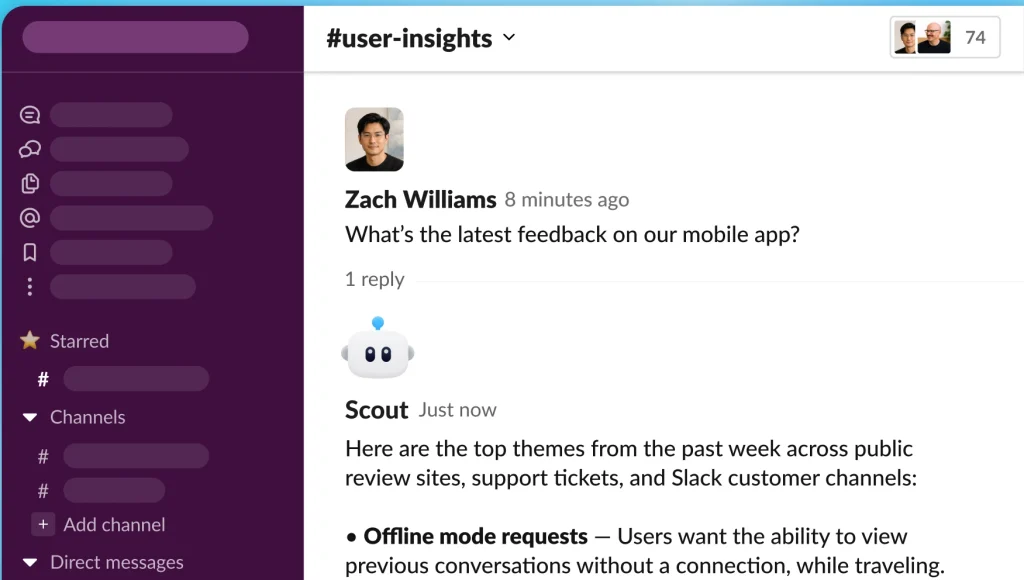
OpenAI emphasizes the extensive customization possibilities for these agents. Teams can integrate their proprietary tools, connect to specific data sources, and embed their unique internal processes into the agent’s operational logic. Internally, OpenAI has already identified and implemented several compelling use-cases. These include agents that meticulously compile sales notes from various communications, generate comprehensive business reports by aggregating data from disparate sources, and provide instant responses to employee queries within Slack channels, thereby streamlining internal communication and support.
Controls and Oversight: Ensuring Security and Compliance in AI Deployment
As these sophisticated AI systems are entrusted with increasingly critical tasks and sensitive internal data, OpenAI is implementing robust controls and oversight mechanisms. The company is providing teams with granular permissions to define precisely what tools and data their workspace agents can access and manipulate. Furthermore, mechanisms for requiring explicit approval for certain high-impact actions, such as sending emails or modifying crucial files, are being integrated.
For administrators, comprehensive monitoring capabilities are being introduced. These will allow them to track agent usage, understand how frequently they are running, and identify the specific systems they interact with. A dedicated compliance API is also in development, which will offer deep visibility into agent configurations and ongoing activity, ensuring adherence to organizational policies and regulatory requirements.
This strong emphasis on oversight is particularly pertinent given the increasing use of AI with sensitive internal data. OpenAI has concurrently been investing in related privacy initiatives, including the open-source OpenAI Privacy Filter. This tool is designed to enhance data handling security in AI systems by filtering or limiting the scope of data processed, thereby mitigating potential privacy risks and ensuring responsible AI deployment.
The initial release of workspace agents is currently available as a research preview for users of ChatGPT Business, ChatGPT Enterprise, and education-focused plans. OpenAI has indicated that pricing for these advanced capabilities will transition to a credit-based model in May, offering a flexible and scalable approach to AI resource management as adoption grows. This phased rollout and evolving pricing strategy suggest a commitment to iterative development and market responsiveness as the capabilities of these autonomous AI assistants mature. The long-term implications of such agents could redefine operational efficiency, enhance collaborative capabilities, and unlock new avenues for data-driven decision-making within organizations globally.
