
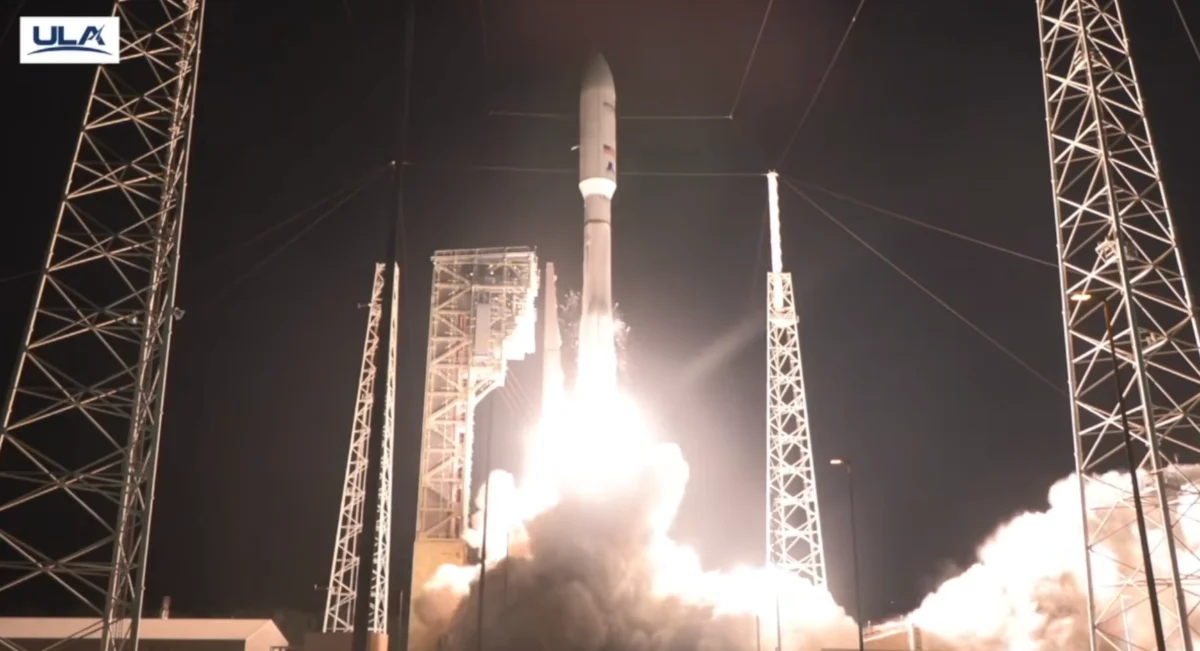

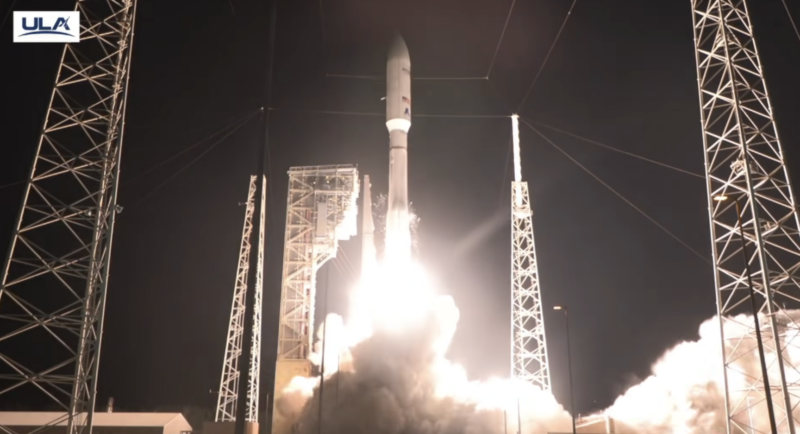
United Launch Alliance (ULA) successfully executed the sixth dedicated mission for the Amazon Leo satellite constellation on Monday evening, marking a significant step forward in the tech giant’s ambitious efforts to establish a global high-speed broadband network. An Atlas V rocket, the venerable workhorse of the ULA fleet, lifted off from Space Launch Complex-41 (SLC-41) at Cape Canaveral Space Force Station in Florida at precisely 8:53 p.m. ET on April 27. The mission, designated as Leo-6, successfully delivered 29 advanced communications satellites into low Earth orbit (LEO), further populating the growing orbital architecture that Amazon intends to use to challenge established players in the satellite internet sector.
This launch represents the second time in a single month that ULA has provided launch services for the Amazon Leo project, following the successful Leo-5 mission on April 4. The increased frequency of launches highlights a critical pivot point for Amazon as it races against both regulatory deadlines and market competitors to bring its connectivity services to a global audience. With the completion of this mission, the total number of Amazon Leo satellites currently in orbit has reached 270, a figure that remains a fraction of the planned 3,236-satellite constellation but indicates a significant acceleration in deployment capabilities.
Detailed Mission Chronology and Orbital Injection
The Leo-6 mission followed a precise and complex flight profile designed to ensure the accurate placement of the 29 satellites. The Atlas V rocket, configured in its 551 variant—featuring a five-meter payload fairing, five solid rocket boosters, and a single-engine Centaur upper stage—provided the necessary thrust to escape the dense lower atmosphere. Following the initial boost phase and the jettisoning of the solid rocket motors, the Centaur upper stage took over to perform the delicate maneuvers required for satellite deployment.
The deployment sequence was characterized by its efficiency and technical precision. The satellites were released in a series of 10 distinct deployment events, spread across a 16-minute window. The first set of satellites began their separation from the carrier 21 minutes and 5 seconds into the mission. To avoid collisions and ensure proper orbital spacing, the deployments were staggered, with the final satellite successfully clearing the launch vehicle at 37 minutes and 37 seconds after liftoff. This rapid-fire deployment strategy is essential for large-scale constellations where dozens of units must be placed in specific orbital planes within a single launch window.
Operational Innovations: The Continuous Rollout Strategy
A notable highlight of the Leo-6 mission was ULA’s implementation of a "continuous rollout" process. In a traditional launch campaign, a rocket is often moved to the pad days in advance for final checks and fueling, consuming valuable time and limiting the throughput of the launch facility. For this mission, ULA conducted the rollout from the Vertical Integration Facility (VIF) and the subsequent launch within a single 24-hour period.
This operational shift is designed to minimize the "on-pad" time, allowing ULA to increase its launch cadence significantly. As the demand for heavy-lift launches grows—driven largely by megaconstellations like Amazon Leo—launch providers are under immense pressure to streamline ground operations. By reducing the time a vehicle occupies the launch pad, ULA can more effectively manage a crowded manifest that includes national security missions, scientific endeavors, and commercial contracts.
Amazon’s Strategic Path to Commercial Service
The Leo-6 launch arrives at a pivotal moment for Amazon’s satellite division. Amazon CEO Andy Jassy recently provided clarity on the project’s timeline, confirming that the company is targeting mid-2026 for the official commencement of commercial services. This timeline is critical, as Amazon must adhere to strict regulatory requirements set by the Federal Communications Commission (FCC). Under the terms of its license, Amazon is required to have at least half of its authorized constellation—roughly 1,618 satellites—in operation by July 2026.
To meet these goals, Amazon has secured what is widely considered the largest commercial procurement of launch services in history. The company has contracted for 77 heavy-lift launches from a diverse group of providers, including ULA, Arianespace, and Blue Origin. This "multi-launcher" strategy is intended to mitigate the risks associated with any single rocket’s grounding or technical failure.
However, the path to full deployment has not been without obstacles. Amazon’s strategy relies heavily on next-generation rockets that are still in their early operational or testing phases. Currently, two of the primary vehicles slated for Amazon Leo missions are facing significant hurdles:
- ULA Vulcan Centaur: The successor to the Atlas V experienced an anomaly during a Space Force mission in February. This has led to a temporary halt in its use for National Security Space Launch (NSSL) missions while investigations continue. While Vulcan is expected to carry the bulk of the Amazon Leo constellation in the future, these delays place more pressure on the existing Atlas V stockpile.
- Blue Origin New Glenn: The massive New Glenn rocket, owned by Jeff Bezos’s aerospace company, suffered a setback last week when an anomaly during a launch resulted in an AST SpaceMobile satellite being placed into the incorrect orbital position. This incident has led to a grounding of the New Glenn fleet pending a thorough review of the flight data and hardware.
The Global Launch Landscape and Upcoming Missions
Despite the setbacks facing the Vulcan and New Glenn programs, Amazon is maintaining a rigorous launch schedule by utilizing alternative vehicles. Later this week, on April 30, the company is scheduled to launch the Leo Europe 2 (LE-02) mission. This mission will see 32 satellites launched aboard an Ariane 6 rocket from the Guiana Space Centre in Kourou, French Guiana. This partnership with Arianespace underscores the international nature of the project and Amazon’s commitment to utilizing every available orbital corridor to reach its 2026 targets.
The use of the Ariane 6 is particularly significant, as the European heavy-lift vehicle is also in its early stages of deployment. The success of the LE-02 mission will be a crucial indicator of Arianespace’s ability to support the high-frequency demands of a LEO constellation.
Broader Implications for the Satellite Internet Market
The successful deployment of the Leo-6 mission intensifies the competition in the low Earth orbit broadband market, which is currently dominated by SpaceX’s Starlink. With over 5,000 satellites already in orbit, Starlink has a substantial head start, providing service to millions of customers globally. However, industry analysts suggest that the market for high-speed, low-latency internet is vast enough to support multiple major players, particularly in underserved rural areas and enterprise sectors.
Amazon Leo aims to differentiate itself by integrating its satellite service with its existing Amazon Web Services (AWS) infrastructure. By providing a seamless link between orbital connectivity and cloud computing, Amazon hopes to capture a significant share of the government and corporate markets. Furthermore, the consumer side of the project intends to leverage Amazon’s massive retail footprint to distribute user terminals, potentially lowering the barrier to entry for millions of households.
The socio-economic implications of these constellations are profound. By providing reliable internet to regions where fiber-optic or traditional cellular infrastructure is non-existent, projects like Amazon Leo can facilitate better access to education, telehealth, and economic opportunities. However, the rapid increase in the number of satellites also raises concerns regarding space debris and the long-term sustainability of the orbital environment. Amazon has publicly committed to responsible space operations, including the de-orbiting of satellites at the end of their functional lives to prevent the accumulation of "space junk."
Conclusion and Future Outlook
The successful launch of the 29 satellites on Monday evening serves as a testament to the robust engineering of the Atlas V and the operational agility of United Launch Alliance. For Amazon, every successful deployment is a step toward fulfilling a multi-billion-dollar vision of global connectivity.
As the mid-2026 deadline approaches, the aerospace industry will be watching closely to see if Amazon can maintain this accelerated cadence. The upcoming Ariane 6 launch and the eventual return to flight of the Vulcan and New Glenn rockets will be the determining factors in whether Amazon Leo can meet its regulatory obligations and become a viable competitor in the celestial race for data. For now, the Leo-6 mission stands as a clear signal that Amazon’s orbital ambitions are moving from the drawing board to the stars at an unprecedented pace.
