
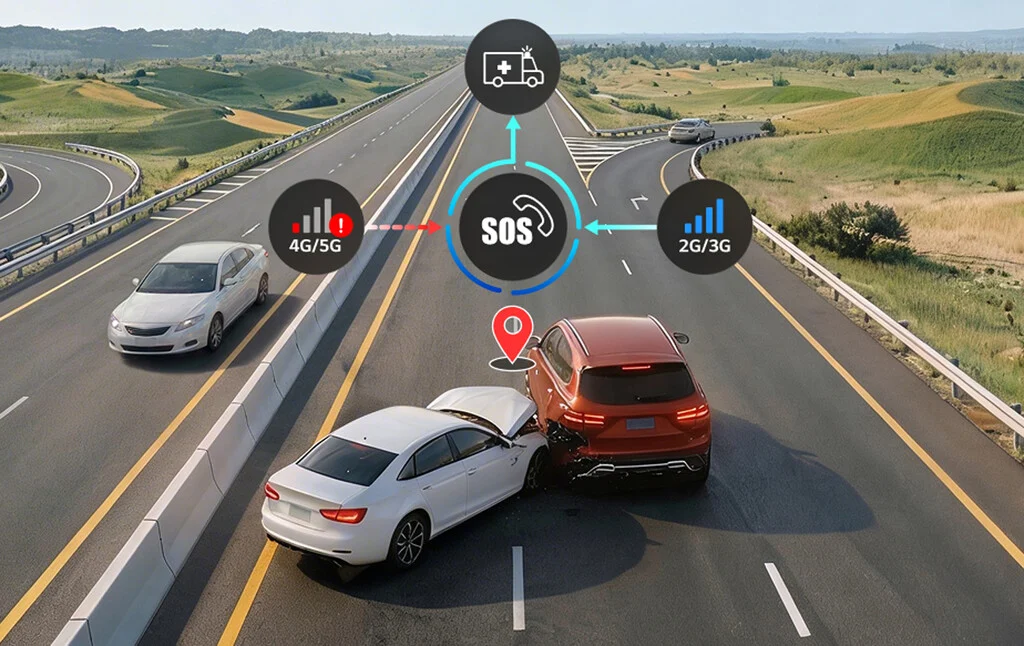

The relentless pursuit of safer roads continues to drive innovation within the automotive industry, where technological advancements are increasingly integrated to protect lives and mitigate the severity of accidents. While certain safety devices, such as the V16 beacons, have sparked considerable debate regarding their efficacy and mandatory adoption, the overarching objective of any initiative aimed at improving road safety is undeniably welcome. In this spirit, LG, a global leader in technology, has unveiled its pioneering Hybrid eCall solution, a sophisticated emergency communication system engineered to provide unparalleled reliability in critical moments. This advanced system ensures a seamless communication channel across various network infrastructures, encompassing everything from legacy 2G to the cutting-edge capabilities of 5G, thereby setting a new benchmark for in-vehicle safety.
The Criticality of Rapid Emergency Response in Road Accidents
Road traffic accidents represent a formidable global public health challenge, claiming an estimated 1.3 million lives annually and causing between 20 and 50 million non-fatal injuries, many of which result in long-term disabilities. The World Health Organization (WHO) highlights that road traffic injuries are the leading cause of death for individuals aged 5-29 years, underscoring the profound societal and economic impact of these incidents. In this grim context, the speed of emergency response is paramount. Medical professionals often refer to the "golden hour," the crucial period immediately following a traumatic injury during which timely and appropriate medical intervention can significantly improve survival rates and reduce the extent of long-term disability. Any technology capable of shortening the time it takes for emergency services to reach an accident scene directly contributes to saving lives and minimizing suffering. This fundamental principle underpins the development and deployment of automatic emergency call systems like eCall.
The Foundation: Understanding Europe’s eCall Initiative
The European Union has played a pivotal role in championing mandatory automatic emergency call systems. The eCall initiative, an acronym for "emergency call," is an in-vehicle system specifically designed to automatically contact Europe’s unified emergency number, 112, in the event of a serious road accident. Mandated for all new types of passenger cars and light commercial vehicles sold within the EU from April 1, 2018, the eCall system activates either manually by vehicle occupants or automatically through integrated sensors that detect a severe collision, such as when airbags deploy.
Upon activation, eCall transmits a Minimum Set of Data (MSD) to the nearest Public Safety Answering Point (PSAP). This crucial data package typically includes the precise geographical coordinates of the incident, the exact time of the crash, the vehicle identification number (VIN), the type of fuel used, and the direction of travel. The provision of this accurate and immediate information empowers emergency services to pinpoint the accident location, assess its potential severity, and dispatch the most appropriate resources—be it an ambulance, fire brigade, or police unit—with greater speed and efficiency. Prior to the eCall mandate, extensive studies projected that the system could slash emergency response times by an estimated 40% in urban areas and a remarkable 50% in rural settings. These reductions were anticipated to save hundreds of lives each year and significantly mitigate the severity of injuries for thousands of road users. The broad acceptance and integration of eCall since its mandate have solidified its status as a cornerstone of modern automotive safety.
The Evolution to Next Generation eCall (NG eCall) and Future Mandates
As telecommunications technologies rapidly advance, so too must the critical safety systems that depend on them. Traditional eCall systems primarily relied on 2G and 3G networks for data transmission. However, with the global rollout of 4G and 5G networks, coupled with the ongoing process of "sunsetting" older network generations in many regions, a more advanced standard known as Next Generation eCall (NG eCall) is emerging. Recognizing the inevitable shift in network infrastructure, European regulations stipulate that from 2027, all new generation vehicles sold in Europe will be required to be compatible with NG eCall.
This upgraded system is designed to operate exclusively over 4G and 5G networks, promising significantly faster and more precise transmission of accident data. The transition to NG eCall is driven by more than just speed; it leverages the enhanced bandwidth, lower latency, and greater data capacity of newer networks. This allows for the potential transmission of richer datasets, which could include real-time video feeds from inside or outside the vehicle, more comprehensive vehicle diagnostics, or even biometric data from occupants, providing emergency responders with an even more detailed understanding of the incident before their arrival. This forward-thinking regulatory approach ensures that automotive safety systems remain aligned with technological progress and are resilient against network obsolescence, thereby future-proofing critical safety functionalities.
LG’s Hybrid eCall: A Solution for Evolving Connectivity Challenges
While the migration to 4G and 5G networks offers substantial benefits, it also introduces a significant challenge: ensuring continuous and reliable emergency communication during this transitional period and in geographical areas where 4G/5G coverage may still be nascent or inconsistent. Many regions, particularly rural expanses or remote locales, continue to depend heavily on existing 2G and 3G infrastructure. Furthermore, network dead zones or areas with poor signal strength can occur even within densely populated urban environments due to topographical features, building density, or temporary network outages. It is precisely in addressing these connectivity gaps that LG’s innovative Hybrid eCall solution truly distinguishes itself.
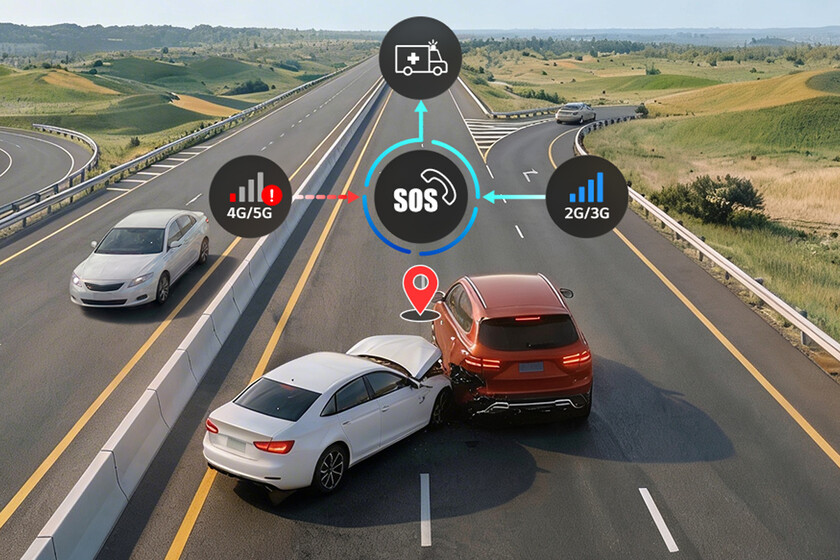
LG’s system is meticulously engineered to guarantee unwavering emergency communication across the full spectrum of available network technologies: 2G, 3G, 4G, and 5G. The "hybrid" designation denotes its intelligent capability to automatically and seamlessly switch between any available network when the primary network’s coverage is irregular, weak, or completely unavailable. For instance, if a vehicle equipped with LG’s Hybrid eCall travels through an area where the 5G signal degrades, the system can instantaneously transition to 4G. Should 4G coverage also prove insufficient, it will then automatically switch to 3G, and if necessary, even to 2G, to maintain the vital emergency call. This adaptive, multi-network communication mechanism is absolutely critical for minimizing communication delays and preventing data loss, thereby ensuring that the life-saving information reaches emergency services without interruption.
An inferred statement from an LG executive, perhaps the head of their Vehicle component Solutions division, might articulate: "Our Hybrid eCall system represents a pivotal advancement in automotive safety, guaranteeing that critical emergency communications are never compromised, irrespective of prevailing network conditions. By intelligently adapting to the diverse and evolving telecommunications landscape, we are delivering unparalleled reliability – a paramount consideration when human lives are at stake. The system’s official certification and its rapid integration into vehicles from leading global automakers underscore the industry’s trust in our vision for a safer, more connected future on our roads." This perspective emphasizes both the technological prowess and the practical impact of LG’s innovation.
Technical Sophistication and Unwavering Reliability
The technical sophistication underpinning LG’s Hybrid eCall is considerable, reflecting years of research and development. The system is deeply integrated into the vehicle’s core communication architecture. Upon detecting a collision – triggered by highly sensitive impact sensors, accelerometers, or the activation of airbags – it automatically initiates an emergency call. The system then meticulously compiles the Minimum Set of Data (MSD), which includes precise GPS coordinates, the vehicle’s speed at the moment of impact, and other crucial parameters, and attempts to transmit this information to the nearest PSAP.
The hybrid nature of the system is sustained by a continuous, real-time monitoring process of network availability and quality. If the designated primary network (e.g., 5G) is deemed unavailable or its signal strength is too weak to ensure reliable data transmission, the system automatically and instantaneously executes a switch to the next best available network. This sophisticated multi-path communication strategy provides an exceptionally robust fail-safe mechanism, which is absolutely critical in emergency scenarios where every fraction of a second can determine the outcome. The rigorous certification process that LG’s system has undergone attests to its adherence to stringent industry standards and regulatory requirements, thereby paving the way for its widespread, confident implementation across the global automotive sector.
Widespread Implementation and Industry Adoption
LG’s Hybrid eCall solution has successfully secured official certification, a testament to its reliability and compliance, and is already being implemented in vehicles manufactured by some of the world’s leading automotive brands. This swift adoption by major global automakers highlights the industry’s acute recognition of the imperative for resilient emergency communication systems, especially as the global telecommunications landscape undergoes profound transformations. Automakers are increasingly challenged to future-proof their vehicle offerings against network changes, particularly the imminent or ongoing sunsetting of 2G and 3G networks in numerous regions worldwide. By integrating LG’s hybrid solution, manufacturers can ensure that their vehicles not only comply with current eCall mandates but also remain compatible with future NG eCall requirements, simultaneously offering superior safety features to their discerning clientele. This proactive stance by automakers aligns seamlessly with escalating consumer expectations for advanced safety technologies and strategically positions them advantageously within an intensely competitive market.
An insightful observation from a leading automotive industry analyst, reflecting on this trend, might be: "The automotive sector is rapidly accelerating its integration of advanced connectivity solutions. LG’s hybrid approach adeptly addresses a pivotal challenge in guaranteeing the steadfast reliability of safety features amidst a rapidly evolving network infrastructure. As older networks are systematically phased out, vehicle manufacturers require robust and adaptive solutions that can effectively bridge this technological gap and ensure uninterrupted transitions. LG’s Hybrid eCall provides precisely that level of resilience, positioning it as an exceptionally compelling choice for automakers across the globe." This perspective underscores the strategic importance of LG’s innovation in navigating complex technological transitions.
Broader Impact and Far-Reaching Implications
1. Enhanced Consumer Safety and Unrivaled Peace of Mind: For the ultimate beneficiary – the driver and passengers – LG’s Hybrid eCall directly translates into significantly enhanced safety and an unparalleled sense of security. The knowledge that their vehicle is equipped with a system capable of reliably summoning emergency assistance, even in areas notoriously prone to patchy network coverage, offers an invaluable layer of reassurance. Faster emergency response times can literally be the demarcation between life and debilitating injury, or even death. This technological leap empowers vehicle occupants by providing a critical safety net that operates autonomously, especially in situations where human intervention might be rendered impossible due to severe injury or shock.
2. Optimizing Efficiency for Emergency Services: Emergency services stand to gain immensely from the provision of more reliable, precise, and immediate accident data. With LG’s system, Public Safety Answering Points (PSAPs) can anticipate a reduction in failed calls or incomplete data transmissions, which in turn leads to a more efficient and targeted dispatch of ambulances, fire brigades, and police units. The pinpoint accuracy of location data, combined with specific vehicle details, allows responders to arrive at the scene better prepared, potentially bringing specialized equipment or personnel tailored to the exact nature of the incident. This critical optimization of resources can result in faster rescue operations, improved patient care, and ultimately, superior outcomes.
3. Future-Proofing Automotive Technology Against Network Obsolescence: LG’s strategic decision to develop a hybrid solution directly confronts the inherent challenges posed by the continuous evolution of telecommunications networks. The gradual phasing out of 2G and 3G networks is a pervasive global phenomenon. In several countries, these older networks have already been fully decommissioned, or definitive plans are firmly in place for their retirement in the coming years. For instance, in the United States, major carriers have already completed the shutdown of 3G, and 2G networks are also progressively being phased out. Similarly, in Europe, while 2G often remains operational for certain IoT applications, 3G networks are being systematically decommissioned to reallocate valuable spectrum for the expansion of 4G and 5G services. A robust system that can seamlessly navigate these network transitions ensures that vehicles sold today will retain their full compliance and critical safety functionalities throughout their entire operational lifespan, thereby preventing the need for costly retrofits or the premature obsolescence of essential safety features.
4. Driving Innovation in the Connected Car Ecosystem: The successful development and widespread adoption of advanced systems like Hybrid eCall serve as a powerful catalyst, pushing the boundaries of connected car technology. This innovation underscores the accelerating integration of telematics, Internet of Things (IoT) devices, and artificial intelligence into modern vehicles, transforming them into highly sophisticated mobile platforms. This technological momentum extends far beyond mere emergency calls, paving the way for the development of more advanced driver-assistance systems (ADAS), sophisticated remote diagnostics, predictive maintenance capabilities, and ultimately, the realization of fully autonomous driving – all of which are critically dependent on robust, pervasive, and reliable connectivity.
5. Global Applicability and Standard Setting: While the article primarily references the European regulatory framework, the foundational principles and technological advantages inherent in LG’s Hybrid eCall are universally applicable. Road safety remains a paramount global concern, and numerous countries outside of Europe are likewise grappling with similar challenges related to network transitions and the urgent need for reliable in-vehicle emergency communication systems. The proven success and demonstrated reliability of LG’s system within the stringent European market could very well serve as an influential blueprint for its broader adoption in other major automotive markets worldwide, thereby contributing to the elevation of global road safety standards. Furthermore, discussions around data privacy and security are inherent with always-on systems. ECall systems are designed with privacy in mind, typically only transmitting data upon activation (i.e., a collision or manual trigger), not continuously tracking vehicle movements. This design principle ensures that while safety is prioritized, individual privacy is also respected.
The Road Ahead: A Vision for a Safer Future
The introduction of LG’s Hybrid eCall system marks a profoundly significant milestone in the continuous, global endeavor to enhance road safety. By proactively and intelligently addressing the intricate complexities of evolving telecommunications networks, LG has delivered a solution that not only rigorously meets current regulatory mandates but also astutely anticipates and prepares for future technological shifts and challenges. This unwavering commitment to innovation ensures that the life-saving potential of automatic emergency call systems is maximized to its fullest extent, providing an indispensable safety net for millions of drivers and passengers across the globe. As vehicles become increasingly connected, intelligent, and autonomous, the widespread integration of robust, adaptive technologies like Hybrid eCall will be absolutely paramount in forging a safer, more responsive, and more secure transportation ecosystem for everyone. The collaborative and sustained efforts of technology providers, automotive manufacturers, and regulatory bodies will continue to illuminate the path toward a future where the devastating impact of road accidents is significantly diminished, ultimately making every journey a safer one.
