
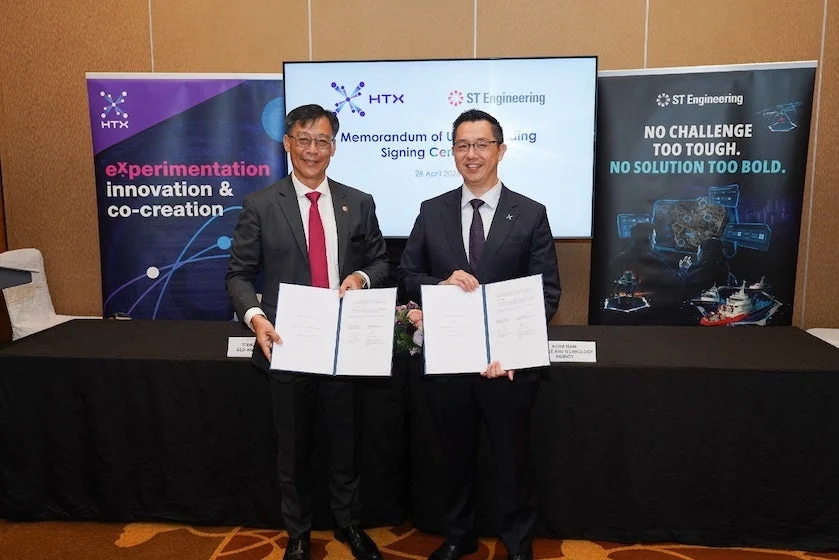

In a significant move to bolster Singapore’s domestic security and emergency response capabilities, ST Engineering and the Home Team Science and Technology Agency (HTX) have officially entered into a five-year Memorandum of Understanding (MoU) to co-develop cutting-edge space-based science and technology solutions. Announced on April 28, this strategic alliance aims to integrate satellite-driven data and advanced geospatial analytics into the operational framework of Singapore’s public safety agencies. By leveraging Earth Observation (EO) technologies and digital innovation, the partnership seeks to provide first responders and security officials with unprecedented situational awareness, potentially transforming how the city-state manages large-scale incidents and environmental hazards.
The collaboration represents a convergence of ST Engineering’s extensive heritage in aerospace and satellite engineering with HTX’s mission to provide "force multiplier" technologies for the Ministry of Home Affairs (MHA). As global security challenges become increasingly complex—ranging from climate-induced disasters to industrial accidents in high-density urban environments—the shift toward space-based assets offers a vantage point that terrestrial systems cannot match. Under the terms of the MoU, the two organizations will focus on the creation of specialized space programs tailored to the unique geographical and operational needs of Singapore, ensuring that the nation remains at the forefront of technological adoption in the public safety sector.
Enhancing Public Safety Through Space-Based Observation
The primary driver behind this partnership is the practical application of space technology in high-stakes public safety scenarios. One of the most critical applications identified by HTX is the detection and monitoring of hazardous gas plumes, particularly those originating offshore or in industrial zones. Singapore, as one of the world’s busiest maritime hubs and a global leader in the petrochemical industry, faces unique risks associated with the transport and processing of volatile materials.
Space-based sensors, particularly those utilizing hyperspectral imaging and Synthetic Aperture Radar (SAR), can detect chemical signatures and atmospheric anomalies that are invisible to the naked eye and difficult to track from ground level. By utilizing satellites, the Home Team—which includes the Singapore Police Force and the Singapore Civil Defence Force (SCDF)—can receive early warnings regarding the drift and concentration of toxic gases. This "over-the-horizon" capability allows for the rapid deployment of evacuation orders and the strategic positioning of emergency teams long before a plume reaches populated areas.
Chan Tsan, Chief Executive Officer of HTX, emphasized the transformative potential of this technology. He noted that space-based developments could significantly enhance the agency’s observational and early-warning capabilities. According to Chan, the ability to monitor hazardous gas plumes offshore provides first responders with critical additional time to react, a factor that is often the difference between a controlled incident and a tragedy. This proactive approach aligns with Singapore’s broader "Smart Nation" initiative, which seeks to use data and technology to improve the quality of life and safety of its citizens.
The Technological Pillars: EO, Geospatial Services, and AI
The partnership will draw heavily on ST Engineering’s expertise in three core areas: Earth Observation (EO) satellites, geospatial services, and digital technologies. ST Engineering has long been a pioneer in Singapore’s space industry, having been instrumental in the development and launch of the TeLEOS-1 and TeLEOS-2 satellites. TeLEOS-2, in particular, features a high-resolution SAR payload capable of imaging the Earth’s surface through clouds and at night, a necessity for a tropical nation like Singapore where cloud cover is frequent.
- Earth Observation (EO): The collaboration will explore the use of high-revisit satellite constellations. Frequent revisits allow for near-real-time monitoring of critical infrastructure, maritime traffic, and environmental changes. For public safety, this means the ability to track the evolution of a crisis as it unfolds.
- Geospatial Services: Raw satellite data is of limited use without sophisticated processing. ST Engineering’s geospatial platforms will be used to convert satellite imagery into actionable intelligence. This includes the use of Change Detection algorithms to identify unauthorized activities or structural damage following an incident.
- Digital Integration and AI: The "Digital" aspect of the MoU refers to the integration of Artificial Intelligence (AI) and Machine Learning (ML) into the data pipeline. AI can automate the scanning of thousands of satellite images to flag anomalies, such as an oil spill or an unusual gathering of vessels, thereby reducing the cognitive load on human operators and accelerating decision-making.
A Chronology of Singapore’s Growing Space Ambitions
The MoU between ST Engineering and HTX is not an isolated event but rather a milestone in a multi-decade journey toward establishing Singapore as a regional space hub. The timeline of this evolution highlights the growing synergy between the private sector and government agencies:
- 2011: Singapore begins to formalize its space aspirations with the establishment of the Office for Space Technology and Industry (OSTIn) under the Economic Development Board.
- 2015: The launch of TeLEOS-1, Singapore’s first commercial Earth Observation satellite. Developed by ST Engineering (then ST Electronics), it provided 1-meter resolution imagery and established the country’s capability in satellite manufacturing and mission control.
- 2019: The formation of HTX as a statutory board under the Ministry of Home Affairs. Its goal was to centralize science and tech capabilities for the Home Team, moving away from fragmented research efforts.
- 2022: The Singapore government announces a S$150 million investment in the Space Technology Development Programme (STDP) to foster local innovation in satellite components and data applications.
- 2023: The successful launch of TeLEOS-2. This satellite, a collaboration between ST Engineering and OSTIn, significantly upgraded Singapore’s remote sensing capabilities with its SAR technology.
- April 2024: The signing of the five-year MoU between ST Engineering and HTX, marking the first major formal integration of space assets specifically for public safety operations.
Data and Market Context: The Shift Toward Sovereign Space Capabilities
The global satellite market is undergoing a paradigm shift, often referred to as "NewSpace," characterized by lower launch costs and the miniaturization of satellites. According to industry reports, the global space economy is projected to reach over US$1 trillion by 2040. Within this market, the demand for "Space-as-a-Service" (SaaS) and specialized geospatial analytics is growing at a compound annual growth rate (CAGR) of over 15%.
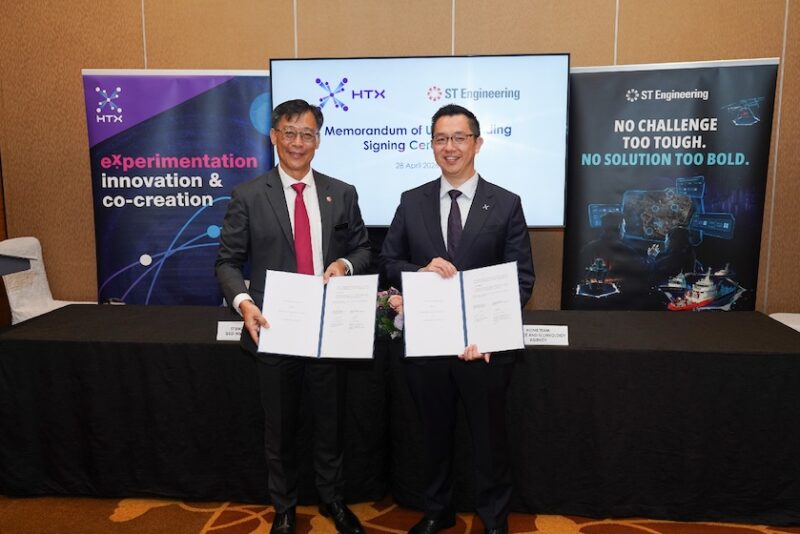
For a small nation-state like Singapore, investing in sovereign space capabilities is a matter of strategic autonomy. Relying solely on third-party satellite providers can lead to delays in data acquisition during a national emergency. By co-developing these capabilities with ST Engineering, HTX ensures that the Home Team has priority access to high-resolution data and that the sensors are tuned to the specific environmental conditions of the Southeast Asian region.
Furthermore, the data generated through this partnership has broader implications for urban planning and climate resilience. As sea levels rise and weather patterns become more volatile, the same sensors used for gas plume detection can be repurposed to monitor coastal erosion and urban heat islands, providing a dual-use benefit for the Singaporean government.
Supporting Infrastructure and Operational Integration
A key challenge in implementing space-based solutions for public safety is the "last mile" delivery of information. The MoU addresses this by focusing on how satellite data will be integrated into the existing Command, Control, and Communications (C3) systems used by the Home Team.
HTX’s role will be to act as the bridge between the high-tech satellite output and the operational needs of the police and civil defense. This involves developing user-friendly interfaces that allow incident commanders to visualize satellite overlays alongside ground-based sensor data and CCTV feeds. The goal is to create a "Common Operating Picture" (COP) that provides a comprehensive view of any incident, whether it is a maritime search and rescue operation or a response to a large-scale fire at a chemical plant.
The five-year duration of the MoU suggests a phased approach. The initial years are likely to focus on research, development, and pilot testing, where specific sensors are calibrated for the types of chemicals and gases most common in Singapore’s industrial landscape. The latter half of the agreement will likely see the operationalization of these systems, including the training of Home Team officers to interpret and utilize space-derived intelligence.
Implications for the Future of Public Safety
The collaboration between ST Engineering and HTX sets a precedent for how national security agencies can harness the "high ground" of space to protect citizens. For ST Engineering, the partnership provides a clear operational roadmap for its future satellite missions, ensuring that its technological development is aligned with real-world security requirements. For HTX, it represents a bold step into a new domain of science, moving beyond traditional forensics and robotics into the realm of aerospace surveillance.
As other nations in the region observe Singapore’s integration of space tech into public safety, this partnership may serve as a model for regional cooperation. Disasters such as haze from forest fires or maritime oil spills are often transboundary in nature. The capabilities developed under this MoU could eventually contribute to regional safety frameworks, positioning Singapore as a leader in tech-driven disaster management.
In conclusion, the five-year MoU between ST Engineering and HTX is more than a technical agreement; it is a strategic investment in the future of Singapore’s national resilience. By turning their gaze toward the stars, Singapore’s public safety agencies are ensuring they have the best possible tools to protect the ground beneath their feet. The ability to monitor the invisible, predict the movement of hazards, and react with precision will define the next generation of emergency response in the city-state.
