
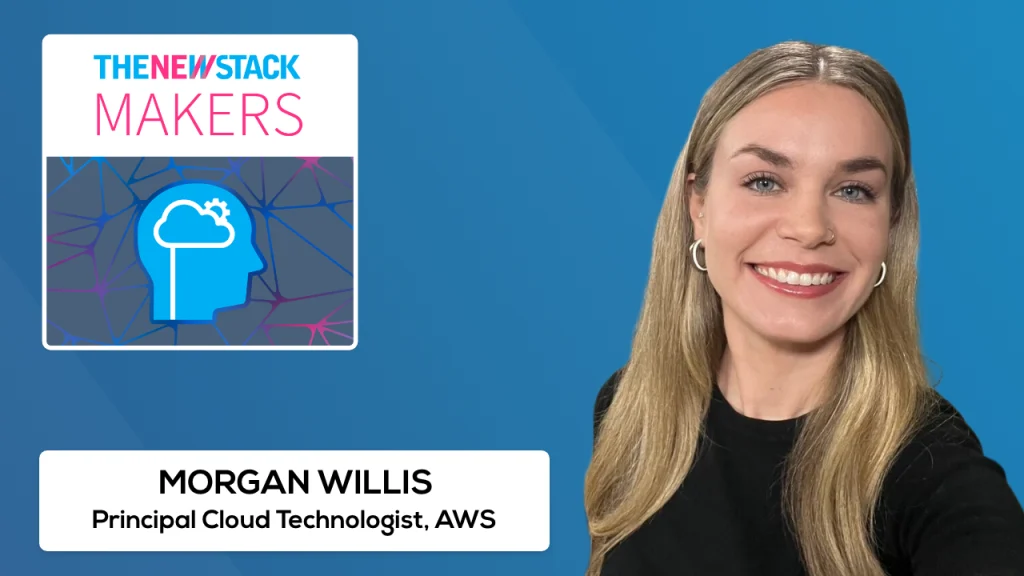

In a recent episode of The New Stack Makers, AWS developer advocate Morgan Willis unveiled the capabilities of Strands Agents, an open-source agentic framework that has achieved a remarkable milestone of over 14 million downloads in less than a year since its launch. Willis provided a practical demonstration, utilizing a straightforward accounting API to illustrate the development process with Strands. This demonstration highlighted a critical evolution in agent design, moving from direct API mapping to more sophisticated intent-based tooling, and ultimately to a distributed architecture with semantic search, significantly enhancing efficiency and accuracy.
The Evolution of Agent Interaction: From Direct Mapping to Intent
The core of Willis’s demonstration revolved around a common task: retrieving a customer’s latest invoice. The initial approach, reflecting a default developer mindset, involved mapping each individual API endpoint directly to an agent tool. This method, while functional, proved to be token-intensive and inefficient. In this first iteration, the agent required a sequence of five API calls to fulfill the request, consuming approximately 52,000 tokens. This illustrates a common challenge in early agent development where the agent is tasked with understanding and orchestrating granular data operations.
The subsequent iteration introduced a significant paradigm shift with the adoption of intent-based tools. Unlike the previous approach that focused on discrete data operations, these tools are designed around specific outcomes or objectives. By abstracting multiple API calls into a single, outcome-oriented tool, the agent’s task was dramatically simplified. The same invoice lookup query, when processed with intent-based tools, required only a single tool call and a drastically reduced token consumption of around 2,000 tokens.
Willis elaborated on this pivotal change, stating, "It’s calling multiple APIs, but rolling them up into one intent-based tool for the agent that it’s going to have a better time using—and understanding when exactly to use it." This shift underscores a fundamental principle in agent design: aligning tools with the agent’s intended purpose rather than its underlying data structure.
The Power of Focused Tooling and Reduced Complexity
A key takeaway from Willis’s explanation is the direct correlation between the number of tools exposed to an agent and its likelihood of success. "The fewer tools that you expose to your agent, the less likely it is to call the wrong one," she emphasized. This principle of minimizing cognitive load for the agent is crucial for optimizing performance. When tools are more closely aligned with specific tasks and less with raw data operations, the agent’s reasoning process becomes more streamlined. It can more effectively determine which tool is appropriate and when, leading to fewer errors and greater efficiency.
The third and final iteration of the demonstration pushed the boundaries of efficiency further by leveraging a distributed architecture. The intent-based tools were migrated to a remote MCP (Machine Control Panel) server, accessible via the AWS Agent Core Gateway. Crucially, this setup enabled semantic search across the tool catalog. Instead of presenting the agent with the entire set of 16 available tools, the system dynamically provided only those tools relevant to the specific query. This selective exposure of tools resulted in another substantial reduction in token usage, roughly halving it compared to the previous intent-based iteration.
The Strategic Advantage of Narrowly Scoped Agents
Willis articulated a broader strategic principle that underpins these advancements: the superior performance of narrowly scoped agents over their general-purpose counterparts. "I think agents that are more narrowly defined tend to perform better than general use case agents," she observed. "If you’re looking for context efficiency, speed, and accuracy, I would also look at your agent design as well."
This perspective suggests that a modular approach to agent development, where multiple agents are responsible for distinct, smaller functions, offers significant advantages. This allows for the precise crafting of tools tailored to each specific use case, circumventing the inherent compromises required when building a single, all-encompassing agent. As MCP servers become more prevalent and tool catalogs expand, the dynamic filtering and presentation of tools to an agent on a given run will become as critical as the quality of the tools themselves.
Background and Context: The Rise of Agentic Frameworks
The proliferation of large language models (LLMs) has spurred a significant interest in agentic frameworks that enable these models to interact with external tools and APIs. Strands Agents, developed by Amazon Web Services (AWS), represents a significant contribution to this burgeoning field. The framework aims to simplify the process of building intelligent agents capable of performing complex tasks by orchestrating various functionalities.
The timing of Strands Agents’ launch, less than a year ago, and its rapid adoption, evidenced by over 14 million downloads, signals a strong market demand for robust and efficient agent development platforms. The need for developers to move beyond simple prompt engineering and empower AI models with practical capabilities, such as data retrieval and API interaction, is becoming increasingly evident across industries.
The demonstration by Morgan Willis occurred within the context of The New Stack Makers podcast, a platform dedicated to exploring emerging technologies and developer trends. This context provided an opportunity to showcase practical applications and address the technical challenges faced by developers in the current AI landscape.
Implications and Future Outlook
The advancements demonstrated with Strands Agents have several critical implications for the future of AI development and deployment:
- Enhanced Efficiency and Cost Reduction: The reduction in token consumption directly translates to lower operational costs for AI applications. As LLM usage scales, token efficiency becomes a paramount concern for economic viability.
- Improved Accuracy and Reliability: By minimizing the complexity and number of tools an agent interacts with, the probability of errors or misinterpretations is significantly reduced. Narrowly scoped agents are less prone to "hallucinations" or incorrect actions.
- Accelerated Development Cycles: Intent-based tooling and semantic search streamline the development process, allowing engineers to build more sophisticated AI agents with less effort and time.
- Democratization of Advanced AI Capabilities: Open-source frameworks like Strands Agents lower the barrier to entry for developers to create powerful AI agents, fostering broader innovation.
- Scalability of AI Systems: The distributed architecture and efficient tool management are crucial for building scalable AI systems capable of handling a high volume of requests and a growing number of functionalities.
The trend towards more specialized and efficiently designed AI agents is likely to continue. As AI systems become more integrated into business processes and consumer applications, the focus will increasingly shift from the raw power of LLMs to the intelligent and efficient orchestration of their capabilities. Strands Agents, with its emphasis on intent-based tooling, reduced complexity, and efficient tool discovery, appears well-positioned to be a significant player in this evolving landscape. The continued development and adoption of such frameworks will be instrumental in realizing the full potential of artificial intelligence in practical, real-world applications.
