

The telecommunications landscape in the Lao People’s Democratic Republic has undergone a profound transformation over the last decade, transitioning from a nascent market with limited connectivity to a vibrant sector boasting more than 10 million mobile subscribers as of 2021. This rapid expansion reflects the nation’s broader strategic goal of transforming from a "land-locked" to a "land-linked" country, utilizing digital infrastructure to bridge geographical barriers. Currently, the market is defined by the operations of four major service providers: Unitel, Lao Telecom (LaoTel), TPlus Laos, and ETL Laos. These entities operate within a complex regulatory and economic environment, balancing the need for technological advancement with the challenges of a rugged topography and a developing economy. This report provides an exhaustive examination of the market share, service offerings, pricing structures, and technological trajectories of these operators, while also analyzing the regulatory framework and future outlook for the industry.
Historical Chronology and Market Evolution
The journey of mobile telecommunications in Laos began in earnest in the mid-1990s. Lao Telecom was established in 1996 as a joint venture between the Lao government and international investors, setting the foundation for the country’s mobile network. For over a decade, the market saw slow but steady growth until the late 2000s, which marked a pivotal turning point in the industry’s history.
In 2008, the entry of Unitel—a joint venture between the Lao Asia Telecom and Vietnam’s Viettel Group—disrupted the status quo. Unitel’s aggressive strategy of building infrastructure in remote and mountainous provinces allowed it to quickly surpass the incumbent. By 2009, VimpelCom (now VEON) entered the market through the acquisition of Millicom’s assets, launching the Beeline brand (now TPlus). The most recent major structural change occurred in 2015 with the formalization of ETL Laos as a state-owned entity, following various partnership shifts involving Chinese investment.
Between 2015 and 2021, the focus shifted from basic voice connectivity to high-speed data. The Ministry of Post and Telecommunications (MPT) oversaw the rollout of 4G LTE services in major urban centers, and by 2020, the nation began preliminary testing for 5G technology, signaling its intent to keep pace with regional neighbors in the ASEAN bloc.

Market Share and Operator Profiles
As of the most recent comprehensive data from the Ministry of Post and Telecommunications at the end of 2020, the market remains characterized by a clear hierarchy of dominance.
Unitel: The Market Leader
With a commanding 51% market share and over 5 million subscribers, Unitel stands as the undisputed leader in the Lao telecom sector. Its success is largely attributed to the "Viettel model," which prioritizes extensive network coverage even in low-density rural areas. By treating telecommunications as a basic necessity rather than a luxury, Unitel has secured a loyal base in the provinces. Their portfolio includes traditional voice and data, fiber-to-the-home (FTTH) internet, and a robust suite of value-added services (VAS) such as U-Money, a mobile financial service that has been instrumental in promoting financial inclusion among the unbanked population.
Lao Telecom (LaoTel): The Established Incumbent
Holding approximately 34% of the market share, Lao Telecom remains the second-largest operator. With more than 3 million subscribers, LaoTel leverages its long-standing reputation and deep integration with government infrastructure. In recent years, LaoTel has focused on digital lifestyle services, offering mobile banking integrations and premium data packages tailored for the urban middle class and corporate sectors. They were also among the first to spearhead 5G trials in Vientiane, positioning themselves as the "premium" choice for high-speed connectivity.
TPlus Laos: The Rebranded Challenger
TPlus Laos, formerly known as Beeline, holds a 10% market share with roughly 1 million subscribers. Following its rebranding, TPlus has focused on the youth demographic and urban consumers. By offering competitive international roaming rates and flexible data "top-ups," TPlus maintains a niche but stable presence. Their strategy often involves aggressive marketing campaigns and partnerships with entertainment platforms to appeal to the younger, tech-savvy generation in Vientiane and Luang Prabang.
ETL Laos: The State-Owned Specialist
ETL Laos holds the remaining 5% of the market. As a state-owned enterprise, ETL plays a strategic role in ensuring that telecommunications services are available for administrative and governmental functions. While its commercial market share is smaller, ETL provides critical backbone infrastructure and has recently sought to modernize its offerings with competitive data plans and improved internet access for small and medium enterprises (SMEs).

Service Innovation and the Rise of eSIM Technology
The service portfolio of Lao mobile operators has expanded beyond simple SMS and voice calls to include a sophisticated array of digital solutions. A significant development in recent years is the adoption of eSIM (embedded SIM) technology, specifically targeting the tourism sector.
Laos, a major destination for regional and international travelers, has recognized the friction involved in purchasing physical SIM cards. Operators now allow tourists to purchase and activate eSIMs via authorized digital platforms such as laosesim.com before they even arrive in the country. This innovation allows travelers to maintain connectivity the moment they cross the border, facilitating easier access to navigation, translation, and booking services. This move is seen as a strategic alignment with the "Visit Laos Year" initiatives, aimed at boosting the post-pandemic tourism economy.
Infrastructure, Technology, and Network Coverage
The technological backbone of Laos’ mobile industry is primarily based on the Global System for Mobile Communications (GSM) standard. However, the last five years have seen a massive migration toward 4G LTE.
- 4G Expansion: Most urban centers, including Vientiane, Savannakhet, and Pakse, enjoy reliable 4G coverage. Unitel and LaoTel have been the most aggressive in this rollout, utilizing the 1800MHz and 2600MHz bands to deliver high-speed mobile broadband.
- The 5G Frontier: While still in the early stages, 5G is the next logical step. The Lao government has expressed a keen interest in utilizing 5G to support the "Digital Laos" vision. Trials have demonstrated speeds exceeding 1Gbps, though commercial availability remains limited to specific high-traffic zones in the capital.
- Rural Connectivity: This remains the most significant infrastructure challenge. The mountainous terrain of northern Laos makes the installation of cell towers and fiber optic cables both difficult and expensive. Unitel’s extensive microwave link network has been a partial solution, but the "digital divide" between urban and rural populations persists.
Pricing Analysis and Economic Impact
Pricing for mobile services in Laos is remarkably competitive when compared to global averages, though it remains a significant expenditure for low-income rural families. On average, the cost of mobile data ranges between $2 and $5 per gigabyte.
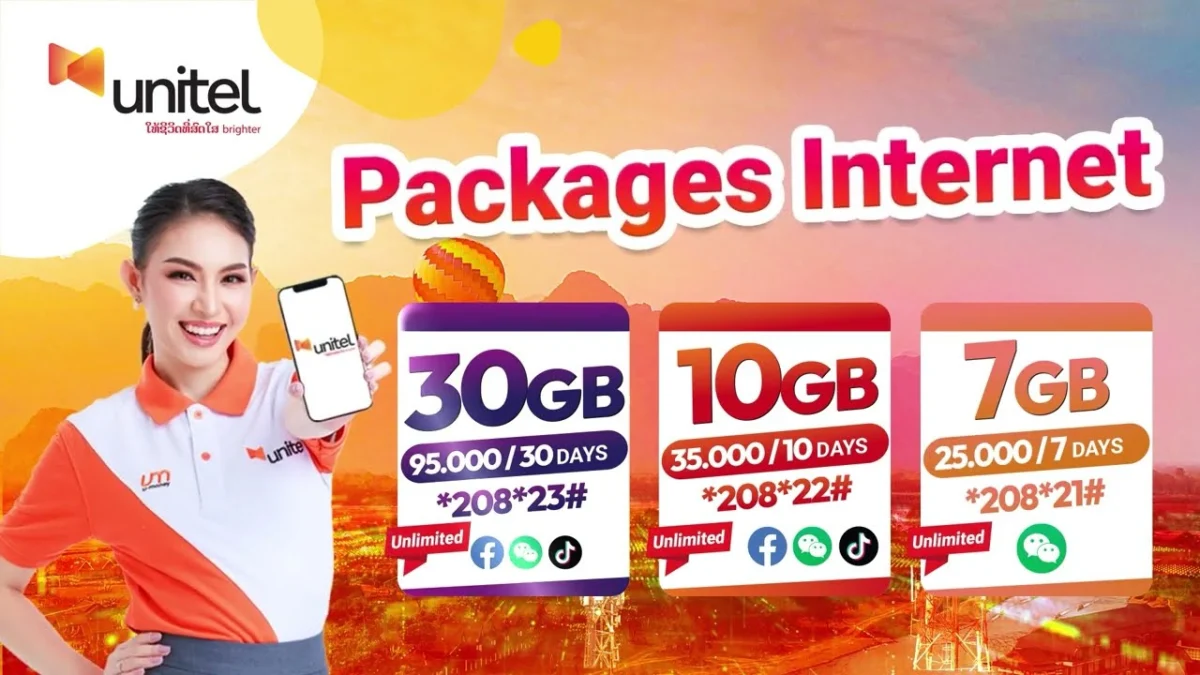
Operators frequently use "package-based" pricing, where users purchase daily, weekly, or monthly bundles. For example, a "Night Data" plan might offer 5GB of data for less than $1, specifically targeting students and night-shift workers. This tiered pricing structure allows operators to maximize network utilization during off-peak hours while providing affordable access to various socioeconomic groups.

The economic impact of these services is profound. The proliferation of mobile internet has enabled the growth of e-commerce, ride-hailing services like Xanh SM and Loca, and digital payment systems. The telecommunications sector is now a major contributor to the national GDP and a primary source of tax revenue for the government.
Regulatory Framework and Governance
The Ministry of Post and Telecommunications (MPT) serves as the primary regulatory body. Its mandate includes:
- Licensing: Issuing and renewing operating licenses for mobile and internet service providers.
- Spectrum Management: Allocating radio frequencies to prevent interference and ensure efficient use of the airwaves.
- Consumer Protection: Implementing regulations regarding data privacy, fair pricing, and service quality.
- SIM Registration: In an effort to enhance national security and reduce fraud, the MPT has implemented strict SIM card registration laws, requiring all users to link their mobile numbers to official identification documents.
Recent ministerial statements have emphasized the importance of "fair competition." The government aims to prevent any single operator from creating a monopoly that could stifle innovation or lead to price gouging.
Challenges and Constraints
Despite the upward trajectory, the sector faces several systemic hurdles:
- Infrastructure Costs: The high cost of importing equipment and the logistical difficulty of building in remote areas slow down network expansion.
- Human Capital: There is a notable shortage of highly skilled telecommunications engineers and cybersecurity experts within the local workforce, often requiring operators to rely on foreign expatriates.
- Currency Fluctuation: As many operators have foreign debt or import equipment in USD, the volatility of the Lao Kip (LAK) can impact profitability and the ability to reinvest in network upgrades.
- Regulatory Hurdles: Navigating the bureaucracy of land rights for tower placement and complying with evolving digital laws can be time-consuming for operators.
Future Outlook and Strategic Implications
The future of mobile telecommunications in Laos is intrinsically linked to the country’s digital economy roadmap. Several key trends are expected to define the next five years:

- 5G Commercialization: As 5G devices become more affordable, a wider commercial rollout is expected, focusing on "Smart City" applications in Vientiane.
- Integration with the Belt and Road Initiative (BRI): The Kunming-Vientiane railway and other BRI projects are expected to be accompanied by enhanced fiber optic connectivity, further integrating Laos into the regional digital grid.
- Expansion of Mobile Finance: With the success of U-Money and similar platforms, the transition toward a cashless society will accelerate, driven by mobile operators.
- Universal Service Obligations: The government is likely to increase pressure on operators to reach the final 10-15% of the population currently without reliable signal, possibly through subsidized infrastructure projects.
Conclusion
The mobile telecommunications sector in Laos has evolved into a cornerstone of the national economy. Led by Unitel’s expansive reach and Lao Telecom’s established infrastructure, the industry has successfully navigated the challenges of a difficult geography to connect over 10 million subscribers. While issues such as the rural-urban digital divide and infrastructure costs remain, the proactive stance of the Ministry of Post and Telecommunications and the adoption of cutting-edge technologies like eSIM and 5G suggest a positive trajectory. As Laos continues its digital transformation, the mobile operators will remain the primary engines of connectivity, driving social inclusion and economic modernization in the heart of Southeast Asia.
