

This week’s discussion delves into Honeywell’s strategic integration of TinyML, a burgeoning field of machine learning optimized for microcontrollers, and its potential to revolutionize data processing and service delivery within industrial environments. The conversation features Muthu Sabarethinam, VP of AI/ML Product and Services at Honeywell, who elaborates on the company’s vision for leveraging data from its extensive installed base of equipment. This includes the prospect of deploying sophisticated algorithms directly onto sensors, a move poised to address critical concerns regarding security, power consumption, and operational latency.
Honeywell, a global conglomerate with a significant footprint in aerospace, building technologies, performance materials and technologies, and safety and productivity solutions, oversees a vast network of over one million sensors deployed worldwide. The integration of TinyML into these existing and future sensor arrays presents a compelling opportunity to unlock new levels of operational efficiency and data intelligence. Sabarethinam highlights the fundamental reasons behind this strategic pivot: the desire to process data closer to its source, thereby minimizing the risks associated with transmitting sensitive information across networks and reducing reliance on cloud-based processing.
The core of TinyML’s appeal lies in its ability to perform complex computations on devices with extremely limited computational power and energy budgets. This "edge intelligence" paradigm is particularly relevant for industrial settings where devices are often deployed in remote or harsh environments, making constant connectivity and robust power infrastructure challenging. By enabling sensors to analyze data in real-time, Honeywell aims to achieve several key objectives.
Enhancing Security Through Edge Processing
One of the primary drivers for Honeywell’s interest in TinyML is the enhancement of data security. Traditional IoT architectures often involve collecting raw data from sensors, transmitting it to a central server or cloud for analysis, and then acting upon the insights. This data pipeline, while functional, introduces potential vulnerabilities at multiple points. Transmitting data over networks can expose it to interception, and centralized data storage can become a single point of failure or a target for cyberattacks.
TinyML offers a solution by processing data locally on the sensor. This means that only aggregated insights, anomalies, or actionable alerts need to be transmitted, rather than raw, potentially sensitive, operational data. Sabarethinam emphasizes that this localized processing significantly reduces the attack surface. For instance, in critical infrastructure monitoring or industrial control systems, a compromised sensor could lead to significant operational disruptions or safety hazards. By having intelligent algorithms running on the sensor itself, anomalies can be detected and flagged immediately, potentially preventing malicious actors from exploiting vulnerabilities before they can even transmit harmful data. This proactive security posture is paramount in sectors like energy, manufacturing, and transportation, where operational integrity is non-negotiable.
Optimizing Power Consumption for Long-Term Deployment
The inherent low-power nature of TinyML microcontrollers is another significant advantage. Many industrial sensors are designed for long-term deployment, often in locations where frequent battery replacement or wired power is impractical or cost-prohibitive. Traditional machine learning models, even simpler ones, can be computationally intensive and consume substantial amounts of power, rendering them unsuitable for battery-operated edge devices.
TinyML algorithms, on the other hand, are specifically designed and optimized to run on resource-constrained microcontrollers. This allows sensors to perform sophisticated data analysis, such as anomaly detection, predictive maintenance, or environmental monitoring, using minimal energy. Sabarethinam points out that this optimization extends the operational life of sensors, reducing maintenance costs and improving the overall reliability of deployed systems. For example, a sensor monitoring vibration in a remote pump could continuously analyze subtle changes indicative of impending failure without requiring frequent power interruptions or battery changes. This not only enhances operational efficiency but also contributes to a more sustainable approach to industrial asset management.
Reducing Latency for Real-Time Decision-Making
In many industrial applications, real-time decision-making is crucial for maintaining operational efficiency and safety. Delays in data transmission and processing can have significant consequences. For instance, in an automated manufacturing line, a delay in detecting a faulty component could lead to the production of numerous defective items, incurring substantial financial losses and requiring extensive rework. Similarly, in safety-critical systems, a delayed alert from a gas leak detector could have catastrophic outcomes.
TinyML addresses this latency challenge by enabling immediate data processing and analysis directly at the edge. This eliminates the round trip to the cloud and back, allowing for near-instantaneous detection of events and triggering of responses. Sabarethinam elaborates on how this reduction in latency is particularly beneficial for applications requiring rapid feedback loops. Honeywell’s existing portfolio, which includes systems for building automation, industrial control, and safety, can be significantly enhanced by this capability. For example, smart building systems can respond to occupancy changes or environmental conditions in real-time, optimizing energy usage and occupant comfort without the delays associated with cloud-based processing.
Packaging Algorithms for Scalable TinyML Deployment
A critical aspect of successfully deploying TinyML at scale is the ability to package and distribute algorithms in a manner that is both efficient and accessible to developers. Sabarethinam discusses Honeywell’s approach to this challenge, emphasizing the need for standardized frameworks and tools that simplify the process of embedding machine learning models into sensor firmware.
The sheer volume of sensors Honeywell supports—over a million in the field—underscores the importance of a scalable deployment strategy. This involves not only developing efficient algorithms but also creating robust mechanisms for updating and managing these algorithms across diverse hardware platforms. Honeywell is exploring methods for abstracting away the complexities of microcontroller programming and machine learning inference, allowing for a more streamlined development and deployment lifecycle. This could involve developing specialized software development kits (SDKs) or leveraging existing TinyML frameworks to facilitate the integration of custom algorithms. The goal is to enable a broad range of applications to benefit from TinyML without requiring deep expertise in embedded systems or machine learning optimization.
Business Models and Customer Access to Data
Beyond the technological advancements, the conversation also touches upon the evolving business models and customer expectations surrounding data access and service delivery. As sensors become more intelligent, the value proposition shifts from simply providing raw data to delivering actionable insights and predictive services.

Sabarethinam highlights that customers are increasingly looking for solutions that not only monitor their assets but also provide proactive recommendations for maintenance, operational improvements, and energy optimization. This necessitates a shift in how Honeywell packages and delivers its offerings. Instead of selling hardware and basic data logging, the company is moving towards a service-oriented model, where customers subscribe to intelligent insights and predictive analytics derived from the data processed by TinyML-enabled sensors.
The business models are likely to encompass a spectrum of offerings, from on-premises solutions for highly sensitive industrial environments to cloud-connected services that provide advanced analytics and remote management capabilities. The key is to provide customers with flexible and secure ways to access the data and insights that are most valuable to their operations, while ensuring that their data remains protected and utilized ethically.
Broader Industry Trends and Implications
The discussion around Honeywell’s TinyML initiatives is situated within a broader landscape of technological advancements and industry shifts. Several other recent developments underscore the growing importance of edge intelligence and specialized silicon.
The Rise of RISC-V in the Semiconductor Industry: A significant development mentioned is the formation of a new RISC-V company backed by industry giants like Qualcomm, NXP, and Infineon. This collaboration signals a strong industry commitment to the RISC-V architecture, an open-source instruction set architecture (ISA) that offers greater flexibility and customization compared to proprietary ISAs like ARM. The RISC-V ecosystem is particularly well-suited for embedded systems and edge computing, as it allows chip designers to create highly specialized processors optimized for specific workloads, such as those found in TinyML applications. This move could accelerate the development of more powerful and cost-effective microcontrollers capable of running sophisticated AI algorithms at the edge.
Acquisitions in the IoT Module Space: The proposed acquisition of an IoT module business by Renesas from an unnamed entity further illustrates the consolidation and strategic focus within the IoT hardware market. Companies are actively seeking to bolster their capabilities in providing integrated hardware and software solutions for connected devices. The sale of such a business to Renesas, a prominent semiconductor manufacturer with a strong presence in automotive and industrial markets, suggests a strategic effort to expand its reach into the rapidly growing IoT sector. This trend indicates a demand for end-to-end solutions that simplify the development and deployment of IoT products, including those leveraging TinyML.
Drone Technology and Critical Infrastructure Protection: The mention of a drone startup building an on-demand drone network for critical infrastructure protection highlights another facet of edge intelligence and autonomous systems. Such networks, designed to operate similarly to satellite constellations, would rely heavily on localized processing and decision-making capabilities within the drones themselves. TinyML could play a crucial role in enabling these drones to perform tasks like real-time threat detection, anomaly identification, and autonomous navigation without constant reliance on ground control, thereby enhancing their responsiveness and operational effectiveness in remote or challenging environments.
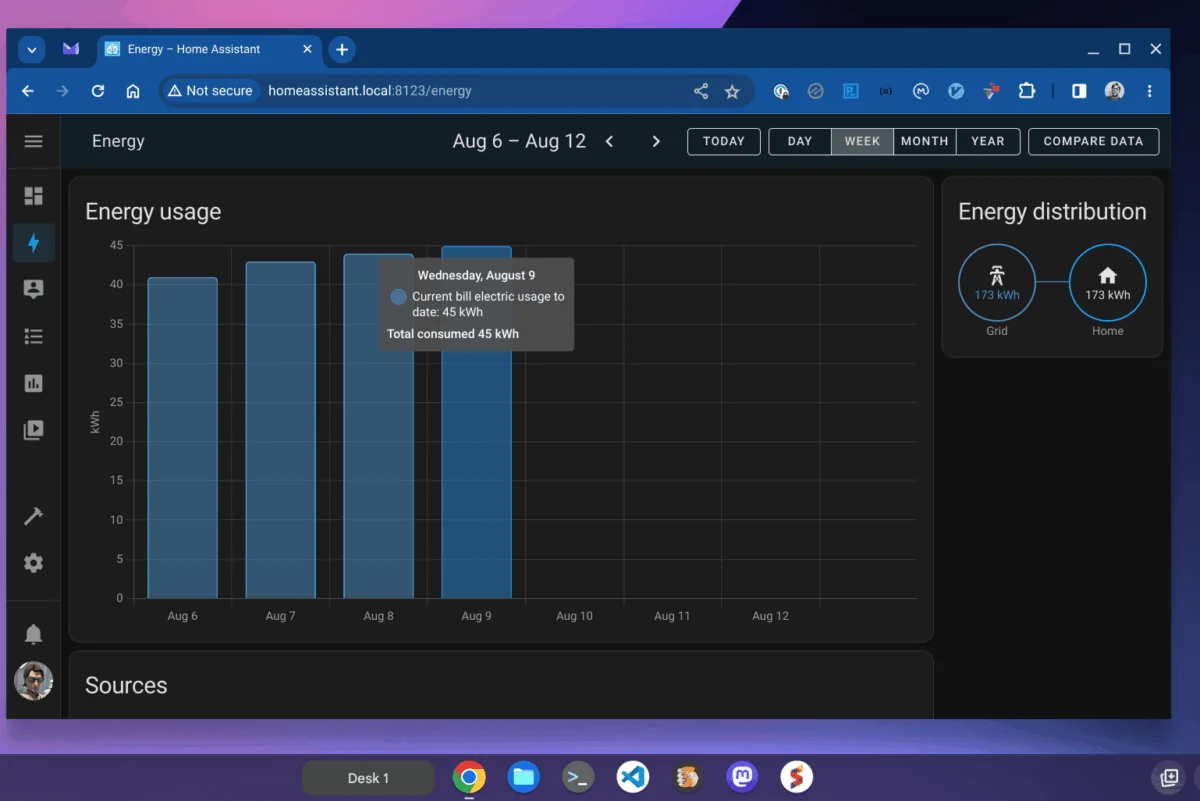
Smart Home Evolution and Energy Management: The personal anecdote regarding a transition to Home Assistant and the subsequent audience engagement provides a relatable counterpoint to the industrial focus. Kevin’s experience and the audience’s reactions underscore the growing consumer interest in smart home technology and energy management. The tips offered for preparing homes for smart energy management programs are timely, as utility companies increasingly implement dynamic pricing and demand-response initiatives. The listener question about Amazon Echo Show compatibility further illustrates the consumer drive for interoperability and seamless integration of smart devices within the home environment.
The "Mess" of Smart Home Interoperability
The article also touches upon the persistent challenges within the smart home ecosystem, specifically concerning the Matter standard and its associated technologies like Thread. Despite the promises of simplified device setup and interoperability, users and industry observers have encountered significant hurdles.
Challenges with Thread Credentialing: The technical complexities surrounding Thread credentialing, as highlighted by both The Verge and the podcast hosts, remain a significant pain point. This process, crucial for securely onboarding devices onto a Thread network, has proven to be less seamless than anticipated, leading to frustration for consumers attempting to set up their smart home devices. Issues such as inconsistent device support and difficulties in establishing stable network connections contribute to a general perception of a "mess" within the smart home landscape.
Vendor Responsibility in Interoperability: The question of who is to blame for these interoperability issues is a recurring theme. While standards like Matter aim to create a unified platform, the implementation and adherence to these standards by individual vendors can vary significantly. Some vendors may prioritize their proprietary ecosystems, leading to fragmented user experiences. This creates a complex landscape where consumers must navigate a multitude of device brands and protocols, often with mixed results in achieving true interoperability.
The Chernobyl Radiation Sensor Incident: A stark reminder of the potential for compromised sensor data comes from the reported incident of hacked radiation sensors in Chernobyl, as detailed by Kim Zetter. This alarming event underscores the critical need for robust security measures in sensor networks, particularly those monitoring sensitive or hazardous environments. The incident serves as a potent case study for the importance of edge security and the potential consequences of adversarial actions targeting sensor data, reinforcing the value proposition of TinyML’s localized processing capabilities.
In conclusion, Honeywell’s strategic embrace of TinyML represents a forward-thinking approach to leveraging data and intelligence at the edge. By enabling sensors to perform complex computations locally, the company aims to bolster security, optimize power consumption, reduce latency, and deliver more sophisticated services to its customers. This initiative aligns with broader industry trends in edge computing, open-source hardware architectures like RISC-V, and the continuous evolution of the Internet of Things. While the smart home sector continues to grapple with interoperability challenges, the industrial and enterprise realms are increasingly recognizing the transformative potential of intelligent, resource-efficient edge devices, with TinyML poised to play a pivotal role in shaping their future.
