
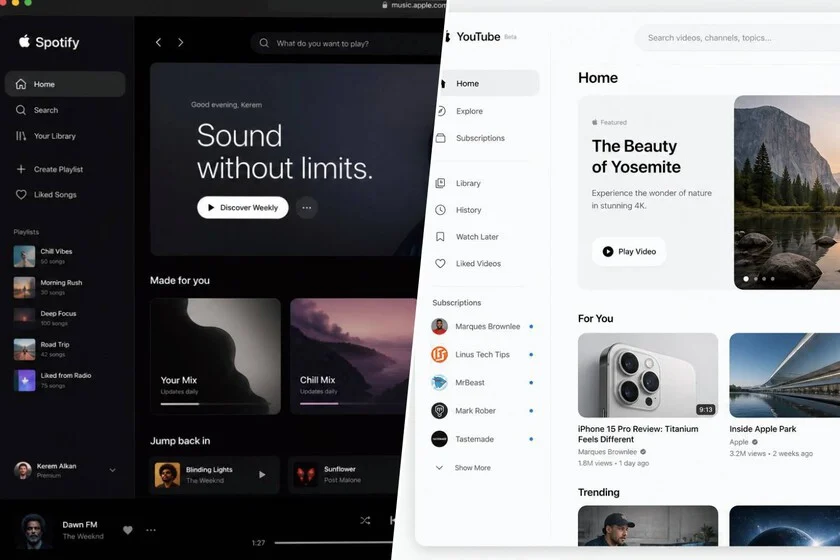

The digital landscape is currently witnessing a fascinating convergence of artificial intelligence and design aesthetics, giving rise to a burgeoning trend where AI is being leveraged to reimagine popular third-party applications through the lens of Apple’s distinctive design philosophy. This phenomenon, largely fueled by advancements in generative AI and amplified across social media platforms, highlights the enduring influence of Apple’s minimalist approach and sparks broader discussions about brand identity, user experience, and the future of design. The core of this trend lies in the meticulous application of Apple’s signature visual cues – a relentless obsession with eliminating the unnecessary, a pristine and clean aesthetic, and an inherent touch of elegance – to interfaces that traditionally adhere to different design paradigms.
The Enduring Allure of Apple’s Design Philosophy
For decades, Apple’s design language has been a benchmark in the technology industry, shaping not only hardware but also software interfaces. Rooted in the principles of minimalism and functionality, Apple’s aesthetic emphasizes clarity, intuitive navigation, and a harmonious user experience. This philosophy, meticulously cultivated since the company’s inception and epitomized by figures like Steve Jobs and Jony Ive, transcends mere visual appeal; it is a fundamental aspect of the brand’s identity and a key differentiator in a competitive market.
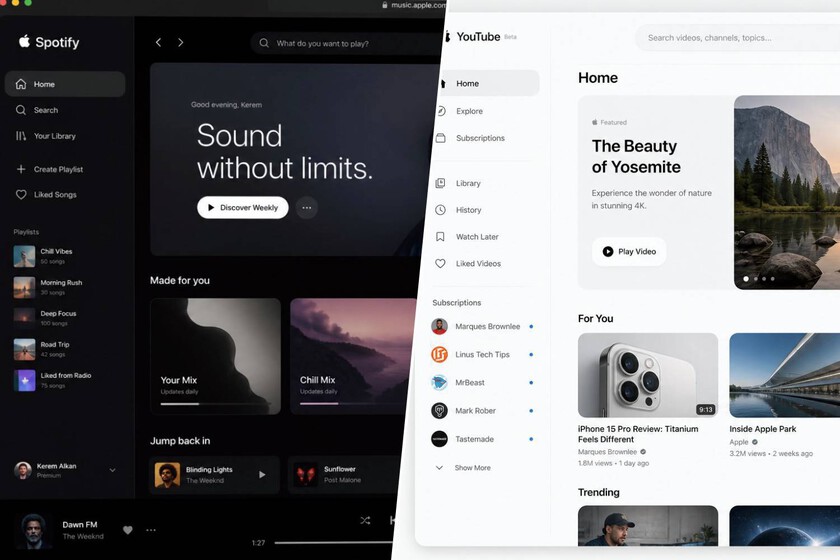
Apple’s design tenets are characterized by several core elements. Firstly, simplicity and reductionism dictate that every element must serve a purpose, with extraneous details ruthlessly pruned. This commitment to "eliminating the unnecessary" results in uncluttered interfaces that are easy to comprehend and navigate. Secondly, a consistent visual language is maintained across all products and services, from the hardware contours of an iPhone to the iconography of macOS applications. This coherence builds familiarity and reinforces brand recognition. Thirdly, a sophisticated color palette often relies on neutral tones – whites, grays, and blacks – punctuated by subtle accents, contributing to an elegant and timeless feel. Coupled with this is the strategic use of transparencies and subtle gradients, adding depth without introducing visual clutter. Finally, typographic clarity is paramount, with carefully selected fonts that prioritize readability and visual harmony. These elements combine to create a distinct "Apple style" that is instantly recognizable and widely admired.
This design consistency is not accidental; it is the result of a rigorous, iterative process driven by a user-centric approach. Apple’s influence extends beyond its direct user base, inspiring countless designers and companies to adopt similar principles, effectively elevating the standard for user interface and experience (UI/UX) design across the tech sector. According to a 2023 report by Statista, Apple’s brand value reached approximately 502.6 billion U.S. dollars, underscoring the immense equity built upon, among other things, its iconic design.
The Rise of Generative AI in Creative Fields
The recent surge in AI’s capability to generate highly realistic and stylized images from textual prompts has been the catalyst for this design trend. Tools like Midjourney, DALL-E, and Stable Diffusion, which have rapidly evolved over the past few years, democratize sophisticated image creation, allowing users with minimal design expertise to produce complex visual concepts. These generative AI models are trained on vast datasets of images and corresponding text descriptions, enabling them to understand and replicate artistic styles, themes, and specific visual attributes.

The timeline of this AI revolution is remarkably swift. While rudimentary image generation AI existed prior, the public release of DALL-E 2 in April 2022, followed by Midjourney’s open beta and Stable Diffusion later that year, marked a turning point. These tools quickly demonstrated an unprecedented ability to translate abstract ideas into tangible visuals, including architectural renderings, character designs, and, crucially for this trend, user interface concepts. Users discovered that by feeding the AI specific prompts detailing Apple’s design characteristics – "minimalist," "clean UI," "neutral colors," "clear typography," "elegant," "iOS aesthetic" – alongside the name of a third-party application, the AI could synthesize remarkably convincing mock-ups.
This development has profound implications for the design industry. What once required skilled graphic designers, extensive software knowledge, and considerable time for wireframing and prototyping can now be initiated and iterated upon rapidly using AI. While these AI-generated images are not fully functional applications, they serve as powerful conceptualizations, igniting imagination and demonstrating possibilities that might otherwise remain abstract.
"What If Apple Designed…?" – A Social Media Phenomenon
The intersection of Apple’s iconic design and advanced generative AI has spawned a vibrant social media trend, predominantly on platforms like X (formerly Twitter) and Instagram. Users pose the hypothetical question, "What if Apple designed…?", followed by the name of a popular application or service, and then share AI-generated images visualizing the result. This simple premise has resonated widely, tapping into both an appreciation for Apple’s aesthetic and a curiosity about how familiar digital spaces might appear under a different creative direction.
The trend gained significant traction throughout late 2023 and early 2024, with countless posts showcasing these AI redesigns. The examples are diverse and span various categories of applications:
- Communication Apps: Users like @Surendar__05 shared compelling renders of WhatsApp reimagined with Apple’s clean lines, subtle chat bubbles, and integrated iOS-style controls. The AI often translates the core functionalities into a more streamlined, less visually busy interface, replacing WhatsApp’s distinct green palette with more subdued tones.
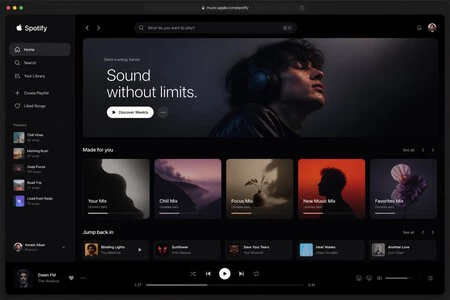
- Streaming Services: @egeberkina showcased a fascinating rendition of Netflix, presenting a layout that emphasized content tiles with greater white space, refined typography, and a less cluttered navigation bar, mirroring the elegance found in Apple TV+’s interface. Similarly, Spotify received the Apple treatment from @miilesus, envisioning a music player with transparent elements, a simplified track display, and refined iconography, aligning it more closely with Apple Music’s aesthetic.
- Social Media Platforms: @quietly_viral took on X (Twitter), stripping away much of its current visual noise to present a cleaner timeline, clearer profile layouts, and a more understated branding, reflecting Apple’s preference for content over chrome. Even TikTok, known for its vibrant and often chaotic interface, was reimagined by @eglitisX with a more polished video feed, streamlined user profiles, and less intrusive overlay elements.
- E-commerce and Search: The trend extended to functional services as well. @astro_60 and @hongkiat explored how Amazon and eBay might look, predicting interfaces that prioritize product imagery with ample negative space, clear pricing, and simplified checkout flows, reminiscent of the Apple Store app. The ubiquitous Google Search was also envisioned by @rdotapps with a minimalist search bar, cleaner result pages, and subtle animations, aligning it with Apple’s Safari browser experience.
These redesigns often emphasize elements such as larger, bolder titles, more restrained use of color, rounded corners for UI elements, and a general sense of spaciousness. The AI models successfully capture the essence of Apple’s human interface guidelines, which prioritize clarity, deference (the UI helping the user understand the content without competing with it), and depth (using visual layers to communicate hierarchy).
Deconstructing the "Apple Style" in AI Renders
When AI models translate applications into the "Apple style," they are essentially identifying and replicating a set of recurring visual patterns and interaction paradigms. Key characteristics frequently observed in these AI-generated redesigns include:
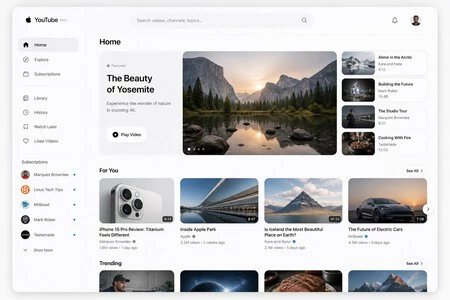
- Reduced Visual Clutter: A hallmark of Apple’s design is its restraint. The AI versions often feature more negative space, fewer decorative elements, and a stronger focus on essential content.
- Harmonious Typography: Apple heavily invests in its proprietary fonts (like San Francisco) or carefully selected system fonts. The AI renders typically adopt clean, sans-serif typefaces, often with varying weights and sizes to establish clear hierarchies, reflecting Apple’s emphasis on readability and elegance.
- Subdued Color Palettes: While original apps might use vibrant brand colors, the AI frequently defaults to a more muted palette dominated by whites, grays, and subtle gradients, with brand colors used sparingly as accents rather than dominant features.
- Consistent Iconography: Icons are usually simplified, often line-based or with minimal fills, maintaining a uniform style across the interface, mirroring Apple’s meticulous icon design.
- Rounded Rectangles and Smooth Transitions: UI elements like buttons, input fields, and content cards consistently feature rounded corners, contributing to a softer, more approachable feel. Transitions and animations, while not directly rendered in static images, are implied to be fluid and subtle.
- Effective Use of Transparencies and Blurs: Elements like navigation bars or overlays often incorporate subtle frosted glass effects, allowing background content to peek through, a common feature in iOS and macOS.
The accuracy with which AI can capture these nuanced design cues demonstrates its sophisticated understanding of visual aesthetics and pattern recognition. It highlights how Apple’s design language, due to its consistency and widespread presence, has become a well-defined and recognizable dataset for these algorithms to learn from.
Reactions and Perspectives
The "What if Apple designed…?" trend has elicited a range of reactions from various stakeholders:
- User Sentiment: Users overwhelmingly express fascination and, often, a desire for these AI-generated designs to become reality. Many comments reflect a preference for cleaner, less cluttered interfaces, suggesting a market appetite for the aesthetic purity that Apple champions. The trend serves as a creative outlet for users to visualize their ideal digital environments.
- Design Community Insights: For professional UI/UX designers, the trend presents both inspiration and a challenge. Some view generative AI as a powerful prototyping tool, capable of quickly generating diverse concepts that can jumpstart the design process. It can help designers explore variations and validate aesthetic directions much faster than traditional methods. Others raise questions about originality, the "soul" of design, and the potential for AI to diminish the need for human creativity. However, the prevailing view among forward-thinking designers is that AI will augment, rather than replace, human designers, shifting the focus from manual execution to strategic thinking, prompt engineering, and refining AI outputs.
- Implications for Brands: For Apple, this trend unequivocally reinforces its status as a design leader. It underscores the strength and recognizability of its brand identity, demonstrating how deeply ingrained its aesthetic is in the public consciousness. For the third-party app developers whose products are being reimagined, the trend offers valuable, unsolicited feedback. It reveals user preferences and highlights potential areas where their interfaces could be simplified or modernized. While unlikely to lead to immediate overhauls, it could certainly influence future design iterations.
Implications for Design, Brands, and User Experience

The "Apple-style" AI redesign trend is more than just a fleeting internet phenomenon; it carries significant implications for the future trajectory of digital design, brand perception, and user expectations.
- Future of UI/UX Design: Generative AI is poised to become an indispensable tool in the UI/UX design workflow. Designers can leverage AI to rapidly generate initial concepts, explore variations, and test different aesthetic directions. This could accelerate the design cycle, allowing for more iterative development and a greater focus on user testing and refinement. The role of the designer may evolve from pixel-pusher to curator and prompt engineer, guiding AI to produce desired outcomes and injecting the critical human element of empathy and strategic thinking.
- Reinforcement of Brand Identity: The trend underscores the immense value of a strong, consistent brand identity. Apple’s design language is so distinctive that AI can learn and replicate it, demonstrating its power as a coherent visual system. This serves as a case study for other brands on the importance of cultivating a unique and recognizable aesthetic across all touchpoints.
- Elevated User Expectations: As users become accustomed to seeing these highly polished, minimalist AI-generated interfaces, their expectations for actual applications may rise. There could be an increased demand for cleaner, more intuitive, and visually appealing user experiences across all platforms, pushing developers to invest more in their UI/UX.
- Democratization of Design Exploration: AI tools allow anyone, regardless of design background, to experiment with visual concepts. This democratization fosters creativity and provides a new avenue for community engagement in design discussions, potentially leading to more user-driven innovation.
- The Nuance of "Style": While AI can mimic style, it currently lacks the deeper understanding of context, user psychology, and strategic intent that human designers bring. The AI-generated designs are aesthetically pleasing but might not always fully account for complex user flows, accessibility needs, or the unique brand voice of the original application. This highlights the continued irreplaceable role of human oversight in translating raw aesthetics into truly functional and empathetic user experiences.
Challenges and Considerations
Despite the exciting possibilities, the rise of AI in design also presents challenges. Questions around originality and intellectual property, while less critical for conceptual mock-ups, become significant if AI-generated designs are directly incorporated into commercial products. There’s also the risk of aesthetic homogenization, where over-reliance on AI trained on popular styles could lead to a lack of visual diversity and innovation if not carefully managed by human designers. Maintaining the "soul" and unique character of an application, beyond its visual style, remains a crucial human endeavor.
In conclusion, the trend of AI reimagining third-party applications in Apple’s iconic style is a compelling illustration of technology’s capacity to engage and inspire. It serves as a powerful testament to Apple’s enduring design legacy and simultaneously showcases the remarkable advancements in generative artificial intelligence. As these technologies continue to evolve, they promise to reshape the landscape of digital design, fostering new collaborations between human creativity and algorithmic intelligence, and ultimately influencing the aesthetic expectations of users worldwide. The digital canvas, now augmented by AI, is more dynamic and creatively fertile than ever before.
