
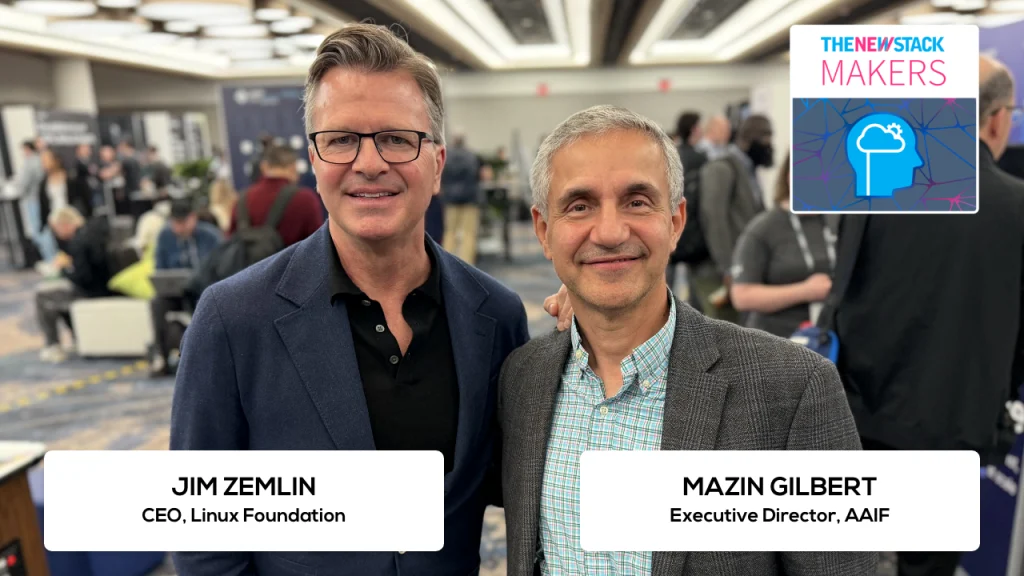

The rapid evolution of agentic artificial intelligence (AI) necessitates a robust governance framework, prompting the Linux Foundation to establish the Agentic AI Foundation (AAIF). This new entity, formed in late 2025, aims to foster accelerated development and standardization of the open-source projects crucial to the advancement of AI agents. The AAIF has officially adopted three foundational projects: the Model Context Protocol (MCP), Goose, and AGENTS.md, bringing them under the unified umbrella of the newly formed foundation.
The establishment of the AAIF signifies a critical step in ensuring that the tooling supporting agentic AI deployment keeps pace with the technology’s inherent dynamism. This proactive approach seeks to preempt potential fragmentation and encourage collaborative innovation within the burgeoning field. The recent MCP Dev Summit in New York City provided a timely backdrop for discussions surrounding the AAIF’s mission and its leadership.
Genesis of the Agentic AI Foundation
The inception of the AAIF is rooted in the Linux Foundation’s recognition of the accelerating pace of agentic AI development. As this field began to mature, the need for a dedicated, neutral organizational body to shepherd its open-source ecosystem became apparent. The Linux Foundation, with its proven track record in nurturing and governing complex open-source projects like Linux itself, was ideally positioned to initiate this effort.
The decision to house these critical agentic AI projects under a new foundation was a strategic one. Jim Zemlin, CEO of the Linux Foundation, explained that while he initially helmed the AAIF, his commitment was always intended to be transitional. "It became clear that to truly empower the Agentic AI Foundation, it needed a dedicated leader with deep technical acumen and strong interpersonal skills – someone who could foster collaboration and lead through influence," Zemlin stated. This approach allowed the Linux Foundation to scout for the ideal candidate without rushing the selection process, ensuring the right person was in place to guide the foundation’s trajectory.
Leadership Transition and the Vision for AAIF
The mantle of executive director for the AAIF has been passed to Mazin Gilbert. His appointment comes at a pivotal moment, as he steps into a role previously occupied by Zemlin, inheriting the responsibility of shaping the fundamental architecture of the agentic AI stack. Gilbert’s appointment was publicly announced shortly before the MCP Dev Summit, signaling a clear mandate for the new foundation.
"My decision to join the Agentic AI Foundation stems from a profound belief in the transformative potential of agentic AI and the critical need for open, collaborative development to realize that potential," Gilbert remarked in a blog post announcing his transition. "The internet of agents, as I envision it, requires a solid foundation built on shared protocols, interoperable tools, and a community-driven ethos. The AAIF is poised to be that cornerstone."
Gilbert’s role is multifaceted. He is tasked with not only overseeing the existing three core projects but also with guiding the broader community in identifying future development priorities. This includes making crucial decisions about what to build, what standards to establish, and how to ensure equitable representation of diverse voices in the development process. The success of the AAIF will be instrumental in defining the future landscape of AI agent technologies.
The Core Projects Under the AAIF Umbrella
The three initial projects brought under the AAIF’s stewardship represent critical components of the agentic AI ecosystem:
-
Model Context Protocol (MCP): This protocol is designed to standardize how AI models exchange and manage contextual information. In agentic AI, where agents need to maintain a coherent understanding of their environment and past interactions, MCP is crucial for enabling seamless communication and state management between different AI components. Its adoption aims to prevent data silos and promote interoperability, allowing agents to leverage diverse model capabilities effectively.
-
Goose: While the specific details of Goose are less elaborated in the initial announcement, it is understood to be a project focused on enhancing the capabilities or accessibility of AI agents. Its inclusion suggests a focus on practical tools that developers can utilize to build and deploy sophisticated agents.
-
AGENTS.md: This project likely serves as a central repository or framework for defining standards, best practices, and documentation related to AI agents. Its existence under the AAIF underscores a commitment to clarity, discoverability, and shared understanding within the agentic AI community. By providing a structured approach to defining what constitutes an agent and how they should behave, AGENTS.md can foster trust and accelerate adoption.
The Linux Foundation’s involvement in incubating these projects reflects a broader trend of major technology organizations recognizing the strategic importance of open-source governance in nascent, high-growth fields. By placing these projects under the AAIF, the Linux Foundation aims to ensure their neutrality and foster widespread community engagement, mirroring the success of initiatives like the Linux kernel and Kubernetes.
The Linux Foundation’s Role: A "Reverse Venture Capitalist"
During the MCP Dev Summit, Jim Zemlin elaborated on the Linux Foundation’s unique position in the technology landscape, likening it to a "reverse venture capitalist." This analogy highlights the foundation’s approach to investing in open-source projects not for direct financial return, but for the long-term strategic benefit of enabling technological advancement and fostering innovation within an open ecosystem.
"Instead of taking equity and aiming for a financial exit, we invest our resources, credibility, and governance expertise into projects that have the potential to become foundational technologies," Zemlin explained. "Our ‘return’ is the widespread adoption of these technologies, the creation of vibrant developer communities, and the acceleration of innovation across industries."
This model of open-source stewardship is particularly relevant for cutting-edge fields like agentic AI, where the initial investment in establishing standards and robust tooling can be prohibitively high for individual entities. By providing a neutral home and professional governance, the Linux Foundation empowers these projects to flourish without being beholden to the proprietary interests of any single company.
The Synergy of Money and Open Collaboration
Zemlin also emphasized the symbiotic relationship between financial investment and open collaboration in the open-source world. While open-source projects thrive on community contributions and shared development, significant financial resources are often required to sustain them, facilitate full-time development, and manage complex governance structures.
"We see that where there’s significant commercial interest and investment in an open-source technology, it often leads to more rapid development and broader adoption," Zemlin noted. "The AAIF is designed to be a nexus where commercial entities can invest in and contribute to a shared commons, benefiting from the collective innovation while ensuring the technology remains open and accessible to all."
This approach encourages companies to contribute financially and with developer time to projects that underpin their own product development. The AAIF, by providing a structured and trustworthy environment, de-risks these contributions for businesses and ensures that the benefits of their investment are shared across the entire ecosystem. This is crucial for agentic AI, a field with immense commercial potential that relies heavily on foundational, interoperable technologies.
The Impact of Early Adopters and Defining the Agentic Stack
The early adopters of agentic AI technologies will play a disproportionately significant role in defining the "agentic stack" – the collection of tools, protocols, and architectures that will form the basis of future AI agent development. The AAIF’s establishment is timely in that it provides a forum for these early movers to collaborate and shape standards before the landscape becomes too entrenched.
The decisions made within the AAIF regarding MCP, Goose, AGENTS.md, and future projects will have far-reaching implications. They will influence how AI agents interact with each other, with users, and with the broader digital and physical world. The foundation’s commitment to balancing diverse voices is therefore paramount. It aims to prevent any single entity or perspective from dominating the direction of this critical technology.
"We are actively working to ensure that the AAIF is a truly inclusive platform," Gilbert stated. "This means engaging with researchers, developers, startups, and established enterprises. Our governance model is being designed to facilitate consensus-building and to ensure that the needs and perspectives of all stakeholders are considered in our development roadmap."
Broader Implications and the Future of Agentic AI
The formation of the Agentic AI Foundation and the adoption of these core projects represent a significant milestone in the maturation of AI agent technology. The implications are far-reaching:
-
Accelerated Innovation: By providing a unified platform and clear governance, the AAIF is expected to accelerate the pace of innovation in agentic AI, enabling developers to build more sophisticated and capable agents more quickly.
-
Interoperability and Standardization: The focus on protocols like MCP will drive interoperability between different AI models and agent frameworks, reducing fragmentation and fostering a more cohesive ecosystem.
-
Democratization of Agentic AI: Open-source governance ensures that the benefits of agentic AI are accessible to a wider range of developers and organizations, not just those with significant proprietary resources.
-
Enhanced Trust and Security: Standardized protocols and transparent development processes can contribute to greater trust and security in AI agent deployments, which is crucial as these agents become more integrated into critical systems.
-
Defining the "Internet of Agents": The AAIF’s work is foundational to realizing the vision of an "internet of agents" – a future where autonomous AI agents can seamlessly collaborate and interact to perform complex tasks, automate workflows, and enhance human capabilities.
The journey ahead for the AAIF and its maintainer cohort is undoubtedly complex. The task of defining the future of agentic AI, balancing competing interests, and fostering a vibrant open-source community is a formidable one. However, with the backing of the Linux Foundation and a clear leadership vision from Mazin Gilbert, the AAIF is well-positioned to play a pivotal role in shaping this transformative technological frontier. The ongoing conversations and collaborations fostered by initiatives like the MCP Dev Summit will be crucial in navigating this exciting and rapidly evolving landscape.
