
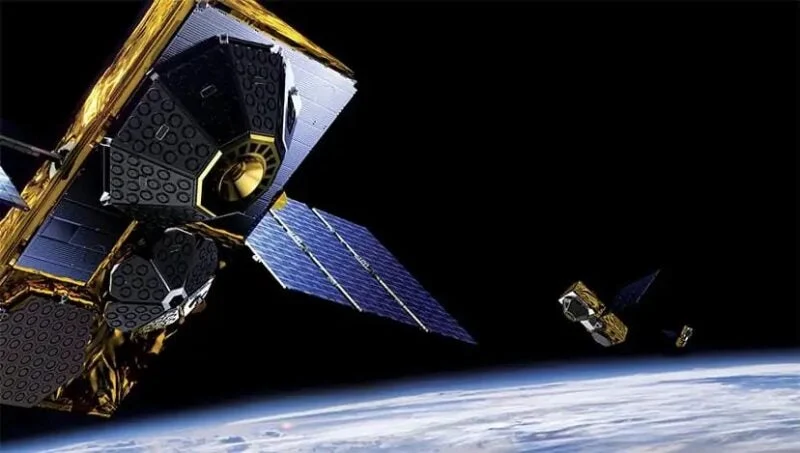

The landscape of global telecommunications underwent a seismic shift last month as Amazon officially moved to acquire Globalstar in a deal valued at approximately $10.8 billion, ending months of intense market speculation. This strategic acquisition grants Amazon immediate control over Globalstar’s extensive satellite infrastructure and, perhaps more critically, its coveted mobile satellite services (MSS) spectrum licenses. By absorbing Globalstar, Amazon has effectively fast-tracked its entry into the direct-to-device (D2D) arena, a burgeoning sector that promises to connect standard smartphones directly to orbital networks without the need for specialized hardware or ground-based intermediary stations.
The transaction includes a significant tie-in with Apple, which has long relied on Globalstar’s network to power its emergency satellite messaging features. Under the terms of the deal, Amazon will continue to provide these essential services for Apple products, maintaining a critical link in the consumer electronics ecosystem while simultaneously laying the groundwork for its own next-generation D2D constellation. This move positions Amazon as a direct competitor to SpaceX’s Starlink, signaling the start of a high-stakes "arms race" for dominance in both satellite broadband and mobile connectivity.
A Strategic Timeline of the Acquisition and Market Evolution
To understand the gravity of this acquisition, one must look at the trajectory of the D2D market over the last 24 months. The sector has rapidly transitioned from a conceptual "proof of concept" phase to early commercial scaling. In late 2022, Apple introduced the Emergency SOS via Satellite feature for the iPhone 14, utilizing Globalstar’s legacy LEO constellation. This move validated the consumer demand for satellite-augmented mobile services. Since then, the ecosystem has matured at an exponential rate. Industry data indicates that the number of active consumer satellite services grew from 17 to 24 in the last six months alone, while the number of D2D-capable smartphone models jumped from 75 in late 2025 to 96 today.
Amazon’s entry via Globalstar follows its ongoing development of Project Kuiper, a planned 3,236-satellite broadband constellation. While Project Kuiper was initially designed to address rural broadband and enterprise cloud connectivity, the shifting center of gravity toward D2D forced a strategic pivot. Mobile operators are increasingly demanding satellite integration to extend coverage and resilience without the massive capital expenditure required for new terrestrial towers. By acquiring Globalstar, Amazon has bypassed years of regulatory hurdles and technical development, securing a "ready-to-use" network that already serves millions of iPhone users globally.
The Critical Value of MSS Spectrum as Orbital Real Estate
The primary driver behind the $10.8 billion price tag is the Mobile Satellite Services (MSS) spectrum. In the world of satellite telecommunications, spectrum is the scarcest and most strategic asset available. MSS spectrum is particularly valuable because it is globally harmonized, meaning a satellite can use the same frequency to communicate with devices in the United States, Europe, and Asia without navigating a fragmented patchwork of national regulations.
This acquisition confirms a structural re-rating of MSS spectrum value. Recent market activity mirrors this trend: late last year, SpaceX acquired EchoStar’s AWS-4 and H-block spectrum for $17 billion, while AST SpaceMobile secured long-term usage rights for Ligado Networks’ MSS spectrum. Unlike the early approaches pursued by some D2D hopefuls, which attempted to repurpose terrestrial mobile network operator (MNO) spectrum—a process often plagued by interference issues at national borders—MSS spectrum is purpose-built for space-to-ground communication. For Amazon, owning this spectrum de-risks its entire satellite roadmap, ensuring that its future constellations will have the "highway" necessary to carry data to billions of devices.
The Apple Alliance: A Catalyst for Scale
A pivotal element of the deal is the continued relationship with Apple. Apple has served as a catalytic force in the D2D market, proving that satellite connectivity is not a niche service for explorers but a scalable feature for the mass market. Analysts suggest that the Apple link-up was a strategic anchor for Amazon. By taking over Globalstar’s obligations, Amazon inherits a massive, built-in user base from day one.
For Apple, the deal is equally beneficial. While Apple is a strategic investor in Globalstar and holds rights to 85% of its current constellation capacity, the tech giant likely lacked the appetite to independently fund and manage the multi-billion-dollar deployment of a next-generation constellation capable of matching SpaceX’s advancing capabilities. In Amazon, Apple finds a partner with the financial "infinite runway" and technical expertise to upgrade the network. Industry observers expect this relationship to deepen, potentially moving beyond emergency text services to include satellite-based voice, high-speed messaging, and data services powered by Amazon’s upcoming high-capacity LEO satellites.
The Emerging Duopoly: Amazon vs. SpaceX
The acquisition effectively solidifies a market structure dominated by two titans: Amazon and SpaceX. SpaceX’s Starlink currently holds a significant lead, with over 10,000 satellites in orbit and a subscriber base exceeding 10 million. However, Amazon’s acquisition of Globalstar provides a unique shortcut. While SpaceX has focused on vertical integration and rapid launch cadence, Amazon is leveraging its massive distribution synergies, cloud infrastructure (AWS), and existing consumer device ecosystem.
This "arms race" creates a difficult environment for smaller players. The capital intensity required to compete in the LEO broadband and D2D markets is staggering. Starlink’s proposed 15,000-satellite filing could reach 1,900 Tbit/s of downlink capacity, while Amazon’s Project Kuiper (Gen 1 and 2) is expected to provide 600 Tbit/s. For traditional satellite operators like Viasat and Iridium, the challenge will be to find specialized niches—such as government, aviation, or maritime defense—to avoid being crushed by the commoditized pricing of the two giants. Some analysts predict a "barbell" market structure: a few massive global infrastructure providers at one end, and highly specialized, regionally anchored players at the other.
Financial Implications and Return on Investment
While $10.8 billion represents a significant premium over Globalstar’s previous market valuation, the cost is relatively minor for Amazon. With 2025 net sales reaching approximately $717 billion, the acquisition represents roughly 1.6% of Amazon’s annual revenue—a "drop in the bucket" for a strategic asset of this magnitude.
The potential ROI is tied to the projected growth of the D2D market, which is estimated to reach $11 billion to $16 billion by the early 2030s. If Amazon captures even 10% of this market, the resulting annual revenue would quickly offset the acquisition premium. Furthermore, the internal benefits to Amazon’s logistics empire are substantial. D2D tracking and telemetry can be integrated into Amazon’s global supply chain, allowing for continuous visibility of assets in regions with zero cellular coverage, thereby improving delivery precision and operational efficiency.
Challenges and Technical Execution
Despite the strategic advantages, Amazon faces significant hurdles in making the Globalstar acquisition a long-term success. The foremost risk is execution. To compete with Starlink’s "Mobile" service, Amazon must rapidly upgrade and expand Globalstar’s aging constellation. This involves not only technical risks in satellite manufacturing but also a massive requirement for launch capacity—an area where SpaceX currently holds a monopoly through its Falcon 9 and Starship programs.
Furthermore, Amazon must navigate complex relationships with terrestrial Mobile Network Operators (MNOs). Many telecom companies are wary of big tech players like Amazon and SpaceX, fearing "disintermediation"—the process where satellite providers bypass traditional carriers to deal directly with consumers. To succeed, Amazon will need to articulate a business model that treats MNOs as partners rather than competitors, potentially positioning its satellite network as a "roaming" extension for terrestrial providers.
The success of this venture will also depend on hardware compatibility. Amazon will need to use its market leverage to ensure that smartphone original equipment manufacturers (OEMs) and chipset makers continue to integrate Globalstar’s specific frequency bands into their future roadmaps.
As the satellite industry moves toward an oligopoly of scale, Amazon’s acquisition of Globalstar marks the end of the "proof of concept" era for D2D. The focus now shifts to the deployment of massive orbital infrastructure and the integration of space-based connectivity into the fabric of everyday mobile use. For the global consumer, this suggests a future where "dead zones" are a thing of the past, but for the industry, it signals a period of intense consolidation where only those with the deepest pockets and the most strategic spectrum holdings will survive.
