
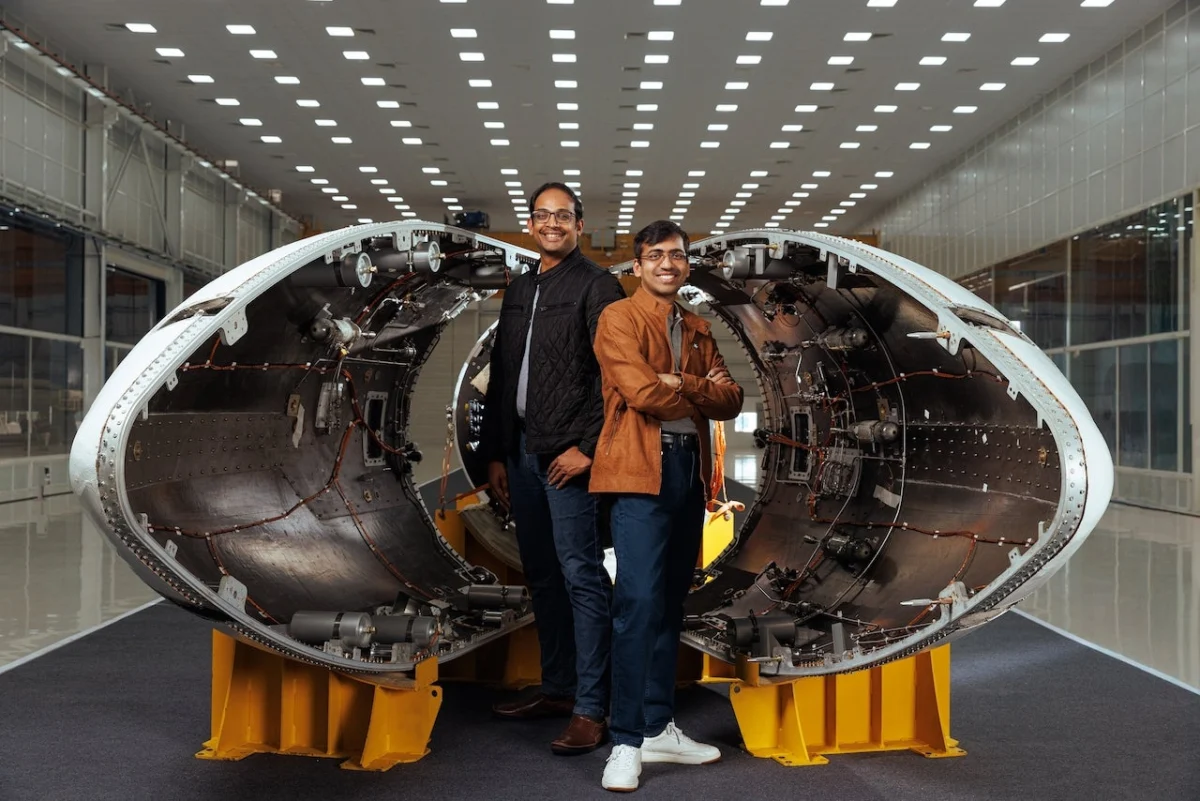

Skyroot Aerospace, the Hyderabad-based space launch startup, has officially ascended to unicorn status after securing $60 million in a new funding round, marking a historic milestone for India’s burgeoning private space sector. The latest capital injection, co-led by Singapore’s sovereign wealth fund GIC and Sherpalo Ventures, brings the company’s post-money valuation to $1.1 billion, making it the first Indian space-tech entity to cross the billion-dollar threshold. This financial boost follows a period of rapid growth for the firm, which has nearly doubled its valuation in less than 30 months, signaling strong investor confidence in India’s ability to compete in the global small-satellite launch market.
The funding round saw diverse participation from a consortium of high-profile investors, including the founders of Greenko Group, Arkam Ventures, and funds managed by BlackRock. Other notable participants included Playbook Partners and the Shanghvi Family Office. According to details released by Skyroot on May 7, this latest round brings the company’s total capital raised to date to $160 million. The influx of capital is earmarked for several critical operational objectives: scaling the launch cadence of the Vikram-1 rocket, expanding the company’s high-tech manufacturing infrastructure, and accelerating the research and development phases for the more powerful Vikram-2 launch vehicle.
Strategic Capital Allocation and Manufacturing Expansion
The $60 million investment is timed to coincide with a pivotal transition for Skyroot, moving from the developmental phase to active commercial operations. A significant portion of the funds will be directed toward the company’s expansive manufacturing facilities in Hyderabad, known as Max-Q and Infinity. Spanning over 250,000 square feet, these facilities represent some of the largest private sector aerospace manufacturing hubs in the world. By integrating advanced additive manufacturing—specifically 3D-printed cryogenic and liquid engines—Skyroot aims to streamline the production of its Vikram series.
Central to Skyroot’s operational strategy is the "assembly-to-launch" efficiency model. The company has set an ambitious goal of achieving a 72-hour turnaround time for Vikram-1, allowing the vehicle to be assembled and ready for liftoff within three days of arriving at the launch site. This rapid response capability is designed to appeal to global satellite operators who require flexible, on-demand access to Low Earth Orbit (LEO) without the lengthy scheduling delays often associated with larger, heavy-lift rocket missions.
The Vikram Series: Technical Specifications and Launch Timeline
Skyroot’s immediate focus remains the maiden orbital flight of Vikram-1. While the exact date has not been finalized, company leadership has indicated that the launch is targeted for the weeks immediately following the funding announcement. Vikram-1 is a multi-stage launch vehicle designed to carry payloads of up to 480 kilograms to 500-kilometer Low Earth Orbits. It utilizes solid-state propulsion for its primary stages and a liquid-fueled upper stage for precision orbital insertion.
Pawan Kumar Chandana, CEO and co-founder of Skyroot Aerospace, has outlined an aggressive roadmap for the current financial year. The firm is aiming for four to six launches, though Chandana noted that the schedule remains flexible based on the performance and data gathered from the initial orbital flight. "Depending on the observations of the first flight, we may have to change that. But currently, we do plan to follow up quickly," Chandana stated in a recent interview.
Following the stabilization of Vikram-1 operations, the company will pivot toward the Vikram-2 and Vikram-3 variants. Vikram-2 is designed for a higher payload capacity and the ability to reach Sun-Synchronous Orbits (SSO), which are highly sought after for Earth observation and remote sensing satellites. The development of these vehicles is expected to benefit from the modular design philosophy Skyroot has adopted, where components and engine technologies are shared across the Vikram family to reduce costs and improve reliability.
A Chronology of Success: From Foundation to Unicorn
Skyroot Aerospace was founded in 2018 by former scientists from the Indian Space Research Organisation (ISRO), Pawan Kumar Chandana and Naga Bharath Daka. Their vision was to leverage the decades of expertise housed within India’s national space program and translate it into a lean, commercially driven enterprise.
The company first captured international headlines in November 2022 with the "Prarambh" mission. This mission saw the successful launch of Vikram-S, a sub-orbital technology demonstrator. It was a watershed moment for the Indian private sector, as it was the first time a privately developed rocket had been launched from an ISRO facility (the Satish Dhawan Space Centre). The success of Vikram-S validated several core technologies, including the "Kalam" series of solid-fuel motors and the carbon-fiber rocket structures that Skyroot uses to minimize vehicle weight.
Since that successful test flight, Skyroot has focused on scaling its engineering team and securing the regulatory clearances required for orbital missions. The journey from a startup with a vision to a $1.1 billion unicorn has been facilitated by a series of funding rounds that attracted both domestic venture capital and international institutional investors, reflecting a broader trend of "NewSpace" investment moving toward emerging markets.
Global Market Positioning and Demand Projections
Skyroot enters a global launch market currently characterized by a significant supply-demand imbalance. As the number of small satellites (smallsats) being manufactured for telecommunications, climate monitoring, and defense increases, the availability of dedicated launch vehicles has struggled to keep pace. While SpaceX’s Transporter missions offer a cost-effective "rideshare" option, many operators require dedicated launches to reach specific orbital inclinations and altitudes.
Chandana anticipates that Skyroot’s demand will be split between domestic and international clients. "We anticipate a third of the demand to be domestic, and the remaining to be international. In terms of international—Southeast Asia, Japan, U.S., and Europe will be good contributors," he remarked. By positioning itself as a cost-competitive alternative to Western providers like Rocket Lab or Firefly Aerospace, Skyroot aims to capture a significant portion of the global smallsat launch market, which is projected to grow to over $20 billion by 2030.
The company’s competitive advantage lies in India’s lower labor costs and the established aerospace supply chain within the country. By utilizing 3D printing for its "Raman" and "Dhawan" engines, Skyroot can reduce the number of parts and the time required for engine assembly, further driving down the price per kilogram for its customers.
The Role of Government Reform and IN-SPACe
The rise of Skyroot Aerospace is inextricably linked to the Indian government’s strategic shift in space policy. Historically, the Indian space sector was the exclusive domain of ISRO. However, beginning in 2020, the government introduced a series of reforms aimed at privatizing the industry. The creation of the Indian National Space Promotion and Authorization Centre (IN-SPACe) provided a single-window regulatory body to facilitate private sector participation.
The "Indian Space Policy 2023" further solidified this transition, allowing private companies to own and operate satellites, provide communication services, and develop launch vehicles. These policy changes, combined with a liberalized Foreign Direct Investment (FDI) policy that allows up to 100% FDI in certain space segments, have created a fertile environment for companies like Skyroot to raise large sums of international capital.
Industry analysts suggest that Skyroot’s success will serve as a bellwether for other Indian space startups. With over 100 space-tech companies currently operating in India, the "unicorn" status of Skyroot is expected to trigger a new wave of investment into the sector, potentially leading to more domestic launches and the development of local satellite constellations.
Broader Implications for the Global Space Economy
Skyroot’s valuation and its impending orbital launch signal a shift in the geography of the space race. While the United States and China have dominated private space investment, India’s emergence as a hub for low-cost, high-reliability aerospace engineering is becoming increasingly apparent. The success of the Vikram-1 mission will not only be a victory for Skyroot but also a demonstration of India’s capability to provide "end-to-end" space solutions, from manufacturing to launch and orbital management.
As the company prepares for its first orbital attempt, the eyes of the global aerospace community are on Hyderabad. The ability to execute a successful launch "in the weeks following" this funding announcement will be the ultimate test of Skyroot’s technology and its readiness to serve a global clientele. If successful, Skyroot will move from being a promising startup to a critical infrastructure provider in the global digital economy, supporting everything from global internet connectivity to real-time environmental monitoring.
The road ahead for Skyroot involves navigating the high-risk environment of orbital mechanics and the intense competition of the global market. However, with $160 million in the bank and a newly minted unicorn status, the company is well-positioned to lead India’s charge into the stars, transforming the nation from a traditional space power into a modern, commercially-driven space leader.
