

Amazon Web Services (AWS) has announced the general availability (GA) of its highly anticipated AWS DevOps Agent and AWS Security Agent, marking a significant stride in autonomous cloud operations and cybersecurity. These frontier agents, initially conceptualized at re:Invent, are designed to autonomously manage complex tasks across various cloud and on-premise environments, drastically improving efficiency and reducing resolution times. The announcement comes alongside a recent engagement with the vibrant AWS Hong Kong User Group, underscoring AWS’s commitment to fostering robust developer communities worldwide.
The rollout of these agents represents a pivotal moment in the evolution of cloud management, transitioning from reactive human-centric operations to proactive, AI-driven automation. This strategic move aims to empower organizations to optimize their cloud infrastructure, enhance security postures, and accelerate incident response, freeing up critical human resources to focus on innovation rather than operational overhead.
Autonomous Operations Redefined: AWS DevOps Agent Goes GA
The AWS DevOps Agent, now generally available, is engineered to transform cloud operations by autonomously investigating incidents, expediting resolution, and preemptively mitigating potential issues. This sophisticated agent operates continuously, leveraging advanced artificial intelligence to analyze telemetry, identify anomalies, and recommend or even execute corrective actions across multi-step processes. Its capabilities extend beyond mere monitoring, delving into root cause analysis and implementing solutions without direct human intervention in many scenarios.
First introduced as a concept, the DevOps Agent has undergone rigorous testing and refinement, demonstrating substantial benefits for early adopters. Major enterprises like United Airlines, Western Governors University (WGU), and T-Mobile have already integrated the DevOps Agent into their workflows, reporting transformative improvements. Western Governors University, for instance, has observed a dramatic reduction in resolution times, shrinking from hours to mere minutes. Across various preview customers, the agent has delivered up to a 75% reduction in Mean Time To Resolution (MTTR) and a 3 to 5 times faster incident resolution rate. These metrics highlight the agent’s capacity to significantly enhance system reliability and operational agility at scale.
The agent’s ability to operate across AWS cloud, multicloud, and on-premise environments ensures comprehensive coverage, providing a unified approach to incident management regardless of an organization’s architectural complexity. By automating the heavy lifting of operational tasks, the AWS DevOps Agent allows engineering and operations teams to redirect their expertise towards strategic initiatives, innovation, and architectural improvements, rather than being bogged down by repetitive troubleshooting. This shift not only boosts productivity but also fosters a more resilient and efficient operational environment.
Proactive Security with the AWS Security Agent
Complementing the DevOps Agent, the AWS Security Agent has also achieved general availability, introducing continuous, context-aware penetration testing directly into the development lifecycle. This agent is designed to mimic the sophisticated techniques and methodologies of a human penetration tester, operating autonomously to identify vulnerabilities and potential security flaws from the earliest stages of application design through deployment. Its proactive nature allows organizations to "shift left" on security, integrating robust testing into every phase of development rather than addressing issues post-deployment.
The implications for enterprise security are profound. Traditional penetration testing often involves periodic, resource-intensive engagements that can be costly and time-consuming, leading to potential security gaps between testing cycles. The AWS Security Agent, by contrast, offers an always-on, automated solution that continually assesses applications for vulnerabilities. This continuous testing paradigm ensures that security risks are identified and addressed much faster, significantly reducing the attack surface.
Customers leveraging the Security Agent, including LG CNS, HENNGE, and Wayspring, have reported compelling results. LG CNS teams estimate achieving over 50% faster testing cycles and approximately 30% lower costs associated with security assessments. Crucially, they also report a significant reduction in false positives, a common challenge with automated security tools, which translates to less wasted effort for security teams. By providing highly accurate and actionable insights, the Security Agent empowers developers and security professionals to build more secure applications with greater efficiency.
Like its DevOps counterpart, the AWS Security Agent is designed for seamless integration across diverse environments, including AWS cloud, multicloud setups, and on-premise infrastructure. This universal compatibility ensures that organizations can maintain a consistent and robust security posture across their entire IT footprint, making it an indispensable tool for modern cybersecurity strategies. The combined power of both agents heralds a new era where intelligent, autonomous systems serve as essential partners in maintaining high operational standards and impenetrable security.

Strengthening Global Cloud Communities: The Hong Kong User Group Engagement
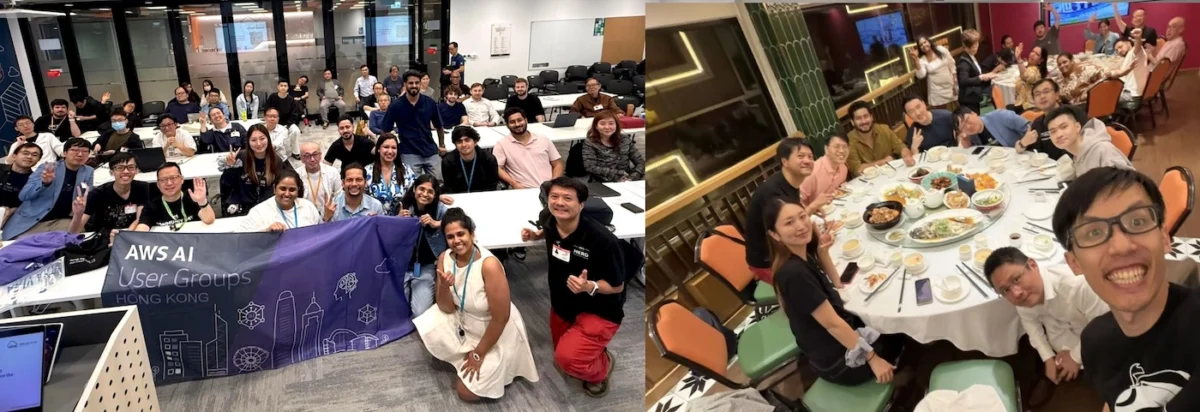
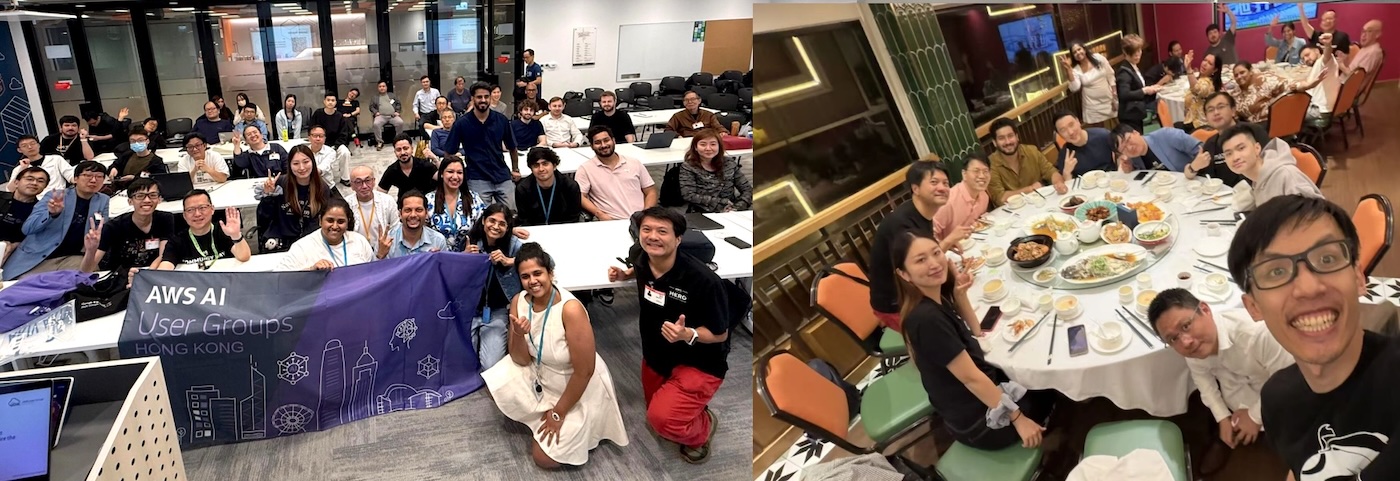
Beyond technological advancements, AWS continues to emphasize the critical role of community in fostering innovation and adoption. This commitment was recently highlighted by a visit to the AWS Hong Kong User Group, where an AWS team engaged with local cloud enthusiasts. The Hong Kong community, though characterized as "small," was lauded for its "strong" foundation, "energy," and "passion." Such direct engagement is vital for AWS to understand regional challenges, gather feedback, and support the organic growth of its user base.
The visit revealed a particularly encouraging development: the recent launch of a new AI user group within the Hong Kong community. This initiative reflects the burgeoning interest and investment in artificial intelligence technologies within the region and aligns with AWS’s broader strategy of democratizing AI/ML capabilities. The formation of specialized groups like this signals a maturing ecosystem where users can delve deeper into specific domains, share advanced knowledge, and collaborate on cutting-edge projects.
Community user groups play an indispensable role in the cloud ecosystem. They serve as crucial platforms for knowledge exchange, skill development, and professional networking. For AWS, these groups act as invaluable feedback loops, providing insights into real-world use cases, feature requests, and areas for improvement. For members, they offer opportunities to learn from peers, gain practical experience, and stay abreast of the rapidly evolving cloud landscape. The strengthening of bonds through such interactions, often facilitated by informal gatherings over food and conversation, fosters a sense of belonging and collective growth, which is paramount for sustainable technology adoption.
The energy witnessed in Hong Kong is indicative of a broader trend across the Asia-Pacific region, where cloud adoption continues to accelerate, driven by digital transformation initiatives and a growing pool of skilled professionals. AWS’s proactive engagement with these communities ensures that local needs are met and that the global AWS ecosystem remains vibrant and inclusive.
Strategic Service Availability Updates and Lifecycle Management
In its ongoing commitment to transparency and customer support, AWS also provides regular updates regarding the availability and lifecycle of its services and features. On March 31, 2026, the company updated its AWS Product Lifecycle Changes documentation. This resource offers comprehensive guidance on available alternatives and migration support when the availability of an AWS service or feature is altered, ensuring that customer operations experience minimal disruption.
Managing the lifecycle of hundreds of cloud services is a complex undertaking, and clear communication is paramount. AWS’s policy is designed to provide customers with ample notice and practical assistance for transitioning to new services or alternative solutions. This proactive approach underscores AWS’s dedication to long-term customer success and operational stability. Organizations are encouraged to regularly consult the relevant service documentation and contact AWS Support for specific guidance related to these lifecycle changes, facilitating smooth transitions and continuity of service. This practice ensures that businesses can strategically plan their cloud architectures and avoid unexpected operational challenges.
A Week of Continuous Innovation and Resources
Beyond these major announcements, the past week saw a steady stream of updates and new launches across the AWS ecosystem, reflecting the company’s relentless pace of innovation. While a comprehensive list is maintained on the "What’s New with AWS" page, several notable developments caught attention, ranging from new service features and regional expansions to enhanced developer tools and AI/ML capabilities. These continuous improvements ensure that AWS customers have access to the latest technologies and optimizations, enabling them to build more resilient, scalable, and intelligent applications.
Furthermore, AWS continues to publish a wealth of informative content through its various blogs, offering deep dives into new services, architectural best practices, and customer success stories. These resources are invaluable for developers, architects, and IT professionals seeking to maximize their use of AWS services and stay informed about emerging trends. The "AWS Blogs" page serves as a central hub for this expert-driven content, fostering a culture of continuous learning within the community.
To further support its global builder community, AWS hosts a diverse array of events, both in-person and virtual. These include AWS-led events, startup-focused gatherings, developer-centric sessions, AWS Summits, and AWS Community Days. These platforms provide unparalleled opportunities for learning, networking, and hands-on experience with AWS technologies. The AWS Builder Center also serves as a critical resource, connecting builders, facilitating solution sharing, and offering curated content to support ongoing development. These initiatives collectively underscore AWS’s holistic approach to empowering its global user base, combining leading-edge technology with robust educational and community support systems.
As AWS continues to push the boundaries of cloud computing with autonomous agents and foster vibrant global communities, the focus remains on empowering builders and businesses to achieve unprecedented levels of efficiency, security, and innovation. The weekly roundups serve as a testament to this dynamic environment, highlighting continuous progress and the strategic vision driving the future of cloud technology.
