

Choosing a quality USB cable is a critical, yet often underestimated, task in an increasingly connected world where devices demand reliable power and data transfer. Far beyond mere connector type, length, or brand, a cable’s internal construction and external sheathing profoundly impact its performance, longevity, and ultimately, user safety. While many consumers might perceive all cables as functionally identical, discerning between a robust, high-performance cable and a substandard alternative requires attention to specific technical attributes. Among these, the material used for the cable’s outer jacket stands out as a primary indicator of its resilience and overall quality. A growing consensus among tech enthusiasts and experts points towards nylon braided cables as a superior choice, offering enhanced durability and a range of practical advantages that extend their lifespan and ensure consistent functionality. However, even the most robust designs have their limits, and understanding the signs of wear in a nylon braided cable is paramount to preventing potential hazards and maintaining optimal device performance.
The Underestimated Accessory: Why Cable Quality Matters
In the modern digital ecosystem, USB cables serve as indispensable conduits for power and data, connecting everything from smartphones and tablets to laptops, external drives, and a myriad of IoT devices. The ubiquitous nature of these accessories often leads to a casual approach to their selection, yet this oversight can have significant ramifications. A poorly constructed cable can lead to inefficient charging, slow data transfer speeds, and even pose serious safety risks. The rapid evolution of charging technologies, such as USB Power Delivery (USB-PD) and Quick Charge standards, further accentuates the need for cables capable of safely handling higher wattages and faster data rates. These advancements demand cables engineered with precise specifications for internal wiring, shielding, and insulation, making the external jacket an even more critical component in protecting these delicate internal structures.
Decoding Cable Anatomy: Beyond the Connector
To appreciate the value of a nylon braided cable, it is essential to understand the fundamental components that constitute a USB cable. At its core, a cable comprises several layers, each serving a distinct purpose:
- Conductors: Typically made of copper, these wires carry electrical current for power delivery and transmit data signals. The gauge of these wires (measured in AWG – American Wire Gauge) directly influences their ability to carry current; lower AWG numbers indicate thicker wires capable of handling more power.
- Insulation: Each conductor is individually insulated, usually with materials like polyethylene (PE) or polypropylene (PP), to prevent short circuits and signal interference.
- Shielding: To protect against electromagnetic interference (EMI) and radio-frequency interference (RFI) from external sources, and to prevent internal signals from leaking out, cables often incorporate multiple layers of shielding. This can include aluminum foil wraps and braided copper or aluminum mesh. Effective shielding is crucial for stable data transfer and efficient power delivery.
- Drain Wire: Often found alongside shielded pairs, the drain wire helps to ground the shield, further improving its effectiveness.
- Outer Jacket (Sheath): This is the outermost layer that encapsulates and protects all the internal components from physical damage, environmental factors, and everyday wear and tear. Traditional cables commonly use polyvinyl chloride (PVC) or thermoplastic elastomer (TPE) for this jacket.
The quality of these materials and the precision of their assembly directly correlate with a cable’s performance and lifespan. Substandard materials or poor manufacturing can lead to high electrical resistance, signal degradation, and premature mechanical failure, undermining the very purpose of the cable.
The Superiority of Nylon Braiding: Durability and Beyond
When discussing nylon braided cables, the "nylon" refers specifically to the material used for the outer jacket, typically a woven fabric sheath that encases the primary insulation layer. This braided design represents a significant upgrade over conventional PVC or TPE jackets, offering a multitude of advantages that contribute to its growing popularity.
- Enhanced Mechanical Durability: The primary benefit of nylon braiding is its superior resistance to physical stress. Nylon fibers possess high tensile strength, meaning they can withstand considerable pulling forces without stretching or breaking. Furthermore, the braided structure distributes stress more effectively across the cable’s surface, making it far more resilient against repeated bending, twisting, and knotting, common causes of failure in conventional cables. This significantly reduces the likelihood of internal wire damage or jacket splitting, particularly at the vulnerable points where the cable meets the connector. While a typical PVC cable might withstand a few thousand bend cycles before failing, high-quality nylon braided cables can endure tens of thousands of cycles.
- Abrasion Resistance: Nylon is inherently more resistant to abrasion than PVC or TPE. This makes braided cables ideal for situations where they are frequently rubbed against rough surfaces, such as inside backpacks, desk drawers, or car interiors. This resistance protects the underlying insulation and conductors from external damage that could compromise the cable’s electrical integrity.
- Tangle-Free Experience: One of the most appreciated practical benefits for users is the reduced propensity for tangling. The woven texture and inherent stiffness of nylon braiding make these cables less prone to knotting and coiling into frustrating messes, a common annoyance with smoother, more pliable plastic cables. This "anti-tangle" property saves time and reduces the physical stress on the cable each time it’s unraveled.
- Improved Aesthetics and Tactile Feel: Beyond functionality, nylon braided cables often present a more premium aesthetic and a softer, more pleasant tactile feel compared to their plastic counterparts. They come in a wider variety of colors and textures, allowing for a more personalized and organized tech setup.
- Heat Dissipation: While not their primary function, some nylon braids can offer marginal improvements in heat dissipation compared to solid plastic jackets, especially for cables carrying higher currents over extended periods. This can contribute to the overall safety and longevity of the cable, particularly when fast charging devices.
- Chemical Resistance: Nylon exhibits good resistance to many common chemicals, oils, and solvents, further enhancing the cable’s longevity in various environments where traditional plastics might degrade more rapidly.
Performance Implications: Power, Data, and Safety
The quality of a cable, especially its external protection, has direct implications for both performance and safety.
- Power Delivery: For modern fast-charging standards like USB-PD, cables must be capable of handling significant power levels, often up to 100W, and even 240W with the latest USB-C standards. Cables designed for these higher wattages incorporate thicker power conductors and often an "e-marker" chip within the connector to communicate their capabilities to connected devices. A damaged outer jacket can compromise the internal insulation, leading to increased resistance, voltage drops, and reduced charging efficiency. In extreme cases, internal shorts can occur, potentially damaging the charging device or the connected gadget.
- Data Transfer: High-speed data protocols (e.g., USB 3.0, 3.1, 3.2, Thunderbolt) rely on precise signal integrity. Damage to the cable’s shielding or internal data lines, often caused by physical stress, can introduce noise and interference, resulting in slower data speeds, intermittent connections, or even complete data corruption. Nylon braiding helps maintain the physical integrity of these sensitive internal components, preserving signal quality.
- Safety Hazards: The most critical implication of cable damage is safety. When the outer jacket, and subsequently the inner plastic insulation, becomes compromised, the conductive wires can become exposed. This creates a severe risk of:
- Electric Shock: Direct contact with exposed live wires can cause electric shock.
- Short Circuits: Exposed wires can come into contact with each other or with conductive surfaces, leading to short circuits. This can generate excessive heat, melt plastic, and potentially ignite flammable materials nearby, posing a significant fire hazard.
- Device Damage: Inconsistent power delivery or electrical surges due to a faulty cable can irreversibly damage the delicate internal circuitry of smartphones, laptops, and other electronic devices.
Recognizing Wear and The Imperative of Replacement
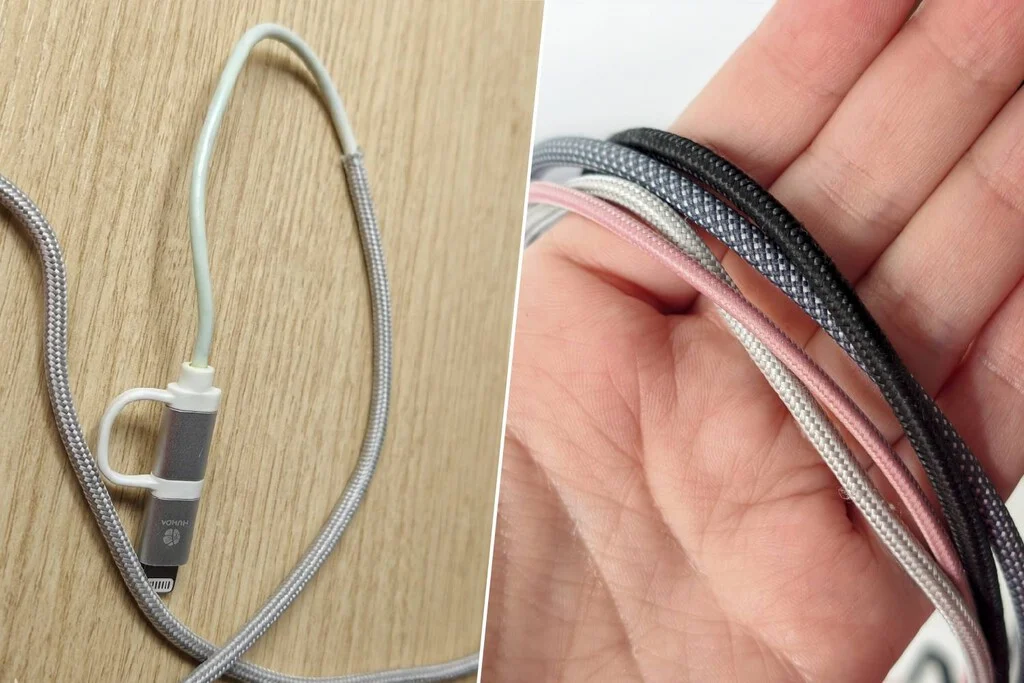
Despite their enhanced durability, nylon braided cables are not indestructible. Prolonged, rigorous use will inevitably lead to wear and tear. A common pattern of degradation involves the nylon braiding at the stress points, particularly near the connectors, beginning to fray or detach.
The typical timeline of cable degradation, even for robust nylon cables, follows these stages:
- Initial Fraying: The first sign of wear is often visible fraying of the nylon threads, usually where the cable repeatedly bends at the junction with the connector. This is a cosmetic issue at first, but a clear indicator of ongoing stress.
- Braiding Displacement: As fraying continues, the nylon braiding may start to bunch up, slide, or peel away from the underlying plastic insulation, exposing the smoother plastic jacket beneath. At this stage, the cable’s enhanced mechanical protection is significantly reduced.
- Plastic Jacket Exposure/Damage: If the wear progresses, the internal plastic jacket (PVC or TPE) will become fully exposed. While the copper conductors are still protected by this layer, the cable is now as vulnerable as a standard, unbraided cable, if not more so due to the initial stress that caused the nylon to fail. Continued bending or abrasion can easily compromise this plastic layer.
- Conductor Exposure: The most critical stage occurs when the internal plastic insulation is breached, exposing the bare copper conductors. This is when the cable becomes an immediate safety hazard.
The moment the nylon braiding begins to fray or displace, it serves as an unequivocal signal that the cable’s protective integrity is diminishing. While the exposed inner plastic may not immediately present an electrical danger as long as it remains intact, it is a strong recommendation to begin sourcing a replacement. The cable has lost its primary layer of defense against physical stress and environmental factors, making it significantly more susceptible to further, more dangerous damage.
Crucially, if the underlying plastic insulation shows any signs of cracking, tearing, or peeling, or if the copper wires themselves become visible, the cable must be decommissioned and replaced immediately. Continuing to use such a cable poses unacceptable risks of electric shock, fire, and damage to connected devices. Even if the copper is not directly exposed but the inner insulation is compromised, the reduced dielectric strength makes the cable vulnerable to moisture ingress, which can lead to internal corrosion and short circuits. Furthermore, the diminished insulation can lead to localized overheating, especially when handling higher charging currents.
Navigating the Market: Choosing Wisely
Given the importance of cable quality, consumers should adopt a more informed approach to purchasing.
- Certification: Look for certifications such as MFi (Made for iPhone/iPad) for Apple Lightning cables, which guarantees compatibility and safety standards, or USB-IF certification for USB-C cables, ensuring adherence to USB specifications for power delivery and data transfer.
- Reputable Brands: Investing in cables from well-known and respected brands, even if they come at a higher initial cost, generally ensures better build quality, adherence to safety standards, and reliable performance. These brands often use higher-quality conductors, superior shielding, and durable outer jackets like nylon braiding.
- Purpose-Driven Selection: Consider the cable’s intended use. A short, highly durable nylon braided cable might be ideal for on-the-go charging in a backpack, while a longer, equally robust cable could be perfect for bedside charging or desk setups where it might endure frequent adjustments.
- Power and Data Needs: Ensure the cable supports the required power delivery wattage (e.g., 60W, 100W) and data transfer speeds (e.g., USB 2.0, USB 3.2 Gen 2) for your devices. This information is usually specified by the manufacturer.
Broader Impact and Sustainability
The seemingly minor decision to choose a durable cable has broader implications for environmental sustainability. The vast quantity of electronic waste (e-waste) generated globally is a growing concern, and disposable, short-lived cables contribute significantly to this problem. By investing in higher-quality, durable nylon braided cables, consumers can reduce the frequency of replacements, thereby lessening their individual contribution to e-waste. This shift towards more resilient accessories aligns with a broader consumer trend favoring product longevity and sustainability, moving away from a ‘throwaway’ culture. While the initial cost of a premium nylon braided cable might be slightly higher, its extended lifespan often translates into better long-term value and reduced environmental impact.
In conclusion, the humble USB cable is far from a trivial accessory. Its quality profoundly impacts the efficiency, safety, and longevity of our electronic devices. Nylon braided cables, with their superior mechanical durability, abrasion resistance, and anti-tangle properties, represent a significant advancement in cable design. While not impervious to wear, their robust construction offers a far longer service life than conventional plastic alternatives. Recognizing the early signs of wear and proactively replacing damaged cables is not merely a matter of convenience, but a critical safety measure to prevent electrical hazards and protect valuable electronics. Making an informed choice about cable quality is an investment in both personal safety and technological reliability.
