

Amazon Web Services (AWS) today announced the general availability of a new express configuration for Amazon Aurora PostgreSQL, a significant stride towards accelerating development cycles and democratizing access to high-performance cloud databases. This streamlined database creation experience, featuring preconfigured defaults, enables developers to deploy a production-ready Aurora PostgreSQL serverless database in mere seconds, fundamentally reshaping the journey from concept to running application. The move directly addresses the industry-wide imperative of "building at the speed of an idea," a core tenet championed by Colin Lazier, Vice President of Databases at AWS, during his keynote at re:Invent 2025.
The Drive for Rapid Innovation: A re:Invent 2025 Vision

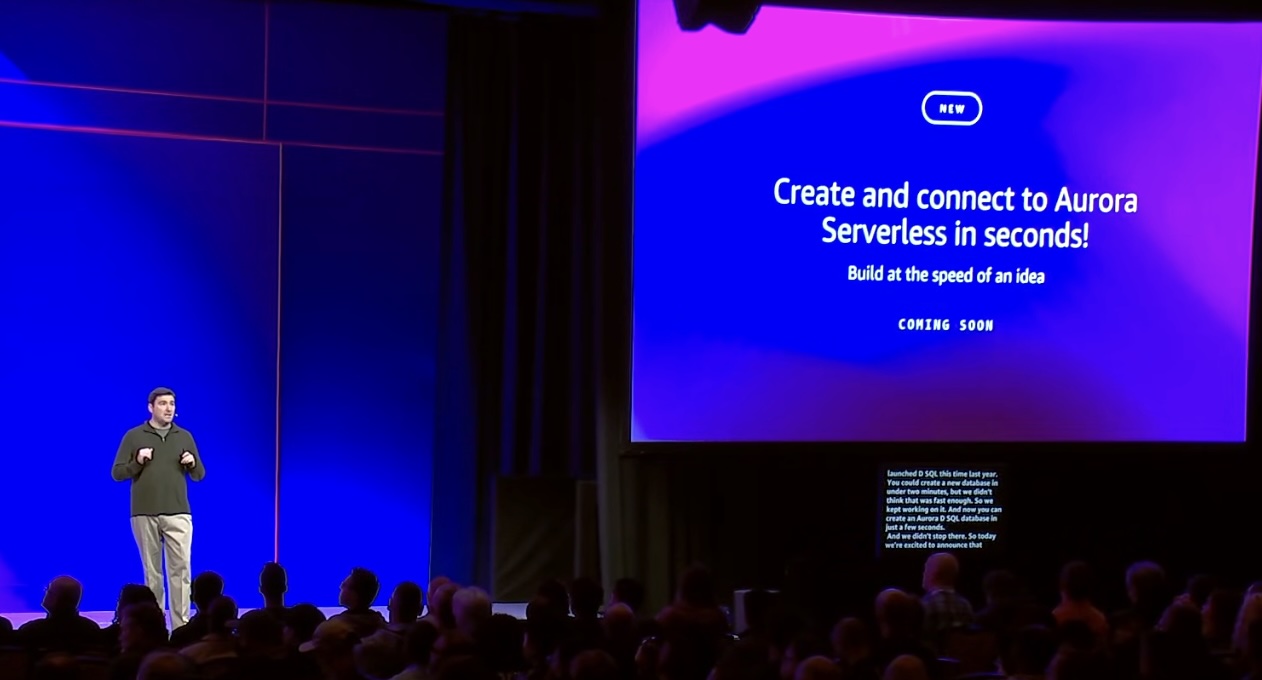
The journey towards this express configuration began with a clear strategic vision articulated at re:Invent 2025. During the annual cloud computing conference, Colin Lazier underscored the critical importance of enabling rapid iteration and deployment, minimizing the friction traditionally associated with infrastructure provisioning. He highlighted how existing AWS database services, such as Amazon DynamoDB and Amazon Aurora DSQL, already allowed customers to create production-ready tables and databases in seconds. The re:Invent 2025 preview of a similar lightning-fast creation capability for Amazon Aurora serverless databases was met with enthusiastic reception, generating substantial customer demand for its immediate availability. This widespread anticipation signaled a clear market hunger for tools that compress development timelines, allowing innovators to spend less time on setup and more time on core application logic.
This announcement is a direct fulfillment of that re:Invent promise and a testament to AWS’s responsiveness to developer needs. It reflects a broader industry trend towards "developer experience" as a paramount concern, where ease of use, speed, and minimal configuration overhead are increasingly vital for fostering innovation. By drastically cutting down the time required to provision a robust database, AWS empowers startups, enterprises, and individual developers alike to experiment, prototype, and deploy at an unprecedented pace.
Express Configuration: A Deep Dive into Simplified Deployment

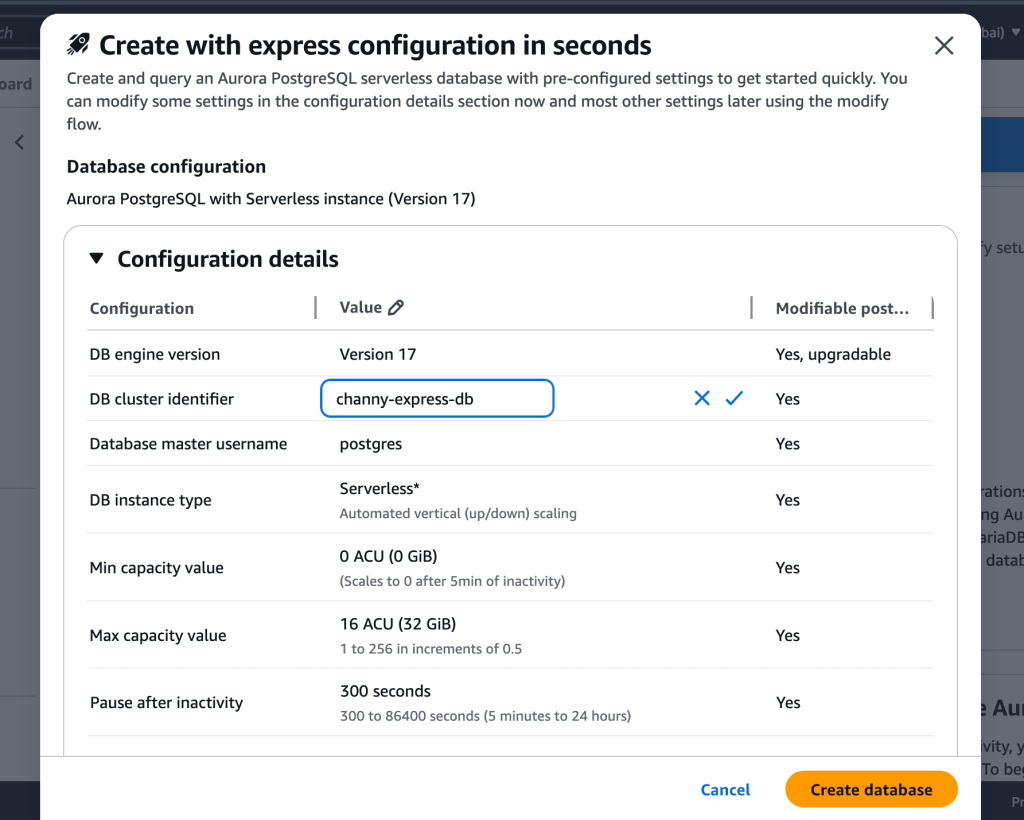
The core of the express configuration lies in its unprecedented simplicity. With just two clicks, users can provision a fully functional Aurora PostgreSQL serverless database. This process is orchestrated through intelligent preconfigured defaults that handle many of the initial setup complexities, traditionally requiring multiple steps and detailed technical decisions. While optimized for speed, the express configuration retains crucial flexibility. Users can modify key settings both during and after the initial database creation. For instance, the capacity range for the serverless instance can be adjusted at the time of creation, and additional read replicas or custom parameter groups can be configured post-deployment to meet evolving application demands for scalability and performance.
One of the most significant innovations within the express configuration is the paradigm shift in network connectivity. Aurora clusters created with express configuration are provisioned without an Amazon Virtual Private Cloud (Amazon VPC) network. Instead, they include an internet access gateway, enabling secure connections from a wide array of development tools directly over the internet. This eliminates the traditional requirement for setting up complex VPNs or AWS Direct Connect links solely for initial database access, drastically reducing network configuration overhead and streamlining the developer onboarding process. This direct internet access is fortified with robust security measures, ensuring data integrity and access control.
Furthermore, the express configuration automatically sets up AWS Identity and Access Management (IAM) authentication for the administrator user by default. This enables passwordless database authentication from the outset, eliminating the need for manual password management and enhancing overall security posture. IAM authentication provides granular control over who can access the database and what actions they can perform, aligning with best practices for least privilege access. Developers can leverage IAM roles and policies to manage database access, integrating seamlessly with their existing AWS security frameworks.
Unlocking Advanced Aurora Capabilities and Enhanced Connectivity
Despite its simplified setup, an Aurora PostgreSQL serverless database created with express configuration provides full access to the comprehensive suite of features inherent to Aurora PostgreSQL serverless. This includes essential capabilities such as deploying additional read replicas for high availability and automated failover, ensuring business continuity and resilience against outages. The serverless architecture also means that the database automatically scales capacity up or down based on application demand, billed per second from zero capacity, offering unparalleled cost efficiency by paying only for consumed resources.
The launch introduces a new internet access gateway routing layer for Aurora, a critical component that facilitates the simplified connectivity. This gateway is enabled by default for new serverless instances created via express configuration, allowing applications to connect securely from virtually anywhere in the world through the internet using the standard PostgreSQL wire protocol. This distributed gateway, spanning multiple Availability Zones, offers the same level of high availability as the underlying Aurora cluster, ensuring consistent and reliable connectivity. This means developers can utilize their preferred development tools and environments without being constrained by network topology, further fostering agility and productivity.
A Holistic Approach to Developer Productivity
The express configuration for Aurora PostgreSQL is part of a broader, concerted effort by AWS to foster developer productivity and lower barriers to entry for cloud adoption. This strategy encompasses several interconnected initiatives:
-
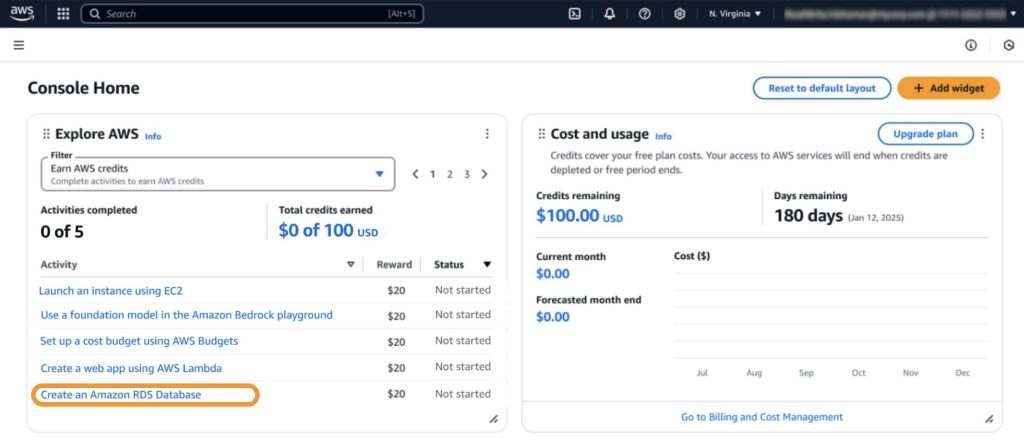
AWS Free Tier Expansion: At re:Invent 2025, AWS announced significant enhancements to its Free Tier program. New customers now receive up to $200 in AWS credits ($100 upon sign-up and an additional $100 for using services like Amazon RDS, AWS Lambda, and Amazon Bedrock). Crucially, Amazon Aurora is now available across a broad set of eligible Free Tier database services, allowing developers to gain hands-on experience with Aurora at no upfront cost. This removes a significant hurdle for experimentation and learning, enabling a wider audience to leverage Aurora’s capabilities.
-
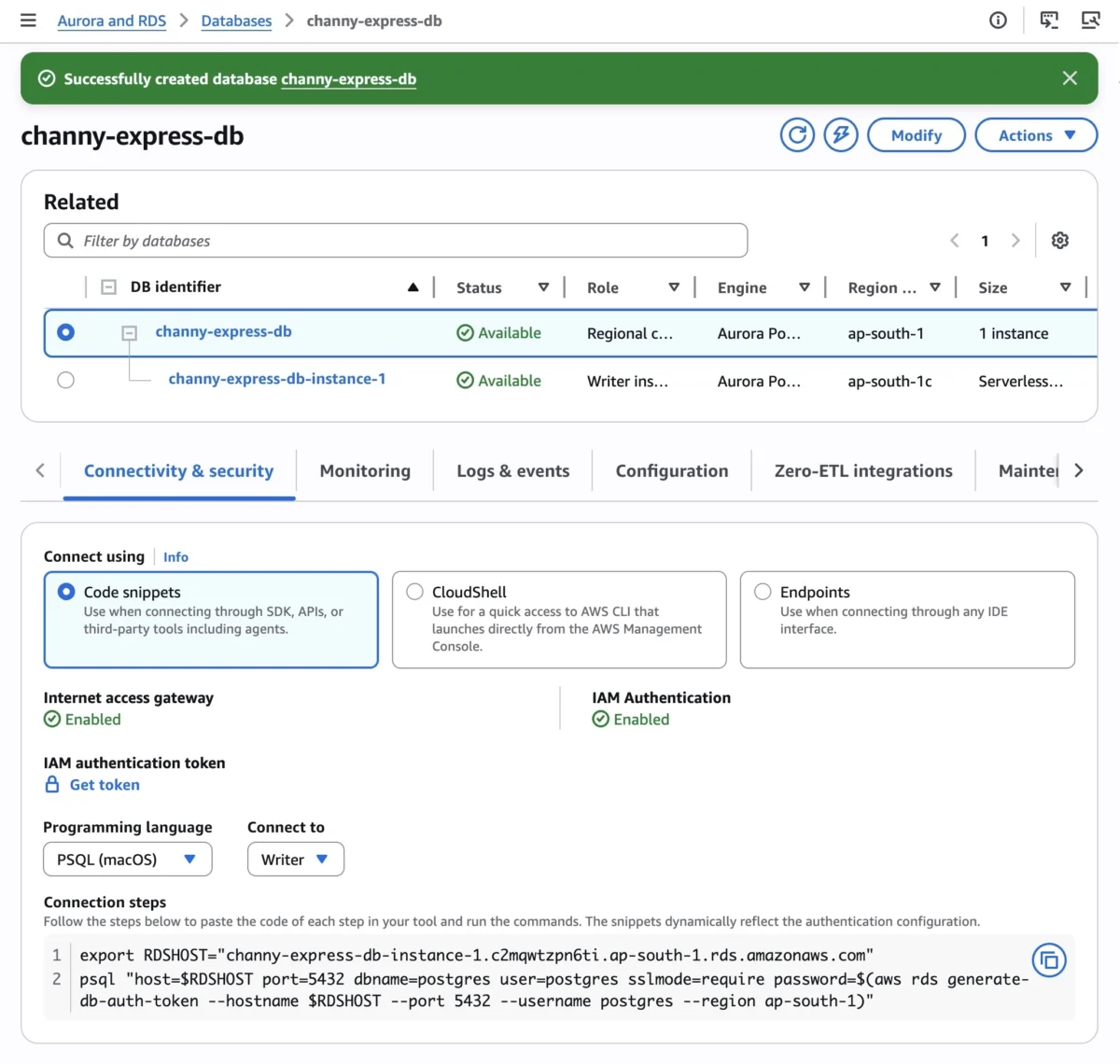
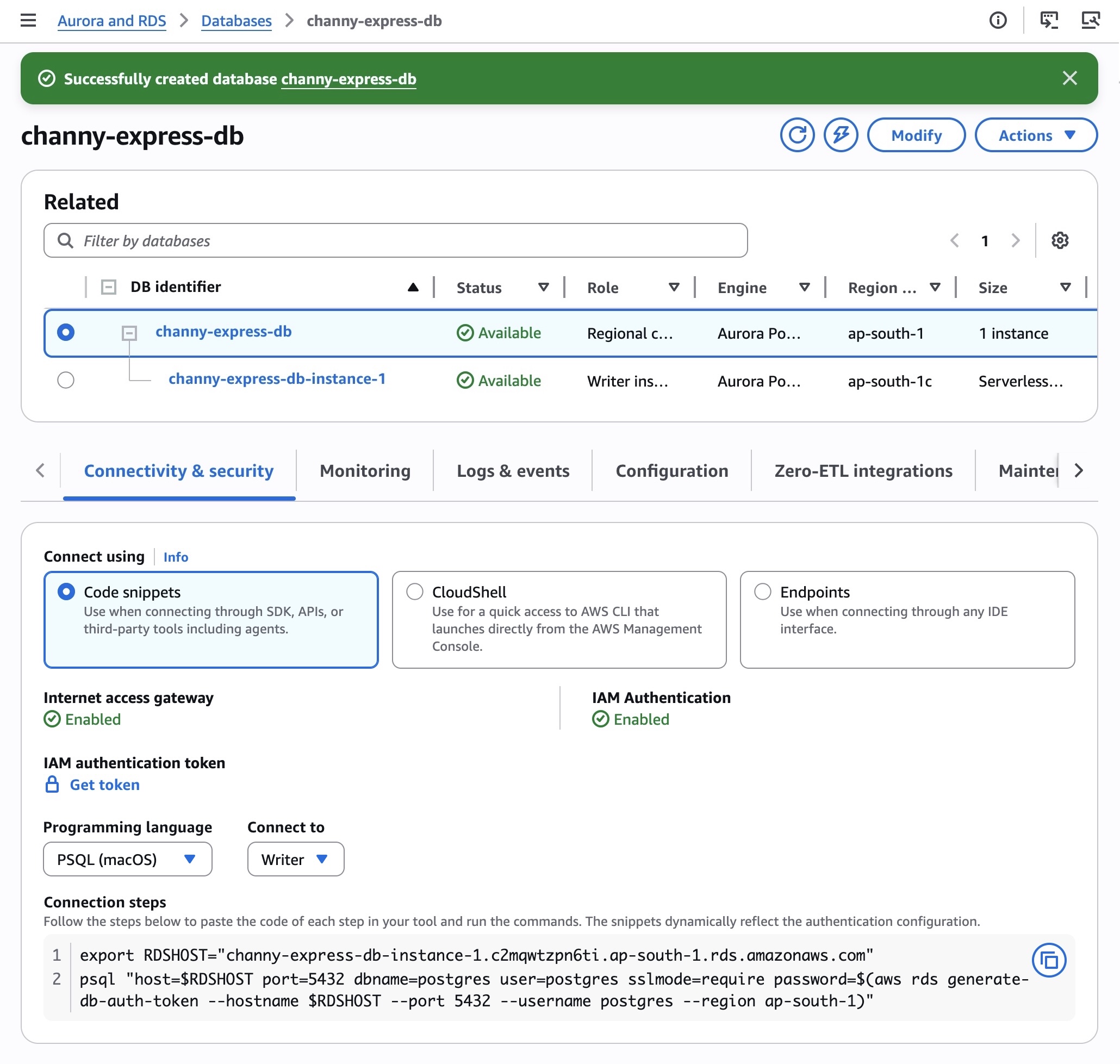
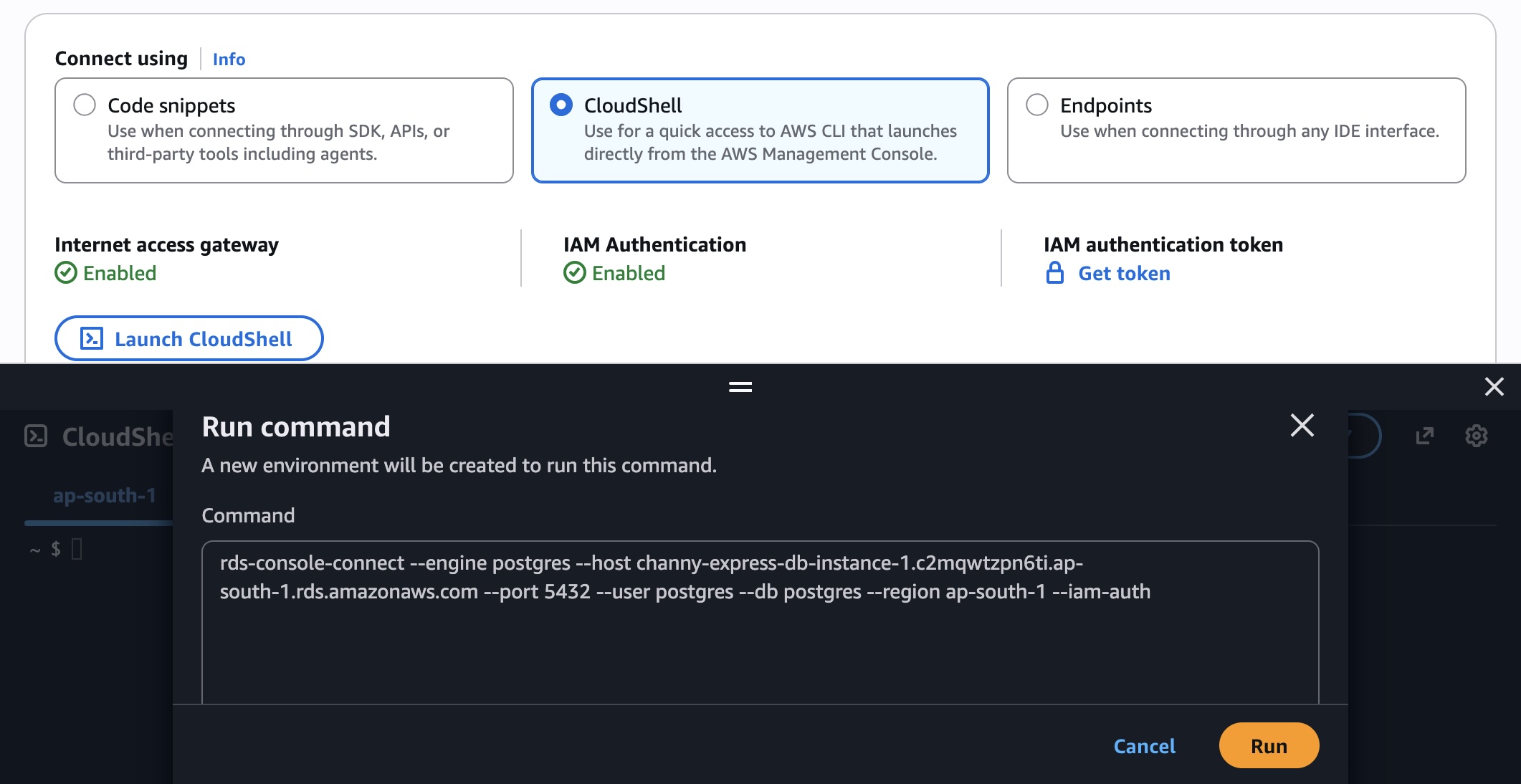
Integrated Developer Workflows: After creation, developers can directly query an Aurora database using AWS CloudShell, a browser-based shell that comes pre-populated with connection commands. Alternatively, standard programming languages and developer tools can connect via the new internet-accessible routing component. The AWS Console’s "Connectivity & security" tab provides dynamically generated code snippets for various languages (e.g., Python, Node.js, Java JDBC, Go, PHP, PSQL, TypeScript), simplifying the integration process. For tools like pgAdmin that rely on username and password credentials, the console offers a "Get token" option, generating a temporary IAM authentication token valid for 15 minutes, balancing convenience with security best practices.
-
AI-Assisted Development: AWS is actively integrating its databases with cutting-edge AI-powered development platforms to further accelerate the "speed of an idea."
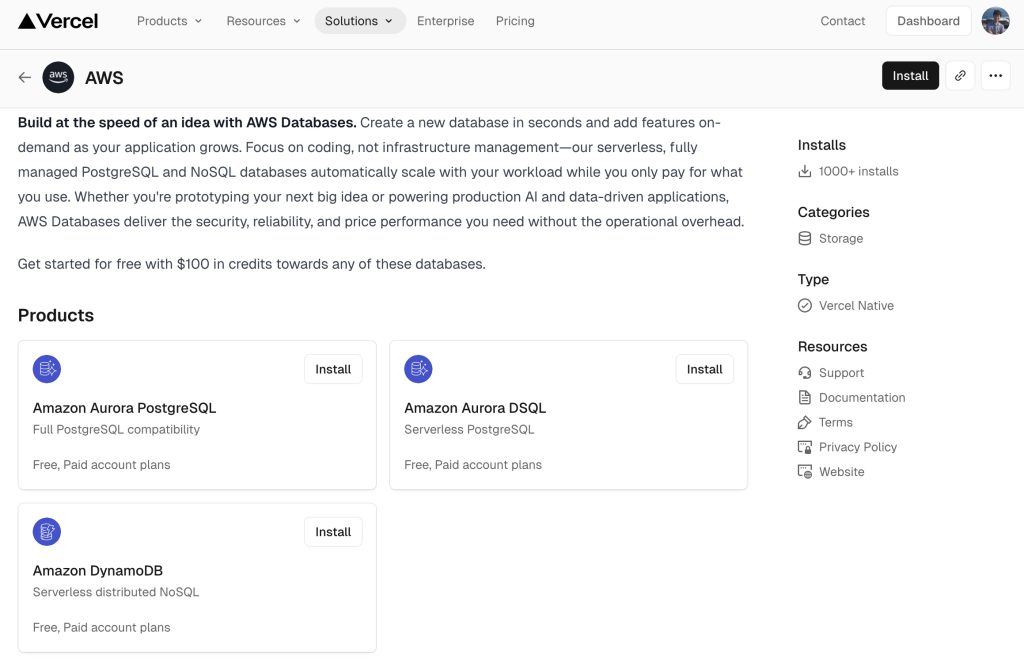
- Vercel Integrations: Building on existing integrations announced in December 2025 (AWS databases available on Vercel Marketplace for direct creation and connection), AWS further enhanced its collaboration with Vercel in January 2026. This includes deep integration with v0 by Vercel, an AI-powered tool that transforms natural language ideas into production-ready, full-stack web applications in minutes. v0 now supports Aurora PostgreSQL, Aurora DSQL, and DynamoDB, allowing developers to scaffold applications with robust database backends using simple prompts. Existing express configuration databases can also be seamlessly connected to Vercel projects. This signifies a move towards declarative, AI-driven application development, where the database becomes an integral, easily provisioned component.
- Kiro Integration: In December 2025, AWS announced Aurora PostgreSQL integration with Kiro powers. Kiro, an AI agent-assisted development platform, allows developers to build Aurora PostgreSQL-backed applications faster through intelligent code generation and assistance. Kiro powers for Aurora PostgreSQL are available within the Kiro IDE and through its webpage for one-click installation, offering a collaborative AI partner for database-centric development. This empowers developers to leverage AI to design schemas, write queries, and troubleshoot, further accelerating the development lifecycle.
Practical Implementation and Availability
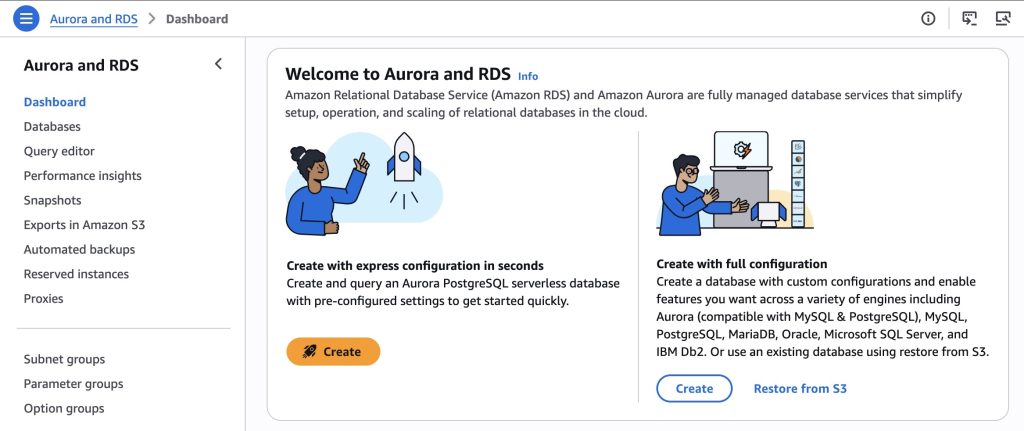
Creating an Aurora PostgreSQL serverless database with express configuration is designed to be intuitive. Users can navigate to the Aurora and RDS console, choose "Dashboard," and then select the "Create" option, prominently marked with a rocket icon to signify speed. The subsequent dialog box presents pre-configured settings, allowing for quick review and optional modification of the DB cluster identifier or capacity range before finalizing with "Create database."
For developers preferring programmatic control, the AWS Command Line Interface (AWS CLI) and AWS SDKs support the --with-express-configuration parameter. This enables the creation of both a cluster and an instance within it via a single API call, making the database ready for queries in seconds. The official documentation, "Creating an Aurora PostgreSQL DB cluster with express configuration," provides detailed guidance.
Upon successful creation, a confirmation banner appears, and the database status quickly transitions to "Available." The "Connectivity & security" tab in the console then offers various connection options, including the aforementioned code snippets for different programming languages, direct access via AWS CloudShell with pre-populated commands, and endpoint details for tools requiring traditional username/password credentials (with temporary IAM tokens).
The express configuration for Amazon Aurora PostgreSQL is generally available today across all AWS commercial Regions. This widespread availability ensures that developers globally can immediately benefit from this enhanced speed and simplicity. Pricing remains consistent with the Aurora Serverless model, where customers pay only for the capacity consumed, measured in Aurora Capacity Units (ACUs) and billed per second, with automatic startup, shutdown, and scaling to match application needs.
Broader Impact and Future Implications
The launch of Aurora PostgreSQL express configuration marks a pivotal moment in the evolution of cloud database services. Its primary implication is the profound acceleration of the innovation cycle. By removing the initial setup friction, AWS empowers developers to move from idea to functional prototype, and then to production, with unprecedented agility. This is particularly beneficial for rapid prototyping, hackathons, proof-of-concept projects, and new ventures where time-to-market is critical.
Furthermore, this initiative significantly lowers the barrier to entry for developers who might be new to cloud databases or AWS. The simplified networking and automated IAM authentication abstract away complex infrastructure decisions, allowing developers to focus on application logic rather than intricate cloud configurations. This democratizes access to a powerful, scalable, and highly available database service, making Aurora more accessible to a broader audience, including students, independent developers, and small to medium-sized businesses without dedicated DevOps teams.
From a strategic perspective, this move solidifies AWS’s commitment to developer-centric design and positions Aurora as a highly competitive offering in the cloud database market. By integrating with popular developer platforms like Vercel and AI-assisted tools like Kiro, AWS is not just providing a database but an integrated development experience. This holistic approach ensures that developers can leverage the full power of Aurora within their preferred workflows, further enhancing productivity and fostering a vibrant ecosystem of innovation.
Looking ahead, the success of the express configuration for Aurora PostgreSQL may pave the way for similar streamlined offerings across other AWS database engines and services. The underlying philosophy—to simplify, accelerate, and integrate—is likely to be a guiding principle for future AWS service enhancements, pushing the boundaries of what’s possible in cloud-native development. This relentless focus on developer agility ultimately translates into faster innovation, more resilient applications, and a more dynamic digital economy.
AWS encourages users to explore the new express configuration via the Aurora and RDS console and to provide feedback through AWS re:Post for Aurora PostgreSQL or their usual AWS Support contacts.
