


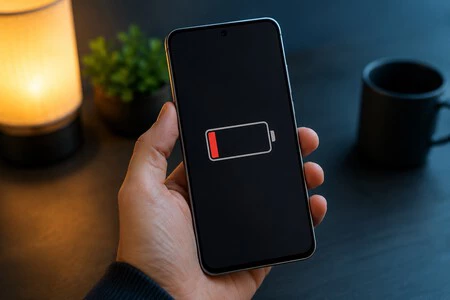
The scenario is all too familiar for millions of smartphone users worldwide: you glance at your device, confirming a comfortable 18% charge, only to pull it from your pocket moments later and find it alarmingly plummeted to 6%, or even shut down entirely. No heavy applications were running, no demanding tasks initiated, yet the battery percentage appears to have evaporated as if punctured. The immediate, instinctual reaction is often to conclude that the battery has reached the end of its life, a common assumption that, while occasionally true, frequently misinterprets the complex interplay between battery chemistry and sophisticated software algorithms. The truth, as revealed by industry experts and embedded within the very design of modern smartphones, is that the percentage displayed on your device’s status bar is not a direct, precise measurement but rather an intricate estimation, prone to calibration discrepancies that can lead to misleading readings.
The Science Behind the Deception: Lithium-Ion Chemistry and Non-Linear Discharge
At the heart of every contemporary smartphone lies a lithium-ion (Li-ion) battery, a marvel of chemical engineering that has revolutionized portable electronics due to its high energy density and lack of memory effect. However, the very chemistry that makes these batteries so powerful also introduces inherent complexities in accurately determining their State of Charge (SoC). Unlike a simple fuel tank that empties linearly, a Li-ion battery does not discharge its voltage in a perfectly straight line.
The Open Circuit Voltage (OCV) of a Li-ion cell, which is the voltage across its terminals when no current is flowing, correlates directly with its SoC. However, this correlation is far from linear. The voltage curve of a Li-ion battery exhibits a relatively flat plateau over a significant portion of its discharge cycle, typically ranging from approximately 80% down to 20% of its capacity. Within this "sweet spot," the voltage drops slowly and predictably, allowing the smartphone’s Battery Management System (BMS) to estimate the remaining charge with a high degree of accuracy. This stable voltage range provides a reliable metric for the software to track.
Conversely, at the extreme ends of the charge spectrum – above 80% and particularly below 20% – the voltage curve becomes much steeper. In these regions, a small change in actual charge can result in a significant drop in voltage, or vice-versa. This pronounced gradient makes it inherently more challenging for the software to precisely predict how much energy remains. The system struggles to interpret these rapid voltage fluctuations accurately, leading to the phenomenon where the last few percentage points seem to vanish at an accelerated rate, not due to a faulty battery, but because of the fundamental electrochemical properties of lithium-ion cells. This non-linear behavior means that 1% of battery at 90% charge does not represent the same amount of ‘actual’ energy or discharge time as 1% at 10% charge. This chemical reality is a critical piece of background context often overlooked by the average user.
The Brains of the Operation: Battery Management Systems and Fuel Gauges

To bridge the gap between complex battery chemistry and a simple percentage display, smartphones employ sophisticated Battery Management Systems (BMS) and "fuel gauge" integrated circuits. These systems are miniature powerhouses of computation, constantly collecting data from an array of sensors to provide the most accurate SoC estimate possible. Key parameters monitored include:
- Voltage: The most direct indicator of charge, albeit with the non-linear caveat discussed.
- Current: Measured both entering (charging) and exiting (discharging) the battery, allowing for "Coulomb counting" – essentially tracking the flow of electrons.
- Temperature: Battery performance and voltage characteristics are highly temperature-dependent. Cold temperatures can temporarily reduce capacity and discharge voltage, while excessive heat can accelerate degradation.
- Usage Patterns: The software also considers how the phone is being used, predicting power consumption based on active apps, screen brightness, network activity, and processor load.
The BMS integrates these data points using complex algorithms, often incorporating techniques like Kalman filters and impedance tracking. Coulomb counting, while precise in theory, can drift over time due as errors accumulate. Kalman filters are statistical methods used to estimate the state of a dynamic system (like a battery’s charge) from a series of incomplete or noisy measurements. Impedance tracking involves measuring the battery’s internal resistance, which changes with SoC and age, providing another layer of data for estimation.
The challenge for these algorithms is significant. They must account for the battery’s age (degradation changes its characteristics), temperature fluctuations, varying discharge rates (a heavy gaming session vs. standby), and manufacturing tolerances between individual battery cells. When the algorithms become desynchronized or "uncalibrated" due to prolonged partial charging cycles, infrequent full discharges, or sudden changes in temperature, the percentage displayed can begin to deviate significantly from the actual remaining capacity. For instance, if the phone hasn’t experienced a full discharge in a long time, the BMS might lose its reference point for the true "empty" state, leading to a miscalculation in the lower percentage range.
Decoding the Discrepancy: Calibration Versus Degradation
Understanding the difference between a calibration issue and actual battery degradation is crucial for users to make informed decisions about their device. The symptoms, though sometimes overlapping, offer distinct clues.
Calibration Issues: These manifest primarily as erratic or abrupt jumps in the battery percentage, particularly noticeable at the high or low ends of the scale. A phone might show 15% one moment and suddenly drop to 3% within minutes, or it might linger at 2% for an unexpectedly long period before finally shutting down. Crucially, in cases of pure calibration error, the total autonomy of the device – the overall time it operates from a full charge to shutdown – generally remains consistent. The battery itself might still hold a decent charge, but its representation is inaccurate. This often happens because the software hasn’t had sufficient "real-world" usage, particularly full discharge cycles, to re-learn and accurately map the non-linear voltage curve at the extremes. For example, if a user consistently charges their phone from 30% to 80% without ever letting it drop low or reach 100%, the BMS’s estimation model for the 0-20% and 80-100% ranges can become inaccurate.
Real Battery Degradation: This is a more serious condition where the battery’s chemical capacity has genuinely diminished. The tell-tale sign of degradation is a progressive and consistent reduction in total autonomy. A phone that once comfortably lasted a full day now requires recharging by mid-afternoon, regardless of how the final percentages are used or displayed. Other indicators of severe degradation include:
- Spontaneous shutdowns when the battery percentage is still visibly high (e.g., 20% or 30%). This indicates the battery can no longer deliver the necessary peak power, even if some charge remains.
- Unusual heating during charging or even during normal use, which can signify increased internal resistance.
- Physical swelling of the battery, a dangerous symptom that requires immediate professional attention.
- Significantly longer charging times or, conversely, rapid charging followed by rapid depletion.
A common industry benchmark for a "healthy" battery is retaining 80% of its original design capacity. Below this threshold, performance impacts become increasingly noticeable, and users might experience the symptoms of degradation more frequently.
Manufacturer Responses and Diagnostic Tools
Recognizing the widespread user concern surrounding battery performance and transparency, smartphone manufacturers have increasingly integrated diagnostic tools into their operating systems. These tools aim to provide users with objective data about their battery’s health, helping to distinguish between perceived issues and actual degradation.
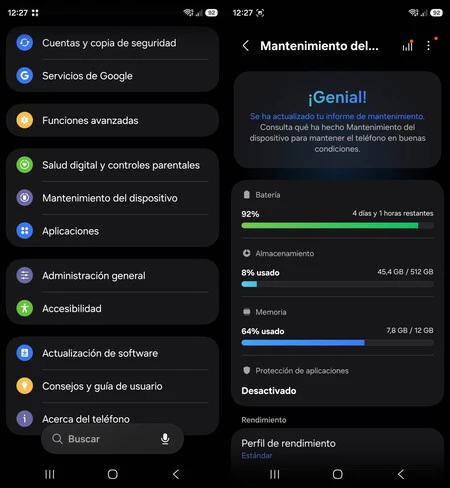
Samsung’s One UI, for instance, offers a comprehensive battery diagnostic feature directly accessible through the system settings. Users can navigate to Settings > Device care > Battery, and then delve into Battery information or More battery settings depending on the UI version. Here, a crucial metric, often labeled "Battery status" or "Maximum capacity," displays the current maximum charge capacity of the battery relative to its original design capacity, expressed as a percentage.
- Above 80%: The battery is generally considered in good health, and any perceived performance issues are more likely related to software optimization, calibration, or demanding usage patterns.
- Between 70% and 80%: Users will likely begin to notice a tangible reduction in total autonomy. While still functional, the need for more frequent recharging becomes apparent.
- Below 70%: The battery’s deterioration is significant, and replacement is strongly recommended to restore optimal device performance and autonomy.
If the "Battery status" percentage remains high (e.g., above 85-90%), yet the phone exhibits sudden, drastic drops in the lower percentage ranges, the problem is almost certainly a calibration issue rather than a genuinely degraded battery. This distinction empowers users to avoid unnecessary battery replacements and instead focus on recalibration techniques or simply understanding the inherent limitations of the percentage display. Other manufacturers, like Apple, offer similar "Battery Health" features in iOS, displaying maximum capacity and recommending service when it falls below a certain threshold. Google’s Android ecosystem also provides developer options and third-party apps that can access similar battery health data, though often requiring more technical know-how.
Expert Insights and Industry Perspectives
Battery experts and smartphone engineers consistently emphasize that the "fuel gauge" in a smartphone is one of the most challenging sensors to implement accurately. "It’s a constant balancing act between user expectation, battery longevity, and real-world performance," states Dr. Anna Schmidt, a leading researcher in electrochemical energy storage systems. "The algorithms are incredibly sophisticated, but they’re trying to predict the future based on a highly dynamic chemical reaction. Perfect accuracy is an elusive goal."

Manufacturers like Samsung and Apple invest heavily in optimizing their BMS software, often using machine learning to adapt to individual user habits and battery aging profiles. This "learning" process is continuous and aims to refine the SoC estimation over the device’s lifespan. However, even with these advancements, the fundamental non-linear discharge curve of Li-ion batteries remains a physical constraint.
"There’s an inherent trade-off," explains an unnamed senior engineer from a major smartphone OEM. "We could be perfectly conservative and have the battery shut down earlier to protect it, but users would complain about lost capacity. Or we can push it to the very last electron, risking sudden shutdowns. The displayed percentage is our best attempt to provide a useful, actionable number that balances these factors, even if it sometimes feels misleading." The industry’s focus is also shifting towards prolonging battery life through smart charging features, like adaptive charging that learns user sleep patterns to ensure the battery reaches 100% just before waking, minimizing time spent at full charge which can contribute to degradation.
Broader Implications: Consumer Trust, Sustainability, and the Future
The nuances of battery percentage reporting have significant implications beyond individual user frustration.
Consumer Trust and Satisfaction: Inaccurate battery readings can erode consumer confidence in a brand. Users expect reliability, and a phone that "lies" about its charge can lead to anxiety, inconvenience, and a perception of poor quality, even if the underlying hardware is functioning as intended. Clearer communication and education from manufacturers about how battery percentages are estimated could mitigate some of this dissatisfaction.
Sustainability and E-waste: The misconception that a rapidly dropping percentage always signifies a "dead" battery can lead to premature device replacement. This contributes to the growing global problem of electronic waste (e-waste), which contains hazardous materials and consumes valuable resources. By understanding when a battery merely needs recalibration versus genuine replacement, users can extend the lifespan of their devices, promoting a more sustainable consumption model. Governments and regulatory bodies are also increasingly pushing for greater repairability and longevity in consumer electronics, with battery health being a key component.
Future of Battery Technology: The challenges of Li-ion battery estimation are driving innovation. Researchers are exploring alternative battery chemistries (e.g., solid-state batteries, silicon anodes) that promise higher energy density, faster charging, and potentially more linear discharge characteristics, which could lead to more accurate SoC reporting. Advances in sensing technology, such as miniature impedance spectroscopy chips, could also provide real-time, highly granular data to fuel gauge algorithms, further improving accuracy. The integration of advanced AI and machine learning at a deeper hardware level is also expected to make BMS systems even more intelligent and adaptive.
User Empowerment: Practical Tips for Battery Health and Diagnosis
Armed with this knowledge, users can adopt several practices to both improve battery calibration and extend its overall lifespan:
- Occasional Full Charge/Discharge Cycles: While not necessary weekly, performing a full discharge (until the phone shuts off) followed by a full charge (to 100%) once every few months can help recalibrate the BMS and reset its estimation algorithms, especially if you primarily engage in partial charging.
- Avoid Extreme Temperatures: Both excessive heat and extreme cold can negatively impact battery health and performance. Avoid leaving your phone in direct sunlight, in a hot car, or using it extensively in freezing conditions.
- Partial Charging is Generally Good: For daily use, charging your phone between 20% and 80% is often recommended as it reduces stress on the battery and can prolong its lifespan. However, remember the need for occasional full cycles for calibration.
- Monitor Battery Health: Regularly check your phone’s built-in battery diagnostic tools (e.g., Samsung’s "Battery status" or Apple’s "Battery Health") to get an objective measure of its degradation.
- Identify True Degradation: Pay attention to the distinction between percentage jumps (calibration) and a consistent, overall reduction in total usage time (degradation). If your phone frequently shuts down with significant charge remaining, heats up unusually, or the total autonomy has drastically diminished, it’s likely time to consider a professional battery replacement.
Conclusion: Navigating the Nuances of Smartphone Power
The seemingly simple battery percentage icon on our smartphones masks a world of complex chemistry, sophisticated engineering, and intricate algorithms. It’s a testament to modern technology’s efforts to translate nuanced scientific phenomena into an easily digestible metric for the user. While the experience of a rapidly draining battery can be frustrating, understanding that the percentage is an estimation – an educated guess by the device – rather than an absolute measurement, empowers users to better diagnose issues. By differentiating between calibration quirks and genuine degradation, leveraging built-in diagnostic tools, and adopting informed charging habits, smartphone users can not only extend the life of their devices but also gain a deeper appreciation for the silent, tireless work of the tiny powerhouses that fuel our digital lives. The battery might not always tell the whole truth, but with the right knowledge, its subtle cues become far less perplexing.
